The recipe starts with four pounds of onions and no fat. Not a film of oil, not a knob of butter, nothing. Sliced onions go into a dry pot over low heat and stay there for the better part of an hour, releasing their own water, cooking in it, and eventually reducing to a thick pale mass roughly a quarter of the volume that went in.
Everyone who reads that instruction assumes it is a typo or a translation error. It is neither. Cooking the onions dry is the structural decision of the entire dish, because the sauce that ends up on the plate is not a sauce with onions in it, it is onions, and adding fat at the start would fry them instead of collapsing them.
Once the onions are down, the rest goes quickly: spiced butter, a large amount of a chile blend, chicken, and hard-boiled eggs. The finished stew is dark red, thick enough to stand a spoon in, and hot in a way that builds rather than announces itself.
- Serves: six to eight, with injera or another flatbread
- Clock: about three hours, of which the first hour is the onions
- Onions: four pounds, sliced fine, cooked dry before any fat goes in
- The two things to buy: berbere and niter kibbeh, both available or both makeable
- Heat level: start at half a cup of berbere for a first pot and go up from there
- The eggs: hard-boiled, peeled, scored, added in the last twenty minutes
The onions are the recipe
Four pounds is roughly six large onions, and they need to be sliced thin rather than chopped, because thin slices break down completely while a dice keeps some structure. A food processor with a slicing disc turns this from a twenty-minute job into a three-minute one, and this is the dish that justifies owning one.
They go into a heavy, wide pot with nothing else. Low heat, lid off, stirred every five minutes at first and more often as they dry out. Within ten minutes the pot is full of liquid; within thirty that liquid has mostly gone; by fifty minutes what remains is a soft, sticky, pale gold mass that smells sweet rather than sharp.
What the dry cook achieves is complete collapse without browning. Onions cooked in fat brown at the edges and hold their shape, which gives a sauce with pieces in it. Onions cooked in their own water disintegrate into something closer to a puree, and that puree is what gives the finished stew its body without any flour, cream or thickener at all.
The hour that looks like nothing is happening
The pot goes through three visible stages and it helps to know them. First the volume drops sharply as water comes out, and it looks like onion soup. Then the liquid boils off and the mass starts to look dry and slightly grainy, which is the stage where people panic and add oil. Then it turns glossy and sticky as the sugars concentrate.
Stir more often in the third stage, because that is when it can catch. If the bottom starts to colour, splash in a couple of tablespoons of water and scrape, which lifts it without adding fat. A little browning at this stage is not a disaster and a lot of it is.
A wide pot beats a tall one by a wide margin, since evaporation is the whole mechanism. A twelve-inch Dutch oven does in fifty minutes what a narrow stockpot takes ninety to do, and the narrow pot also steams the onions rather than drying them, which changes the result.
Berbere: what is in it and where to buy it
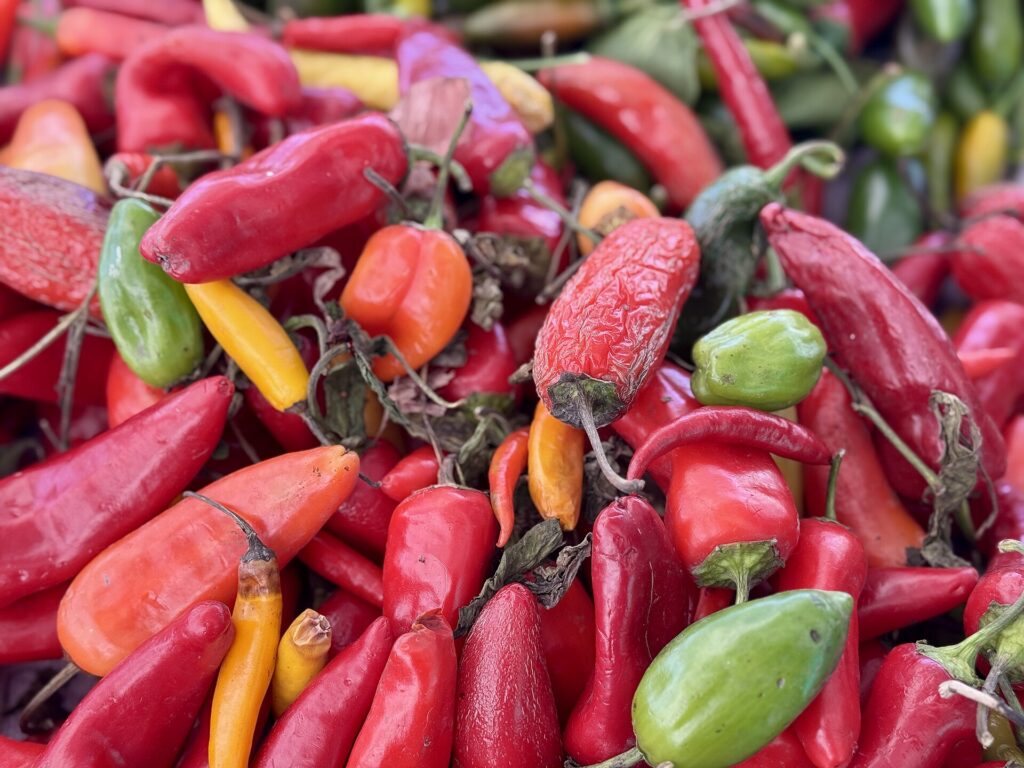
Berbere is a red chile blend and it is closer to a foundation than to a seasoning. The chile base is usually a mild to medium dried red pepper, and the rest of the blend commonly includes fenugreek, korarima, ginger, garlic, rue, nigella, ajwain, coriander, cardamom, cinnamon and cloves, in proportions that vary between households and between producers.
Two things about buying it. Quantity matters, because this dish uses half a cup or more of the stuff, so a small supermarket jar will not cover one pot. Ethiopian and Eritrean groceries sell it by the bag, online spice merchants carry it, and both are far cheaper per ounce than the jar in the international aisle.
Quality varies enormously. A good blend smells complex and slightly sour from the fenugreek, with the chile behind rather than in front. A cheap one is mostly paprika and salt and produces a stew that tastes red and flat. Fenugreek is the most reliable tell, and its absence is what separates the two.
Niter kibbeh, and the spices infused into the butter
Niter kibbeh is butter clarified with aromatics infused into it during the process. Melt a pound of unsalted butter over low heat with a chopped small onion, several crushed garlic cloves, a knob of ginger, and whole spices: cardamom pods, fenugreek seeds, korarima if you can find it, a cinnamon stick, cloves, and a few sprigs of rue or thyme.
Hold it at a bare simmer for forty-five minutes to an hour without letting it colour. The milk solids will settle and the aromatics will give everything up into the fat. Strain it through a fine sieve lined with cloth, discard the solids, and pour the clear golden fat into a jar.
It keeps for months in the refrigerator and a good while at room temperature, since the water and milk solids are gone. Plain clarified butter or ghee is a workable substitute and loses the aromatic layer, which is a real loss but not a fatal one for a first attempt at the dish.
A doro wat recipe, timed from the onions
- Slice four pounds of onions thin. Put them in a wide, heavy pot over low heat with nothing else, and cook fifty to sixty minutes, stirring, until they collapse into a sticky pale mass.
- Add half a cup of niter kibbeh and stir it through. Cook ten minutes more, now with the fat, until the onions turn a shade darker.
- Add six minced garlic cloves and two tablespoons of grated ginger. Cook five minutes.
- Add half a cup of berbere and stir it into the fat over low heat for eight to ten minutes. It will look alarmingly dark and thick. This step cooks the raw edge out of the spice and cannot be rushed.
- Add two cups of water or chicken stock, a quarter cup of dry red wine if you have it, and a teaspoon of salt. Simmer twenty minutes until it is a thick, dark, glossy sauce.
- Meanwhile, skin eight chicken legs and thighs and rub them with lemon juice and salt. Rinse and pat dry.
- Add the chicken to the pot, turning to coat, and simmer covered for forty-five minutes, until the meat is thoroughly cooked and pulling from the bone.
- Hard-boil six to eight eggs, peel them, and score each one three or four times with a knife so the sauce gets in.
- Add the eggs and simmer uncovered for a final twenty minutes. The sauce should reduce to the point where fat pools at the edges.
- Check the salt, stir in a half teaspoon of ground cardamom off the heat, and serve straight from the pot with injera.
The chicken: legs and thighs, and why the skin comes off
Dark meat only. Breast dries out in the forty-five minutes this sauce needs and contributes nothing, while legs and thighs come out soft and hold up to a thick, heavily spiced sauce. Eight pieces is right for a pot this size.
The skin is removed, which is not squeamishness. Skin in a long braise does not crisp, it turns flabby, and it releases a quantity of fat into a sauce that already has half a cup of butter in it. Without the skin the sauce coats the meat directly and the surface takes on the colour of the pot.
The lemon and salt rub is traditional and it does two useful things: it firms the surface slightly and it takes the edge off any strong smell from the bird. Rinse it off and dry the pieces before they go in, since wet chicken dropped into a thick sauce dilutes it.
The eggs go in whole, and the number is a household matter
Hard-boiled eggs are a fixed feature of the dish and one of the things that identifies it on a table. They are peeled and then scored with shallow cuts around the surface, which lets the sauce penetrate and gives them the streaked red appearance they have when served.
How many, and whether every guest gets one, is a matter of household convention rather than recipe. Common practice is one per person, and a pot cooked for a celebration will have more. They need only twenty minutes in the sauce, long enough to take on colour and flavour and not so long that the whites turn rubbery.
The dish is closely associated with holidays and with hospitality, and it is the standard offering for guests and for the end of a fast in both Ethiopian and Eritrean kitchens. Which of the two countries the dish originates in is a live and sometimes heated question with no documentary answer, and the reasonable position is that it belongs to a shared culinary region whose modern borders are recent.
Injera, and the substitutes that actually work
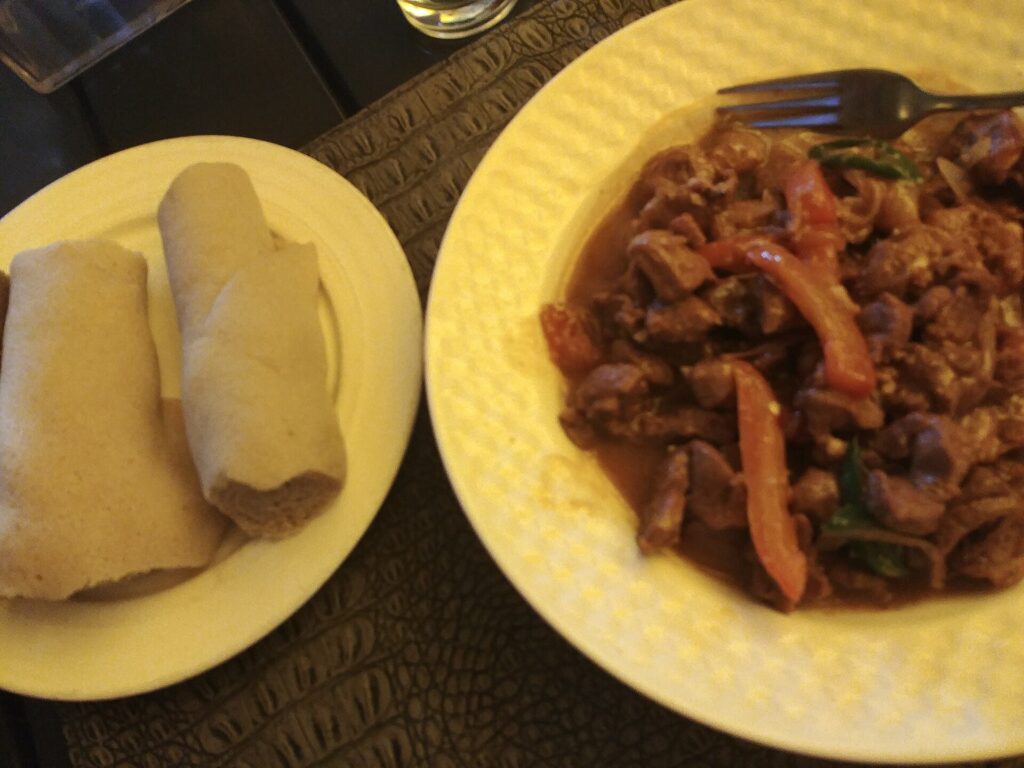
Injera is a large, thin, spongy sourdough flatbread made from teff, fermented for several days, and it is genuinely difficult to make well outside a kitchen that makes it regularly. Teff behaves unlike wheat, the fermentation is temperature-sensitive, and most first attempts produce something dense and sour without the characteristic holes.
| Option | How close | Effort | Verdict |
|---|---|---|---|
| Bought injera | Identical | A trip to an Ethiopian grocery or restaurant | By far the best route |
| Home injera from teff | Variable | Three to five days of fermentation | A project, not a weeknight |
| Sourdough crepes | Reasonable in function | Thirty minutes with a live starter | Sour, thin, holds sauce well |
| Plain rice | Not close, but it works | None | Perfectly acceptable, widely done |
| Wheat flatbread | Wrong texture | None | Fine, if there is nothing else |
Many Ethiopian restaurants sell injera by the piece to take away, which is the shortcut worth taking. Failing that, rice is honest and eats well with a sauce this thick, and it is better than a bad imitation of something the dish is built around.
Heat, and how much berbere a first pot should carry
Half a cup in a pot for six to eight is a moderate version by the standards of the dish and a fairly hot one by the standards of most kitchens outside the region. A full cup is not unusual in a household pot. Starting at half and increasing on the next attempt is more sensible than the reverse, since there is no way to remove it.
The heat also depends heavily on the blend, which is why a fixed number is unreliable. Some berbere is genuinely mild with the heat coming from a small proportion of hot chile; some is built on hotter peppers. Taste a pinch of the dry blend before deciding on the quantity.
The long cook in fat, step four, changes the character of the heat as well as taking out the raw taste. Berbere stirred in at the end tastes sharp and dusty; berbere cooked in butter for ten minutes tastes deep and rounded, and the heat sits behind the flavour rather than in front of it, which is the same principle at work across any well-built spice base.
Where it goes wrong, and how to keep the pot safe
Fat in with the onions at the start. This is the single failure that changes the dish. The onions fry instead of collapsing and the sauce ends up thin with pieces in it.
Berbere added to liquid rather than to fat. The spice needs the fat and the time. Stirred into water it stays raw-tasting for the whole cook.
A pot that is too narrow. Without a wide surface the onions steam, the sauce never reduces properly, and the whole timeline stretches.
Not enough salt. A pot with four pounds of onion and half a cup of spice needs more salt than instinct suggests. Taste at the end and expect to add more than once.
On safety, three straightforward points. Chicken goes in raw and needs the full forty-five minutes; check that the meat at the bone is no longer pink before the eggs go in. Hard-boiled eggs sitting in a warm sauce for a long buffet should be kept genuinely hot rather than tepid, and leftovers with eggs in them are best eaten within two days. And a pot this deep cools slowly, so move it into shallow containers and refrigerate within two hours rather than leaving it on the stove overnight, the same discipline any large braise deserves. Anyone with a dairy allergy should note that niter kibbeh is butter, and a neutral oil infused the same way is the workaround, though it is a different dish. Those are the checks worth running on any long-simmered pot from an unfamiliar tradition.
Frequently Asked Questions
Can I speed up the onions?
Not really, and not without changing the dish. Higher heat browns them instead of collapsing them, and a pressure cooker gives a wet result that then has to be reduced anyway. Slicing them thin with a machine is the only meaningful time saving available.
Is there a version without meat?
Yes, and it is widely eaten. The same onion and berbere base carries red lentils, split peas or potatoes and cabbage, and those dishes are standard fasting food in the tradition. The lentil version, misir wat, uses the same method with the lentils going in where the chicken would.
How hot is it, really?
Hotter than most stews and less hot than the colour suggests. The heat is broad and slow rather than sharp, because it comes from a large quantity of a moderately hot blend rather than a small quantity of a very hot one. Yogurt or a mild cheese alongside tempers it.
Can I make it ahead?
It is better on the second day, like most heavily spiced braises. Make the sauce and the chicken a day ahead, refrigerate, and add freshly boiled eggs when reheating rather than storing them in the pot, since they toughen.
What if I cannot find berbere at all?
Making a rough version is possible: paprika and a hot chile powder as the base, plus ground fenugreek, coriander, cardamom, ginger, garlic powder, cinnamon, clove and allspice. It will not be the real blend, since two or three of the traditional spices have no substitute outside the region, and it will still make a good pot.
Put the onions on before anything else is prepared, and use the hour to boil the eggs, skin the chicken and make the spiced butter. The dish takes three hours and asks for about forty minutes of actual attention, most of it in the first stretch, which is a better trade than the instructions make it look.