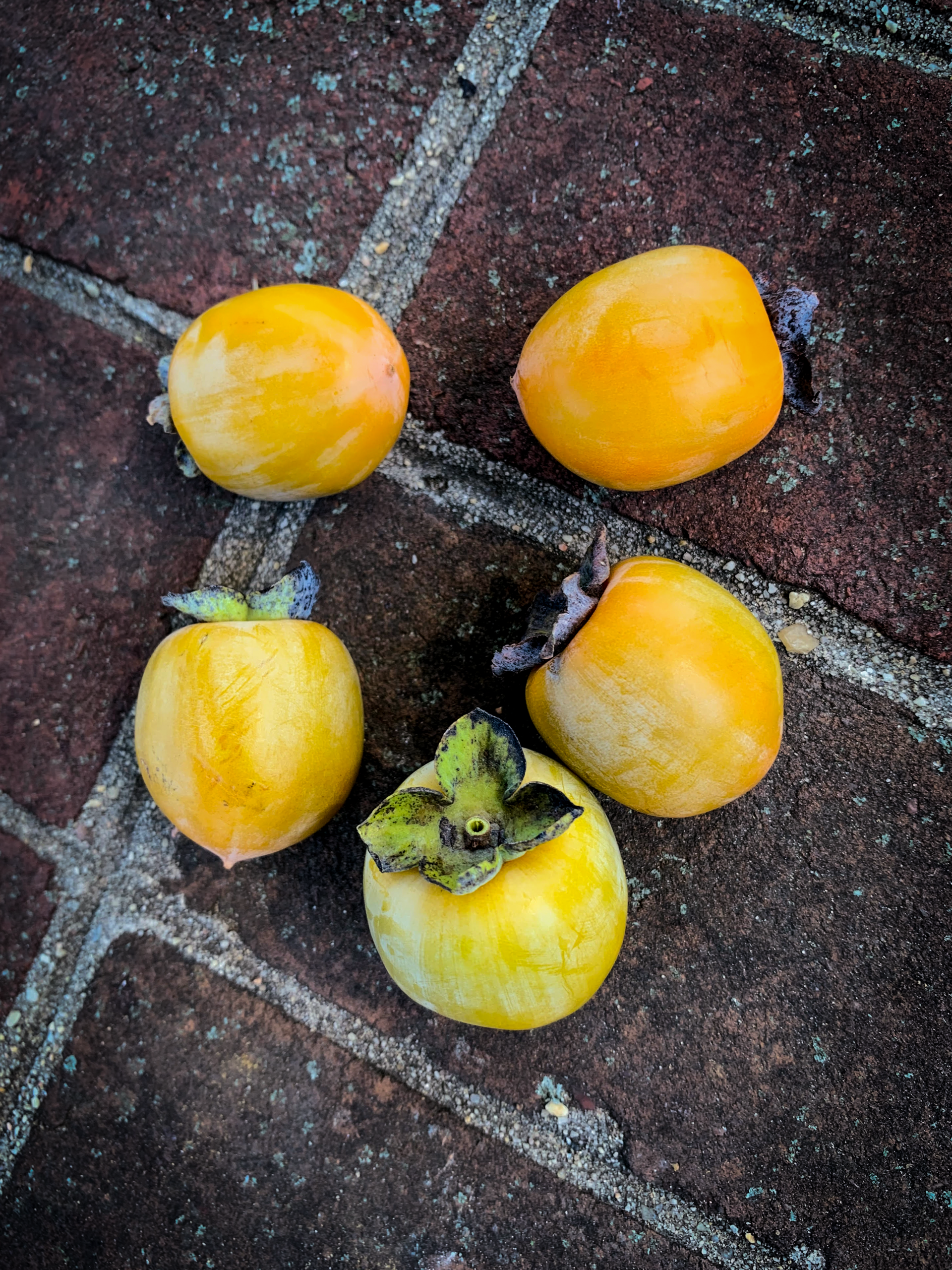
A persimmon that looks ready to eat is not ready to eat. The right fruit for this dish is one that has gone soft enough to sag in the hand, with skin that has turned translucent and wrinkled and a body that has more in common with a water balloon than with a piece of fruit. Anybody who has not seen one at that stage will assume it has spoiled.
Pick one a week earlier, when it is firm and bright orange and looks like something you would put in a lunchbox, and the result is a mouthful of dry fur. That is astringency, it is chemical rather than a matter of taste, and no amount of sugar or baking fixes it. The fruit has to collapse first.
Get that part right and what follows is one of the simplest baked puddings in American regional cooking: pulp, sugar, egg, buttermilk, a little flour, and an hour in the oven. It comes out dense, dark and somewhere between a cake and a custard, and in a handful of southern Indiana counties it is a competitive sport.
- The fruit: collapsed to mush, translucent, wrinkled, no firmness anywhere
- The pulp: two cups for a nine by thirteen dish, which is a lot of fruit
- The batter: thin, pourable, closer to a pancake batter than a cake batter
- The bake: about an hour, and it puffs then sinks, which is correct
- The variables: buttermilk or sweet milk, sorghum or none, and the spice level
- The caution: unripe fruit is not merely unpleasant, and there is a reason to take that seriously
Ripe to the point of collapse, or inedible
Astringency in persimmons comes from soluble tannins that bind to proteins in the mouth, which produces the dry, gripping sensation people describe as furry or chalky. As the fruit ripens, those tannins become insoluble and the sensation disappears entirely, and the change happens fast and late.
The practical test is touch rather than colour. A fruit ready for this is soft everywhere, with no firm spot near the stem, and it will feel like it might burst if squeezed. Colour is a poor guide, since the varieties that matter here go deep orange long before the tannins convert.
Fruit picked early can be ripened on a counter, and it takes a week or more. A paper bag with an apple or banana speeds it up, since the ethylene those release accelerates the process. Freezing whole fruit and thawing it also works and is what many households do with a large haul, and the resulting pulp is slightly wetter.
American persimmon and the Japanese kinds are not the same fruit
Two different species turn up under the same word. The American persimmon is a native tree of the eastern United States, with small fruit about the size of a golf ball, full of large flat seeds, intensely flavoured and traditionally gathered from the ground rather than picked.
The Japanese or Asian persimmon is the one in supermarkets, and it comes in two shapes that behave differently. Hachiya is acorn-shaped, astringent until fully soft, and it is the one this recipe wants. Fuyu is squat and tomato-shaped, non-astringent, and eaten firm like an apple, which makes it useless here: it has neither the flavour concentration nor the pulp consistency.
Recipes from southern Indiana assume the native fruit and produce a darker, more strongly flavoured pudding than the same recipe made with hachiya. Hachiya works and is what most people outside the range will have to use. Fuyu does not, and substituting it is the second most common reason a first attempt disappoints.
The frost story, and what it actually explains
Almost every account of the native fruit repeats that it must be touched by frost before it is edible. Growers and horticulturists generally point out that this is a correlation rather than a cause: the fruit ripens in mid to late autumn, frost arrives around the same time, and the ripening is what removes the astringency.
The tradition is still useful as a calendar. Gathering after the first frosts means gathering fruit that has had the season to ripen and has begun dropping on its own, which is the real signal. The fruit that falls is the fruit that is ready, which is why the traditional harvest is collecting from the ground rather than picking from the branch.
Where the story misleads is in the other direction. Firm, unripe fruit put in a freezer comes out soft, but softness from ice damage is not the same as ripeness, and the tannins have not necessarily converted. Frozen unripe fruit can still be astringent, which is a disappointment discovered too late by a good many people.
Getting the pulp: the mill, the sieve, and the arithmetic
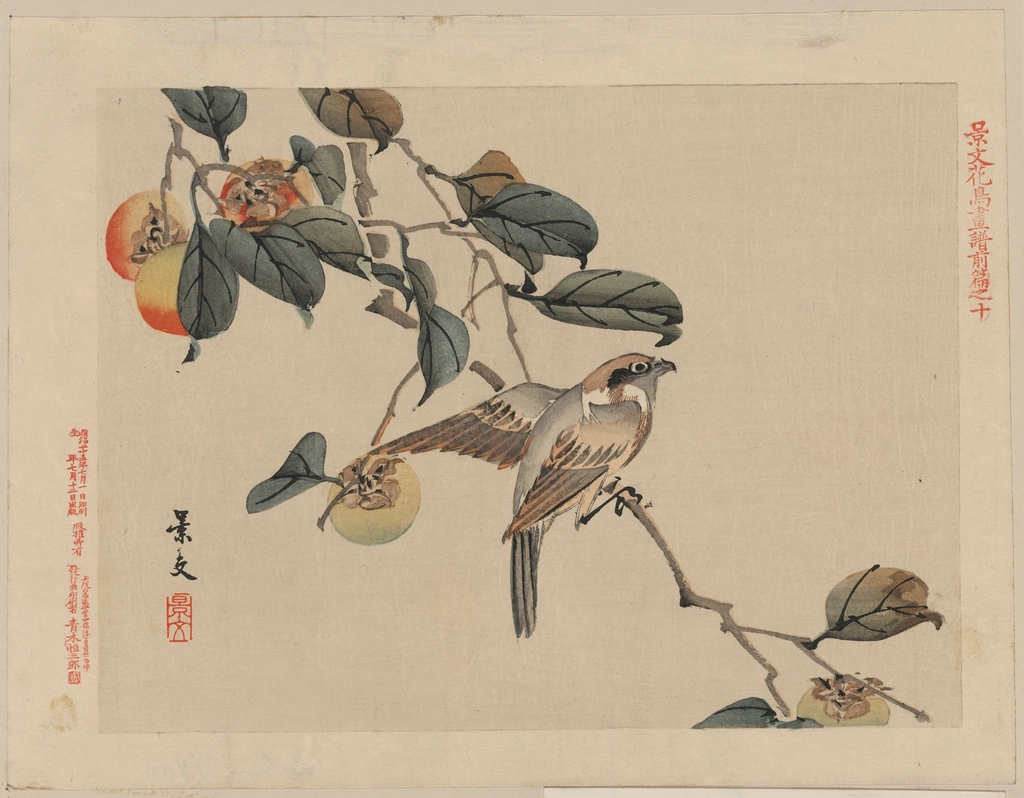
Native fruit is mostly seed by volume, and separating the pulp is the labour in this dish. A food mill with a medium plate is the correct tool: the fruit goes in whole and soft, and the mill holds back seeds and skin while the pulp goes through. A conical sieve with a wooden pestle does the same job more slowly.
The arithmetic is discouraging the first time. A gallon of native fruit yields somewhere in the region of two cups of pulp, which is one pudding. Hachiya is far more generous: three or four large fruits, scooped out with a spoon and pressed through a sieve to catch the fibrous bits, gets to the same two cups.
Do not use a blender or a food processor on native fruit. The blades crack the seeds and release a bitterness that spreads through the whole batch, and there is no removing it afterwards. On hachiya, where the seeds are few or absent, a quick blitz is harmless.
A persimmon pudding recipe for a nine by thirteen
- Heat the oven to 350 degrees and butter a nine by thirteen inch baking dish generously.
- Whisk two cups of persimmon pulp with one and a half cups of sugar until the sugar has dissolved.
- Beat in two eggs, one at a time, then a cup and a half of buttermilk and half a cup of melted butter.
- In a separate bowl, whisk one and a half cups of flour, a teaspoon of baking soda, half a teaspoon of baking powder, half a teaspoon of salt, a teaspoon of cinnamon and a quarter teaspoon of grated nutmeg.
- Fold the dry into the wet just until combined. The batter will be thin and will pour easily, which is correct.
- Pour into the dish. It should come no more than an inch and a half up the sides.
- Bake fifty-five minutes to an hour and ten. It will rise noticeably in the middle around the forty-minute mark.
- It is done when the edges have pulled slightly from the dish, the top is a deep brown, and the centre has begun to sink back.
- Cool it in the dish for at least an hour. It firms considerably as it cools and cutting it hot gives a puddle.
- Serve at room temperature in squares, with lightly whipped unsweetened cream.
The batter is thin, and it is supposed to be
Anyone used to cake batter will assume something has gone wrong. This one pours like heavy cream, and the flour quantity is low relative to the liquid because the pulp itself is doing most of the structural work. Adding flour to thicken it produces a dry, cakey result that misses the point entirely.
The texture it is aiming for is dense and slightly damp, closer to a steamed pudding or a baked custard than to a cake. A properly made square holds its shape on a plate and yields immediately to a fork, and the surface has a distinct chewy edge where it met the dish.
Depth matters as much as the batter. Poured deep it stays wet in the middle and takes twice as long; poured shallow, an inch to an inch and a half, it cooks evenly and develops the browned top and edges that are half of the appeal. Two smaller dishes beat one deep one every time.
The drop in the middle is the sign it is done
This pudding rises like a soufflé around two thirds of the way through the bake, sometimes dramatically, and then falls as it finishes and again as it cools. The fall is expected and is not a fault, and a pudding that stays domed has usually been made with too much flour.
A skewer test is unreliable, since the interior stays moist by design and a clean skewer usually means it is overbaked. Better signals are the edges pulling from the sides of the dish, a top that has gone deep brown rather than golden, and the beginning of the sink in the centre.
Overbaking is the more common error and it produces something dry and crumbly that is still perfectly edible and clearly not what it should be. Pull it at the first signs and let carryover heat and the cooling do the rest.
Buttermilk, sorghum, and the household variations
| Variable | Common versions | What changes |
|---|---|---|
| The dairy | Buttermilk, sweet milk, or cream | Buttermilk with the soda gives more lift and a tang that cuts the sugar |
| The sweetener | All sugar, or part sorghum or molasses | Sorghum darkens it and adds a mineral edge |
| The spice | Cinnamon alone, or with nutmeg, clove, allspice | Heavier spicing pushes it toward a holiday pudding |
| The fat | Butter, or none at all | Butterless versions are leaner and firmer, and common in older recipes |
| The depth | One dish or two | Shallower means more browned edge, which many households prefer |
Everything in that table is contested by somebody. The recipe above uses buttermilk and butter and a moderate hand with spice, which is a middle position rather than a definitive one, and any household in the region would adjust at least two of those lines without hesitation.
The county fair competitions that keep it alive
The dish survives as a living tradition largely because of a small stretch of southern Indiana where the native tree grows thickly and where the pudding is a matter of local identity. The town of Mitchell holds an annual persimmon festival in the autumn with a pudding contest at the centre of it, and entries are judged on texture, colour and flavour by people who have been eating it their whole lives.
Competition versions tend to be darker and denser than everyday ones, and the recipes are guarded in the way that competitive recipes usually are. The consistent points of agreement are that the pulp must be from properly ripe native fruit, that the texture should be smooth rather than fibrous, and that it should not taste primarily of spice.
That last point is worth taking seriously in a home kitchen. The temptation, particularly for anyone approaching this as a variation on a pumpkin dessert, is to load it with cinnamon and clove until the fruit disappears. The fruit is the reason the dish exists, and it has a specific flavour, faintly of dates and apricot, that a heavy hand with spice erases.
Storing the pulp, and how long a pudding keeps
Pulp freezes very well and is how anyone with access to a tree gets through the year. Portion it into two-cup measures, which is one pudding, and it holds a year in a sealed container. A tablespoon of lemon juice per cup keeps the colour from darkening, though the darkening is cosmetic.
The baked pudding keeps three or four days covered in the refrigerator and is arguably better on day two, once it has firmed and the flavours have settled. It also freezes, cut into squares and wrapped, for a couple of months, and comes back with twenty minutes at room temperature.
It is eaten cold or at room temperature far more often than warm, which surprises people who assume any baked pudding is a hot dessert. Warm, it is loose and the flavour is muted; cold, it slices cleanly and the fruit comes forward, which is the same reasoning behind a good many older regional desserts.
Wild fruit, unripe fruit, and one caution worth the space
Unripe persimmon is not simply unpleasant. The soluble tannins can react with stomach acid and other stomach contents to form a hard mass, a condition documented in the medical literature and associated specifically with eating quantities of unripe persimmon. Cases are uncommon and they are real, and the risk rises with quantity, with unripe fruit, and in people who have had previous stomach surgery or who have slowed gastric emptying.
The practical instruction is straightforward and it is the same one this article started with. Use only fruit that has gone completely soft, do not eat quantities of firm astringent persimmon, and if a batch tastes furry, stop rather than continuing on the assumption that baking will fix it. Anyone with a known digestive condition should raise it with a doctor before eating persimmon in quantity.
On foraging, the usual rule applies. The native tree is distinctive and the fruit is unmistakable to anyone who has been shown it once, and identification is a skill best learned in person rather than from a photograph. Fruit gathered from the ground should be picked over for damage and washed, and trees on roadsides or field edges may have been sprayed. Anyone building a habit of collecting wild food should learn it locally, which is the same advice that applies to any seasonal gathering.
Frequently Asked Questions
Can I use fuyu persimmons?
Not for this. Fuyu is non-astringent and eaten firm, and its flesh is crisp and comparatively mild, so it neither breaks down into pulp nor carries the flavour the pudding depends on. Hachiya, ripened until it collapses, is the supermarket fruit to look for.
How do I know when a hachiya is ready?
When it feels like it will burst. Soft everywhere including at the stem, skin gone slightly translucent and often wrinkled, and heavy for its size. If there is any firmness left, give it another two or three days on the counter.
Why did mine come out rubbery?
Usually too much flour, sometimes overbaking, occasionally both. The batter should pour thinly. If it mounded in the bowl before it went in the dish, there was too much flour in it, and the result will be firm rather than custardy.
Is this the same as a pumpkin pudding?
No, though the spices overlap and the texture is in the same family. The fruit is more acidic and more strongly flavoured than pumpkin, the batter contains flour and a leavener, and the result slices rather than needing a crust to hold it.
Can it be made without eggs or dairy?
Partly. Older recipes without butter exist and work well. Replacing the eggs is harder, since they are doing the setting, and versions using a starch slurry come out noticeably denser. Buttermilk can be replaced with a plant milk soured with a spoonful of vinegar, which works well enough.
Buy or gather three times as much fruit as seems necessary and leave it on the counter until somebody in the house asks whether it has gone off. That is the point at which it is ready, and it is the only part of this dish that requires any patience at all.