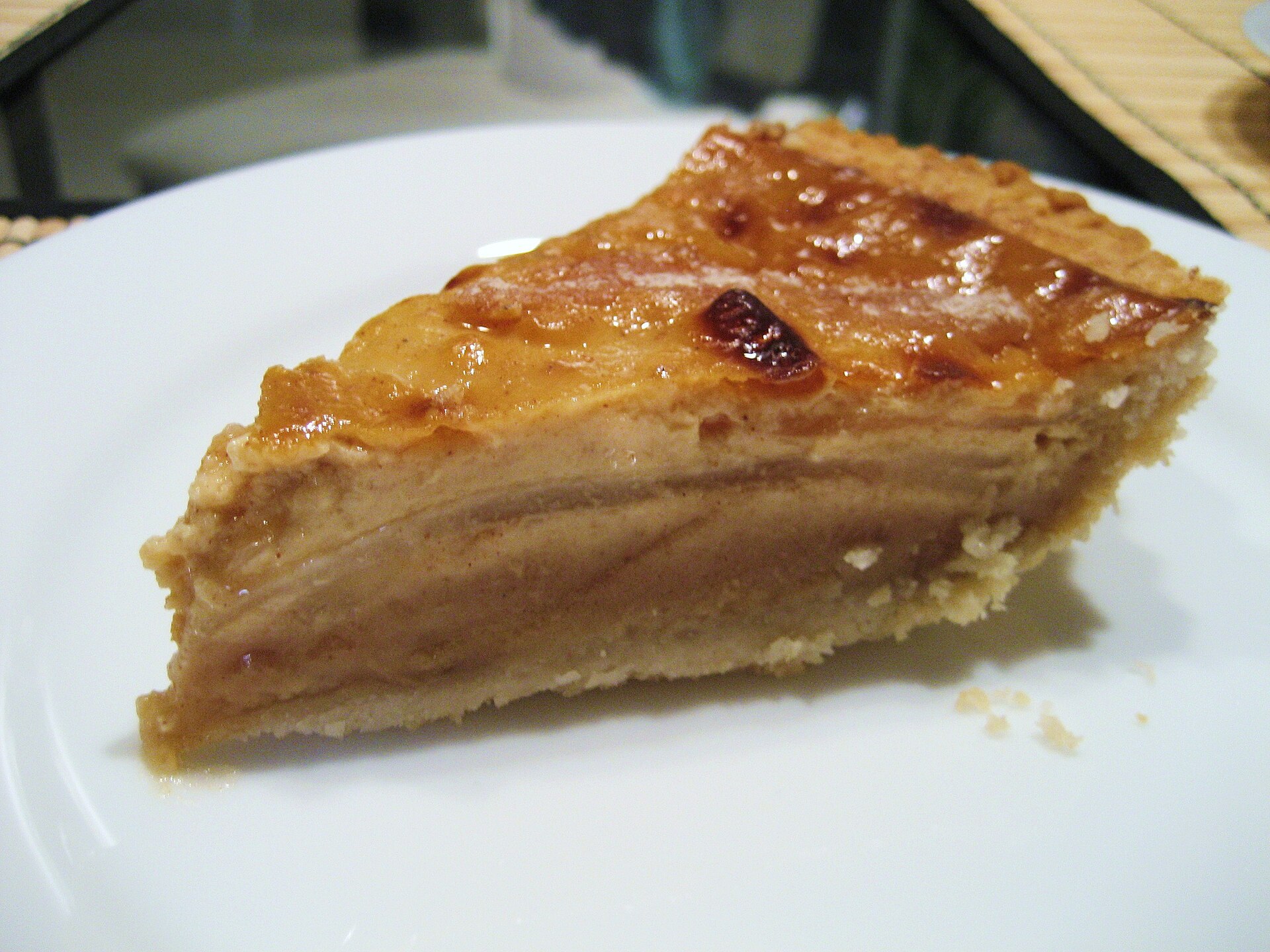
Two pies came out of my grandmother’s oven on the same afternoon and I could not tell them apart. Both were pale gold, both had a thin crackled skin across the top, both sat in a plain crust with no lattice and no decoration. One was chess and one was buttermilk, and the only way to know was to eat a bite of each.
They are cousins rather than twins. Both are custard pies from a kitchen with no fresh fruit in it, built from what was always in the house: eggs, sugar, butter, and one liquid. The difference is that liquid, plus a tablespoon of cornmeal that changes the texture of one of them more than its quantity suggests.
Below are the two of them measured on the same points, the recipes written out for the same nine-inch shell, and the part of the story about the name that nobody has ever been able to prove.
- Chess: eggs, sugar, butter, a tablespoon of cornmeal, a splash of vinegar, very little liquid
- Buttermilk: eggs, sugar, butter, flour, and a full cup of buttermilk
- Texture: chess is dense and slightly grainy, buttermilk is lighter and closer to a set custard
- Both bake: around 350 degrees for 45 to 55 minutes, with the centre still moving
- The sugar: a cup and a half in either one, which is not a misprint
- After baking: both are egg pies and both belong in the refrigerator within two hours
Two pies that look identical coming out of the oven
The family they belong to is the desperation pie, which is a real category and not a slight. These are the pies you make in February when there is no fruit, no nuts worth using, and nothing in the pantry except staples. Sugar pie, vinegar pie, oatmeal pie, and shoofly all belong to the same shelf.
What they share structurally is a filling that is mostly sugar and egg, thickened by protein rather than by starch, and a crust that has to be sturdy enough to hold a liquid batter through a long bake. The custard sets, the top browns, and the whole thing goes from a pourable batter to something you can cut in the same forty-five minutes.
Both are Southern in the sense that they turn up constantly in Southern cookbooks and community collections, and both have relatives in English baking that go back a great deal further. Neither belongs to one state, whatever any state says about it. Pies like these are the backbone of the recipes families keep on cards rather than in books.
Chess pie vs buttermilk pie, on one table
The differences look small written down and they are obvious on a fork. Amounts below are for a single nine-inch pie.
| Chess pie | Buttermilk pie | |
|---|---|---|
| Liquid | 2 to 4 tablespoons of milk or evaporated milk | 1 cup of buttermilk |
| Thickener | 1 tablespoon cornmeal, sometimes plus 1 flour | 2 to 3 tablespoons flour |
| Acid | 1 tablespoon vinegar, or lemon juice | The buttermilk itself |
| Eggs | 4, whole | 3, whole |
| Texture | Dense, chewy edge, faint grain | Softer, wobbles, closer to flan |
| Top | Thin crackled sugar crust, reliably | Browned but usually smooth |
| Sweetness | Very sweet, with the vinegar cutting it | Sweet with a tang underneath |
Notice how little liquid goes into a chess pie. That is the number people get wrong when they try to build one from memory, and a chess filling with a cup of milk in it is a buttermilk pie that will never set properly because it has no acid and not enough flour.
Cornmeal is the tell, and a tablespoon is enough
One tablespoon of plain yellow or white cornmeal in a whole pie sounds like nothing. It is the single ingredient that makes a chess pie identifiable. During the bake the meal absorbs moisture, swells slightly, and settles into the bottom half of the filling, giving a faint grain that you notice against your teeth rather than see.
Two tablespoons is better if you want that texture to be unmistakable, and three is too much: the pie starts reading as gritty rather than as textured, and the bottom develops a distinct layer. Stone-ground meal is coarser and shows up more than the fine degerminated kind in a supermarket box.
Some old recipes use flour instead and call the result a chess pie anyway. It is a fine pie and it is a slightly different one, with a smoother, more uniform set. If you want to know what the fuss is about, bake the two versions a week apart and pay attention to the last third of each bite, which is where the meal announces itself.
What the buttermilk is actually doing
Three things, and only one of them is flavour. The sourness is the obvious contribution and it is what keeps a cup and a half of sugar from being unbearable. Real cultured buttermilk has a clean lactic sharpness that reads on the finish rather than the front.
The acid also affects the set. Acid encourages egg proteins to coagulate at a slightly lower temperature, which is part of why a buttermilk pie firms up reliably despite carrying far more liquid than a chess pie does. And where baking soda is in the recipe, the acid is what activates it, which produces the very slight lift some versions have.
Do not substitute regular milk with a spoonful of vinegar stirred in. That trick works acceptably in a quick bread where the acid only needs to hit the soda, and it fails here because the pie needs the body and the flavour of the real thing. Whole milk plus lemon juice makes a thin, oddly flat pie. Full-fat cultured buttermilk from the refrigerated case is worth the trip.
The crackled top, and why one gets it more than the other
The thin, shattery skin on a chess pie is not a crust. It forms because sugar and a small amount of egg protein rise to the surface during the bake, dry out, and set into a fragile layer, in something close to the way the top of a brownie behaves.
Two things encourage it. Beating the eggs and sugar together for a full minute before anything else goes in incorporates the air the layer depends on, and a high proportion of sugar to liquid gives it the material to work with. That is why a chess pie, with three tablespoons of liquid, gets a better top than a buttermilk pie with a full cup.
If a chess pie comes out with no crackle, the usual reason is that the eggs went in cold and were barely stirred. Bring them to room temperature and beat properly, which is thirty seconds of extra work and the same principle behind most of what makes a baked surface behave.
Doneness: the jiggle, and a number if you want one
Both pies are done before they look done, and this is where most home versions fail. A custard pie left in the oven until the centre is firm comes out of the oven overcooked, because carryover heat keeps setting it for another ten minutes on the counter. Overcooked egg custard weeps, cracks, and turns slightly rubbery.
The test is the centre. Nudge the pan and watch a circle roughly two inches across at the middle move as one piece, like set gelatin, while everything around it stays still. If a wave ripples out to the edge it needs more time; if nothing moves at all it has gone too far.
For anyone who prefers a number, an instant-read thermometer in the centre of a custard pie should land somewhere near 175 degrees Fahrenheit at the end of the bake, and it will climb a few degrees while resting. That is the same range at which egg custards generally set, and it puts the filling well past the temperature at which eggs are considered cooked.
The crust, and the soggy bottom problem
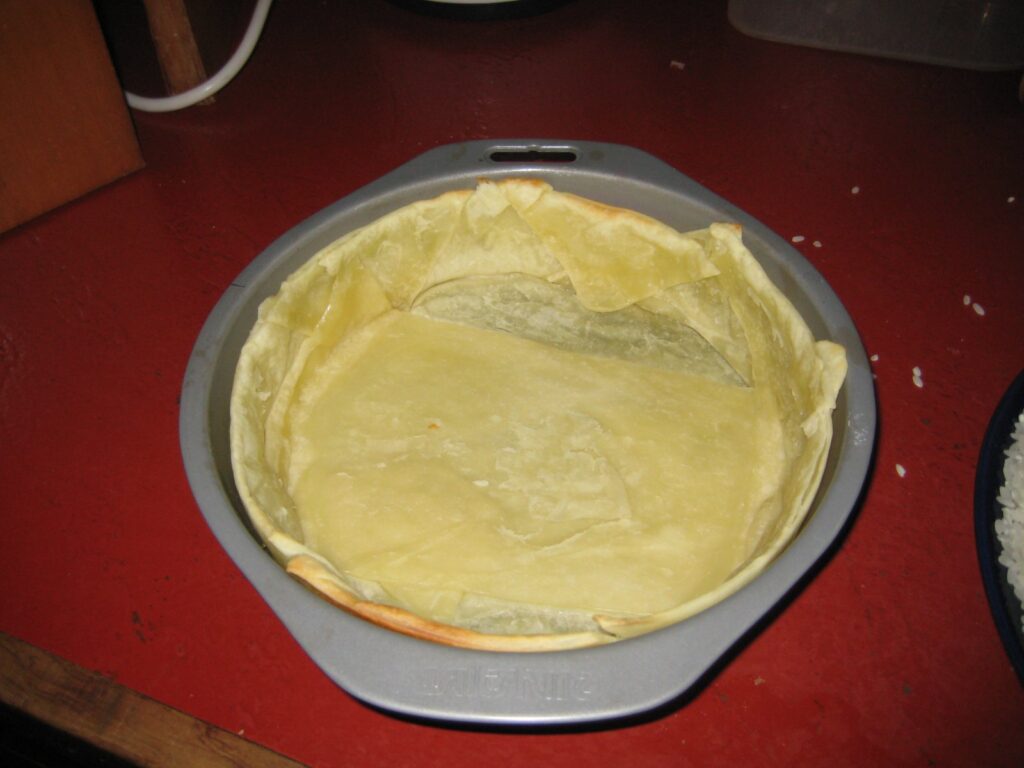
A liquid filling poured into a raw crust and baked for nearly an hour is a recipe for a pale, damp base. Blind baking is the fix and it is worth the twenty minutes. Line the chilled shell with parchment, fill it with weights, bake at 400 for fifteen minutes, remove the weights, and give it another five to seven until the bottom looks dry and set.
Brush the hot shell with a little beaten egg white and put it back for two minutes. That seals the surface and buys real protection against the filling soaking in, and it costs almost nothing.
Keep the crust thicker than you would for a fruit pie and build a proper raised edge, because both fillings come nearly to the rim. An all-butter crust is best on flavour, though a crust with some shortening in it holds its shape better through a long bake, and either one beats a shell that has been rolled too thin.
Where the name came from, and why nobody has settled it
There are four explanations in circulation and no documentary evidence for any of them. The first says it comes from pie chest or pie safe, the ventilated cupboard where a pie sat out because sugar and acid preserved it. The second says a cook asked what it was answered “jes’ pie”, and the phrase stuck. The third traces it to English cheese pies, curd tarts that shared the name without the cheese. The fourth points at the word chess as a corruption of chest in regional speech.
All four are repeated confidently, usually in the same paragraph, and none has a source you can follow back. What is documented is that recipes matching the formula appear in nineteenth-century American cookbooks and that similar egg and sugar tarts are older than that in England.
The honest version is that the pie is well recorded and the word is not. Anyone presenting one of the four stories as settled is repeating a guess, which is a common condition for the names of very old, very ordinary foods. A search for the history of chess pie turns up the same four theories in the same unresolved state.
The two pies, written out for a nine-inch shell
Chess pie: beat 4 room-temperature eggs with 1 and a half cups of sugar for a full minute. Add half a cup of melted butter, 1 tablespoon of cornmeal, 1 tablespoon of flour, 1 tablespoon of white vinegar, 3 tablespoons of milk, a teaspoon of vanilla and a quarter teaspoon of salt. Pour into a blind-baked shell and bake at 350 for 45 to 50 minutes.
Buttermilk pie: beat 3 eggs with 1 and a half cups of sugar until pale. Add half a cup of melted butter, 3 tablespoons of flour, a cup of full-fat buttermilk, a teaspoon of vanilla, the zest of a lemon and a quarter teaspoon of salt. Pour into a blind-baked shell and bake at 350 for 50 to 55 minutes, tenting the edge with foil if the crust darkens early.
Both want the oven rack in the lower third, which browns the base and slows the top. Both are better the day after they are baked, once the filling has fully set and the flavours have settled, which makes them useful for a table you are cooking ahead for.
The variations worth making, and one that is not
Lemon chess is the most common variation and the best of them: the juice and zest of two lemons in place of the vinegar and milk, which turns a very sweet pie into a balanced one. Chocolate chess adds a quarter cup of cocoa and drops the cornmeal, and it makes something closer to a brownie in a crust.
Brown sugar chess, sometimes sold as an old-fashioned or a butterscotch version, swaps half the white sugar for dark brown and gains a molasses note. Coconut buttermilk pie, with a cup of shredded coconut folded in, is common through the Gulf states and holds together well.
The one that does not work is the reduced-sugar version. These are pies where sugar is a structural ingredient, not just a sweetener: cutting it by a third produces a filling that sets poorly, browns badly, and never develops a top. If the sweetness is the objection, cut the slice in half and serve it with something sharp, which is what most people who eat a lot of very rich desserts end up doing anyway.
Cooling, refrigerating, and the rule custard pies live under
Cool either pie on a rack for at least two hours before cutting. Cutting hot gives you a slice that runs, and the filling continues firming the entire time it cools. A pie cut at the four-hour mark holds a clean edge.
Then refrigerate it. This is the point where the pie safe story stops being useful advice: a pie whose filling is largely egg and milk is not shelf stable, whatever it did on a nineteenth-century porch. Public food safety guidance treats egg custard pies, pumpkin pie, and anything with a milk-and-egg filling the same way, which means covering and refrigerating within two hours of the bake and eating it within three or four days.
Fruit pies and pecan pies sit in a different category and can be left on the counter for a day, which is where the confusion comes from. Chess and buttermilk are not in that category. Serve them cold or let a slice sit out for twenty minutes to take the chill off, and put the rest of the pie back.
Frequently Asked Questions
Can I make either one without a thermometer?
Yes, and most people always have. The jiggle test is reliable once you have seen it work twice: a two-inch circle at the centre moving as a set piece means take it out. The thermometer is a way to confirm what the nudge is already telling you.
Why did my pie crack across the top?
It was in the oven too long, or the oven ran hot. Cracking is a sign the egg proteins tightened past the point where they hold water, which also explains the small puddle that usually appears with it. Pull it earlier next time and check the oven with a separate thermometer.
Is powdered buttermilk acceptable?
It works better than milk with vinegar and worse than the real thing. Mix it as directed and expect a milder tang and a slightly softer set. In a pie where the buttermilk is a full cup of the filling, the difference is noticeable to anyone paying attention.
Which one should I make for people who do not like very sweet desserts?
Buttermilk, with the lemon zest, and serve it cold. It carries the same amount of sugar but the acid and the extra liquid spread it further, and a cold slice reads considerably less sweet than a room-temperature one.
Can either be made ahead and frozen?
Both freeze acceptably for about a month if wrapped well and thawed overnight in the refrigerator. The texture loosens slightly and the crackled top on a chess pie softens. Baking two days ahead and refrigerating is the better plan when the schedule allows it.
Bake them on the same afternoon at least once. The recipes are close enough that the comparison is quick and the difference on the fork is large enough to settle an argument that has been running in a lot of families for a very long time.