Two bags sat on the counter, both labeled wild rice, both from the same grocery aisle, and one cost nearly four times the other. I cooked them the same way, in the same amount of water, for the same amount of time, expecting a minor difference in flavor. What came out of the two pots was closer to two different grains than two grades of the same one.
The cheaper bag was cultivated wild rice, grown in flooded paddies in California or the upper Midwest and processed by machine. The expensive one was hand-harvested from a natural lake bed, parched over wood fire the way it has been done in the Great Lakes region for generations, and sold under its own name, manoomin, by the people who harvested it. Both are technically Zizania, the same genus of aquatic grass. What they are not is interchangeable. It is the same kind of side-by-side test used in our comparison of farro, freekeh, and barley cook times.
Below is the case, worked through side by side: the two rices cooked the same way, what came out different, and which dishes actually show the gap and which ones bury it.
- Same genus, different rice: hand-parched lake rice and cultivated paddy rice both come from Zizania
- Cook time: lake rice runs 35 to 45 minutes, paddy rice 45 to 55
- Texture: lake rice stays chewier and more varied grain to grain, paddy rice cooks more uniformly
- Price: lake rice runs several times the cost of paddy rice per pound
- Storage: cooked rice of either kind needs the refrigerator within two hours, not the counter
- Where the gap shows least: a heavily seasoned stuffing or soup where texture matters less than bulk
wild rice cooking starts with knowing which rice you bought
Wild rice cooking goes wrong more often from a mismatch between the rice and the method than from anything happening at the stove. A bag labeled simply wild rice, with no mention of origin or harvest method, is almost certainly cultivated paddy rice, since that is the overwhelming majority of what reaches a standard grocery shelf. Hand-harvested lake rice is usually labeled explicitly, often naming the lake, the harvesting family, or the tribal nation involved in producing it.
Reading the bag before cooking matters because the two rices do not behave the same way in a pot. A recipe written for one, followed exactly with the other, tends to either undercook or overcook the grain, since the water absorption and swelling time differ enough to matter over a forty-minute simmer.
The confusion is not helped by the fact that most cookbooks and recipe cards simply say wild rice without specifying which kind, since for decades the cultivated version was the only one most cooks outside the Great Lakes region had any access to. It is only in the last couple of decades that hand-harvested rice has become easier to buy directly online or through specialty grocers.
Manoomin: hand-parched, hand-harvested, and why the price reflects it

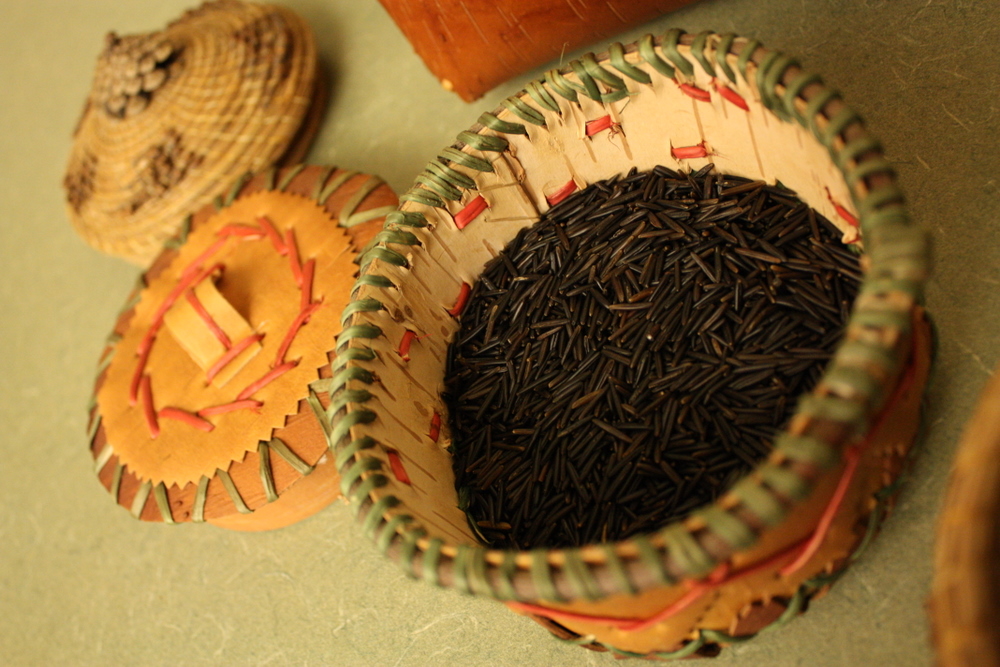
Manoomin, the Ojibwe word for the plant, grows wild in the shallow lakes of Minnesota, Wisconsin, and parts of Canada, and it has been harvested there by Indigenous communities for centuries using methods that have changed very little. Two people work from a canoe, one poling through the rice bed and the other bending stalks over the boat with wooden sticks to knock ripe grains loose, leaving unripe grains on the stalk to be collected later in the season.
After harvest the grain is parched, traditionally over a wood fire in a large kettle, which dries it, loosens the hull, and develops the deep, smoky, almost roasted character that sets hand-processed lake rice apart. The hulls are then removed by treading or a mechanical finisher, and the grain is winnowed by hand or with a fan. Every step of that process is slower and more labor-intensive than a mechanized paddy operation, which is the entire reason for the price gap, not a marketing premium attached to the word wild.
The harvest itself is also limited to a narrow window each year, typically a few weeks in late summer or early fall depending on the lake, and a poor season, whether from weather, water levels, or wildlife pressure on the beds, can mean less rice reaches the market at any price. That scarcity is baked into the cost in a way that a year-round cultivated crop never has to account for.
Paddy-grown wild rice: cultivated, machine-parched, and cheaper for a reason
Cultivated wild rice is grown in flooded paddies, often in California, Minnesota, or parts of Canada, using selectively bred strains of the same Zizania plant chosen for uniform ripening, since a paddy is harvested all at once by combine rather than gathered gradually by hand over several passes through a natural bed.
Machine parching dries the grain more uniformly and at a more controlled temperature than a wood fire kettle, which produces a more consistent product batch to batch but a milder, less smoky flavor. This is the rice found in the bulk bins of most supermarkets and in the mixed rice blends sold in boxes, and it is a perfectly good grain in its own right. It is simply a different grain from what a hand-harvested bag delivers, at a fraction of the cost and the labor.
California is now the largest producer of cultivated wild rice in the country, having built an industry around paddies converted from rice and other row crops starting in the 1970s. Minnesota also grows a significant cultivated crop alongside its natural lake harvest, which is part of why a bag simply labeled Minnesota wild rice does not by itself guarantee it was hand-harvested from a lake rather than grown in a paddy.
The side-by-side test: same water, same time, two different pots
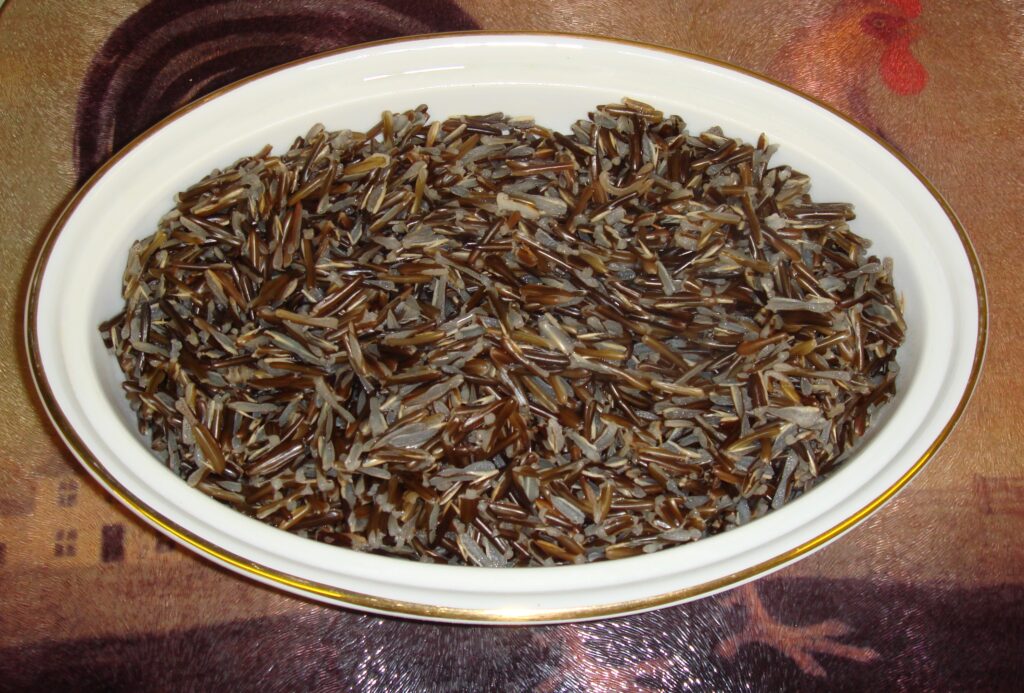
A cup of each rice went into its own pot with three cups of water, a pinch of salt, brought to a boil and then simmered covered. The paddy rice, checked at forty minutes, had cooked evenly through, with grains splitting open along their length in the classic wild rice way, tender with a slight chew remaining.
The lake rice at the same forty-minute mark was noticeably less done, with some grains still firm at the center while others nearby had already split and softened. It needed another ten to fifteen minutes to reach a comparable doneness, and even then the grain-to-grain variation stayed more pronounced than in the paddy batch, which is a real feature of hand-harvested rice rather than a flaw: it was not sorted to the same uniformity a mechanized operation achieves.
Cook time, texture, and the grain that never fully opens
| Hand-parched lake rice | Cultivated paddy rice | |
|---|---|---|
| Cook time | 35 to 45 minutes, uneven | 45 to 55 minutes, more even |
| Texture | Chewy, varied grain to grain | Softer, more uniform |
| Flavor | Smoky, roasted, more complex | Milder, grassier |
| Color | Darker, more variation | More uniform dark brown |
| Price per pound | Several times higher | Lower, widely available |
A small number of grains in a batch of hand-harvested rice never fully split open even after forty-five minutes, staying firm at the core. This is expected rather than a sign of undercooking the whole pot, and it is one more reason lake rice is often finished a little longer than a recipe suggests, checking grain by grain rather than trusting a single timer.
Price per pound, and what you’re actually paying for
The price difference reflects genuine labor rather than branding. Hand-harvesting from a canoe, one pass at a time, over a limited ripening window each fall, produces far less rice per hour of work than a combine moving through a paddy, and wood-fire parching in small batches cannot match the throughput of an industrial dryer.
Buying hand-harvested rice from a known source, particularly one connected to the Indigenous communities for whom manoomin carries cultural and treaty significance well beyond its use as a grain, supports that labor directly. Buying cultivated paddy rice is not a lesser choice for a household on a budget; it is simply a different product serving a different purpose, and most dishes that call for wild rice as one ingredient among several are built with that cheaper, more available grain in mind.
Three dishes that show the difference
A simple wild rice pilaf, with little more than butter, toasted almonds, and herbs, puts the grain itself front and center, and this is where the gap between the two is most obvious. The same principle, that a plain preparation shows the most about an ingredient, is what our piece on Carolina Gold rice in a shrimp perloo makes about a different variety entirely. The smokiness and grain variation of hand-harvested rice reads clearly against a plain background, while paddy rice in the same dish tastes pleasant but noticeably flatter.
A wild rice salad, served at room temperature with a vinaigrette, is the second dish where the chewier texture of lake rice holds up better over time than the softer paddy grain, which can turn mushy as it sits dressed for an hour. A simple side of wild rice tossed only with butter and salt is the third, precisely because there is nowhere for either rice to hide.
The one dish that hides it completely
A heavily seasoned wild rice and mushroom soup, built on a rich stock, sauteed mushrooms, and a good amount of black pepper and thyme, buries the difference almost entirely. The rice is one texture among several, the smoky note from hand-harvested grain gets lost in the mushroom and stock flavors, and a taster blindfolded would struggle to say which pot used which rice.
This is not a criticism of the soup, only a useful fact for anyone deciding where to spend the extra money. A dish that showcases the grain on its own is where a hand-harvested bag earns its price; a dish that folds the rice into a wall of other flavors is where the cheaper cultivated version does the job just as well.
A wild rice and turkey stuffing, made with plenty of celery, sage, and stock and baked until the top crisps, is a fourth example of the same principle, common enough on a Thanksgiving table that a great many people have eaten cultivated wild rice for years without registering that a hand-harvested version even exists.
Buying it: labels, and the sovereignty question worth knowing
A label naming a specific lake, a harvesting family, or a tribal nation is the clearest sign of hand-harvested rice, and buying directly from Native-owned businesses or cooperatives is the most reliable way to be sure the premium price is actually reaching the people doing the harvesting. A label that says only wild rice with no further detail, sold in a large plastic tub at a standard grocery chain, is almost certainly the cultivated paddy version regardless of price. The same close reading of a label is worth applying to rice generally, a habit covered in our notes on cooking rice properly.
Wild rice harvesting rights are a matter of ongoing legal and cultural significance for Ojibwe and other Great Lakes nations, tied to treaty rights over specific waters, and it is worth knowing that context exists even for a shopper who only wants a good bag of rice for dinner.
Frequently Asked Questions
Can the two rices be mixed in the same pot?
They can, though the uneven cook times mean one will likely be slightly over or under done by the time the other finishes. Cooking them separately and combining afterward gives more control over the final texture of each.
Why does my wild rice stay hard even after an hour of simmering?
Old rice that has dried out further in storage, or a pot with too little water relative to the rice, are the two most common causes. Add more hot water rather than letting the pot run dry, and give hand-harvested rice the benefit of extra time before assuming something has gone wrong.
Is wild rice actually a type of rice?
No. It is the seed of an aquatic grass in the genus Zizania, unrelated botanically to Oryza, the genus that includes white and brown rice, despite sharing a name and a similar role on the plate.
How long does cooked wild rice keep in the refrigerator?
About four to five days, provided it is cooled and refrigerated within two hours of cooking rather than left to cool slowly at room temperature, which applies to wild rice the same way it applies to any cooked grain.
Does wild rice freeze well?
Yes, both kinds freeze acceptably for a couple of months in a sealed bag, and reheating with a splash of water on the stove or in a covered dish in the oven restores most of the original texture.
Buy a small bag of each at least once and cook them side by side the way this test did. The difference is loud enough on the first bite that no description of it does quite as much work as five minutes with two pots on the stove.