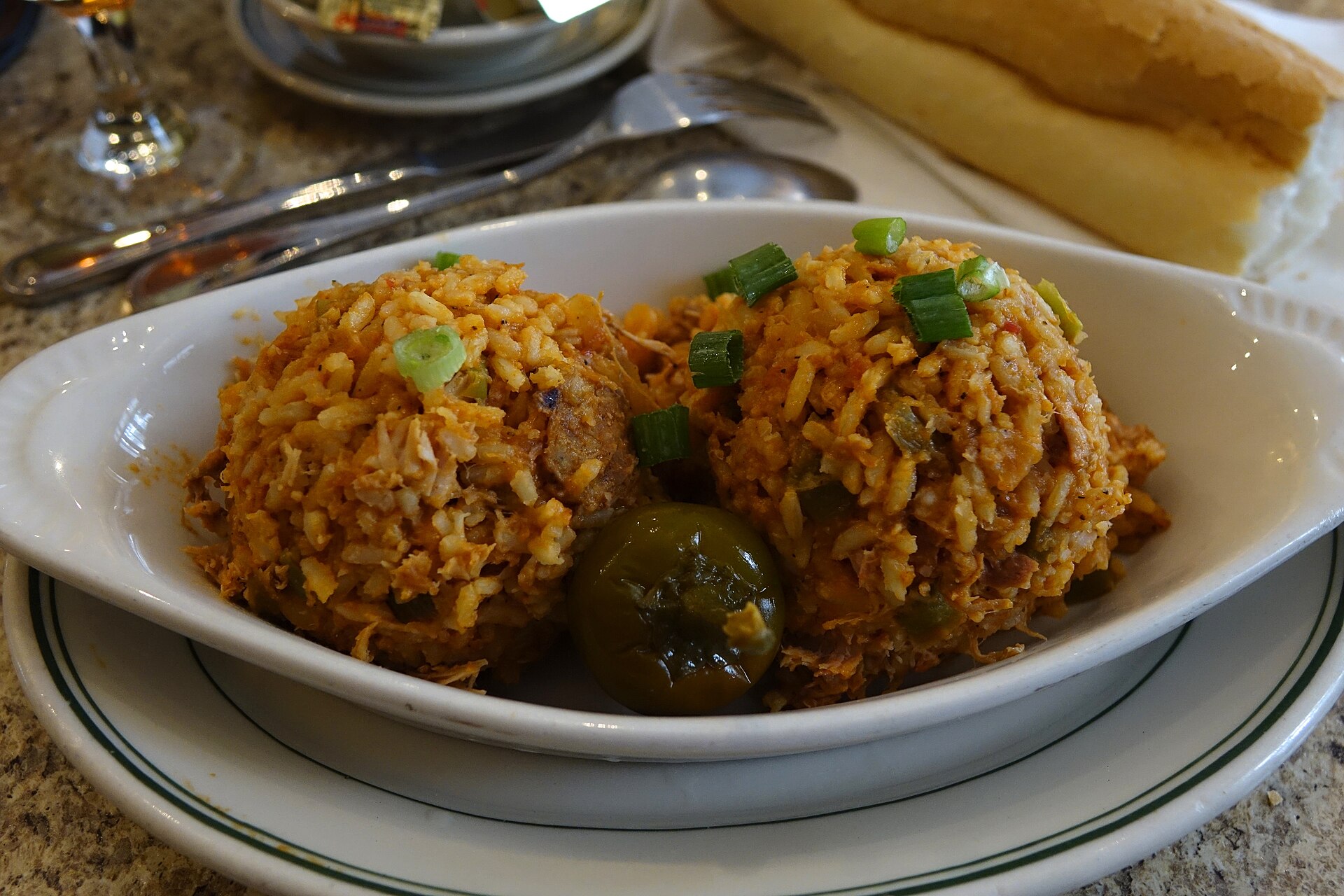
Ask three people between Georgetown and Savannah what separates a perloo from a jambalaya and you will get three answers, two of them delivered with some heat. The spellings alone run to perlo, purloo, pilau, and pilaw, and which one a family uses tends to depend on which county it came from rather than on anything you could look up.
Underneath the argument there is a real distinction, and it is a technical one. A perloo is rice cooked in a measured quantity of seasoned stock, absorbed under a lid that does not come off, with the grains staying separate. Everything the dish tastes of has to be dissolved in that liquid before the lid goes down, because after that point nothing is added and nothing is stirred.
Which is why the shells matter more than anything else in the pot. Below: the lines the coast draws between the three dishes, what Carolina Gold does that supermarket long grain does not, a twenty-minute shrimp stock, and a scale-up that holds together for twelve people on a long weekend.
- Serves: six, from two pounds of shell-on shrimp
- Time: 70 minutes, of which 30 is unattended
- The ratio: 1 cup Carolina Gold to 1 1/2 cups stock; 1 to 1 3/4 for commodity long grain
- The rule: lid on at the boil, no stirring, no lifting, ten minutes of rest off the heat
- The shrimp: raw, added off the heat, cooked by residual steam
- Scales to: twelve, in a wide 8-quart pot, with less liquid than doubling suggests
Where the line falls between perloo, pilau, and jambalaya
The name travels the same road as pilaf, pilav, and pulao, which is a road rice itself traveled. Commercial rice growing in the Carolinas ran from the late seventeenth century into the early twentieth, and it was built on the agricultural knowledge and the forced labor of enslaved West Africans from rice-growing regions. The dish and the word both arrive through that history, and it is worth saying plainly rather than leaving it as background.
| Perloo | Chicken bog | Jambalaya | |
|---|---|---|---|
| Where | Coastal South Carolina and Georgia | The Pee Dee, inland | Louisiana |
| Liquid | Measured, fully absorbed | Deliberately generous, loose | Measured, absorbed |
| Aromatics | Onion and celery, often nothing else | Onion, sometimes just that | Onion, celery, bell pepper |
| Tomato | Usually absent | Absent | In the Creole version, yes |
| Proteins | Usually one | Chicken and sausage | Commonly two or three |
| Texture | Separate grains | Wet, spoonable | Separate grains, browner |
These are working lines rather than laws, and plenty of cooks cross them on purpose. The most useful single test is the liquid: a perloo is dry enough to fork, a bog is wet enough to need a spoon, and a Cajun jambalaya gets its color from meat browned hard in the pot before the rice goes in rather than from tomato.
Carolina Gold, and what it does that commodity long grain does not

Carolina Gold is the historic long-grain variety that carried the Lowcountry rice trade, named for the color of the ripe hull. It went commercially extinct in the early twentieth century, then came back from a small holding of seed in the 1980s through the work of a South Carolina physician, and it is grown again now in modest quantities and sold by mail.
Two things make it behave differently in this pot. It drinks less liquid than modern commodity long grain, so the standard two-to-one ratio floods it. And it will go either way on texture depending entirely on how you handle it: left alone it cooks up separate and dry, and stirred it releases starch and turns creamy. Nobody making a perloo wants the creamy version, which is the whole reason the spoon stays out of the pot.
If you cannot get it, use a good long-grain white rice and move the ratio to one and three-quarter cups of stock per cup of rice. Do not use basmati, whose aroma pulls the dish somewhere else entirely, and do not use converted rice, which will not absorb the stock in the same way. The mechanics of absorption and rest are the same as in any covered pot, and we went through them in detail in what actually happens under the lid.
The stock is the shells, and it takes twenty minutes
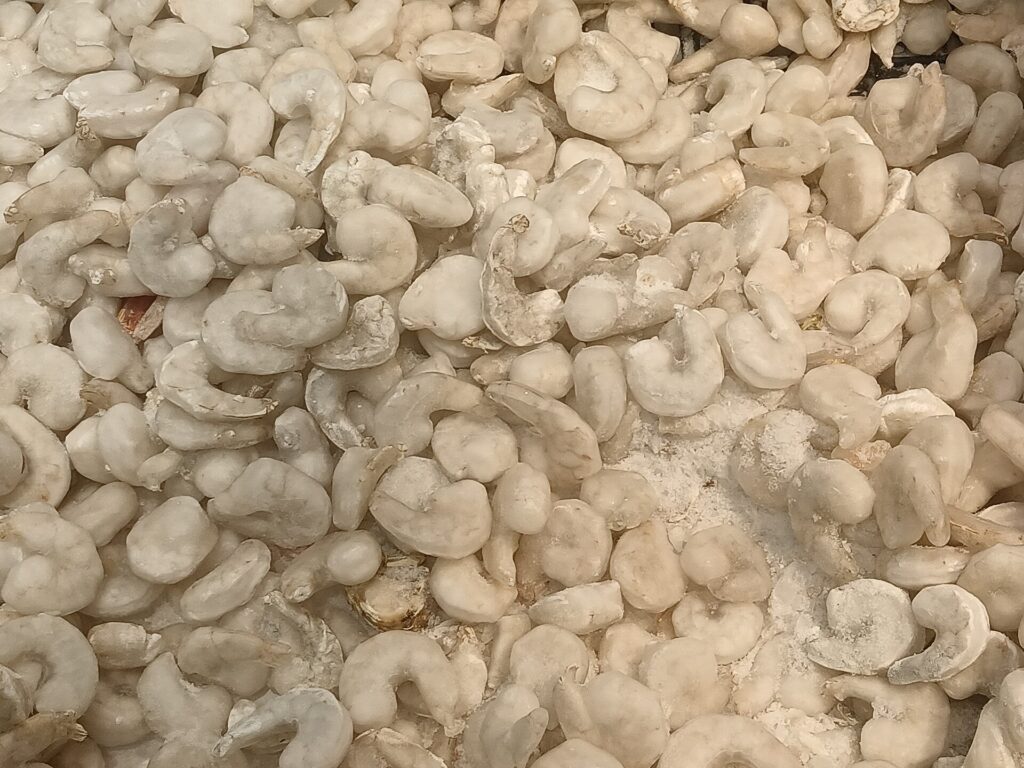
Buy shell-on shrimp, head-on if the counter has them. Two pounds shell-on yields roughly a pound and a quarter peeled, which is the right amount for six people over rice. The shells and heads are the entire reason this dish tastes like shrimp rather than like rice with shrimp on it.
Peel the shrimp and refrigerate them. Put the shells and heads in a pot with an onion half, a celery top, a bay leaf, a few black peppercorns, and six cups of cold water. Bring it to a bare simmer and hold it there for twenty minutes, never at a rolling boil, which turns the stock cloudy and drags a faint bitterness out of the shells. Strain it, pressing hard on the solids, and you should have between four and five cups.
One optional step earns its two minutes: fry the heads and shells in a spoonful of fat until they turn bright orange and smell toasted, then add the water. The pigment and the fat in the heads carry a lot of flavor, and the resulting stock is deeper and faintly orange. Use three cups for the perloo and freeze what is left.
The ratio, and why the lid stays on
Measure the liquid. This is not a pot you top up by eye, because there is no opportunity to correct once it is covered, and a quarter cup either way is the difference between separate grains and a wet bed.
Carolina Gold runs at one and a half cups of stock per cup of rice. Standard long grain runs at one and three-quarters. Bring it to a full rolling boil uncovered, then drop to the lowest setting the burner offers, cover, and leave it for seventeen minutes. If the lid rattles or steam escapes at the rim, lay a sheet of foil under it, because escaping steam is liquid leaving the calculation.
Then it comes off the heat entirely and sits, still covered, for ten to twelve minutes. That rest is doing real work: the grains at the top are still slightly firm and the ones at the bottom are wetter than they should be, and the rest equalizes both. Stirring at any point breaks the grains and releases the starch you were trying to keep locked up, which is the single fastest way to turn a perloo into something else.
A shrimp perloo recipe for six
Two pounds of shell-on shrimp, four ounces of thick bacon or smoked sausage, one medium onion, one celery rib, two cups of Carolina Gold rice, three cups of the shrimp stock, one bay leaf, salt, plenty of black pepper, a pinch of cayenne, and scallions and parsley at the end. Hot sauce and lemon on the table.
- Peel the shrimp, keeping every shell and head. Refrigerate the shrimp until the last step.
- Simmer the shells for 20 minutes as above, strain, and measure out exactly 3 cups.
- Render the diced bacon in a heavy 5-quart pot over medium heat until crisp. Lift it out and set it aside.
- Sweat the diced onion and celery in the fat for 6 to 8 minutes, until soft and translucent. Do not brown them; this is not a jambalaya.
- Add the rice and turn it in the fat for 2 minutes, until the grains look glassy at the edges and smell faintly toasted.
- Pour in the hot stock. Add the bay leaf, salt, black pepper, and cayenne. Bring it to a full boil.
- Cover, drop to the lowest heat, and set a timer for 17 minutes. No lifting and no stirring.
- Take the pot off the heat. Lift the lid just long enough to scatter the raw shrimp in one layer across the surface, then close it immediately.
- Leave it covered, off the heat, for 10 to 12 minutes. The trapped steam cooks the shrimp through.
- Fork through gently from the bottom, fold in the bacon, scallions, and parsley, and serve straight from the pot.
The shrimp go in last, and here is the timing
Raw medium shrimp scattered on a pot of rice that has just come off the heat will be fully cooked in ten to twelve minutes under the lid. They come out just opaque, still tender, and seasoned by the steam rather than boiled in it. Shrimp that go in with the rice at the start spend twenty-eight minutes in a hot pot and come out with the texture of an eraser.
Size decides whether the timing holds. Medium shrimp at around 21 to 25 per pound are the right choice. Jumbo shrimp need the pot back on the lowest heat for three minutes before the rest, and small salad shrimp will overcook no matter what you do. Cooked shrimp should be pearly and opaque all the way through, with no translucence at the thickest part, and the federal guidance on seafood temperatures puts the finished point at 145 degrees.
Never use pre-cooked shrimp here. They contribute nothing to the stock, since you will have bought them peeled, and they turn tough in the residual heat. This is a dish where shellfish is not optional or substitutable, so it is worth saying out loud to anyone at the table who avoids it.
Seasoning: what belongs in the pot and what does not
Salt goes into the liquid, not onto the finished rice, because rice seasoned after the fact tastes salty on the outside and bland inside. Taste the stock before the lid goes on: it should read as very slightly under-seasoned, since twenty-seven minutes of absorption concentrates it.
Black pepper belongs in quantity, more than feels right. Cayenne belongs in a pinch. Bay belongs. Smoked pork, either as bacon or as a good smoked sausage, belongs and is doing most of the background work. That is the list.
What does not belong is the contents of a Creole seasoning jar. Thyme in quantity, oregano, cumin, paprika, and tomato paste all make a good pot of rice and all of them move the dish two states west. If you want that, cook that, and cook it properly with the trinity and browned meat. Perloo is a plainer thing on purpose, which is also why it sits so well next to a pot of greens and their liquor.
Scaling to twelve for a Labor Day table
This is the pot for the first Monday in September, when a coastal table runs to twelve people and nobody wants to be inside. Doubling it is where most cooks come unstuck, because liquid does not scale the way rice does. Evaporation happens at the surface, and a pot holding twice the rice does not have twice the surface area, so straight doubling leaves you with a wet bed.
For twelve, use four cups of Carolina Gold and five and a half cups of stock rather than six, which works out near a ratio of one to one point four. Use a wide eight-quart pot rather than a tall stockpot, and keep the bed of rice under two and a half inches deep, or the bottom layer overcooks before the top is done. Add three minutes to the covered time and five to the rest, and double the shrimp.
Make the stock the day before and refrigerate it; it is the only part that takes real time and it is better cold-stored overnight anyway. Everything else is thirty-five minutes of actual work, which is the reason this pot shows up so often when a crowd is coming, and the reason it belongs on any short list of dishes that scale without falling apart.
Where a perloo goes wrong
Stirring. The most common fault and the least recoverable. Once the lid is on, the pot is finished being managed.
Boiling the shells hard. Twenty minutes at a bare simmer gives a clean, sweet stock. Twenty minutes at a boil gives a cloudy one with a bitter edge that no amount of seasoning covers.
Eyeballing the liquid. A quarter cup over is a wet bed, a quarter cup under is a scorched bottom. Measure the stock into a jug.
Browning the onion. Sweating gives sweetness and keeps the pot pale, which is what you want. Browned aromatics push the flavor and the color toward a jambalaya.
The wrong pot. Tall and narrow traps steam badly and cooks unevenly. Wide and heavy, with a lid that actually seals, is worth more here than any ingredient.
Leftovers, and the one thing not to do with them
The thing not to do is leave the covered pot sitting on the back of the stove overnight. Cooked rice held at room temperature is a genuine food safety problem, because bacterial spores that survive cooking will germinate in a warm, moist pot over several hours, and reheating does not undo it. Spread the leftovers on a sheet pan to cool quickly and refrigerate within two hours.
Kept properly, it holds three days. Reheat it covered with a splash of stock over low heat, or better, press it into a hot skillet with a little bacon fat and let the bottom crisp for four minutes before turning it out. Rice that has been refrigerated firms up and crisps far better than fresh rice does.
Freezing works for the rice and not for the shrimp, which come back rubbery. If you know there will be a container going into the freezer, pick the shrimp out first and eat them cold the next day over lettuce with lemon.
Frequently Asked Questions
Where do I buy Carolina Gold?
By mail from the small growers who have brought it back, and in some Southern groceries and specialty shops. It costs several times what a bag of supermarket long grain costs. If that is not practical, a plain long-grain white rice at a one to one and three-quarter ratio makes a good perloo, and nobody at the table will be unhappy.
Can I use brown rice?
You can, but the timing changes completely: brown rice needs roughly forty-five minutes and about two and a quarter cups of liquid per cup. The shrimp still go in off the heat at the end. The result is nutty and quite good, and it is not a perloo, since the bran keeps the grains from taking on the stock the same way.
Is a perloo the same thing as a bog?
No, and the difference is deliberate. A chicken bog is cooked with extra liquid so it stays loose and spoonable, and it is a Pee Dee dish rather than a coastal one. Same family, opposite end of the wetness scale.
Can I make it with chicken instead of shrimp?
Yes, and chicken perloo is at least as common on the coast. Brown bone-in thighs, build the pot on chicken stock, and return the meat pulled from the bone at the rest stage rather than cooking it in the rice. The shell stock is what you give up, so the chicken version wants a stronger stock to compensate.
Does it need a bell pepper?
Not traditionally, and leaving it out is the cleanest way to keep the dish on its own side of the line. Onion and celery are enough. If you add the pepper you have not ruined anything, you have simply moved a step toward Louisiana.
Cook it once with the shell stock and once with water and you will never make it with water again. That twenty minutes is the entire dish, and everything after it is a matter of measuring properly and then leaving the pot alone.