A grain bowl packed on Sunday and opened at one o’clock on Thursday is usually a disappointment, and the grain gets blamed for it. The grain is rarely the problem. The problem is that six whole grains behave completely differently after four days in a container, and most people pick whichever bag was at eye level.
Wheat berries opened on Thursday still pop between the teeth. Buckwheat opened on Tuesday is paste. Barley sits somewhere in between and turns gluey specifically when it has been dressed, which is why the same bowl can work on Monday and fail on Wednesday with no change to the recipe.
What follows is cook times and yields for six grains, six complete bowls with a dressing each, an estimate of protein and fiber for every one, and a straight answer on which of them survive a working week.
- Six grains: farro, freekeh, pearl barley, wheat berries, sorghum, buckwheat
- Fastest: buckwheat at 10 minutes. Slowest: wheat berries and sorghum at an hour
- Best keeper: wheat berries, still firm on day four. Worst: buckwheat, same day only
- The method: boiled in salted water like pasta, drained, cooled on a sheet pan, dressed warm
- Gluten: sorghum and buckwheat contain none; the other four are wheat or barley
- Batch: 2 cups dry makes roughly five lunches
Six grains, with cook times and yields
Cook times assume unsoaked grain dropped into boiling salted water. Taste at the bottom of each range, because every one of these goes from chewy to soft in about four minutes.
| Grain | 1 cup dry yields | Boil time | Texture | Gluten |
|---|---|---|---|---|
| Farro, pearled | About 2 1/2 cups | 20 to 25 min | Chewy, nutty | Yes |
| Freekeh, cracked | About 3 cups | 15 to 20 min | Soft-chewy, smoky | Yes |
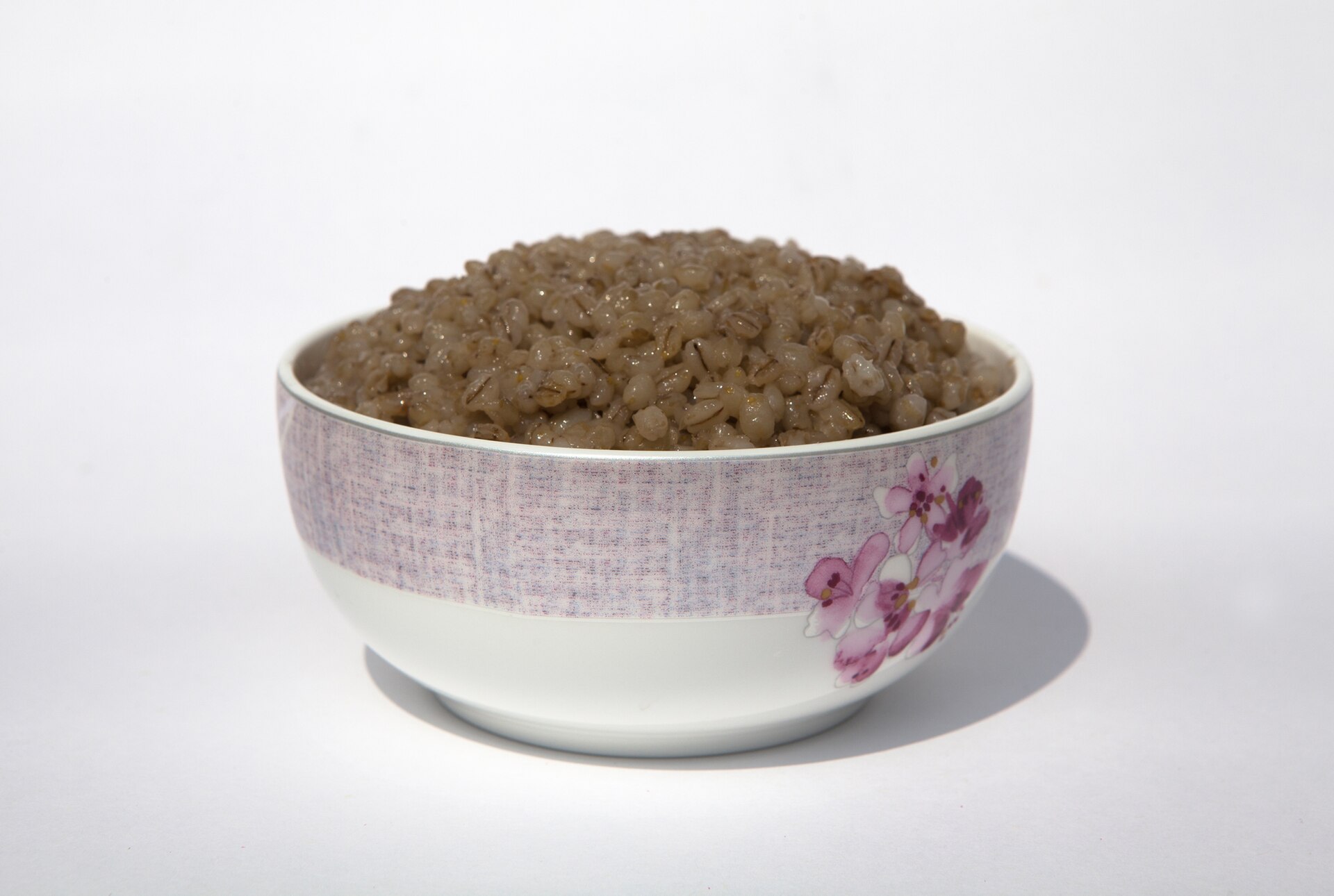
| Pearl barley | About 3 1/2 cups | 25 to 30 min | Plump, slippery | Yes |
| Wheat berries | About 2 1/2 cups | 50 to 60 min | Very firm, popping | Yes |
| Sorghum, whole | About 3 cups | 50 to 60 min | Round, bouncy | No |
| Buckwheat groats | About 3 cups | 10 to 12 min | Soft, delicate | No |
Two labels are worth reading. Farro comes pearled, semi-pearled, or whole, and only the whole version needs soaking and a forty-minute boil; almost every American bag is one of the first two. Barley comes pearled or hulled, and hulled barley keeps its bran, needs forty-five to sixty minutes, and carries noticeably more fiber.
Freekeh is the odd one on the list. It is durum wheat harvested while still green and then roasted, which is where the smoke in it comes from, and that smoke is a seasoning you get for free. Buckwheat is not wheat at all but a seed, which is why it belongs in the gluten-free column beside sorghum.
Cook them like pasta, not like rice
The absorption method, where a measured amount of water disappears into the grain under a lid, belongs to rice. For everything on this list it produces uneven results, because the difference between the fast and slow grains in a single bag is large enough to matter.
Instead, boil a large pot of water, salt it at about a tablespoon per four quarts, and cook the grain uncovered like pasta. Start tasting three minutes before the low end of the range. Drain it, and here is the step people skip: spread it on a sheet pan in a thin layer to cool. That stops carryover cooking and dries the surface, and a dry surface is what stops the dressing from sliding straight to the bottom of the container.
Then dress it while it is warm rather than hot or cold. Warm grain drinks dressing; cold grain merely gets coated by it, and the difference on day three is the whole difference between a lunch and a chore. Salt in the cooking water is not optional either, since grain seasoned afterward tastes salty on the outside and flat in the middle.
The dressing is what makes whole grain bowl recipes work
Cold food needs more salt and more acid than the same food served hot, and a dense grain absorbs and mutes acid on top of that. Nearly every dull grain bowl is a dressing problem rather than an ingredient problem.
Move the ratio. A classic vinaigrette runs three parts oil to one part acid; for a grain bowl, two to one is closer to right, and for barley or wheat berries closer still to one and a half to one. Make about a cup of dressing at the start of the week and it covers five lunches with some left for a salad.
Dress in two stages. Half goes onto the warm grain so it soaks in, and the other half goes over the assembled bowl at the last moment so there is something bright on the surface. Every bowl below also has one crunchy element and one sharp element, because a bowl with neither reads as heavy no matter how good the grain is. That two-stage habit is most of what makes a week of cooking once and eating five times actually work.
Farro with roasted delicata and a walnut dressing
A cup of cooked farro, half a delicata squash roasted in half-moons at 425 degrees for twenty minutes, an ounce of feta, two tablespoons of toasted walnuts, and a handful of parsley. Delicata skin is thin enough to eat, so there is no peeling and no wrestling with a hard squash.
The dressing: three tablespoons of olive oil, one of walnut oil, two of sherry vinegar, a teaspoon of honey, a spoon of minced shallot, and salt. Walnut oil goes rancid quickly and should live in the refrigerator; if it smells like crayons, it is finished. This is the sweetest bowl of the six and the honey is what makes the squash and the sherry vinegar agree with each other.
Freekeh with chickpeas and lemon tahini
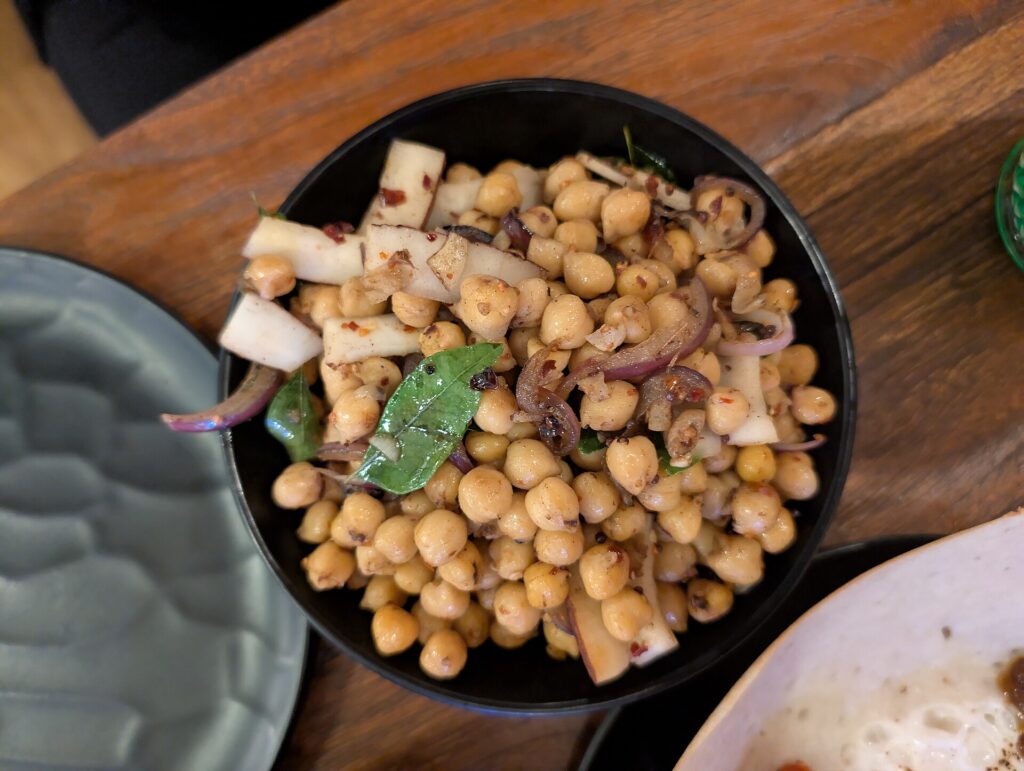
A cup of cooked freekeh, three-quarters of a cup of chickpeas, diced cucumber, halved cherry tomatoes, and parsley and mint measured by the handful rather than the tablespoon. Herbs are an ingredient in this bowl, not a garnish, and half a cup of chopped leaves is the right amount.
The dressing: a quarter cup of tahini, three tablespoons of lemon juice, one small clove of garlic grated fine, four to six tablespoons of cold water, and salt. Tahini seizes into a stiff paste the moment the lemon hits it, which alarms people the first time. Keep adding water a tablespoon at a time and it loosens into something pale and pourable. The freekeh brings its own smoke, so no other spice is needed here.
Barley with mushrooms, white beans, and mustard
A cup of cooked pearl barley, six ounces of mushrooms roasted at 425 degrees for twenty to twenty-five minutes until the edges crisp, half a cup of white beans, and a large handful of kale wilted in the hot mushroom pan for a minute.
The dressing: two tablespoons of red wine vinegar, a tablespoon of Dijon, a quarter cup of olive oil, minced shallot, salt, and pepper. Dijon is doing structural work here and not just flavor, since mustard holds an emulsion together for days in the refrigerator. One caution specific to this bowl: barley keeps shedding starch after it is dressed, so assemble this one the day you eat it and keep the barley and the dressing in separate containers.
Wheat berries with broccoli and a yogurt dressing
A cup of cooked wheat berries, a head of broccoli cut into florets and roasted at 425 degrees for eighteen minutes, a soft-boiled egg, and a scatter of toasted sunflower seeds. Wheat berries are the firmest grain on the list and the broccoli stems, sliced thin, roast in the same time as the florets.
The dressing: half a cup of whole-milk yogurt, two tablespoons of lemon juice, one grated garlic clove, two tablespoons of olive oil, salt, and plenty of black pepper. Seven minutes in boiling water gives a jammy yolk; ten gives one fully set. Anyone pregnant, very young, elderly, or immunocompromised should take the ten-minute egg, and in any case the egg is boiled the morning it is eaten rather than packed on Sunday.
Sorghum with black beans, corn, and lime
A cup of cooked sorghum, three-quarters of a cup of black beans, half a cup of corn charred in a dry skillet until it spots, sliced scallion, an ounce of crumbled cotija, and cilantro. Sorghum stays round and bouncy in a way no wheat grain manages, and it is the bowl to build when someone at the table avoids gluten.
The dressing: three tablespoons of lime juice, three of olive oil, a teaspoon of chipotle in adobo mashed to a paste, a teaspoon of honey, and salt. Chipotle in adobo is potent and the heat varies by can, so start with half a teaspoon and taste. Wash your hands after handling it and keep them away from your eyes, which sounds obvious right up until it is not.
Buckwheat with cucumber, salmon, and dill
A cup of cooked buckwheat, half a cucumber in thick half-moons, a drained six-ounce tin of salmon, quick-pickled red onion, and a great deal of dill. Canned salmon is inexpensive, keeps in the cupboard, and is the most efficient protein on this entire list.
The dressing: half a cup of yogurt, two tablespoons of lemon juice, a tablespoon of olive oil, chopped dill, and salt. For the onion, slice it thin and cover it with white vinegar and a pinch each of salt and sugar for twenty minutes. Buckwheat is the fastest grain here and the least forgiving: ten minutes is right, twelve is the outer edge, and fourteen is porridge. Set a timer and stand near it.
Which ones hold for four days and which collapse
The pattern follows structure. A grain with intact bran and a dense endosperm resists water moving back into it, and a grain that has been pearled to speed up cooking has lost exactly the layer that would have protected it.
- Wheat berries. Firm on day four, and arguably better on day two than day one.
- Sorghum. Nearly as good, and it stays bouncy rather than going soft.
- Farro. Reliable through day three, slightly tired on day four.
- Freekeh. Holds three days, and the smoke keeps it interesting even when it softens.
- Pearl barley. Fine undressed for three days, gluey by day three once dressed.
- Buckwheat. The day it is cooked. There is no way around this one.
Storage matters as much as choice. Cool the grain on the sheet pan and get it into the refrigerator within an hour, and eat it within four days. Cooked grains left standing at room temperature for hours are a real food safety problem, since bacterial spores survive boiling and multiply in a warm, moist container, and reheating does not fix it. The published guidance on cooling and storage times is worth two minutes of reading if you pack lunches regularly.
Protein and fiber, per bowl
These figures are estimates calculated from standard published values for the quantities listed above, not laboratory measurements of your bowl. Brands, portion sizes, and how heavy a hand you have with the cheese will move them by several grams in either direction.
| Bowl | Protein, est. | Fiber, est. | Keeps |
|---|---|---|---|
| Farro, delicata, feta | About 15 g | About 9 g | 3 days |
| Freekeh, chickpea, tahini | About 22 g | About 16 g | 3 days |
| Barley, mushroom, white bean | About 16 g | About 14 g | Dress on the day |
| Wheat berry, broccoli, egg | About 19 g | About 12 g | 4 days |
| Sorghum, black bean, corn | About 18 g | About 14 g | 4 days |
| Buckwheat, cucumber, salmon | About 26 g | About 7 g | Same day |
The pattern is that the legume decides the fiber and the animal protein decides the protein. A bowl built on grain alone lands somewhere near eight grams of protein and does not hold anyone until dinner, which is the actual reason grain bowls have a reputation for leaving people hungry at four o’clock. None of this is dietary advice for a specific person, and anyone managing a medical condition should take numbers like these to someone qualified to interpret them. For the broader argument about building a plate around what is in season, our piece on assembling a plate that actually fills you up covers the same ground.
Frequently Asked Questions
Do these grains need soaking?
Only the slow ones benefit, and none of them require it. An overnight soak takes ten to fifteen minutes off wheat berries, sorghum, hulled barley, and whole farro, and does nothing measurable for pearled farro, cracked freekeh, or buckwheat. Drain the soaking water and boil in fresh.
Can I cook them in a pressure cooker?
Yes, and it is worth it for the hour-long grains: wheat berries and sorghum come out well in roughly twenty minutes at pressure with a natural release. Farro and barley work at about ten. Buckwheat does not, since the window between cooked and destroyed is smaller than the appliance can manage.
Which of these are gluten free?
Sorghum and buckwheat only. Farro, freekeh, and wheat berries are all wheat, and barley is barley, so all four contain gluten regardless of how they are labeled. Buckwheat is a seed rather than a cereal, but it is often processed in facilities that handle wheat, so anyone with celiac disease should buy a bag that is certified.
Why does my grain bowl taste boring?
Three fixes, in order of impact. Salt the cooking water properly. Dress the grain while it is still warm so the seasoning goes in rather than on. And put something acidic and something crunchy in every bowl, since a bowl of soft, mild things eaten at room temperature has nothing to hold attention.
Can I freeze cooked grains?
Yes, spread flat in a freezer bag for up to three months. The texture softens a little on thawing, which is unimportant in a soup or a skillet and noticeable in a cold bowl. Freeze in single-lunch portions so you are not chipping at a block, and thaw in the refrigerator overnight rather than on the counter.
Cook two of these on a Sunday rather than six, and pick the pair by the day you plan to eat them. Wheat berries for the far end of the week, buckwheat for the night you cook it, and the bowl on Thursday stops being the meal you regret packing.