The version of this dinner that fails is the one where the chicken sat in lemon juice since morning. It comes out of the pan pale on the outside, chalky under the surface, and somehow both sour and bland. The lemon did that. Acid on raw meat is not a marinade so much as a slow chemical cook, and eight hours of it wrecks a thigh.
The fix is to split the lemon in two directions. The zest goes on the raw chicken, where the aromatic oils do their work in ten minutes and nothing gets tenderized into mush. The juice waits and goes into the pan at the end, off the heat, where it stays bright instead of turning dull and slightly bitter over a flame.
What follows is one skillet, four servings, and a cucumber salad that uses the same knife and the same board, provided the board gets used in the right order. Total time from refrigerator to plate is about half an hour, and only twenty minutes of that involves the stove.
- Serves: four, from about a pound and a half of boneless skinless thighs
- Active time: roughly 30 minutes, of which 20 are cooking
- Pan: one 12-inch skillet, stainless or cast iron, not nonstick
- The rule: zest in the marinade, juice in the sauce, never the other way around
- Board order: cucumbers and onion first, chicken second, then hot soapy water
- Doneness: 165 degrees at the thickest point, though thighs are happier nearer 175
Twenty minutes only works if the vegetables are cut first
Sequence is the whole trick on a weeknight, and it is also the food safety answer. Cut the cucumbers, the onion, and any tomato before the chicken package is opened. Everything raw and ready goes into its bowl, then the board takes the chicken, and after that the board goes into hot soapy water before it touches anything else.
Doing it in the other order means either washing the board mid-cook or serving raw vegetables that met raw poultry, and one of those wastes four minutes while the other is a genuine hazard. The same logic covers the marinade itself: whatever the raw chicken sat in gets thrown out or boiled hard, never spooned over the finished plate. Standard safe handling guidance puts cross-contamination ahead of cooking temperature as the thing home kitchens get wrong.
If rice or orzo is going underneath, that pot goes on the heat before anything else happens. It is the only component with a fixed clock that cannot be moved.
Thin-cut thighs beat breasts on this clock
Boneless skinless thighs carry more fat and more connective tissue than breast meat, which means they tolerate a hot pan and a minute of inattention without turning to string. On a twenty-minute schedule that margin matters more than any flavor argument.
They still need to be made even. A thigh straight from the package is thick at one end and thin at the other, so the thin end is leather before the thick end is safe. Open each one flat, lay it smooth side down, and either press it out with the heel of your hand or give it three or four taps with a meat mallet until it sits at about half an inch throughout. Six to eight thighs, roughly a pound and a half, feeds four.
Dry them properly. Pat both sides with paper towel until the surface is matte, because a wet thigh in a hot pan releases steam and steam prevents browning. This one step separates the version with a real brown crust from the gray one.
The ten-minute marinade, and why longer is worse
For a pound and a half of chicken: three tablespoons of olive oil, the grated zest of one large lemon, two teaspoons of dried Greek oregano crushed between the palms, three cloves of garlic grated on a fine rasp, a teaspoon and a half of kosher salt, and plenty of black pepper. Mix it in the bowl, add the flattened thighs, and turn them until every surface is coated.
Ten minutes is enough because nothing here needs to travel. Oil-soluble aromatics from the zest, the oregano, and the garlic sit on the surface, and the surface is where the crust forms and where most of the flavor of a seared piece of meat actually lives. Salt is the only ingredient that migrates inward, and it starts doing that immediately.
Longer is not neutral, it is worse. Grated garlic left on raw chicken for hours goes harsh and slightly acrid in the pan. And if lemon juice had been included, the acid would begin denaturing the outer few millimeters of protein, producing the opaque, faintly cooked band that reads as chalky no matter how well the searing goes. Anyone who wants the longer approach should read up on what marinades can and cannot do before committing a Tuesday to it.
Greek oregano is not the same jar as Mexican oregano
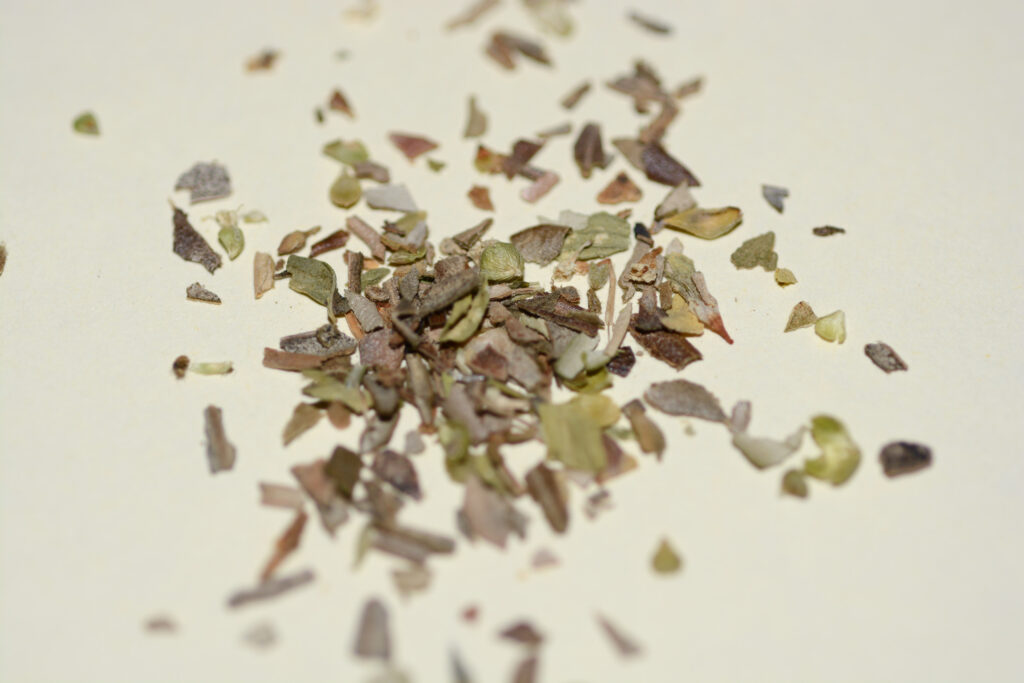
Greek oregano is a subspecies of common oregano with an unusually high concentration of the compounds that give the herb its punch, and it is one of the few herbs that is genuinely better dried than fresh. Drying concentrates the aromatic oils rather than destroying them, which is why bunches of it hang in Greek kitchens on the branch rather than sitting in a pot on the windowsill.
Mexican oregano is not a variety of the same plant. It belongs to a different botanical family altogether and leans citrus and anise rather than peppery and resinous, which is excellent in a pot of beans and wrong here. The jar simply marked oregano in an American supermarket is usually the Mediterranean type and will do the job.
Whatever the jar, crush the leaves between your palms on the way into the bowl. That breaks the dried cell walls and releases oil that would otherwise stay locked up. And check the date: dried oregano is finished at about a year, and a three-year-old jar contributes texture and nothing else.
How the quick Greek chicken comes together in one pan
Read the list once before starting. From the moment the pan is hot there is no time to look anything up.
- Cut the cucumbers, onion, and tomato for the salad. Set them aside. Wipe the board.
- Flatten and dry the thighs, then mix the zest marinade and coat them. Leave them on the counter for ten minutes.
- Wash the board and the knife in hot soapy water. Start the rice or orzo now if it is going underneath.
- Salt the cucumbers, put them in a colander, and let them drain while the chicken cooks.
- Heat the skillet over medium-high with two tablespoons of oil until the oil shimmers and moves easily.
- Lay in half the thighs, smooth side down, without crowding. Do not move them for four to five minutes.
- Turn once and give the second side three to four minutes. Move them to a plate and repeat with the rest.
- Turn the heat to medium-low. Add a sliced clove of garlic and stir it for thirty seconds, no longer.
- Pour in half a cup of stock or water and scrape the brown fond off the bottom. Let it reduce by half.
- Off the heat, stir in three tablespoons of lemon juice, a tablespoon of butter or olive oil, and a pinch of oregano. Taste for salt.
- Rest the chicken five minutes, dress the salad, then return the thighs and any resting juices to the pan and turn them in the sauce.
Two batches is not optional. Eight flattened thighs in a 12-inch pan at once will lower the surface temperature enough that they poach in their own liquid, and the whole point of the exercise is the crust.
The pan sauce is the lemon and the fond
The brown film stuck to the bottom of the pan after the second batch is the sauce. It is concentrated protein and sugar from the chicken and the marinade, it dissolves the instant liquid hits it, and pouring it down the sink is the most common unforced error in weeknight cooking.
Pour off fat until roughly a tablespoon remains. Too much and the sauce breaks into a greasy slick, too little and there is nothing to carry the flavor. Half a cup of liquid is right for four servings; stock is better than water, but water plus the fond is genuinely fine.
The lemon juice goes in off the heat, and this is the one instruction worth being stubborn about. Boiled citrus juice loses its top notes within a minute and leaves a flat, slightly bitter sourness behind. Added after the pan comes off, it stays sharp and floral, and the sauce tastes like lemon rather than like something that used to be lemon.
The cucumber salad, off the same board
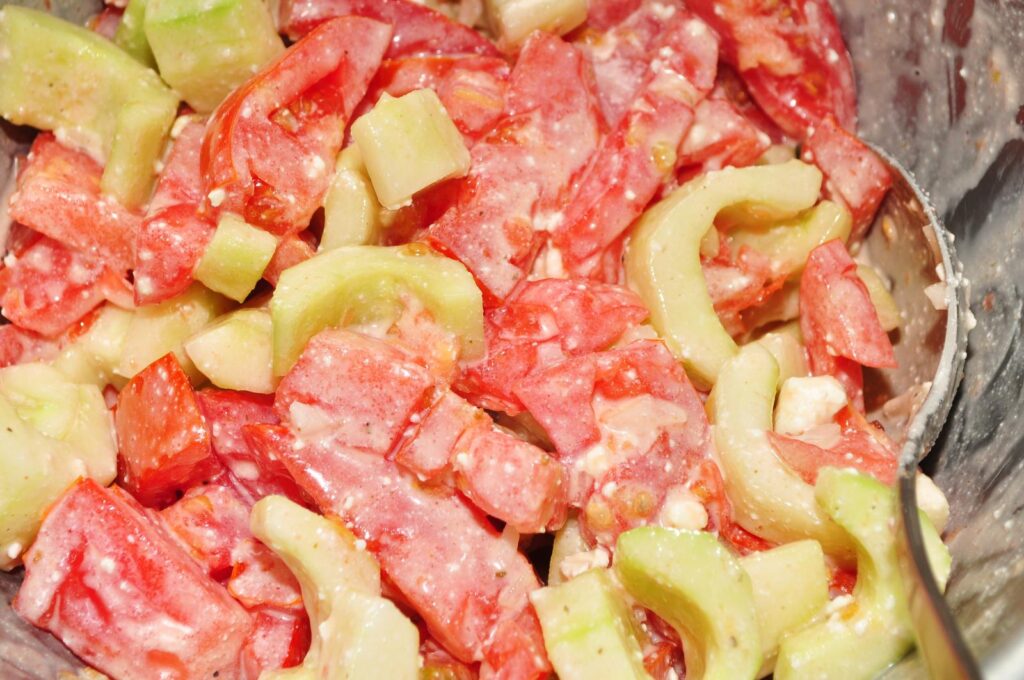
Two English cucumbers, halved lengthwise and cut into thick half-moons. Half a red onion sliced as thin as the knife allows. A large ripe tomato in wedges if it is the season for one, and none at all if it is not, because a hard winter tomato does this salad no favors.
Salt the cucumbers with about half a teaspoon and let them sit in a colander for ten minutes while the chicken cooks. They will give up a surprising amount of water, and that water is the difference between a salad and a puddle. Do not rinse them afterward; just shake the colander and tip them into the bowl.
Dress at the last minute with two tablespoons of red wine vinegar, three of olive oil, a pinch of the same oregano, and pepper. Crumble feta over the top rather than stirring it in, and add a handful of oil-cured olives if there are any. Taste before adding more salt, since the feta and the draining have already done some of that work.
Doneness, and where the probe actually goes
Poultry is safe at 165 degrees Fahrenheit, about 74 Celsius, measured at the thickest part. On a half-inch thigh that point is easy to miss, so slide the probe in from the side rather than down from the top and aim for the middle of the meat, away from the pan surface.
Thighs are the forgiving cut for a reason. Their connective tissue keeps converting to gelatin well past the safety line, so a thigh at 175 is more tender than one at 165, not less. There is no need to hover over the thermometer the way a breast demands.
Color is not a test. Meat near the bone or from a younger bird can stay pink at a perfectly safe temperature, and a dry thigh can look done while the center is still short. A cheap instant-read thermometer settles it in three seconds, and it is the single most useful inexpensive tool in a home kitchen.
What goes underneath
Orzo is the fastest option and cooks in about nine minutes, which fits neatly inside the searing window. Drain it, then turn it directly in a spoonful of the pan sauce so it does not sit there as a bland layer.
Rice takes longer and has to start first. Roasted potato wedges are the best version of the plate and the worst fit for the clock, since they need forty minutes at 425 degrees, so they belong to the weekend version of this dinner. Warm pita is the low-effort answer and turns the leftovers into a sandwich the next day.
For a fuller table, this chicken sits comfortably next to a tray of spinach and feta pastry or a bowl of thick yogurt with grated cucumber and garlic stirred through it.
The five places this falls apart
Every one of these has a single cause and a single fix.
- Gray chicken with no crust. The pan was crowded or the thighs were wet. Two batches, dry surfaces.
- Chalky, opaque outer layer. Lemon juice was in the marinade, or the marinade ran long. Zest only, ten minutes.
- Dull, faintly bitter sauce. The juice went in while the pan was still on the flame. Off the heat, always.
- Dry meat with juice on the board. No resting time. Five minutes, then slice or return to the pan.
- Watery salad. Cucumbers were neither salted nor drained, or the salad was dressed too early.
A sixth, less common one: burnt garlic. Sliced garlic in a pan that is still at searing heat turns bitter in about twenty seconds, and there is no rescuing a sauce built on it. Drop the heat first, then the garlic, then count to thirty.
Day two, and the sandwich it turns into
Cooked chicken keeps three to four days in the refrigerator, and it should get there within two hours of coming off the heat. Store the meat and the sauce together in one container so the slices do not dry out, and keep the salad separate; dressed cucumbers are finished by the next morning.
Reheating in a microwave is what makes leftover chicken rubbery. Slice it cold, put it in a skillet with a spoonful of the sauce and a splash of water, cover, and warm it over low heat for two or three minutes. It comes back close to where it started.
The better answer is not to reheat at all. Sliced cold, piled into warm pita with yogurt, the leftover cucumbers, and a little of the sauce, it makes a better lunch than most things cooked on purpose. This is the same principle behind a lot of fast weeknight cooking: build something on Tuesday that Wednesday can use.
Frequently Asked Questions
Can I use chicken breasts instead of thighs?
Yes, sliced horizontally into cutlets about half an inch thick. Cut the second-side cooking time to two or three minutes and pull them the moment they hit 165, because breast meat goes from juicy to dry in under a minute. The marinade and the sauce stay exactly the same.
Can the chicken marinate longer if I plan ahead?
Up to about four hours in the refrigerator is fine with this zest-only mixture, and the salt will season the meat more deeply. Past that, the grated garlic starts to turn harsh. If lemon juice is in the bowl, the ceiling drops to about thirty minutes.
What if I only have fresh oregano?
Use roughly three times the volume and add most of it at the end rather than in the marinade, since fresh oregano scorches in a hot pan. Dried is the better choice here, which is unusual advice for an herb and specific to this one.
Does this work on a grill or under the broiler?
It works well on a grill over direct heat, about four minutes a side on the same flattened thighs. Under a broiler, use the top rack and watch it, because the oil in the marinade can flare. The pan sauce is the one thing lost, so make a quick lemon and oregano dressing to spoon over instead.
Is bottled lemon juice acceptable?
Not for the sauce. Bottled juice is pasteurized and usually stabilized, and the flat, slightly metallic result is exactly what the off-heat timing was designed to avoid. It also means no zest, which is where most of the lemon character in this dish comes from.
The recipe is short enough that the only real decisions are the order of the cutting board and the moment the lemon juice goes in. Get those two right and the rest is twenty minutes of standing at the stove doing very little.