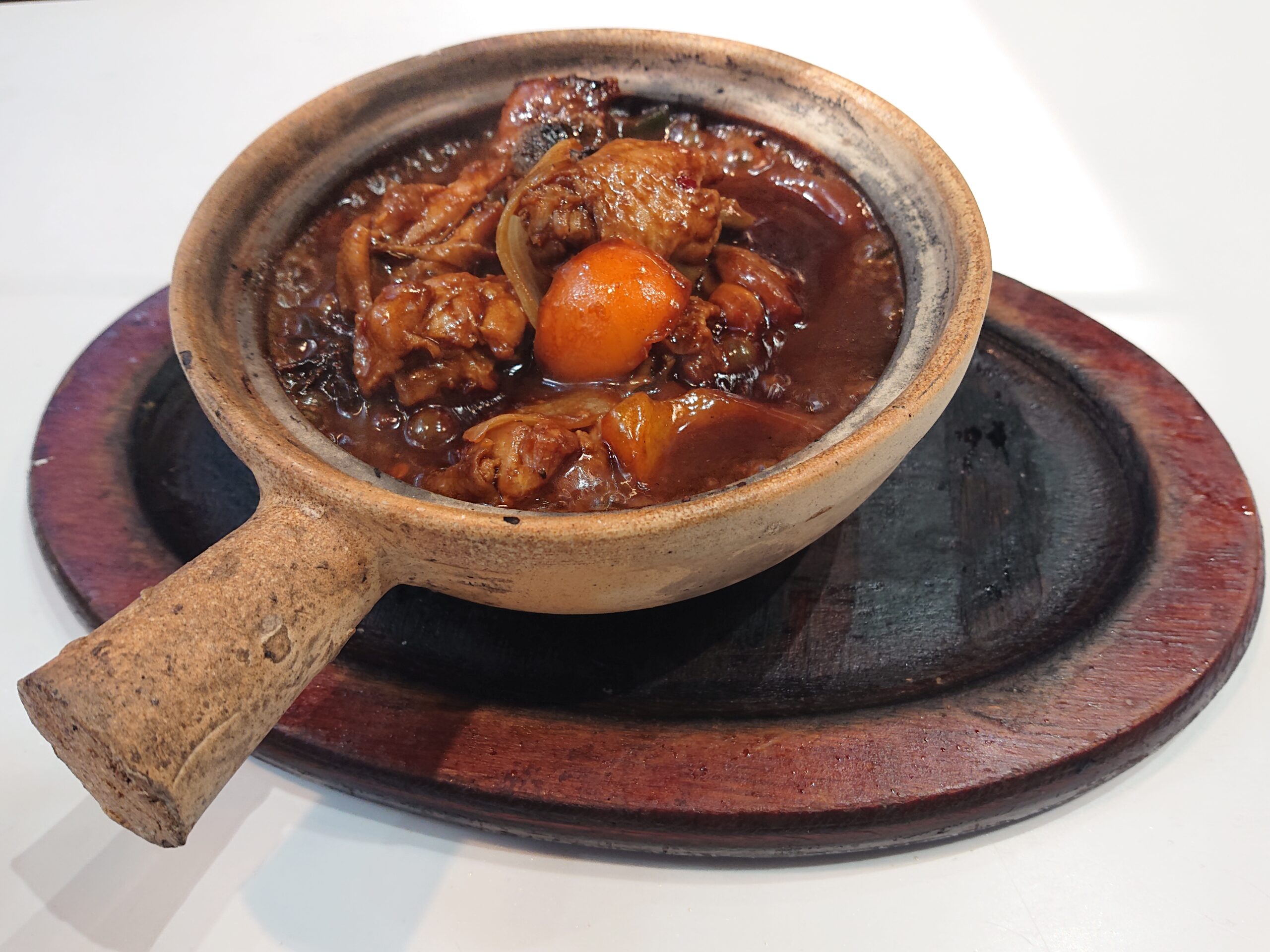
Order pot pie at a diner counter in Lancaster County and what lands in front of you is a wide shallow bowl of cloudy chicken broth with soft squares of noodle floating in it, chunks of potato, and shredded meat. No crust. No lid of pastry. Nothing baked. Somebody at the table who grew up two hours east will say, out loud, that this is not pot pie.
They will be wrong, in the sense that in a stretch of southeastern and central Pennsylvania the word has meant this dish for a very long time and means nothing else. The Pennsylvania German name is bot boi, sometimes written bott boi, and it is a stew that happens to share a name with a baked pie that it has nothing to do with.
What makes the dish worth understanding is the noodle. It is not a dumpling and not store-bought pasta. It is a rolled, egg-rich dough cut into rough squares and boiled directly in the broth, where it thickens everything around it. Get the dough right and the rest is a chicken stew.
- What it is: a stew of square rolled noodles, chicken, potato and broth, cooked in one pot
- What it is not: anything with a pastry crust or an oven
- Where the word works: a handful of counties in southeastern and central Pennsylvania
- Time: about two and a half hours, most of it the broth
- The noodle: flour, egg, a little fat, rolled thin, cut into two-inch squares
- The failure mode: rolling too thick, which gives dense gluey slabs instead of slippery squares
Pennsylvania Dutch pot pie, defined by what it lacks
Start with the absences, because they are what confuses everyone. There is no bottom crust, no top crust, no baking dish, and no oven at any stage. Nothing is browned, nothing is gratineed, and the finished dish is pale on purpose.
What is there is broth thickened by the starch coming off the noodles, so it sits somewhere between a soup and a stew: too thick to drink, too loose to hold a shape on a plate. It is eaten in a bowl, with a spoon, and the traditional accompaniments are bread and butter, applesauce, or pickled beets rather than anything green.
The other regional name, slippery pot pie, describes the texture better than the standard one does. The squares are soft and faintly slick, and they should slide off a spoon. A version where the noodles hold a firm bite has been undercooked or rolled too thick, and that is a different dish.
Bot boi, bott boi, and an etymology nobody has settled
Pennsylvania Dutch has nothing to do with the Netherlands. The community descends from German-speaking immigrants who arrived in Pennsylvania largely through the eighteenth century, and their language, Deitsch, is a German dialect. Whether the English word Dutch here comes from Deitsch itself or from an older and broader English use of Dutch for German speakers is argued both ways and has never been settled to everyone’s satisfaction.
The name of the dish has the same problem in miniature. Bot boi is generally read as the Pennsylvania German rendering of the English phrase pot pie, and phonetically that fits neatly. What nobody has explained convincingly is why the name attached itself to a noodle stew rather than to the crusted pie the English words describe.
The plausible accounts are guesses. Perhaps the word was applied broadly to anything substantial cooked in a pot. Perhaps a crusted version existed and the dough migrated into the liquid. Both explanations circulate and neither is documented, which is worth stating plainly rather than picking one, and it is a fair reminder of how the stories attached to inherited dishes tend to outrun the evidence for them.
The counties where the word means this and nowhere else
The dish is concentrated in the Pennsylvania German settlement belt: Lancaster, Berks, Lebanon, Lehigh, Schuylkill, and the counties around them. Inside that area, ordering pot pie in a family restaurant produces the stew without further discussion, and no one thinks the name is unusual. It sits alongside scrapple, chicken corn soup, and shoofly pie in Pennsylvania German cooking as a marker of the region.
Move two hours in any direction and the same words produce a baked pie with a crust. That is the whole source of the confusion, and it is one of the tighter examples of a food word whose meaning changes over a short distance. The dish did not travel with the name; the name stayed home.
It also shows up where those communities resettled, in parts of Ohio, Indiana, and Ontario, sometimes under the same name and sometimes not. Church suppers and volunteer fire company fundraisers are where it is most reliably found in public, usually cooked in a stockpot large enough to bathe in.
The noodle: flour, egg, fat, and a rolling pin
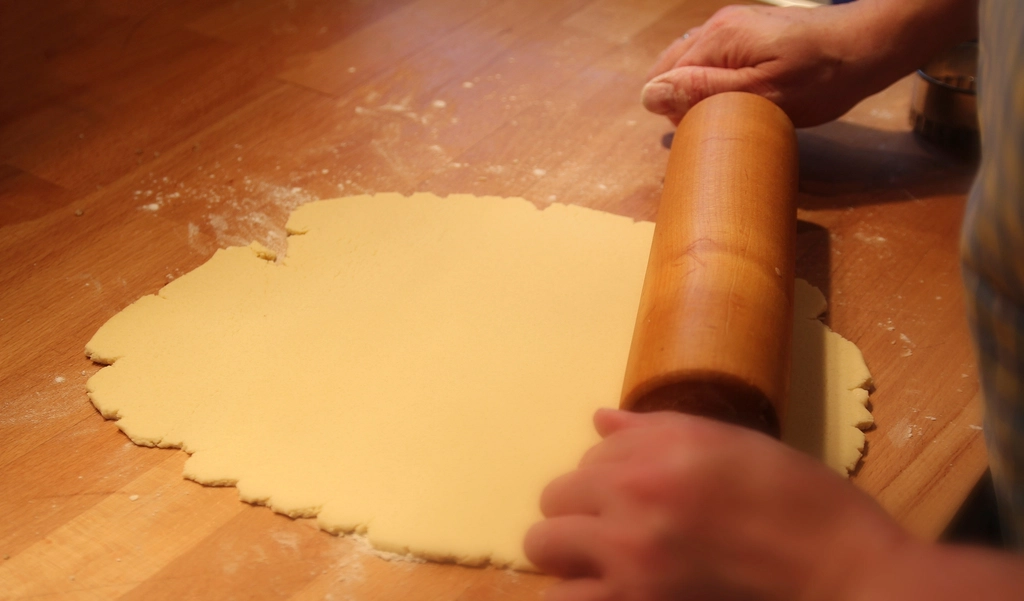
This is the part that makes or breaks the dish and the part most modern recipes skip by reaching for a bag of egg noodles. The homemade square is a different texture entirely: softer, more absorbent, and thick enough at the center to stay tender while the edges go slippery.
For a pot serving six: 300 grams of all-purpose flour, two eggs, a tablespoon of softened butter or lard, a teaspoon of salt, and three to five tablespoons of cold broth or milk, added a spoonful at a time until the dough just comes together. It should be firmer than pasta dough and considerably less elastic.
Knead only until smooth, about two minutes, then wrap and rest for half an hour. Rest matters more than kneading here, because a rested dough rolls thin without springing back. Overworking it builds the kind of chew this dish specifically does not want, unlike a fresh pasta dough that depends on gluten development.
Rolling and cutting squares that do not turn to paste
Roll to about an eighth of an inch. Thinner and the squares disintegrate into the broth; thicker and the centers stay doughy after the outside has gone soft, which is the single most common complaint about home versions.
Cut into rough squares of about two inches with a knife or a pizza wheel. They do not need to match. Irregular edges catch more broth and the unevenness is part of how a homemade pot looks. A cook working fast can cut the whole sheet in ninety seconds.
Let the cut squares sit on a floured towel for fifteen to thirty minutes before they go in the pot. That brief drying firms the surface enough that they hold their shape through the simmer. Dust them lightly with flour and separate them as they go in, one at a time, so they do not weld into a raft.
The broth is the whole dish, and it starts with the right bird
Since there is no browning, no crust, and almost no seasoning beyond salt and parsley, the broth carries everything. Water and a supermarket rotisserie chicken produce a thin, disappointing pot no matter what else is done correctly.
A stewing hen, an older laying bird, is the traditional choice and still the best one where a butcher carries them. It has more connective tissue, which becomes gelatin, and a much stronger flavor than a young broiler. Failing that, use a whole chicken of four to five pounds plus a few extra backs, wings, or feet for body.
Simmer the bird with an onion, two carrots, two celery ribs, a handful of parsley stems, and a few peppercorns for about ninety minutes, never at a rolling boil. Pull the chicken, let it cool enough to handle, strip the meat and set it aside, and return the bones to the pot for another thirty minutes. Strain, skim, and taste. Poultry should reach 165 degrees, which a simmer of that length passes comfortably.
Potatoes, saffron, and the Lancaster question

Potatoes go in with the noodles, cut into large chunks, and they are not a filler. Their starch works alongside the noodle starch to thicken the broth, and a floury variety does that better than a waxy one. Two medium potatoes for a pot of six is typical.
Saffron is the ingredient that surprises people. Pennsylvania German cooks grew and used saffron, and it turns up in chicken dishes across the tradition, including some pot pie recipes and the region’s chicken corn soup. It is used sparingly, giving the broth a faint yellow cast and a savory depth rather than an obvious perfume. A small pinch bloomed in a ladle of hot broth is the whole intervention.
Whether it belongs in bot boi specifically is a household argument rather than a settled rule. Plenty of cooks in the same county leave it out entirely and would not recognize a saffron version as theirs. The rest of the seasoning is deliberately spare: salt, black pepper, and a large amount of chopped parsley stirred in at the end.
Assembling the pot, and the ten minutes that decide it
Bring the strained broth back to a gentle simmer, taste it, and salt it properly before anything goes in, because the noodles will absorb whatever seasoning is there. A bland broth cannot be corrected once the starch is in it.
Add the potatoes and a sliced onion first and give them eight minutes. Then add the noodle squares one at a time, letting the pot come back to a simmer between handfuls. Do not stir aggressively; move them gently with a wooden spoon so they separate without tearing.
They need about fifteen to twenty minutes and they are done when the centers are tender with no floury taste. In the last five minutes, return the pulled chicken to warm through, and stir in the parsley off the heat. The broth should have thickened noticeably. If it has not, the noodles were rolled too thick or the pot held too much liquid.
Slippery pot pie, chicken and slicks, chicken and dumplings
Several dishes in the eastern half of the country are built on the same idea and diverge in small ways. Sorting them out makes it easier to see what is specific to the Pennsylvania version.
| Dish | Where | Dough | Shape |
|---|---|---|---|
| Bot boi | Southeastern Pennsylvania | Rolled, egg, fat | Squares, boiled in broth |
| Chicken and slicks | Western Pennsylvania, West Virginia | Rolled, often no egg | Strips or squares |
| Rolled dumplings | Tennessee, Kentucky | Rolled, often buttermilk | Strips, boiled in broth |
| Drop dumplings | Broadly southern | Wet batter, leavened | Spooned, steamed on top |
| Baked pot pie | Everywhere else | Pastry | Crust over filling, oven |
The dividing line that matters is boiled dough against steamed or baked dough. Everything in the first four rows thickens its own liquid; the last one does not, because the crust never touches the filling. That is why the Pennsylvania dish reads as a stew and the one it shares a name with reads as a pie.
Beef, ham, and the church supper versions
Chicken is the default, not the rule. Beef bot boi is made with chuck simmered until it falls apart, and it produces a darker, heavier pot that suits cold weather. The noodle and the method are unchanged; only the broth is different, and it wants longer, closer to three hours.
Ham versions use a smoked hock or the bone from a holiday ham, which brings salt and smoke and means the pot needs almost none of the former added. Some households make a version with rabbit, and squirrel appears in older regional recipe collections, both reflecting a period when the dish used whatever was available.
Cooked in volume for a fire company supper, the proportions shift toward potato and noodle and away from meat, which is a matter of economics rather than tradition. The broth gets stretched, the seasoning gets bolder to compensate, and it still works, in the way a long-simmered one-pot supper generally does when it has to feed a room.
Reheating a starch-thickened stew without gluing it shut
It thickens dramatically overnight as the noodles keep absorbing. What was a loose stew becomes a solid mass in the refrigerator, and that is normal rather than a sign anything went wrong.
Reheat gently on the stove with extra broth or water stirred in a splash at a time until it loosens, over low heat, with as little stirring as the job allows. Aggressive stirring at this stage breaks the softened squares apart and turns the pot cloudy and pasty. A microwave heats unevenly and tends to overcook the edges.
A thick starchy stew cools slowly in a deep pot, which is the practical safety issue with this dish. Divide it into shallow containers rather than refrigerating the whole pot, get it cold within two hours, and use it within three or four days, following the same cooling and storage guidance that applies to any large batch of soup or stew.
Frequently Asked Questions
Can I use store-bought egg noodles instead?
It will make a decent chicken noodle soup and it will not make bot boi. Dried noodles release much less starch, so the broth stays thin, and their firmer texture is the opposite of what the dish is named for. Wide flat noodles come closest if there is genuinely no time to roll dough.
Why is my broth thin instead of thick?
Usually too much liquid for the amount of noodle, or noodles rolled thick enough that they never gave up much starch. The fix is proportional: less broth or more squares. Some cooks also add a chopped potato early and let it break down completely, which thickens without changing the flavor.
Do the noodle squares have to dry before cooking?
Not strictly, but fifteen minutes on a floured towel helps them hold together in the pot. Freshly cut squares are tacky and tend to stick to one another as they go in. Squares can also be dried fully and stored in a tin for weeks, which is how many households kept them.
Is there a vegetarian version?
Nothing traditional, but the structure adapts. A strong mushroom and root vegetable broth, kept simmering long enough to concentrate, carries the noodles well. The dough itself can stay as it is, or the egg can come out and be replaced with a little more liquid.
How far ahead can I make the noodles?
The dough holds wrapped in the refrigerator for two days. Cut squares can be dried completely on a rack and kept airtight at room temperature for several weeks, or frozen on a tray and bagged. Frozen squares go straight into the simmering broth with a couple of extra minutes.
The dish rewards a slow afternoon and punishes shortcuts in a way that few one-pot suppers do, because there is nowhere for a weak broth or a thick noodle to hide. Make it once with a stewing hen and the reason it stayed in one corner of one state becomes obvious.