A pot of lamb and onions on a stove in Marrakech gets a piece of bark dropped in alongside the ginger and the saffron. In Oaxaca a cook toasts a length of the same bark, grinds it, and stirs it into a sauce with chiles, seeds and a little chocolate. In a kitchen outside Thessaloniki it goes into a meat sauce with tomato and clove, and nobody at that table thinks of it as a dessert flavor.
On an American shelf the jar sits next to the vanilla and comes out for apples, oatmeal and rolls. That is a narrow assignment, and the narrowness is a regional habit rather than a rule about the spice. Three large cuisines put it in the middle of dinner and have done so for centuries.
What follows is where it actually sits in Moroccan, Mexican and Greek savory cooking, the amount that reads as depth rather than as pastry, and the three dishes worth cooking first.
- Two barks, one word: cassia in most supermarket jars, Ceylon in the Mexican bundle labeled canela
- The working dose: one stick per pot for four, or a quarter teaspoon ground per pound of meat
- Partners: onion, animal fat, tomato acid, clove, allspice, black pepper
- Where it goes: a lamb tagine, a Mexican braise, a Greek meat sauce
- What it is not: a stand-in for sugar, and never a finishing sprinkle on meat
- Worth knowing: cassia carries coumarin, which matters at habitual spoonfuls and not at one stick in a pot
Two barks sold under one name
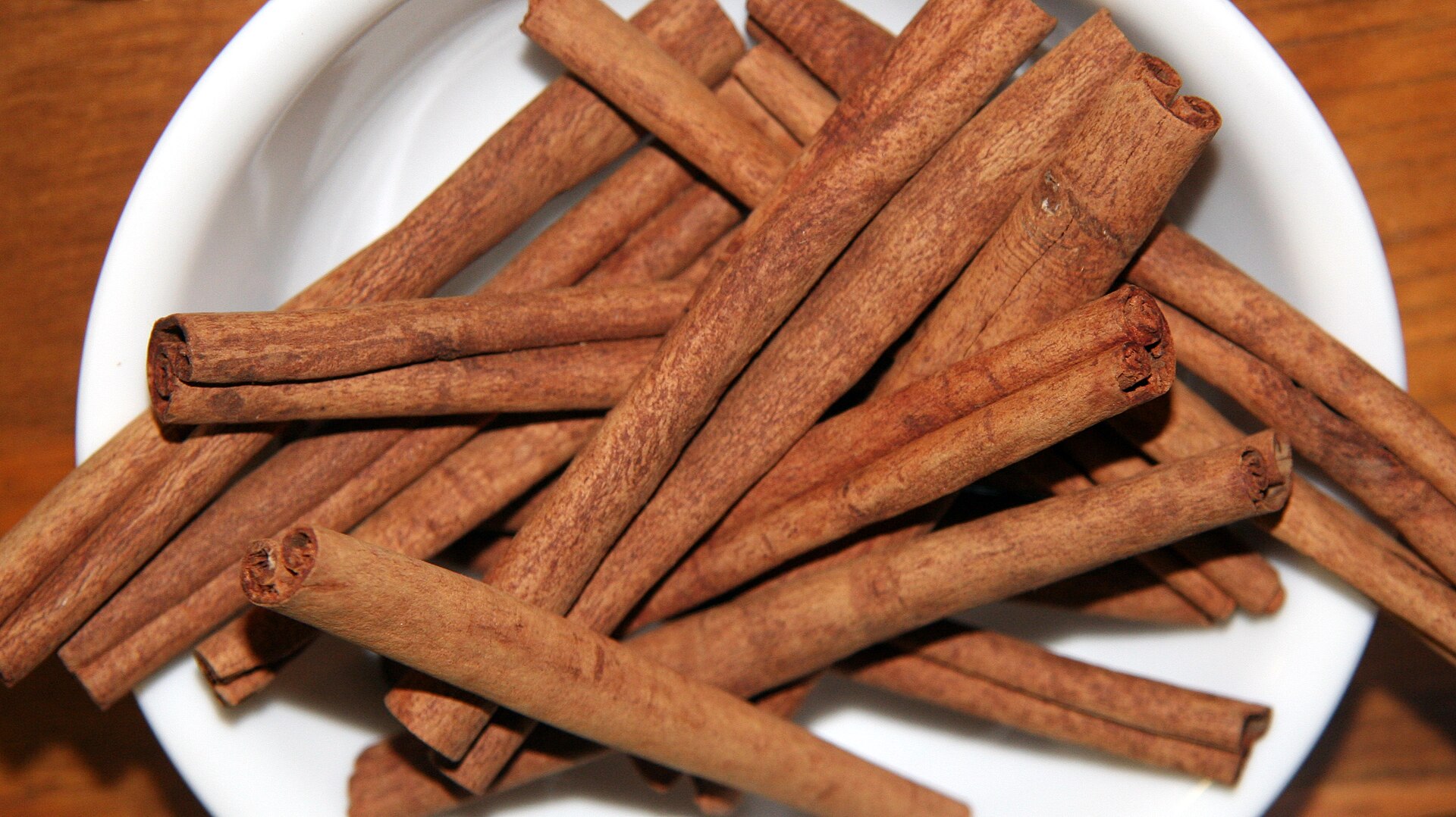
The jar in most kitchens is cassia, harvested from a handful of related trees grown mainly in Indonesia, China and Vietnam. It is thick, dark red-brown, rolls into a single hard curl, and tastes hot and blunt. It is also cheap, which is why it fills the retail supply.
True cinnamon comes from a different tree grown largely in Sri Lanka. The bark is thin and brittle, pale tan, and rolls into a cigar of many fine layers you can crush between two fingers. The flavor is lighter, more floral, with a citrus edge behind it and far less heat.
Both get their character from cinnamaldehyde, the dominant aroma compound in the bark, and cassia simply carries more of it. That is the whole difference in the mouth: cassia arrives loud and closes fast, Ceylon arrives quieter and stays longer. In a pot of braised lamb the loud one can flatten everything around it, which is why the cuisines that use the spice at dinner tend to be careful about which bark they buy.
Cinnamon in savory dishes, and what it is actually doing
It is not there for sweetness. The bark contains almost no sugar, and a stick simmered in broth adds none. What it adds is a warm, resinous top note that sits above the meat and below the acid, and a faint drying sensation on the palate that keeps a fatty braise from going slack.
The reason it reads as dessert to a lot of people is association, not chemistry. The same compound turns up in a cinnamon roll, so the nose files it under pastry before the tongue has a say. Put it into a pot with onion, fat, salt and a sour element and the file changes, because the surrounding flavors give it a different job.
The practical version of that: cinnamon needs something savory and something sour in the pot before it goes in. Alone with meat it reads as an odd sweet note. With onion cooked down, a spoonful of tomato or a squeeze of lemon, and a bay leaf, it becomes part of the background and stops announcing itself.
Morocco: the pot where sweet and savory were never separated
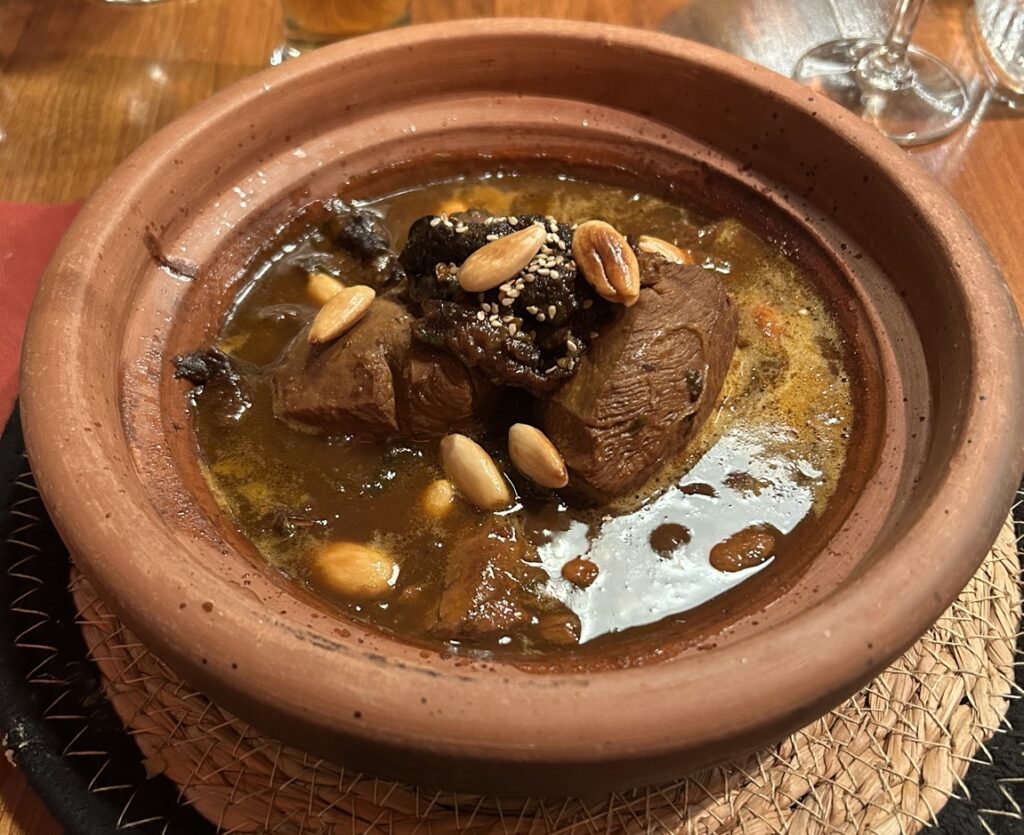
Moroccan cooking never accepted the line that separates a dessert flavor from a dinner flavor, so the question of whether cinnamon belongs at the meal does not come up there. It goes into tagines of lamb with prunes or apricots, into chicken with almonds, into the spice mixes sold by the handful in the souks.
Most of those mixes are some version of ras el hanout, which is not one recipe but a shop’s own blend, different from one merchant to the next and often running to a dozen spices or more. Cinnamon is nearly always in it, alongside ginger, black pepper, cardamom, clove and turmeric. Anyone who tells you the definitive formula is describing one shop.
The other place it shows up is on top. A pastilla, the folded pastry of pigeon or chicken with almonds, gets dusted with sugar and cinnamon over a savory filling. That combination is the clearest statement of the Moroccan position, and it is also the one that most divides visitors. Try the tagine first. The dusted pastry is a second conversation.
Mexico: canela is Ceylon, and it goes in whole

Walk into a Mexican grocery and the cinnamon is sold in loose, shaggy, pale sticks that crumble in the bag. That is Ceylon bark, and Mexico is one of the larger buyers of it in the world. Cooks there use it because a soft bark can be ground into a sauce, and cassia cannot be ground at home without a spice mill and some determination.
It goes into mole, where it works with chiles, seeds, dried fruit and a small amount of chocolate. It goes into adobos and into pork braises. It goes into rice pudding and into café de olla, which is where the association with sweetness comes from, but the savory uses came along with it and never left.
The technique worth stealing is toasting. A short piece of bark goes into a dry pan with the chiles and the seeds until it smells like itself, thirty to sixty seconds, then into the blender with everything else. Toasting knocks the raw edge off and pushes the flavor toward the woody end, which is the end a meat sauce wants.
Greece: the third spice in a meat sauce
Greek cooks put cinnamon in ground meat, and the dishes that carry it are the ones most people have eaten without identifying the spice. The meat sauce under a pastitsio has it. So does the sauce in a moussaka. So does stifado, the onion-heavy beef stew, usually with clove and bay alongside.
The proportion is the point. Cinnamon is the third spice there, behind the onion and the tomato, present in an amount that a person who did not know would call the sauce warm rather than spiced. A quarter teaspoon of ground bark in two pounds of beef is a typical hand.
Soutzoukakia, the oval meatballs simmered in tomato sauce, carry it more openly along with cumin, and are the best dish for tasting what the spice does to ground meat, because there is nothing else in the way. Cook a batch with the cinnamon and a batch without on the same afternoon and the difference is not subtle.
The dose that reads as depth rather than dessert
There is a fairly narrow window. Below it the spice does nothing measurable. Above it the dish flips over into something that tastes like it belongs after the meal, and once flipped there is no way back except to double the batch.
| Cuisine | Form | Amount for four | What it sits with | Dish to start with |
|---|---|---|---|---|
| Moroccan | Stick, plus ground in the blend | 1 stick and about half a teaspoon of blend | Ginger, saffron, onion, dried fruit | Lamb tagine with prunes |
| Mexican | Toasted Ceylon bark, ground into the sauce | A 2-inch piece | Dried chiles, sesame, clove, tomato | Pork in a red chile adobo |
| Greek | Ground, with the meat | A quarter to a half teaspoon | Onion, tomato, clove, bay | Meat sauce for pastitsio |
A useful rule for a first attempt: whatever amount seems right, use two thirds of it and taste at the end. The spice keeps extracting for the length of the simmer, so a pot that is correctly seasoned at ten minutes is overspiced at ninety. This is the opposite of how salt behaves and it catches people out.
Stick or ground, and when each one goes in
A stick releases slowly into liquid and gives a rounded, even background. It also comes out at the end, which means the seasoning can be pulled back by fishing it out early. That makes it the safer choice for anything that simmers longer than half an hour.
Ground bark releases everything at once. It is the right form when the cooking time is short, when the spice has to bind to the surface of meat as in a rub or a kofta mix, or when it has to be part of a sauce that gets blended. It is also the form that goes stale fastest, because grinding exposes the volatile oils to air.
Timing follows from that. A stick goes in with the liquid, at the start. Ground cinnamon goes in with the aromatics, into the fat, for thirty seconds before the liquid arrives, which is enough to bloom it without scorching. It does not go in at the end. Added late it tastes raw and dusty and sits on top of the dish instead of inside it.
The four spices that travel with it
Cinnamon is rarely alone in any of these three cuisines, and the company it keeps is consistent enough to be worth naming. Clove is the most common partner and the most dangerous, because a single clove too many will take over a pot and cannot be removed. Two whole cloves is a normal amount for a stew for four.
Allspice overlaps with both and is the one to reach for when a sauce needs the same warmth without another distinct note. Black pepper supplies the heat that cassia hints at but does not really deliver, and it sharpens the whole group. Cumin, in the Mexican and Greek uses, anchors the mix downward and keeps it from floating.
Ginger belongs with the Moroccan version and adds a second kind of heat, brighter and more forward. None of these are decorative. Drop one and the pot notices.
Three dishes to cook first
Lamb shoulder with onion, prunes and a stick of cinnamon. Brown two and a half pounds of cubed shoulder, cook down three sliced onions in the same pot, add ginger, a pinch of saffron, a cinnamon stick, water to come halfway up, and a dozen prunes in the last thirty minutes. Two hours at a bare simmer. Toasted almonds at the end.
Pork shoulder in a red chile adobo. Toast four guajillos, two anchos, a two-inch piece of Ceylon bark, a teaspoon of cumin seed and two cloves. Soak the chiles, blend everything with garlic, a splash of vinegar and a little of the soaking water, and braise the pork in it for two and a half hours. The spice cabinet behind that sauce is doing most of the work.
Greek meat sauce. Two pounds of ground beef, two onions, garlic, a can of tomato, a bay leaf, two cloves, half a teaspoon of ground cinnamon, a glass of red wine, forty-five minutes. It goes over pasta, under bechamel in a pastitsio, or into a baked dish of eggplant. It is the least exotic of the three and the one most likely to become routine.
Buying it, storing it, and the coumarin question
Buy sticks and buy small. Ground cinnamon in a large jar is stale within a year and most kitchens keep it for five. If the jar in the cupboard smells faintly sweet rather than sharply of itself, it is contributing dust and nothing else, and replacing it will change more dishes than any technique in this article.
Cassia contains coumarin, a compound that occurs naturally in the bark and that European regulators have set a tolerable daily intake for, because at sustained high doses it is associated with liver stress. Ceylon bark contains very little of it. That is a real consideration for someone taking cassia by the spoonful daily as a supplement, and effectively not one for a stick simmered in a stew for four. If cinnamon is a daily habit rather than an occasional dish, buy Ceylon, and raise it with a doctor if there is liver trouble or medication in the picture.
Store sticks in a closed jar away from the stove. Whole bark holds its aroma for two or three years. Ground, six months is optimistic, and grinding a stick in a coffee grinder kept for spices takes under a minute and produces something that does not compare to the jar.
Where it goes wrong
Added at the end. Ground cinnamon stirred into a finished sauce tastes raw and powdery. It needs either fat and heat or a long simmer to integrate.
Used without acid. A braise with cinnamon and no tomato, lemon, vinegar or wine reads sweet even though nothing sweet went in. The acid is what tells the palate this is dinner.
Cassia where Ceylon was meant. Substituting the supermarket jar in a Mexican sauce at the same weight produces something harsh and hot. Use about half as much, or go find the soft bark.
Too much, too early. A full teaspoon of ground bark in a pot for four is dessert territory. The pot cannot be talked out of it afterward.
Paired with sugar by reflex. The Moroccan sweet-savory dishes work because the sugar is deliberate and measured. Adding a spoonful of honey to a stew because cinnamon is in it is how a good pot turns into a confused one. If sweet and savory is the direction, our notes on combinations that hold up are the place to start rather than improvising.
Frequently Asked Questions
Can I use the cinnamon already in my cupboard?
Yes, assuming it still smells like something. It is almost certainly cassia, so use roughly two thirds of what a recipe from Mexico or Sri Lanka calls for, and expect a hotter, blunter result. For Moroccan and Greek dishes cassia is fine as written.
How do I tell Ceylon from cassia in the store?
Look at the stick. Ceylon is pale tan, thin walled, and rolled in many layers like a cigar, and it crumbles under a fingernail. Cassia is dark, thick, and rolls into one hard curl that will not break by hand. The Mexican aisle labeled canela is the reliable place to find the first one.
Does it belong in chili?
A small amount does, and several regional American chili traditions include it along with cocoa and clove. A quarter teaspoon in a pot for six sits behind the cumin and rounds the chiles. More than that and the pot starts to argue with itself.
Is there anything that substitutes for it?
Not exactly, but allspice covers about two thirds of the ground it holds in a savory dish and is less likely to read as dessert. Use the same quantity. Cardamom goes in a different direction entirely and is not a swap.
Why does my tagine taste like a candle?
Usually clove rather than cinnamon. Clove is the spice in that group with the smallest margin for error, and three of them in a pot for four is already too many. Cut to two, and check whether the ras el hanout you are using already contains it.
Cook the Greek meat sauce twice on consecutive weekends, once with the spice and once without, and the argument settles itself in about four minutes at the table. After that the jar stops being a baking ingredient and starts being a stock item, which is the only real change being proposed here.