Ask ten Filipino cooks how adobo is made and you will get ten pots that share a method and disagree on almost everything else. Soy or no soy. Cane vinegar or coconut vinegar. Coconut milk at the end or nothing at the end. Sugar, or the suggestion that sugar is what tourists put in it.
What holds across all of them is narrow and it is the whole dish: meat cooked in vinegar with garlic, salt in some form, black peppercorns, and bay. Everything else is regional, and treating any single version as the correct one is how the argument starts.
The three below cover most of the ground. A white version with no soy sauce at all, the dark soy version that most people outside the Philippines have met, and the Bicol version finished with coconut milk. They come off the same base and diverge in the last twenty minutes.
- The constant: vinegar, garlic, peppercorns, bay, and salt in some form
- The variables: soy or none, coconut milk or none, sugar or none, chile or none
- Time: about an hour, of which forty minutes is unattended
- The rule everyone repeats: do not stir once the vinegar goes in, for the first ten minutes
- Ratio to start from: two parts vinegar to one of soy, plus water to come halfway up the meat
- Keeping it: it does improve for three days, refrigerated, and the old counter habit needs qualifying
What the word names, and what it does not
Adobo is a Spanish word meaning a marinade or a pickling sauce, and in Spain and Latin America it names something else entirely. It arrived in the Philippines with Spanish colonization and was applied to a cooking method that was already there: stewing meat or fish in vinegar and salt, which was a preservation technique before it was a dish.
An early Tagalog vocabulary compiled by a Spanish friar in the seventeenth century records the practice under that borrowed name, which is the usual evidence cited for the sequence. The method is indigenous; the label is colonial. That distinction matters because it explains why the versions with no soy and no sugar have a claim to being closer to the original, and why arguing about which one is authentic tends to go nowhere.
It also explains the range. If the name was applied broadly to anything simmered in vinegar, there was never a single recipe to depart from. The regional versions of Philippine adobo are not corruptions of a standard. They are what the method looks like in different provinces with different pantries.
Three pots, three provinces, one name
Laid out side by side, the differences are easier to see than they are in prose.
| Version | Salt from | Finish | Color | Reads as |
|---|---|---|---|---|
| Adobong puti | Salt or fish sauce | Reduced, no dairy | Pale, almost grey | Sharp, clean, aggressive |
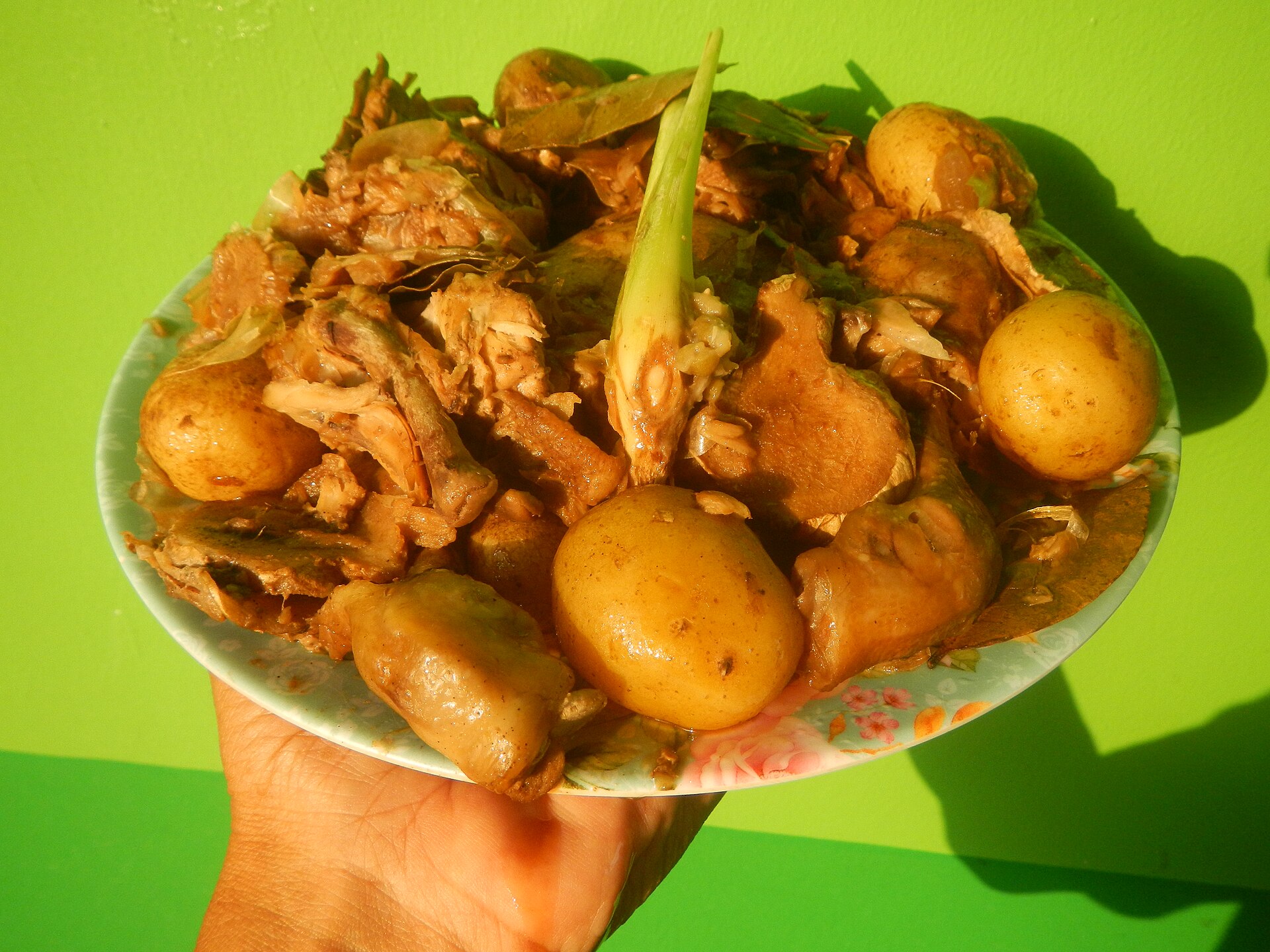
| Manila standard | Soy sauce | Reduced until glossy | Deep brown | Salty, savory, rounded |
| Adobo sa gata | Soy or fish sauce | Coconut milk, then reduced | Pale gold with orange oil | Rich, spicy, softened |
| Adobong dilaw | Salt, plus turmeric | Reduced | Yellow | Earthy, sharp, less salty |
| Adobo sa asin | Salt only | Fried in its own fat | Pale, browned edges | Very salty, very direct |
Two of those five have no soy sauce in them at all, which surprises people whose only reference is a restaurant menu. The yellow version from Batangas uses turmeric, and the salt-only version from the Ilocos region is about as far from the dark glossy picture as the method goes.
Adobong puti: vinegar, salt, and the older claim
White adobo is the version most often described as the original, on the reasoning that soy sauce came later through Chinese trade and the vinegar-and-salt method predates it. That reasoning is sound and it is still an inference rather than a documented lineage.
It is made with vinegar, water, a great deal of crushed garlic, peppercorns, bay leaves, and salt or fish sauce. Nothing darkens it. What comes out is pale, and the flavor is much sharper and cleaner than the soy version, with the vinegar and the garlic sitting right at the front instead of behind a wall of salt.
People raised on the dark version often find the first spoonful startling. Give it the full reduction. Once the sauce has cooked down to a few tablespoons and the meat has browned in its own fat, the sharpness settles into something closer to a pickled roast, and the garlic turns sweet. It is the version I would cook first if I wanted to understand what the method is actually doing.
The Manila standard, and what soy sauce changed
Soy sauce did three things at once. It made the pot dark, it replaced most of the salt, and it added a savory depth that softens the vinegar considerably. That last effect is why the soy version is the easier introduction and why it travelled.
The usual proportion is somewhere between one and two parts vinegar to one part soy, with water to bring the liquid halfway up the meat. Filipino soy sauce is thinner and saltier than Japanese soy and noticeably less sweet than Chinese dark soy. Substituting a Japanese brand works and produces a slightly rounder, sweeter pot, so pull the volume back a little.
The additions that arrived alongside soy are the ones people argue about hardest. Brown sugar, added by many households and refused outright by others. Potatoes, which stretch the pot. Pineapple, which is either a beloved family variation or an outrage depending on the province, and which shows up often enough that it has to be counted as a real version rather than a mistake.
Bicol, coconut milk, and the chile that comes with it
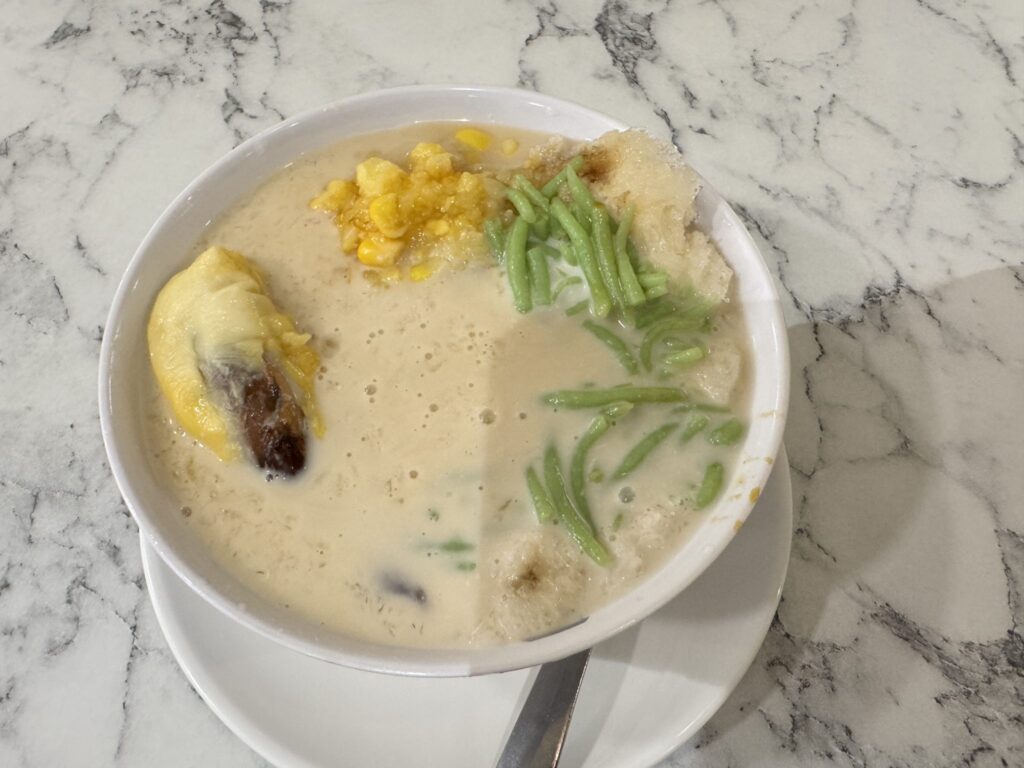
The Bicol region cooks with coconut milk and chile the way other regions cook with garlic, and adobo sa gata is what happens when the method meets that pantry. Coconut milk goes in near the end and the whole pot is reduced again until the oil separates out.
The transformation is bigger than an addition. Fat coats the tongue and blunts acid, so a pot that read as sharp becomes rounded and almost sweet, and the vinegar recedes into the background. That is why the chile is not optional in the same way: siling labuyo or another small hot pepper goes in to put an edge back on a dish that just lost one.
Use full-fat canned coconut milk, about a cup for a pot serving four, added in the last fifteen minutes. Do not let it boil hard, because a fast boil breaks it into curds and oil. A gentle simmer holds it together until you deliberately reduce it past the point of separation, which is when the sauce goes glossy and orange oil pools at the edge.
A Filipino adobo recipe, written for all three
Scaled for four, using two pounds of pork belly cut into inch and a half cubes, chicken thighs, or a pound of each. The first six steps are shared. Step seven is where the versions split.
- Combine the meat in a heavy pot with eight crushed garlic cloves, one teaspoon of whole black peppercorns lightly cracked, and three or four dried bay leaves.
- Add half a cup of vinegar, a quarter cup of soy sauce if the version calls for it, and enough water to come halfway up the meat, usually about a cup. For the white version, use a tablespoon of salt or three tablespoons of fish sauce in place of the soy.
- Bring it to a boil uncovered over medium-high heat. Do not stir, do not cover, and do not taste it for the first ten minutes.
- Lower to a steady simmer, cover partly, and cook for forty minutes for pork or twenty-five for chicken, stirring once or twice after that first ten minutes has passed. Pork should be fully tender; chicken needs to reach 165 degrees.
- Lift the meat out with a slotted spoon and set it aside. Fish out the bay leaves if you like.
- Raise the heat and reduce the liquid hard, five to ten minutes, until it is thick enough to coat a spoon and there is perhaps half a cup left.
- For the standard version, return the meat and turn it in the sauce. For the white version, brown the drained meat in a separate pan in a little of its own rendered fat, then return it. For the Bicol version, stir in a cup of coconut milk and two split chiles before reducing, and take it further until the oil separates.
- Rest it off the heat for ten minutes and serve over plain white rice, with more rice than seems necessary.
The rice is not an accompaniment. The sauce is deliberately over-seasoned because it is meant to be eaten in small amounts against a large amount of plain rice, and tasting the sauce alone and deciding it is too strong is a misreading of the dish.
The no-stir rule, and what it is actually for
Every Filipino kitchen I have cooked in states this rule the same way: once the vinegar is in, leave the pot alone until it has boiled for about ten minutes. Stirring early, the saying goes, makes the dish taste raw and sour.
The reasoning given is that the vinegar needs to boil off its harshest volatile edge before anything gets agitated, and that stirring drags unreduced acid back through the meat. Whether the chemistry works exactly that way is not something I have seen tested properly, but the practical result is consistent enough that it is worth following. Pots that get stirred at minute two do taste sharper.
What is certainly true is the second half of the rule: the pot stays uncovered for that first stretch. A lid condenses the evaporating acid and returns it to the pot, which keeps the sharpness in. Boiling uncovered lets it go. That mechanism is easy to observe and it makes a difference you can taste, in the same way a great deal of what happens with vinegar and salt in a kitchen comes down to what is allowed to leave the pot.
Cane, coconut, palm: the vinegar decides more than the soy

Filipino vinegars are not interchangeable with what sits on an American shelf, and the choice changes the pot more than any other single decision. All of them run around four to five percent acidity, which is milder than sherry or wine vinegar.
| Vinegar | From | Character | Substitute |
|---|---|---|---|
| Sukang maasim | Sugarcane | Clean, slightly sweet, the default | Cider vinegar, cut with water |
| Sukang tuba | Coconut sap | Cloudy, funky, faintly yeasty | Unfiltered cider vinegar |
| Sukang paombong | Nipa palm sap | Sharp, mineral, less sweet | White wine vinegar |
| Sukang Iloko | Sugarcane, aged | Darker, rounder, more depth | Cider vinegar with a splash of malt |
If none of these is available, cider vinegar is the closest common bottle and it is a good stand-in. Plain distilled white vinegar works and gives a flatter, harsher pot, so cut it with a third water. What does not work is balsamic, whose sugar turns the reduction into a syrup, or rice vinegar, which is too mild to survive the reduction at all.
Pork, chicken, or both in the same pot
Pork belly is the classic and the fat is structural, because the reduction ends by frying the meat in what it rendered. Skinless cuts do not do that and the finish falls flat. Shoulder works and takes longer.
Chicken cooks faster and the thighs are the only part worth using. Breast dries out inside twenty-five minutes of simmering and there is nothing in this sauce to disguise it. Bone-in thighs give a better sauce than boneless.
Cooking both together, adobong manok at baboy, is common and requires staging: pork first for twenty minutes, then chicken added for the remaining twenty-five. Squid, water spinach, hard-boiled eggs, and long beans all have adobo versions built on the same method, and the vegetable ones cook in a fraction of the time, which is worth knowing when the pot has to be on the table by seven. Seeing how far one technique stretches across a country is most of the pleasure of cooking through a region rather than a recipe.
The last ten minutes: reduce, fry, or leave it saucy
Three legitimate endings, and households defend all three. Saucy, where the liquid is reduced only a little and there is enough to spoon generously over rice. Glossy, where it is taken down until it coats the meat and there is a few tablespoons left. Fried, where the meat is drained, browned hard in its own fat, and the reduced sauce is poured back over it at the table.
The fried finish is the most work and the best texture, especially with pork belly, where the exterior goes crisp and the inside stays soft. It also produces the least sauce, which matters at a table that eats it with a lot of rice.
Taste before the final reduction, not after. Reduction concentrates salt fast, and a sauce that was correct at minute forty can be inedible at minute fifty. If it does go too far, water is the fix, not more vinegar, and it should go in a tablespoon at a time.
The pot that used to live on the counter
Adobo was a preservation method before refrigeration existed, and older practice was to leave the pot on the counter and reheat it once a day, sometimes for the better part of a week. The acid and the salt do genuinely slow spoilage, and the flavor does genuinely improve over three days.
That is a real tradition and it is not one to copy without qualification. The safety of the practice depends on the acidity actually being high enough throughout the pot, on the reheating being thorough every day, and on the ambient temperature, and a version diluted with water and coconut milk is considerably less acidic than the concentrated original. Refrigerating it costs nothing and keeps the same improvement over three days. Standard guidance on cooling cooked meat and reheating it is published by public food safety authorities, and cooked pork and chicken belong under it regardless of how much vinegar is in the pan.
Practically: cool it in a shallow container within two hours, refrigerate, and reheat to steaming before serving. It keeps three or four days that way and freezes for about three months, though the coconut version separates on thawing and needs a hard stir over low heat to come back together.
Frequently Asked Questions
Which version should I cook first?
The soy version, because it is the most forgiving and it gives you a baseline to compare against. Then cook the white version within the next few weeks, while the first one is still fresh in memory. The gap between them is the entire argument, and tasting it directly explains more than any description does.
Do I have to marinate the meat first?
No, and a great many households never do. Marinating for an hour or overnight in the soy and vinegar does deepen the flavor slightly, and it also firms the surface of the meat. The method works perfectly well as a straight simmer, which is how it is most often cooked on a weeknight.
Why is my sauce bitter?
Usually the bay leaves, left in through a long hard reduction, or garlic that browned too far before the liquid went in. Take the bay out once the meat is tender, and add the garlic whole and crushed rather than sliced so it cannot scorch. Over-reduced soy sauce also turns bitter and no amount of water fixes it afterward.
Can I make it without soy for a gluten-free table?
Adobong puti exists precisely because there are versions with no soy at all, so the answer is to cook that one rather than to substitute. If a dark pot is wanted, coconut aminos or a tamari labeled gluten-free both work, with the salt adjusted, since coconut aminos are noticeably sweeter and less salty than soy.
Is sugar traditional?
In some households, absolutely, and in others it is treated as a mistake. A teaspoon of brown sugar in a pot for four rounds the vinegar and helps the sauce gloss, and plenty of home cooks in Luzon add it without thinking twice. Nobody can claim it is wrong; it is a regional and family preference like every other variable here.
Cook the white one and the dark one within a week of each other and the disagreement stops being abstract. One is a pickle that became dinner and the other is a braise that kept a pickle’s edge, and both of them are the same pot until the last twenty minutes.