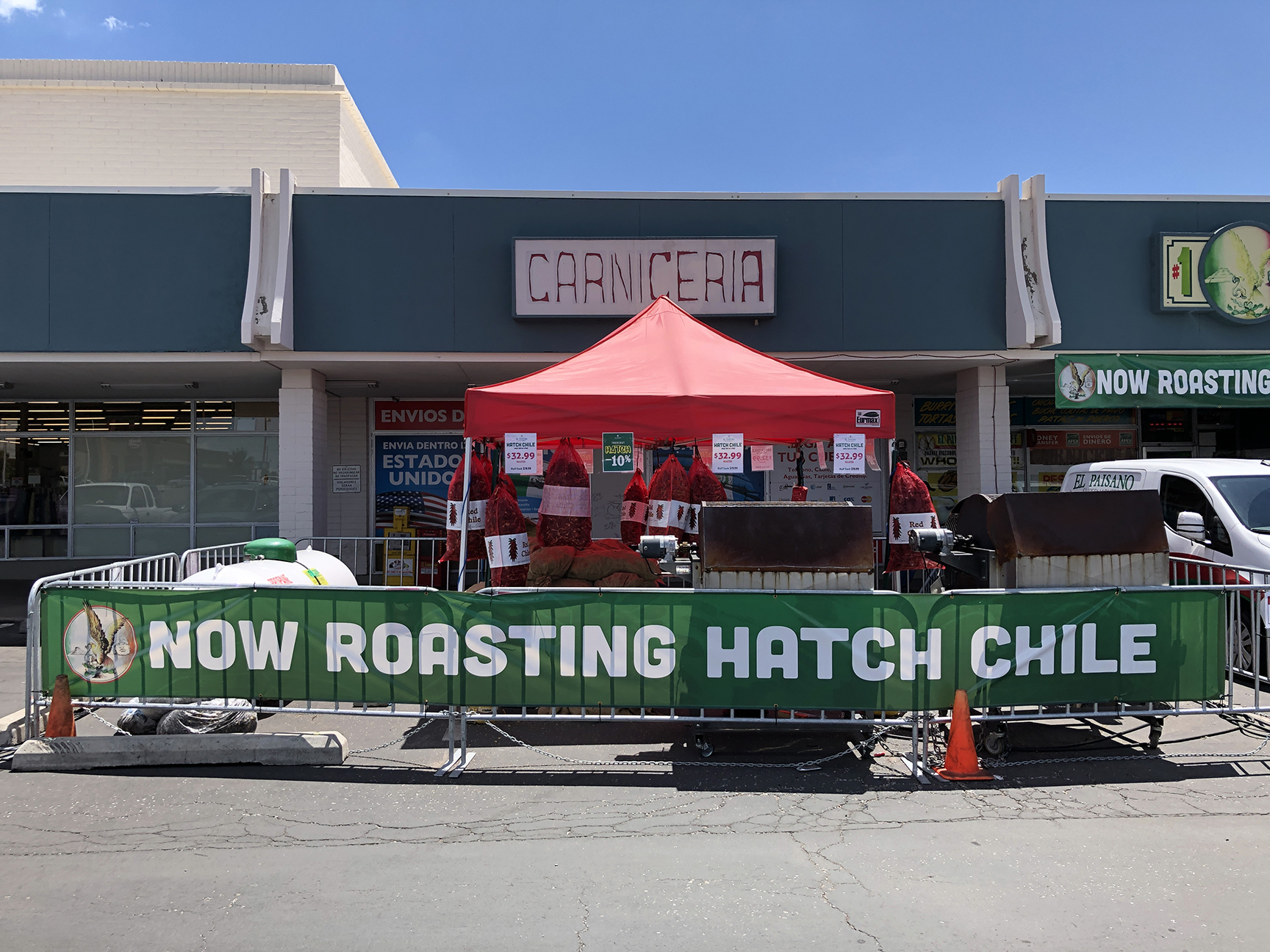
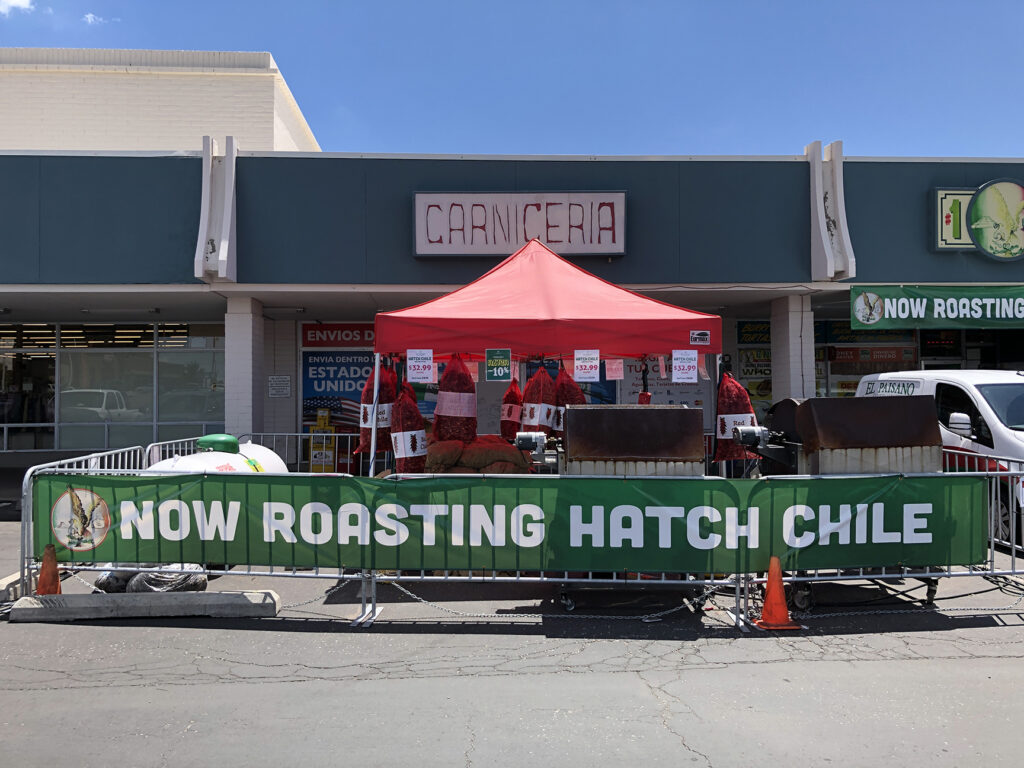
For about two weeks every September, the parking lot of every grocery store in New Mexico has a propane roaster running in it, and the smell reaches three blocks in any direction. It is one of the very few genuinely regional food seasons left in this country that has not been flattened into a year-round shelf item.
People buy chile by the bushel, which is roughly twenty-five to thirty pounds, watch it roast in a rotating steel drum, and take it home in a black plastic bag that is still steaming. Then they spend an evening peeling and bagging it, and that bag is the entire year’s supply.
Outside the state, the same two weeks show up as a display at the front of the supermarket and a sign with the word Hatch on it. What follows is what the word actually means, what a bushel gets you, how to freeze it so it lasts, and the pork stew that is the first thing most households cook once the freezer is full.
- The window: late July through September, with the peak in the first three weeks of that month
- A bushel: 25 to 30 pounds raw, about 12 to 15 pounds after roasting and peeling
- The roast: blistered black in patches, then sealed in a bag for ten minutes so the skins slip
- Freezing: in one-cup portions, and there is a real argument about whether to peel first
- The stew: pork shoulder, potato, onion, garlic, chile, stock, about three hours
- The safety line: roasted chile is a low-acid food and must never be water-bath canned
Two weeks in September, and a smell that carries three blocks
The season starts in late July with the first green pods and runs into October, but the volume and the roasters concentrate into a few weeks around the beginning of September. That is when the price drops, when the roasters appear outside every store, and when buying in quantity makes sense.
The smell is the part nobody prepares you for. Roasting chile produces something between burnt grass, green pepper, and smoke, and in a town where several roasters are running at once it saturates the whole place. People who grew up there describe it the way other regions describe woodsmoke in October.
It is also a genuine deadline. Fresh green chile does not keep; it has to be roasted within a few days of picking and frozen within a day of roasting. The compressed timeline is why the whole state treats it as an event rather than a shopping trip, and why so much of New Mexican cooking runs off a freezer rather than off a market. It is about as literal an example of cooking on the calendar the crop sets as exists in this country.
Hatch is a valley, and the name is contested
Hatch is a small village in the Rio Grande valley in southern New Mexico, and the surrounding farmland is the Hatch Valley. The claim behind the name is that the soil, the elevation, and the wide day-to-night temperature swing produce a pod with a particular flavor that the same seed grown elsewhere does not have.
Whether that claim holds up is argued about seriously. Growers in the valley say it does and have pursued certification to protect the name. Growers elsewhere in New Mexico point out that excellent chile is farmed in several other parts of the state and that the Hatch label has become a marketing shorthand for New Mexico chile in general.
The practical problem is that a lot of what is sold as Hatch chile outside the state was not grown in the valley, and there have been repeated disputes over labeling. If the origin matters to you, buy from a seller who names the farm. If it does not, buy New Mexico chile of a named variety and stop worrying about the village, which is what most cooks in the state actually do.
Big Jim, Sandia, Barker: the pods behind the pile
What is in the roaster is not one pepper. A chile breeding program has been running at the state’s land grant university since the early twentieth century, and the named varieties that came out of it are what growers plant and what the sign at the roaster refers to.
| Variety | Heat | Pod | Best for |
|---|---|---|---|
| Big Jim | Mild | Very long, thick walled | Rellenos, stuffing, freezing whole |
| Heritage 6-4 | Mild | Medium, classic shape | All purpose, sauces, the default |
| Joe E. Parker | Mild to medium | Straight, easy to peel | Stew, chopping, high volume |
| Sandia | Medium to hot | Slim, tapered | Stew, sauce, people who want heat |
| Barker’s Hot | Hot | Small, thin walled | Blending into a hot sauce |
The roaster will ask mild, medium, or hot, and the answer determines which variety goes in the drum. Buy two bushels of different heats if there is freezer space, because a bag of mild and a bag of hot together give far more control over a pot than a single bag of medium ever will.
Red or green, and the third answer
The state legislature made the official state question, in 1996, a choice between the two, which tells you how central the argument is. Ordering food in New Mexico means answering it, and the answer is not a preference so much as a declaration.
They are the same pepper at different stages. Green chile is picked unripe, roasted, and used fresh or frozen, and it tastes green, grassy, and bright. Red chile is the same pod left on the plant until it ripens, then dried, and it tastes deeper, sweeter, and earthier, and it is used as a dried powder or as pods made into a sauce. Nothing about them is interchangeable.
The third answer is Christmas, which means both, served side by side on the same plate. It is not a joke or a tourist thing; it is a standard order and every restaurant understands it. It is also the honest answer for anyone who cannot see why they would have to choose.
Buying a bushel, and what a bushel actually is
A bushel of green chile runs about twenty-five to thirty pounds raw and comes out around twelve to fifteen pounds once roasted and peeled, because the skins, stems, and seeds are all going in the trash and the pods lose water.
That yields somewhere in the range of twenty-four to thirty cups of chopped chile, which is a lot of quart bags and a real amount of freezer space. For a household of two that cooks green chile once a week, half a bushel is closer to right. A full bushel makes sense for a family, or for anyone who is going to give bags away, which is a large part of what actually happens with them.
Look for pods that are firm, glossy, and heavy for their size, with smooth unwrinkled skin. Soft spots, wrinkling, and a dull surface all mean the chile has been sitting. Buy from a roaster with turnover; the ones outside busy stores are moving pallets a day and the chile is picked the same week.
The roaster, the blister, and ten minutes of steam
The drum roaster is a rotating cage of steel mesh over a propane burner, and it does one thing: it blisters the skin fast enough that the flesh underneath stays firm. Five to seven minutes of tumbling gets the skins blackened in patches across every pod.
What happens next is the part that matters and it happens immediately. The hot chile goes straight into a heavy plastic bag or a cooler and the bag gets closed. Ten to fifteen minutes of trapped steam separates the skin from the flesh, and after that the peels slip off with a thumb. Chile that is allowed to cool in the open air keeps its skin firmly attached and peeling it becomes an ordeal.
The same thing can be done at home under a broiler or on a grill, in batches, for a few pounds at a time. It works and it takes an entire evening for what a drum roaster does in six minutes, which is the argument for buying it roasted. Anyone doing it at home should get the pods blackened in patches rather than evenly, and then straight into a covered bowl.
Peeling and freezing, and the argument about skins
Peel over a bowl, with gloves on, working in from the stem end. Pull the stem and the seed cluster out together, split the pod, and scrape the seeds away with a thumb. It goes fast once a rhythm develops, and a bushel is about two hours of work with two people and a good radio.
The argument is whether to peel before freezing at all. A large number of New Mexico households freeze the pods unpeeled, on the reasoning that the skin protects the flesh from freezer burn and slips off easily after thawing. The other camp peels first, because doing the unpleasant work once in September is better than doing it in pieces all winter.
Both work. What matters more is portioning: one cup per bag, flattened so the bags stack, air pressed out, dated. A gallon bag of chile is useless because the whole thing has to thaw to get at any of it. Frozen properly, it holds a year, and it is genuinely good until the next season comes around.
A green chile stew recipe that makes a gallon
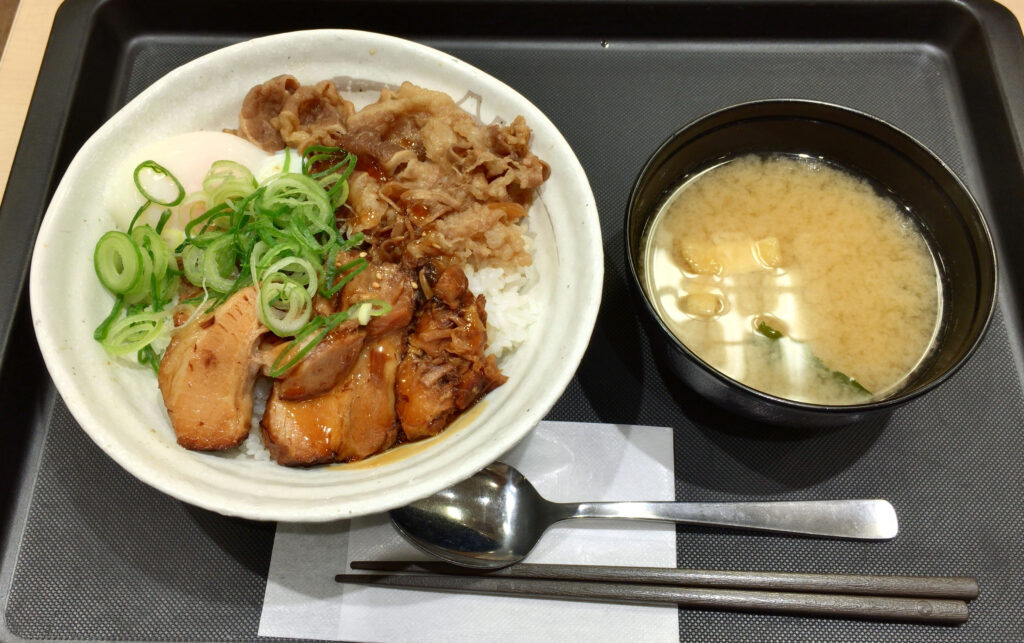
This is the first thing most people cook once the freezer is full, and it is deliberately simple. Pork, potato, onion, garlic, chile, stock. Nothing else belongs in it. Makes about a gallon, which is eight to ten servings.
- Cut three pounds of pork shoulder into three-quarter-inch cubes. Pat them dry and salt them well. Dry meat is the whole difference between browning and steaming.
- Brown the pork hard in two tablespoons of oil in a heavy pot, in three batches so nothing crowds, about four minutes a batch. Set it aside as it finishes.
- Cook two large chopped onions in the fat left behind for eight minutes, scraping the bottom of the pot as they release liquid. Add six minced garlic cloves for two minutes more.
- Add two tablespoons of flour and stir for two minutes, or skip it entirely if you want a thin stew. This is where the argument lives and both versions are correct.
- Return the pork with any juices. Add six cups of chicken stock, a tablespoon of dried Mexican oregano, and a teaspoon of cumin. Bring to a simmer, cover partly, and cook ninety minutes until the pork is tender.
- Add four medium potatoes cut into three-quarter-inch cubes. Simmer thirty minutes more, until they are soft and beginning to break at the edges.
- Stir in four cups of chopped roasted green chile. Simmer twenty minutes more, uncovered. Adding the chile at the end rather than the beginning keeps its flavor bright instead of cooking it into the background.
- Salt properly, which will take more than expected, and let it sit off the heat for fifteen minutes. Serve with a flour tortilla and nothing else on the plate.
Pork shoulder in cubes should be genuinely tender before the potatoes go in, and the whole pot needs about two and a half hours. Rushing the braise gives chewy meat in a good broth, which is not the same thing.
The pork, the flour, and the thickening argument
Two schools, and they are both defended fiercely in the same county. The thin school holds that green chile stew should be a brothy soup where the chile and the pork are suspended in clear liquid, and that flour turns it into gravy. The thick school holds that a spoonful of flour gives the stew enough body to coat a tortilla and that without it the whole thing is a bowl of water.
The stew called caldillo sits at the thin end and is a distinct dish with its own name. Restaurant versions tend toward the thick end because it holds better on a steam table. Home versions vary by household and by who is cooking.
Shoulder is the correct cut either way, and the reason is fat and connective tissue. Loin or tenderloin cut into cubes turns dry and stringy inside an hour of simmering and cannot be recovered, which is the same reason a pot of any long-cooked plate of American home food is built on the cheap cut rather than the expensive one.
What else the freezer bags go into
The stew is the headline and it is not where most of the chile goes. A bag of green chile is a condiment, and it ends up in more things than any other item in the freezer.
The green chile cheeseburger is the most defended of them: chopped green chile and melted cheese on a griddled patty, which several towns in New Mexico claim to have originated and none can document. It is a legitimate contribution to what can be done to a beef patty and it is the thing most visitors remember.
Beyond that: breakfast burritos with egg, potato, and chile; green chile chicken enchiladas stacked flat rather than rolled, which is the New Mexico construction; chile stirred into a pot of pinto beans; chile in cornbread; chile on a bowl of posole; and chile stirred into macaroni and cheese, which sounds wrong and is not. A cup thawed in the refrigerator overnight goes into any of them.
Handling a bushel, and the canning line not to cross
Wear disposable gloves for the entire peeling session. Capsaicin does not wash off with water, it lingers on skin for hours, and after two hours of handling thirty pounds of chile it will find your eyes, your face, and anyone you touch. Even mild chile in that quantity is a problem. If it does reach bare skin, wash with dish soap and warm water, rub with a little vegetable oil, and wash again.
The genuinely important point is about preserving. Roasted green chile is a low-acid food, and low-acid foods cannot be safely preserved in a boiling water bath, because that method does not reach a temperature high enough to destroy the spores of the bacterium that produces botulinum toxin in a sealed jar. Every year somebody water-bath cans a batch of chile because it seemed like it would work.
There are two safe routes. Freezing, which is what nearly everyone in New Mexico does and which preserves the flavor better anyway. Or pressure canning, following a tested process at the correct pressure for your altitude, which matters a great deal in a state where most of the population lives above four thousand feet. General guidance on home preserving and on low-acid foods is published by public food safety authorities, and this is one of the few places in home cooking where following it exactly is not optional.
Frequently Asked Questions
Can I buy Hatch chile outside New Mexico?
Yes, for a few weeks each year. Many supermarket chains run roasters in their parking lots during the season, and several New Mexico farms ship roasted chile frozen year round. Verify the origin if it matters to you, since the name is used loosely and not everything labeled Hatch was grown in the valley.
What can I use instead if there is no green chile at all?
Roasted Anaheim peppers are the closest common substitute and are a related pod, though milder and less complex. Poblanos are the other option and bring a darker, slightly bitter note that changes the stew. Add a serrano or two either way, since the heat is part of what makes the dish work.
How long does frozen green chile keep?
About a year in a properly sealed bag with the air pressed out, which conveniently lasts until the next season. Beyond that it does not become unsafe, it just loses aroma and turns dull. Freeze it in one-cup portions so a bag can be thawed for a single pot rather than the whole supply.
Should I peel the chile before freezing it?
Households do it both ways and both are fine. Freezing unpeeled protects the flesh and the skins slip off easily after thawing, at the cost of doing the work all winter. Peeling first means one long evening in September and no further effort, which is the version I would choose.
Is green chile stew supposed to be thick?
Depends entirely on whose kitchen you are standing in. Both a thin brothy version and a version thickened with a little flour are traditional and both have serious defenders. Make it once each way, since the ingredients are identical and the only difference is two tablespoons and two minutes.
The whole thing hinges on a couple of weeks and a freezer, which is what makes it worth planning for. Buy more than seems reasonable, peel it in one long evening with someone else, and the pot on a cold Tuesday in February will be the reason.