The color arrives before anything else does. A plate of aji de gallina is a deep saffron yellow that no dairy and no chicken could produce on their own, poured over white rice with a boiled potato under it, a black olive on the side, and half a hard-boiled egg.
Underneath the color there is a sauce that is not thickened the way a French kitchen would thicken it. No roux, no cornstarch, no reduction. White bread soaked in milk, blended smooth, and cooked down with ground walnuts until it holds a spoon. It is a medieval technique that survived in Lima and largely disappeared everywhere else.
Two ingredients decide whether this works: the aji amarillo paste, which has no honest substitute, and the walnuts, which people leave out because they seem like a garnish and are in fact half the body of the sauce.
- Serves: six, over rice, with a boiled potato under each portion
- Time: about an hour and a quarter, of which forty minutes is poaching
- The thickener: four slices of crustless white bread soaked in evaporated milk
- The color and heat: three to four tablespoons of aji amarillo paste
- Not optional: half a cup of ground walnuts or pecans
- On the plate: rice, boiled potato, black olive, hard-boiled egg, all of it
A yellow sauce thickened with bread, not flour
Bread thickening is old. Before flour-based sauces took over European cooking, bread soaked in liquid and pounded smooth was one of the standard ways to give a sauce body, and it survives in a handful of places: in Catalan picada, in Italian pappa al pomodoro, in Spanish ajoblanco, and here. It is one of the more durable pieces of technique carried forward from very old kitchens.
It behaves differently from flour. A bread-thickened sauce is opaque, slightly grainy under a spoon rather than glossy, and it thickens further as it sits and then keeps thickening in the refrigerator. It also cannot be thinned and rethickened the way a roux sauce can; once it is loose, more bread has to go in and be cooked through.
The advantage is flavor. Flour tastes of nothing and needs to be cooked out. Bread contributes a faint sweetness and a soft body that carries the chile and the nuts rather than coating them, which is why substituting a cornstarch slurry produces something that looks similar and tastes noticeably thinner.
Where it comes from, and why nobody can prove it
The account you will read almost everywhere traces the dish back to menjar blanc, a medieval Catalan preparation of shredded chicken breast pounded with almonds, milk, sugar, and rice flour. That dish travelled through Spain, arrived in the Americas with colonization, and is said to have turned savory in Peru with chile in place of sugar and walnuts in place of almonds.
It is a tidy story with a real dish at the start of it, and the resemblance is genuine: shredded poultry, ground nuts, a milk-based thickened sauce. What is missing is any document connecting the two across four centuries. Peru also has a surviving sweet preparation called manjar blanco, which complicates the line further rather than confirming it.
So the honest position is that a medieval European technique and an Andean chile met somewhere in colonial Lima and the result stayed. Which household did it, and when, nobody knows. That kind of gap is normal in Peruvian cuisine, where Spanish, Andean, African, Chinese, and Japanese cooking have been folding into each other for a very long time, and where clean genealogies are the exception rather than the rule.
Aji amarillo: the pod, the paste, and the frozen bag
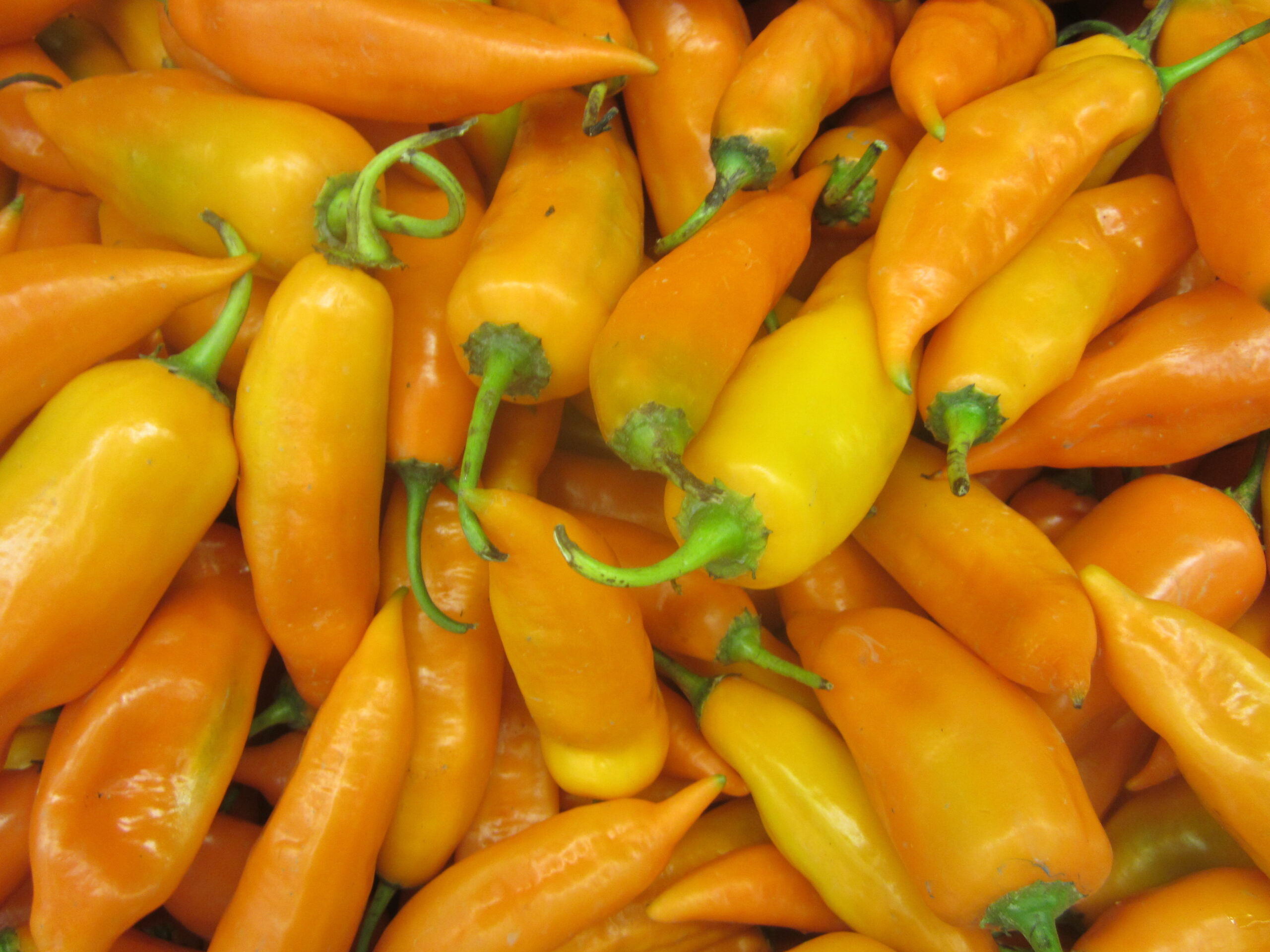
Aji amarillo is called yellow and ripens to a deep orange. It is a different species from the jalapeno and habanero families, with thick flesh, a distinct fruity note somewhere near mango and apricot, and a heat that commonly published ranges put somewhere in the neighborhood of a cayenne.
That heat is real and it is not what the dish is about. Most of the aji amarillo in a pot of aji de gallina is doing color and fruit rather than burn, and the dairy in the sauce blunts it considerably. A plate made with four tablespoons of paste is warm rather than hot.
Three forms turn up. Jarred paste, which is the standard and the most useful. Frozen whole pods, sold in bags at Latin markets, which need to be seeded, boiled twice to soften, and blended. And dried pods, sold as aji mirasol, which are the same chile dried and give a darker, deeper sauce with less of the fresh fruit note.
Finding the paste in the United States, and three stand-ins
Any Latin American grocery with a Peruvian or Ecuadorian section will carry the jarred paste, usually from one of a handful of Peruvian brands, in a small jar with a bright yellow label. It also turns up in the international aisle of larger supermarkets in cities with a Peruvian population, and it keeps months in the refrigerator once opened.
There is no single substitute that gets it right, and it is worth saying that plainly rather than pretending otherwise. What the pod supplies is three things at once: a specific fruity flavor, a moderate heat, and a strong yellow-orange color. Most workarounds get two of the three.
| Stand-in | Gets right | Misses | Amount for this recipe |
|---|---|---|---|
| Yellow bell pepper, roasted, plus a serrano | Color, mild heat | The fruit note entirely | 2 peppers, 1 chile, blended |
| Habanero, seeded, cut with roasted yellow pepper | Fruit note, color | Heat runs much higher | A quarter pod, plus 2 peppers |
| Dried aji mirasol, soaked | Flavor and heat | Darker, less bright | 6 pods, seeded and soaked |
| Turmeric for color alone | Color only | Everything else | Half a teaspoon, as an addition |
If none of these is available, cook something else this week and buy the paste online for next week. It is not an expensive jar and the dish without it is a different dish wearing its name, which is worth knowing before spending an hour on it.
The bread, the milk, and the twenty minutes in between
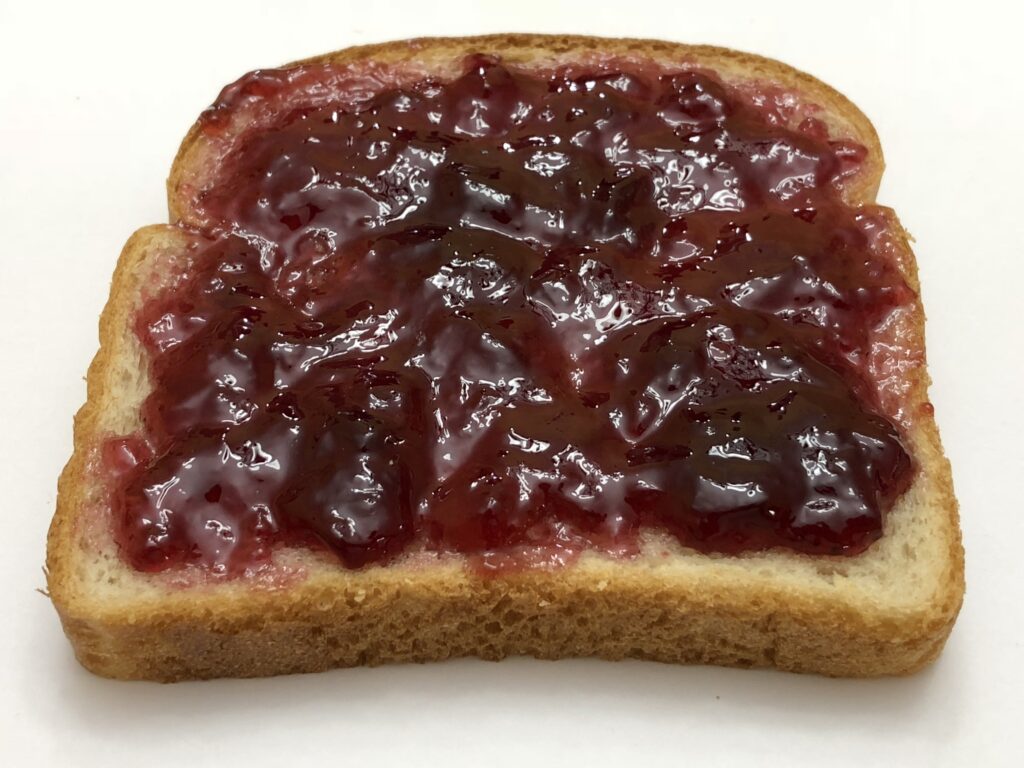
Plain soft white sandwich bread, four slices, crusts removed. Not sourdough, not a crusty loaf, not anything with a strong flavor of its own. The bread here is a texture ingredient and any character it brings is interference.
Soak it in a cup of evaporated milk for about twenty minutes, until it has gone completely soft and there is no dry center left in any slice. Evaporated milk is what Peruvian kitchens use and it is not an approximation of fresh milk; it is thicker, slightly caramelized from the canning process, and it holds together in a hot pan far better. Whole milk works and gives a lighter, less rich sauce.
Then blend the soaked bread with the milk until completely smooth. Any lumps left at this stage will still be there at the end, because nothing later in the process breaks them down. A blender does this in twenty seconds; a food processor takes longer and leaves it slightly rough.
Walnuts and pecans, and the part that is not optional
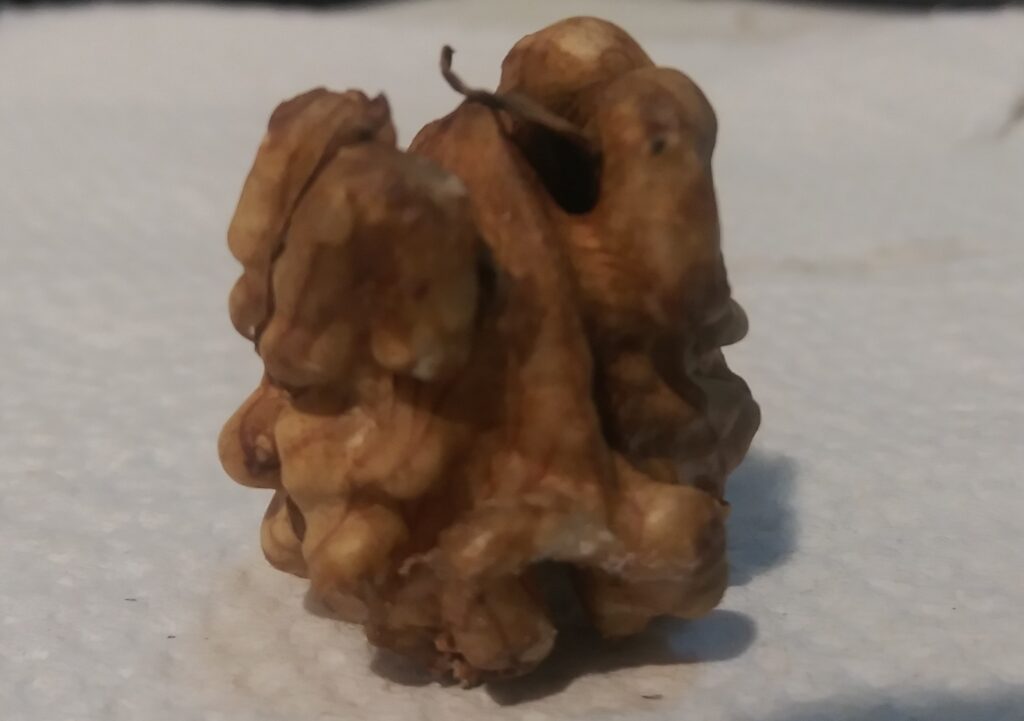
Half a cup of walnuts, ground fine, goes into the blender with the bread. Pecans are a common substitute in Peru and elsewhere and are slightly sweeter and softer. Either one works. Almonds change the direction of the dish and pull it back toward its supposed medieval ancestor, which is interesting once and not what people expect on the plate.
The nuts are structural. They contribute fat and body, and without them the sauce is thinner, flatter, and noticeably less rich no matter how much bread goes in. This is the ingredient people leave out on the assumption that it is a garnish, and it is the single most common reason a home version tastes like it is missing something.
Toast them lightly first, six or seven minutes in a 350 degree oven, and let them cool before grinding. Toasting deepens the flavor considerably. Grinding them while warm turns them oily and pasty in the blender rather than fine.
An aji de gallina recipe for six
Written with chicken breast, which is what most kitchens have, though the name refers to hen and an older bird gives better stock. Have the bread soaking before anything else starts.
- Poach two pounds of boneless chicken breast in six cups of water with half an onion, a carrot, two celery ribs, and a tablespoon of salt, at a bare shiver rather than a simmer, for eighteen to twenty minutes, until it reaches 165 degrees.
- Lift the chicken out, cool it enough to handle, and shred it by hand along the grain into long strands rather than chopping it. Strain the stock and keep it. This is the only liquid the sauce gets.
- While the chicken poaches, soak four slices of crustless white bread in one cup of evaporated milk for twenty minutes, then blend with half a cup of toasted ground walnuts until completely smooth.
- In a wide heavy pan, cook one large finely chopped red onion in three tablespoons of oil over medium heat for ten minutes, until soft and translucent. Add four minced garlic cloves and cook two minutes more.
- Add three to four tablespoons of aji amarillo paste and a teaspoon of ground turmeric if the color needs help. Fry it in the onion for four full minutes, stirring, until it darkens and the oil at the edge of the pan turns orange. Do not shorten this.
- Pour in the blended bread mixture and one cup of the reserved stock. Stir constantly over medium-low heat for eight to ten minutes as it thickens.
- Stir in half a cup of grated hard cheese and the shredded chicken. Cook five more minutes until everything is hot through and the sauce coats the meat heavily. Salt to taste.
- Adjust the consistency with more stock, a quarter cup at a time, until it pours thickly off a spoon but does not run on the plate. Serve immediately.
Step five is where most of the flavor is made. Paste added at the end tastes raw and slightly metallic; paste fried in oil for four minutes tastes of the pepper it came from. The color change in the pan is the signal.
Poaching the bird, and the stock that goes back in
The name says gallina, hen, and a stewing hen genuinely makes a better version. The meat is firmer, it shreds into long strands that hold up in the sauce, and the stock it leaves behind has enough gelatin to give the sauce body on its own.
Breast is what most people will use and it works if it is treated carefully. Keep the water below a simmer, take it out at temperature rather than by time, and shred it while it is still warm. Cold chicken breast tears rather than shreds. Thighs are the middle option: more forgiving than breast, less structured than hen.
Never use water in place of the poaching stock. The sauce is thickened with bread and enriched with milk and nuts, which means the only savory backbone it has comes from that liquid. A version made with water tastes sweet and slightly flat, and no amount of salt corrects it.
The plate: rice, potato, olive, and egg
The full arrangement is not decoration and each element has a job. White rice underneath, plain and unsalted, to absorb the sauce. A boiled yellow potato cut in thick rounds, laid under or beside the chicken, which is the traditional base and does the same work in a different texture.
Then a black olive, usually a Peruvian botija, whose salt and bitterness cut through the richness. And half a hard-boiled egg, which does nothing for flavor and a great deal for the balance of the plate. Together they turn a rich yellow sauce into something you can eat a whole bowl of.
Skipping the olive and the egg is common outside Peru and it makes the plate one-note by the last third. Both take almost no work and they are the difference between a rich dish and a heavy one, which is a lesson that turns up across dishes built on a single dominant sauce.
Too thick, too thin, too sharp: three corrections
Too thick is the easiest and it happens constantly, because the sauce keeps setting as it cools. Loosen it with warm stock, a quarter cup at a time, over low heat. Milk works too and pushes it richer. Water is the last resort and dilutes the seasoning along with the body.
Too thin means not enough bread or not enough time on the heat. Blend another slice of soaked bread and stir it in, then cook it for a full five minutes so the starch actually swells. Adding dry breadcrumbs directly is the shortcut and it leaves a gritty texture that does not go away.
Too sharp usually means the paste was not fried long enough, and the fix is not more dairy. Give the pan a few more minutes with the sauce over low heat and it will settle. A teaspoon of sugar helps a batch made with a particularly aggressive jar of paste, and a squeeze of lime at the end lifts a version that came out heavy.
Nuts, eggs, and one caution before the table sits down
There are ground tree nuts distributed invisibly throughout this sauce. Walnuts blended into a yellow sauce are impossible to see and impossible to pick out, and tree nut allergy is common enough that this needs saying before anyone serves it to guests. There is no version of this dish that removes them and stays itself, so the answer is to say so rather than to substitute quietly.
Chicken needs to reach 165 degrees, and poached breast at a bare shiver hits that in under twenty minutes. Check with a probe rather than by cutting, since a piece cooked in liquid looks the same at 150 as at 165. Hard-boiled eggs for the garnish should be cooked through, cooled promptly, and kept refrigerated until they go on the plate, and guidance on egg and poultry handling is published by public food safety authorities.
The sauce contains milk and cheese and it holds heat for a long time in a heavy pan. Cool leftovers in a shallow container within two hours rather than leaving the pan on the stove, and use them within three days. It does not freeze well; the bread and dairy separate on thawing and the texture never fully comes back. What it does instead is thicken into something excellent on day two, spread on bread or folded into a potato, which is how most of my leftovers end up.
Frequently Asked Questions
Can I make it without aji amarillo paste?
You can make something yellow and creamy and good, and it will not be this dish. The pepper supplies a fruit note that nothing in a standard supermarket reproduces. Roasted yellow bell pepper with a serrano and a little turmeric is the closest workaround, and it is worth ordering the real paste before making it a second time.
Is it supposed to be spicy?
Warm rather than hot. The dairy, the bread, and the nuts all blunt the chile considerably, and a plate made with four tablespoons of paste is comfortable for most people. If more heat is wanted, it comes from an extra spoonful of paste rather than from a different pepper, which would change the flavor.
What can I use instead of evaporated milk?
Whole milk works and gives a lighter sauce with slightly less body. Half and half sits in between. What matters more is that the bread soaks long enough in whatever liquid is used, since the thickening depends on the bread being fully saturated before it is blended.
Can I use rotisserie chicken?
Yes, and it cuts half an hour out of the cooking. Pull the meat into shreds and use a good chicken stock in place of the poaching liquid. The result is a little saltier and the strands are shorter, since roasted meat does not shred as cleanly as poached meat, and it is a reasonable weeknight version.
Why is my sauce grainy?
The bread was not fully soaked or not fully blended. Both faults are locked in by the time the sauce hits the pan, because nothing later breaks down a lump of bread. Soak for the full twenty minutes, blend until there is no texture at all, and pass it through a sieve if any doubt remains.
Make it once with the real paste and the walnuts in, and the thing that stays with you is not the heat. It is how a sauce with no flour and no cream in it manages to be that thick, which is a four-hundred-year-old trick that most kitchens have simply forgotten.