Almost every home version of this bowl fails the same way. The noodles go into the bowl, the sauce goes on top, someone stirs twice, and by the third mouthful all the good part has slid to the bottom and the noodles are dressed in nothing but oil.
The fix is not a better recipe. It is an order of operations. The sauce goes in the empty bowl first, gets thinned with hot water from the noodle pot until it pours, and only then do the noodles land on top of it. Tossed from the bottom, the sauce comes up through the noodles instead of sitting under them.
The whole thing takes about fifteen minutes and most of that is waiting for water to boil. Four things go in the bowl, three things go on top, and none of them requires a wok or any particular skill with one.
- The four in the bowl: Chinese sesame paste, chile oil with its sediment, black vinegar, soy sauce
- The thinner: two or three tablespoons of starchy water from the noodle pot
- Clock: 15 minutes, most of it waiting for the water
- The toss: from the bottom, immediately, before anyone sits down
- The numbing half: ground Sichuan pepper, added last, and it is not chile heat
- At the table: peanuts and sesame are both in this bowl, which is worth saying out loud
The order is the recipe
Sesame paste is heavy and it does not want to disperse. Poured over a bowl of hot noodles it clings to the first few strands it touches, forms a lump, and then slides. That is the entire mechanism behind the disappointing bowl.
Building it underneath solves it with no technique at all. The paste gets whisked with the liquid ingredients in an empty bowl, where there is room to work and nothing in the way. Then it gets thinned with hot starchy water until it is roughly the consistency of heavy cream. At that point it is a sauce rather than a paste and it behaves like one.
The noodles go on top hot and dripping, and the toss takes about ten seconds with two forks or a pair of tongs, lifting from underneath rather than stirring in circles. Done this way, every strand comes out coated and the bottom of the bowl is nearly clean when the noodles are gone.
The four things that go in the bowl first
Per bowl, and this is the ratio I keep going back to after a long stretch of adjusting it. Two tablespoons of Chinese sesame paste, one tablespoon of chile oil taken with sediment, one tablespoon of black vinegar, one tablespoon of soy sauce, half a teaspoon of sugar, and one grated garlic clove.
| Ingredient | Per bowl | Doing what | If you cut it |
|---|---|---|---|
| Chinese sesame paste | 2 tablespoons | Body, roast, richness | The sauce goes thin and watery |
| Chile oil with sediment | 1 tablespoon | Heat, color, fragrance | Flat and pale |
| Black vinegar | 1 tablespoon | Cuts the fat, adds malt | Heavy, cloying by bite four |
| Soy sauce | 1 tablespoon | Salt and depth | Tastes unfinished |
| Sugar | Half a teaspoon | Rounds the vinegar | Sharper, still fine |
| Hot noodle water | 2 to 3 tablespoons | Thins and emulsifies | Nothing works |
Whisk the paste with the soy and vinegar first, before the oil. Adding oil to a stiff paste makes it seize into a ball that no amount of stirring recovers. Liquid first, then oil, then hot water last, a tablespoon at a time.
Sesame paste, and the stir that has to happen in the jar
Chinese sesame paste is made from unhulled seeds roasted dark, and it separates hard. A new jar will have an inch or more of oil floating on a layer of cement, and that oil is not waste, it is a third of the product.
Stir the whole jar back together the day it is opened, with a sturdy knife or a chopstick, until it is uniform. It takes a couple of minutes and it is unpleasant work. Then keep the jar in the refrigerator, where it stiffens but stops separating, and take it out twenty minutes before it is needed.
Tahini is not a substitute here. It is made from hulled seeds that were barely toasted and it lacks the roast this bowl is built on, so a tahini version comes out pale and sour. Natural peanut butter with a half teaspoon of toasted sesame oil stirred into each tablespoon is a much closer stand-in and is what I use when the jar runs out.
Chile oil is two ingredients, and one of them is the sediment
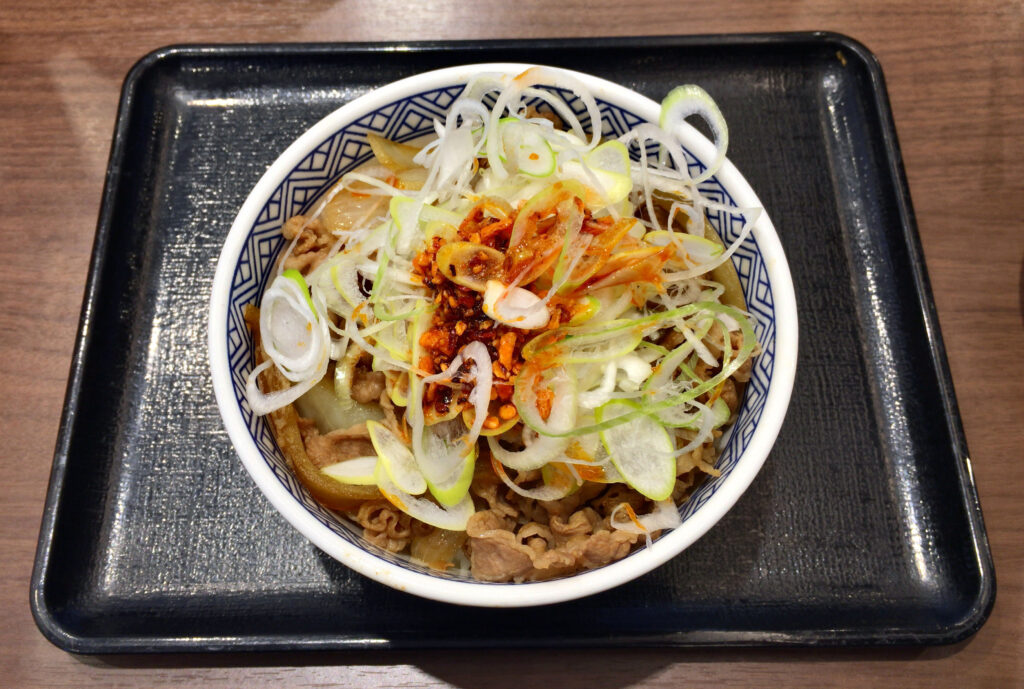
The clear red oil at the top of the jar carries fragrance and color. The layer of chile flakes at the bottom carries texture and most of the actual heat. A tablespoon of oil poured carefully off the top is a completely different ingredient from a tablespoon dug from the bottom.
Stir before measuring, and take some of both. A good jar of Sichuan chile oil also contains fried aromatics, often ginger, star anise, cassia, and sometimes fermented black beans or crushed peanuts, and those are all in the sediment too.
Making it is a twenty-minute job worth doing once. Heat a cup of neutral oil with a few slices of ginger, a scallion, a piece of cassia, and two star anise until the aromatics are deep brown, strain them out, let the oil drop to around 300 degrees, and pour it in three stages over half a cup of coarse Sichuan chile flakes with a teaspoon of salt and a spoonful of toasted sesame seeds. Pouring it all at once at full heat scorches the flakes and the whole batch turns bitter.
Black vinegar, and what it is not
Chinkiang vinegar is brewed from glutinous rice, often with wheat bran, and comes out dark, malty, and faintly smoky. It is not pale Japanese rice vinegar with color added, and swapping the two produces a bowl that tastes thin and sharp instead of deep and rounded.
Its job here is to cut the fat. Sesame paste and chile oil together make a very rich sauce, and without acid the bowl stops being pleasant somewhere around the fourth mouthful. If a bowl reads heavy, more vinegar is almost always the answer, not more salt.
If there is genuinely none available, balsamic cut with an equal amount of water gets closer than rice vinegar does, since it shares the malty sweetness even though it comes from somewhere else entirely. Malt vinegar with a pinch of sugar is another workable approximation.
A sichuan noodle bowl, built from the bottom up
Scaled for two, cooked in one pot and one small pan. Have everything measured before the water boils, because the assembly happens fast.
- Put a large pot of unsalted water on to boil. It stays unsalted because the sauce is already salty and because the starchy water goes into the sauce later.
- In each serving bowl, whisk two tablespoons of sesame paste with one tablespoon of soy sauce and one of black vinegar until smooth. Add half a teaspoon of sugar and one grated garlic clove.
- Stir in one tablespoon of chile oil taken with its sediment. The mixture will look broken. It is not.
- Brown four ounces of ground pork in a small pan over high heat with a teaspoon of oil, breaking it up, for four minutes. Add two tablespoons of chopped preserved mustard greens and a splash of soy and cook two minutes more, until the meat is dark and slightly crisp and reaches 160 degrees.
- Boil the noodles. Fresh wheat noodles take about three minutes, dried about six. Before draining, ladle three tablespoons of the cooking water into each bowl and whisk until the sauce pours like heavy cream.
- Drain the noodles briefly, without shaking them completely dry, and pile them straight into the bowls on top of the sauce.
- Add the pork, a handful of sliced scallion, and a spoonful of crushed roasted peanuts. Grind Sichuan pepper over the top.
- Toss from the bottom with tongs for ten seconds and eat it immediately. This bowl does not wait.
Step five is the one that is easy to skip and impossible to substitute. Plain hot water works about half as well; the starch in the noodle water is what holds the oil and the paste together.
The noodle water is an ingredient, not a byproduct
Boiling noodles releases starch into the water, and that starch acts as an emulsifier. It lets oil and sesame paste and vinegar hold together in a single sauce instead of separating into layers, which is exactly the same mechanism that makes pasta water useful in an Italian kitchen.
Use less water than seems generous so the starch concentrates. A pot just large enough to hold the noodles gives cloudier, more useful water than a stockpot filled to the top. Do not salt it, because the sauce is doing that job and salted water would push the whole bowl too far.
Take the water out with a ladle before draining, not after, and take more than you think you need. A sauce that is slightly too loose corrects itself the moment hot noodles go in and start absorbing. A sauce that is too thick cannot be fixed once the noodles are already in the bowl.
Three toppings, and the one that has to be cooked
The pork is the one that has to be cooked and it is worth doing properly rather than quickly. Ground pork browned hard in a hot dry pan until the edges crisp is a different ingredient from ground pork stirred until it turns grey, and the difference shows up in every bite.
Preserved mustard greens, sold as ya cai or sui mi ya cai in vacuum packs, are the topping most people skip and the one that most changes the bowl. They are salty, sour, and faintly funky, and they go in with the pork for the last two minutes. Preserved radish or the Sichuan pickled mustard tuber sold as zha cai both stand in acceptably.
The third is crunch and freshness: crushed roasted peanuts and a lot of thin-sliced scallion, added raw at the very end. Blanched greens go in the bowl too if the noodles are dinner rather than a starter, and a handful of spinach or bok choy dropped into the noodle pot for the last thirty seconds is the least effort route to a plate with a vegetable on it, in the way that one addition can change what a bowl is doing.
Ma la: the numbing half nobody accounts for
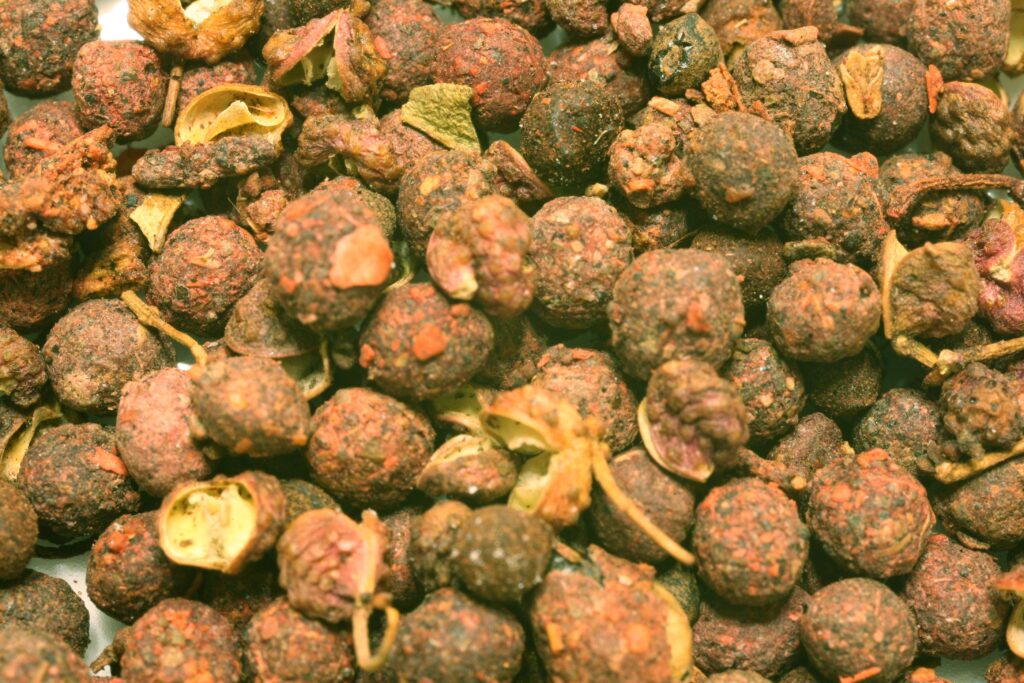
Sichuan pepper is not a chile and not a peppercorn. It is the dried husk of a small citrus relative, and what it produces is not heat at all but a tingling, buzzing numbness on the lips and tongue. The compound responsible acts on the nerves rather than on the heat receptors.
That numbness is half of what the word mala describes: ma for the tingle, la for the chile burn. A bowl with chile oil and no Sichuan pepper is hot and one-dimensional. A bowl with both has a strange, buzzing quality that people either become immediately attached to or find alarming.
Buy the husks whole and grind them yourself, in small amounts, right before use. Pre-ground Sichuan pepper loses its potency within weeks and the stuff sold in supermarket spice aisles is usually already dead. Toast the husks for thirty seconds in a dry pan, let them cool, grind, and sieve out the black seeds and the woody bits, which are gritty and contribute nothing.
Chengdu says the original had almost no sesame paste
The sesame-heavy bowl described here is what most people outside China mean by this dish, and it is not what the street version in Chengdu looks like. The original is served in a much smaller portion, drier, with chile oil and preserved greens doing nearly all the work and little or no sesame paste in the bowl.
The usual account is that the creamier version developed elsewhere, variously attributed to northern China, to Taiwan, and to restaurants abroad adapting to local expectations. Those accounts circulate widely and none of them is documented well enough to state as fact, so the honest position is that the two versions coexist and one is older.
The name refers to a carrying pole, the kind a street vendor balanced across his shoulders with a stove on one end and bowls on the other, which is also why the traditional portion is small. Dan dan noodles were a snack sold by the bowl, not a dinner. Making the dry Chengdu version once is worth it just to see how much of the flavor was coming from the greens and the oil all along.
Four bowls without a lump at the bottom
Scaling up is where this falls apart, because a big bowl of sauce for four takes more thinning than four small ones and the paste has more opportunity to clump. Two approaches work.
Either build each bowl separately, which takes an extra ninety seconds and is what I do for four people, or make the sauce in a measuring jug with a whisk, thin it fully, and divide it into the bowls before the noodles come out. What does not work is mixing a thick sauce in a jug and portioning it, because the thick part settles and the last bowl gets all of it.
Cook the noodles in two batches if the pot is not genuinely large. Crowded noodles stick to each other and come out unevenly done, and the fix for that is a bigger pot, not more stirring. Two people eating at slightly different times is also fine here; this bowl is assembled to order in under a minute once the sauce exists, which makes it a reasonable thing to cook for a household of two without leftovers.
Peanuts, pork, and two labels to read
This bowl contains peanuts and sesame, both of which are declared major allergens in the United States, and both of which are easy to miss because they are in the topping and in the sauce rather than in anything named on a menu. Say so at a table with guests. A shared bowl of crushed peanuts on the table is not a safe arrangement for someone with a peanut allergy.
Ground pork needs to reach 160 degrees, which four minutes in a hot pan clears comfortably as long as the meat is broken up rather than left in clumps. Ground meat is different from a whole cut here, because grinding distributes anything on the surface throughout, which is the reason for the higher target.
The third label is sodium, which in this bowl is genuinely high. Soy sauce, preserved mustard greens, and chile oil are all salt-carrying ingredients, and the greens in particular are packed in it. Rinsing the greens briefly and cutting the soy back by a third makes a noticeable difference without changing the character of the bowl, and is worth doing routinely for anyone watching it.
Frequently Asked Questions
What noodles should I use?
Fresh alkaline wheat noodles of medium thickness, sold refrigerated at any Chinese grocery, are the right choice and they cook in three minutes. Dried wheat noodles work. Rice noodles do not, because the sauce needs something with a rough surface to cling to and rice noodles are too slick.
Can I make this vegetarian?
Yes, and it holds up well. Replace the pork with finely chopped shiitake mushrooms browned hard in the same pan, which give a similar texture and a savory depth. Crumbled firm tofu, pressed and fried until the edges color, is the other route. Keep the preserved greens either way, since they are doing most of the work.
Why is my sauce sitting at the bottom of the bowl?
The sauce was not thinned enough before the noodles went in, or it was poured on top rather than built underneath. It should pour off a spoon like heavy cream before any noodle touches it. If it is already assembled and separating, add another spoonful of hot water and toss again from the bottom.
How hot is this supposed to be?
Assertive but not punishing, and adjustable entirely through the chile oil. A tablespoon per bowl taken with sediment is a comfortable middle. Take it from the top of the jar for less heat, or add a second spoonful of sediment for considerably more. The Sichuan pepper is a separate dial and does not add heat at all.
Can the sauce be made ahead?
The base without the noodle water keeps a week in the refrigerator and is worth mixing in a batch of four or six portions. It stiffens when cold, so let it sit out for twenty minutes or whisk it with a little warm water before the hot noodle water goes in. The assembled bowl does not keep at all.
Mix a jar of the base on a Sunday and this becomes a twelve-minute dinner that tastes like it came from a restaurant. The only skill involved is remembering which order things go into the bowl.