A recipe that says one chopped chile is telling you almost nothing. Between a shishito and a habanero there is a factor of a thousand, and both of them are chiles that fit in the palm of a hand. Between a guajillo and a chile de arbol, which look similar enough that markets mislabel them, there is a factor of six.
The number that separates them has existed since 1912 and hardly anyone uses it, partly because it is not printed on anything and partly because the range for a single variety is wide enough to feel useless. A jalapeno can be three times hotter than the jalapeno next to it in the same bin.
What follows is twelve chiles I keep or use regularly, ranked, with the flavor each one carries underneath the heat. That second part is the one that matters more, because heat is a dial and flavor is a decision, and most cooking mistakes with chiles are flavor mistakes rather than heat mistakes.
- The spread: roughly 50 units at the shishito end, up to 350,000 at the habanero end
- Same variety, wide range: growing conditions can triple the heat of one pod against another
- Where the heat lives: the pale inner ribs, not the seeds, which are only hot by contact
- Dried is not fresh: drying changes the flavor completely and usually gets a different name
- The four to stock: ancho, guajillo, chipotle in adobo, and one fresh hot pepper
- Handling: gloves for anything above serrano, and water does not stop the burn
The chile pepper heat scale, and what it does not measure
The original method was a taste test. A chile extract was diluted in sugar water until a panel of tasters could no longer detect any heat, and the dilution factor became the score. That is where the numbers come from, and it explains why they are round and why they come in ranges.
Modern laboratories measure the capsaicinoid content directly by chromatography and convert the result back into the same units, which makes the figures repeatable in a way the tasting panel never was. The Scoville scale survives as the unit even though nobody dilutes anything anymore.
What the number does not capture is everything that makes one chile different from another at the same heat. It says nothing about whether the pepper tastes of raisins, of tobacco, of green grass, or of apricot. It says nothing about acidity, sweetness, or bitterness. Two chiles at 2,500 units can produce completely unrelated sauces, and the scale will report them as identical.
Twelve chiles ranked, from shishito to scotch bonnet
Ranges below are the ones commonly published for each variety. Treat them as neighborhoods rather than measurements, because sun, water stress, and ripeness move a pod within its range considerably.
| Chile | Form | Typical range | Flavor underneath |
|---|---|---|---|
| Shishito | Fresh green | 50 to 200 | Grassy, faintly sweet, blisters well |
| New Mexico or Anaheim | Fresh or dried | 500 to 2,500 | Green and vegetal fresh, earthy dried |
| Poblano | Fresh green | 1,000 to 2,000 | Thick walled, mild, faintly bitter |
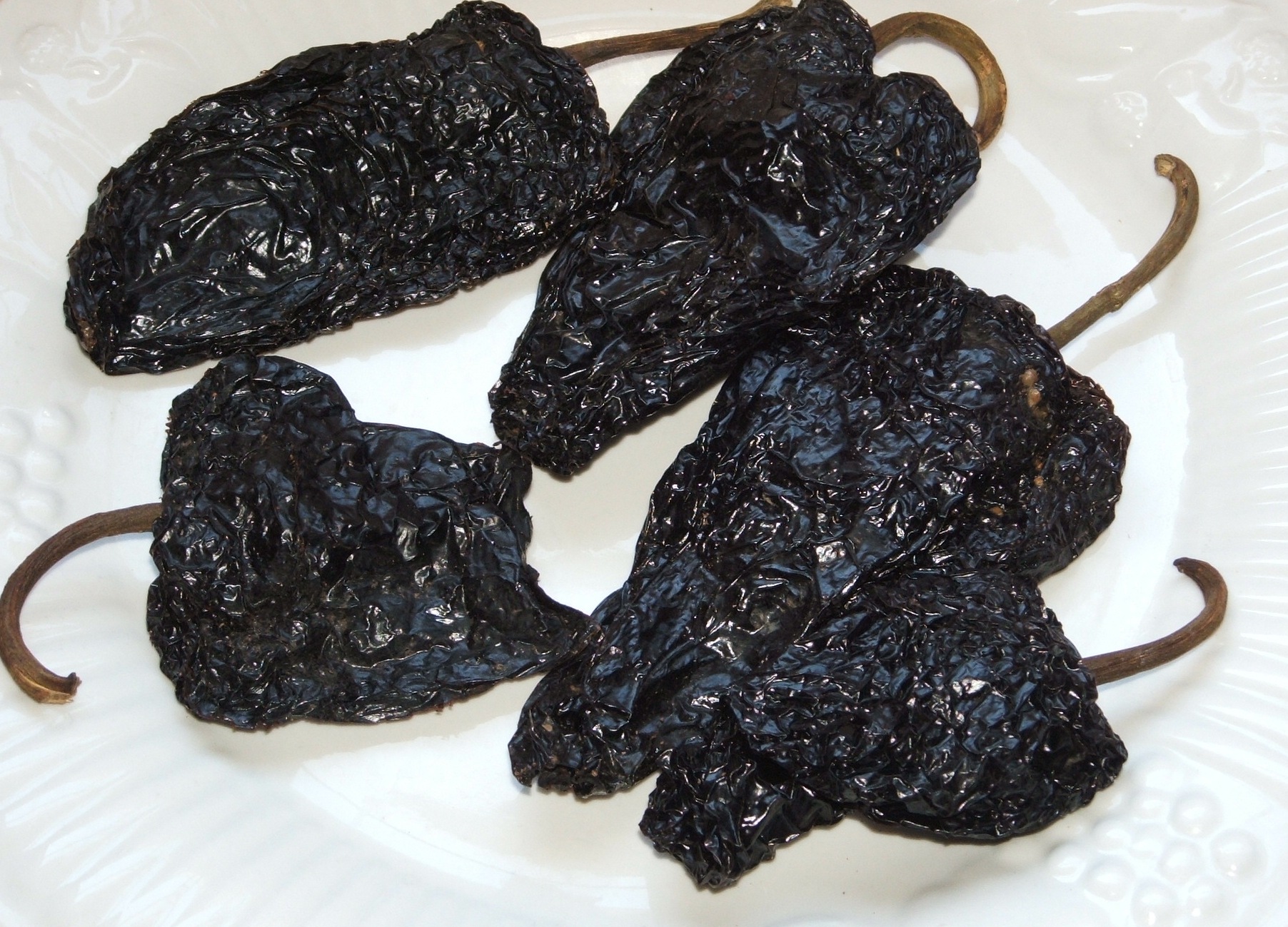
| Ancho | Dried poblano | 1,000 to 2,000 | Raisin, prune, mild sweetness |
| Pasilla | Dried chilaca | 1,000 to 2,500 | Cocoa, tobacco, a little bitter |
| Guajillo | Dried mirasol | 2,500 to 5,000 | Berry, green tea, bright acidity |
| Jalapeno | Fresh green or red | 2,500 to 8,000 | Sharp, green, juicy |
| Chipotle | Smoked dried jalapeno | 2,500 to 8,000 | Smoke, leather, slow burn |
| Serrano | Fresh green | 10,000 to 23,000 | Cleaner and brighter than jalapeno |
| Chile de arbol | Dried red | 15,000 to 30,000 | Nutty, sharp, very direct |
| Cayenne | Dried or ground | 30,000 to 50,000 | Neutral heat, little flavor of its own |
| Thai bird | Fresh red or green | 50,000 to 100,000 | Fast, sharp, fades quickly |
| Habanero or scotch bonnet | Fresh | 100,000 to 350,000 | Apricot, floral, tropical fruit |
Two things stand out in that table. The bottom four entries are separated by more than the whole range of the top eight combined, and the flavor descriptions have nothing to do with the ordering. Understanding the second point is what separates cooking with chiles from adding heat to food.
Fresh and dried are not the same pepper twice
Spanish and Mexican naming gets this right in a way English does not: several chiles change names when they dry, because they become different ingredients. A poblano is a poblano; dried, it is an ancho. A mirasol is a mirasol; dried, it is a guajillo. A chilaca becomes a pasilla, and a ripe jalapeno smoked and dried becomes a chipotle.
Drying concentrates sugars and produces the raisin, cocoa, and dried fruit notes that fresh chiles do not have. It also removes the vegetal, grassy quality entirely, which is why a sauce made from fresh green chiles and one made from their dried counterparts do not resemble each other at all.
Heat concentrates too, by weight, since the water has gone. On a per-pod basis the numbers stay roughly comparable, which is the useful way to think about it: one dried ancho is about as hot as one fresh poblano, and it weighs a fifth as much. Substituting by weight is how people accidentally make something four times hotter than intended.
The mild end: shishito, poblano, and the New Mexico pod
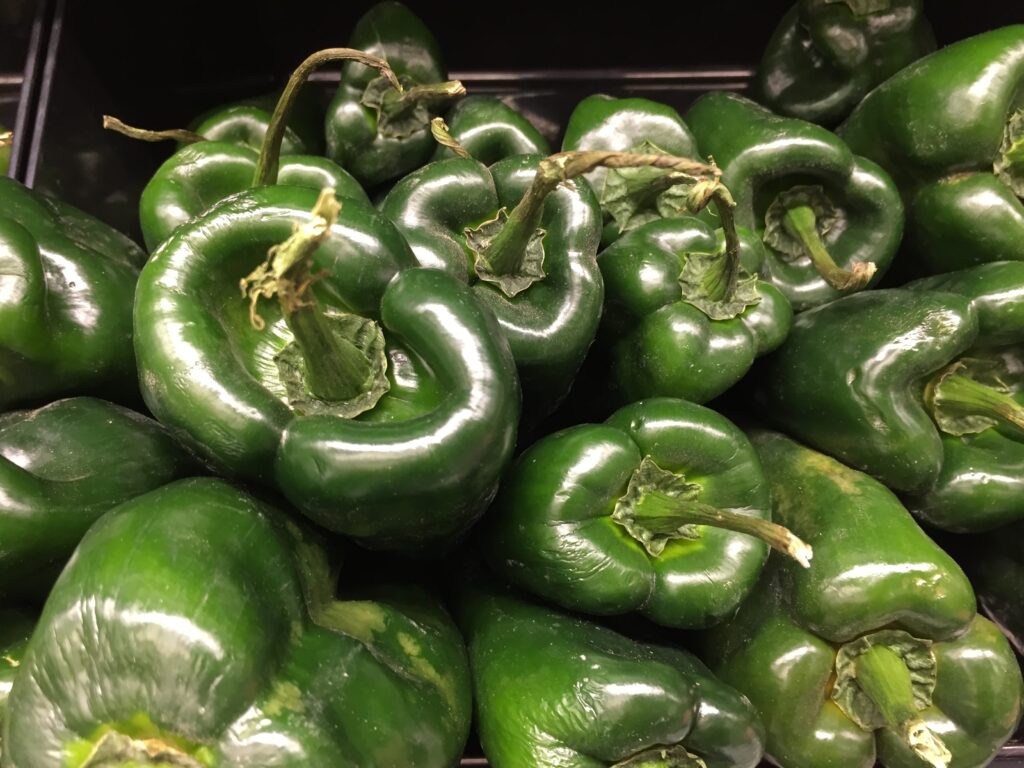
Shishitos are a vegetable that happens to be a chile. Blister them whole in a very hot dry pan until the skins char in patches, salt them, and eat them by the stem. The often repeated claim is that roughly one in ten is hot, which is broadly true and unpredictable, and is most of the entertainment.
Poblanos have thick walls, which is why they are the pepper for stuffing. Roast and peel them first; the skin is tough and does not soften in cooking. Their heat is negligible and their contribution is a dark, faintly bitter, distinctly green flavor that carries a filling well.
The New Mexico pod, sold fresh in late summer and dried the rest of the year, is a different plant with a different history and its own culture around roasting. Fresh and roasted it is green, grassy, and mildly hot. Dried and ground it is the base of red chile sauce, which tastes almost nothing like the green version of the same pod.
Ancho, guajillo, pasilla: the three that build a sauce
These three together are the backbone of a very large amount of Mexican cooking, and they are the reason a dried chile shelf is worth having. None of them is hot in any meaningful sense. All three are there for flavor and color.
Ancho brings sweetness and body, with a clear note of raisin and prune. Guajillo brings acidity and a bright red color, with something that reads as berry or green tea underneath. Pasilla brings the dark end: cocoa, tobacco, and a slight bitterness that keeps the other two from turning cloying.
A working ratio to start from is three guajillo, two ancho, one pasilla, toasted, soaked, and blended with garlic, a little of the soaking water, and salt. That gives a base sauce for enchiladas, for braising pork, or for a pot of beans. Heat, if any is wanted, comes from a separate pepper added on top, which is the whole logic behind treating chiles as a flavor decision before a heat decision.
Jalapeno, chipotle, and what smoke does to heat
The jalapeno is the fresh chile most kitchens actually have, and it is more variable than any other on this list. A pale green one picked young is mild and juicy. A red one with brown striations on the skin has been on the plant longer, is sweeter, and is usually hotter.
Left to ripen fully red and then smoked over wood, it becomes a chipotle, and the transformation is larger than drying alone accounts for. Smoke changes how the heat is perceived: it arrives more slowly, sits lower, and lasts longer. The same number of units feels different when it comes wrapped in smoke.
Two forms exist and they are not interchangeable. The dried pod, sold as chipotle meco or morita, needs rehydrating and gives a cleaner smoke. The canned version in adobo brings tomato, vinegar, and sugar along with the pepper, which is convenient and also means it is seasoning the dish in three ways at once. Anyone building smoke into a dish without a smoker ends up at one of these two sooner or later.
Serrano to habanero, where heat stops being background
Serrano is the point at which heat becomes the first thing anyone notices. It is between three and five times a typical jalapeno, thinner walled, and cleaner tasting, which makes it the better choice for salsas and for anything raw. Use it where a recipe says jalapeno and you want the dish to actually be spicy.
Chile de arbol is the dried workhorse of the hot end, nutty and sharp, and it is what goes into a jar of chile oil or a table salsa that needs an edge. Cayenne, mostly encountered ground, is nearly flavorless by comparison and exists to add heat without changing anything else, which is occasionally exactly what a dish needs.
Thai bird chiles are hotter still and burn fast and briefly, which suits dishes eaten with rice. Habaneros and scotch bonnets are a different species from everything above them on this list, and it shows: underneath a heat that can be ten times a Thai chile there is a genuine apricot and floral character that nothing else supplies. A quarter of one, seeded, in a pot of beans for six is a real amount.
Seeds and veins: the question answered properly
The seeds are not where the heat is. Capsaicin is produced in glands on the placental tissue, the pale spongy ribs that run down the inside of the pod and hold the seeds in place. The seeds sit against those ribs and pick up capsaicin by contact, which is why removing them feels like it helps.
It does help, but only because the ribs usually come out with them. Scraping the pod with a spoon and leaving the seeds behind removes most of the heat. Picking out seeds while leaving the white ribs intact removes very little.
The practical consequence is a dial rather than a switch. Whole pod for maximum heat, ribs removed for perhaps a third of it, ribs and seeds both removed for a pepper that is mostly flavor. It also means the heat is not evenly distributed within a single chile: the tip is milder than the shoulder end, which is where the ribs are thickest.
Toasting and soaking without making it bitter
Dried chiles need to be woken up and the window for doing it is narrow. Stem them, tear them open, and shake out most of the seeds first. Then press them flat in a dry pan over medium heat for thirty to forty-five seconds per side, until they smell toasted and the skin lightens slightly.
Past that point they scorch, and a scorched chile makes a bitter sauce that cannot be corrected. The sign is a sharp acrid smell replacing the sweet one, and it happens in seconds. If it happens, throw them out and start again; three dried chiles cost less than a ruined pot of anything.
Then soak in hot water for twenty to thirty minutes until pliable, and blend with a little of the soaking liquid. Taste that liquid before using it. Some batches are pleasantly fruity and some are aggressively bitter, and when it is bitter, use plain stock instead. Straining the blended sauce through a sieve removes the bits of skin that never break down, which is worth the extra minute for anything that will be served smooth. Working with a shelf of dried pods this way is closer to grinding whole spices to order than it is to shaking powder from a jar.
The four worth keeping stocked, and the arithmetic for swapping
If a kitchen is going to hold four chile products and no more, these are the four with the widest reach: dried anchos, dried guajillos, a can or jar of chipotles in adobo, and one fresh hot pepper bought as needed.
That set covers sweetness, brightness, smoke, and clean heat, and between them they can approximate most of what a recipe asks for. Dried chiles keep about a year in a sealed bag away from light, and they should still be flexible rather than brittle; a pod that snaps has been on the shelf too long and has lost most of its aroma.
Swapping is arithmetic in one direction and guesswork in the other. Going from a mild chile to a hotter one, divide by the ratio of their ranges and round down: replacing three guajillos with chiles de arbol means one, not three. Going the other way rarely works, because the mild chiles are supplying flavor that the hot ones do not have, and adding six anchos in place of one arbol gives a completely different sauce that happens to be equally mild.
Capsaicin on skin, in eyes, and what actually stops the burn
Capsaicin is oil-soluble and not water-soluble, which explains almost everything about handling it. Rinsing your hands under a tap moves it around rather than removing it, and drinking water after a mouthful of something too hot spreads it across the tongue.
Wear disposable gloves for anything above serrano, and for a large quantity of anything at all. The compound stays on skin for hours and transfers readily to eyes, to a contact lens, and to anyone you touch afterward. If it does get on bare hands, wash with dish soap and warm water, then rub with a little vegetable oil and wash again. Eyes want a long flush with water and a call to a clinician if the irritation does not settle.
For the mouth, dairy is the practical answer, because casein binds capsaicin and carries it away. Milk, yogurt, sour cream, or a spoonful of ice cream all work; beer and water do not. Very hot peppers are also genuinely uncomfortable for people with reflux or a sensitive gut, and eating a large quantity on a dare is a bad idea rather than a joke, particularly for children. None of that is a reason to avoid chiles. It is a reason to know which pod is in your hand before you chop it.
Frequently Asked Questions
Why is one jalapeno hot and the next one mild?
Growing conditions. Water stress, sun exposure, and how long the pod stayed on the plant all push capsaicin production up or down, and there is no visual test that reliably predicts it. Brown striations on the skin, called corking, are a rough sign of a pod that stayed on longer and is usually hotter. Taste a sliver before committing the whole pepper.
Can I use chile powder instead of whole dried chiles?
For guajillo and ancho, single-variety powders exist and are a reasonable shortcut, though they lose aroma fast once opened. What does not substitute is supermarket chili powder, which is a blend containing cumin, oregano, and garlic, and using it in place of a pure chile changes the seasoning of the whole dish.
How long do dried chiles keep?
About a year in a sealed bag in a dark cupboard, and they fade rather than spoil. A good pod is leathery and bends without breaking. One that shatters when squeezed has dried out past usefulness, and the sauce it makes will be thin and dusty. Buy them where they turn over quickly.
Does removing the seeds make a chile mild?
It reduces the heat noticeably, but the reason is the white ribs that come out with the seeds, not the seeds themselves. Scrape the interior properly with the tip of a spoon and you remove most of the capsaicin. Picking seeds out one at a time and leaving the ribs behind achieves very little.
What is the difference between a habanero and a scotch bonnet?
They are close relatives with overlapping heat and a similar fruity character, differing mostly in shape and in regional use. Scotch bonnets are squatter and are the standard in Caribbean cooking; habaneros are more common in Mexican and in American markets. Swapping one for the other is one of the few genuinely safe substitutions on this list.
Buy three dried chiles you have never used, toast them, and taste the soaking water from each one separately before it goes anywhere near a pot. The differences are unmistakable in isolation and disappear entirely once they are blended together, which is why so many people think all dried chiles taste the same.