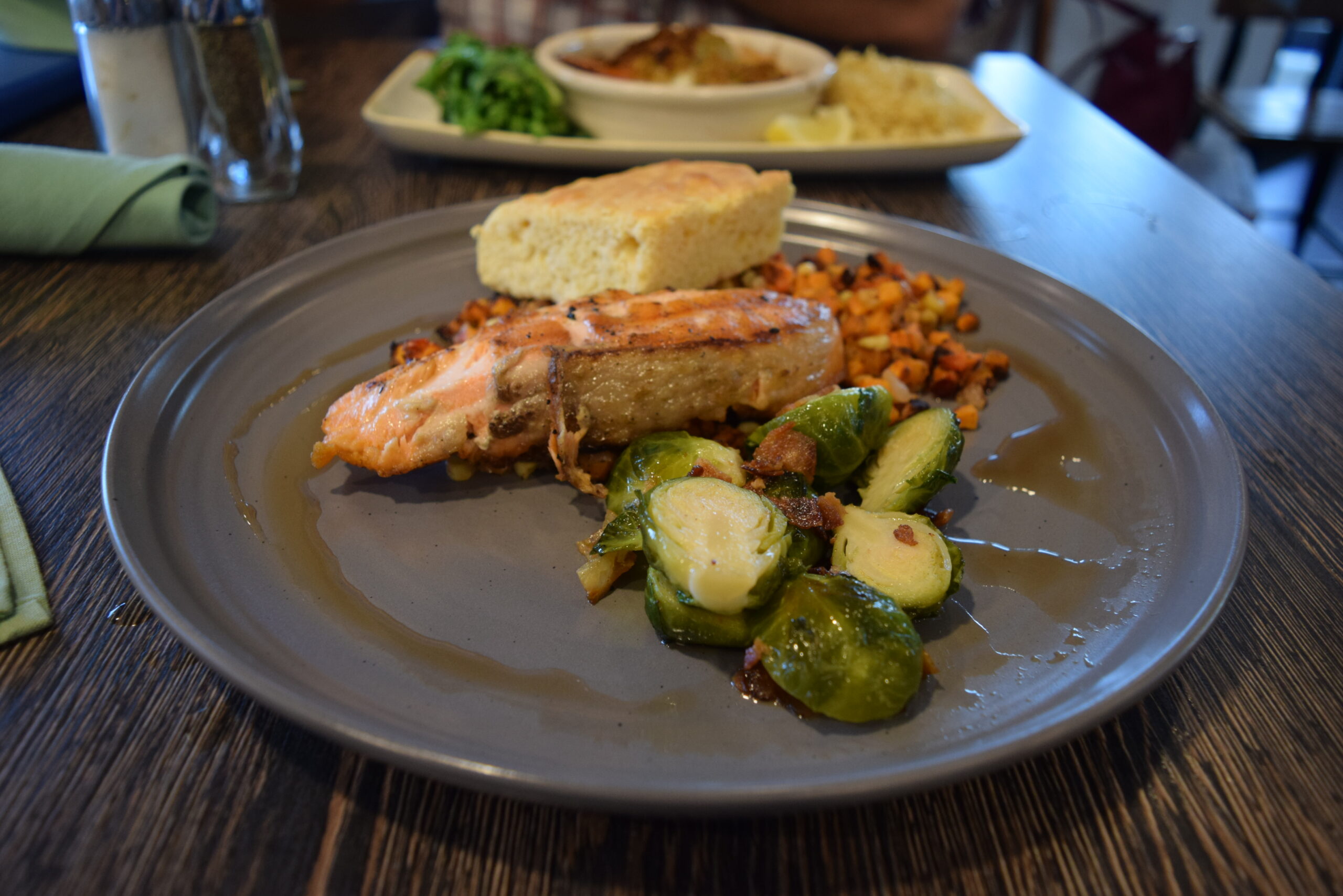
Miso butter is one of the fastest ways to turn a plain salmon fillet into something that tastes like it took real effort, and it is also one of the easiest glazes to ruin, because the sugar in miso browns fast and burns faster once it hits direct heat for too long. The fix is timing, not a different sauce.
The whole dinner comes off one sheet pan: salmon, and two vegetables with different cook times staggered so everything finishes together. The miso butter goes on halfway through the salmon’s time in the oven rather than at the start, which is the one step that separates a lacquered, deeply colored piece of fish from a blackened, bitter one.
This is a genuine weeknight dinner, done start to finish in about half an hour, with one pan to wash and no advance marinating required, since miso’s own saltiness seasons the fish quickly enough that a long soak is not necessary.
- Time: about 30 minutes, one sheet pan
- Serves: four
- Key step: brush the miso butter on halfway through roasting, not at the start
- Vegetables: broccolini and thinly sliced sweet potato, staggered by cook time
- No marinating needed: miso seasons fast enough to skip it
- Safe finish: salmon cooked to 145 degrees internal, or to the preferred doneness with fish handled and stored properly
Miso butter salmon, step by step
- Preheat the oven to 425 degrees. Line a large sheet pan with parchment.
- Toss thinly sliced sweet potato rounds with oil and salt, spread on one side of the pan, and roast alone for 10 minutes.
- While that starts, mix three tablespoons of softened butter with two tablespoons of white or yellow miso, one teaspoon of honey, and a small squeeze of lime.
- Pat four salmon fillets dry and season lightly with salt, keeping in mind miso itself is salty.
- After the sweet potato’s first 10 minutes, push it to make room, add the salmon and a handful of broccolini tossed in oil to the pan, and roast for 6 minutes untouched.
- Remove the pan and brush the miso butter generously over the top of each salmon fillet only.
- Return to the oven for 5 to 7 more minutes, until the salmon reaches 145 degrees at the thickest part and the glaze is deeply caramelized but not blackened.
- Rest two minutes before serving directly from the pan.
Why the miso butter goes on halfway, not at the start
Miso carries natural sugars from the fermented soybeans and rice or barley koji used to make it, and those sugars caramelize quickly under high heat, the same way any sugar does. Applied at the start of a 425-degree roast, the glaze has the full cook time to darken, which pushes it from caramelized to burnt well before the salmon itself is done.
Applying it after the fish has already had six minutes of unglazed roasting time gives the remaining five to seven minutes just enough window for the sugars to brown deeply without crossing into bitter. Watching the color directly in the final few minutes matters more than following the timer exactly, since ovens vary enough that the exact turning point shifts pan to pan.
The two vegetables, and why they go in at different times
Sweet potato rounds, cut about a quarter inch thick, need roughly fifteen to eighteen minutes total at 425 degrees to turn tender and browned at the edges, while broccolini needs only about ten to twelve minutes before it turns from bright green to army green and loses its snap. Roasting both from the very start on the same pan means choosing between undercooked potato and overcooked broccolini.
Giving the sweet potato a ten-minute head start before the broccolini and salmon join it solves that gap cleanly, and it is the same staggered-entry logic that makes a single sheet pan capable of finishing several ingredients with different cook times at the same moment, rather than requiring separate pans or separate pots.
Building the miso butter itself
Softened butter, not melted, blends into a smoother paste with miso than melted butter does, since melted butter tends to separate from the miso rather than emulsifying into it. Leave the butter out at room temperature for twenty minutes before mixing, or if pressed for time, microwave it in five-second bursts just until pliable rather than liquid.
White or yellow miso works better here than the darker, more fermented red miso, which carries a stronger, saltier flavor that can overwhelm the honey and lime meant to balance it. If only red miso is on hand, use about a third less than the recipe calls for and taste before adjusting further.
Picking the salmon, and how thickness changes the timing
Fillets of an even thickness across the whole piece cook more predictably than a tail-end cut that tapers to almost nothing at one end, since the thin end will finish several minutes before the thick end does, and a pan of unevenly sized fillets means picking one for the timing that inevitably leaves some pieces under or over their target.
Skin-on fillets hold together better through the flip-free method used here, since the skin acts as a barrier between the delicate flesh and the direct heat of the pan, and it can be left on or removed after cooking depending on preference, without changing the roasting time itself.
Salmon doneness and safe handling
145 degrees Fahrenheit at the thickest part is the standard safe internal temperature for cooked salmon, checked with an instant-read thermometer inserted from the side rather than the top, which avoids piercing straight through a thinner fillet and getting a false low reading from the cooler air above it.
Many cooks prefer salmon pulled a few degrees earlier, closer to 125 to 130 degrees, for a more medium, slightly translucent center, which is a personal doneness preference rather than a food safety line; anyone serving salmon at that lower temperature should buy from a source they trust for freshness and keep the fish properly refrigerated at 40 degrees or below right up until it goes into the oven. Sushi-grade or previously frozen fish, frozen to manufacturer specifications, is generally considered the safer choice for anyone planning to serve salmon less than fully cooked through.
What to do if the glaze starts to darken too fast
If the miso butter is browning visibly before the five-minute mark of its final roasting window, tent the pan loosely with foil for the remaining time rather than pulling the salmon early and risking an undercooked center. The foil slows the direct heat reaching the glaze while the oven’s ambient heat continues finishing the fish underneath.
A pan positioned too close to the top heating element in some ovens browns faster than the timing above assumes, so on the first attempt in an unfamiliar oven, checking at the five-minute mark rather than waiting the full seven is worth the extra glance.
Swapping vegetables without breaking the timing
Any vegetable that roasts in roughly ten to twelve minutes, snap peas, thin asparagus, or halved brussels sprouts cut small, can stand in for broccolini in the second wave alongside the salmon. Anything needing closer to fifteen to eighteen minutes, like carrots or a firmer squash cut into similarly sized pieces, can take the sweet potato’s spot in the first wave.
The rule that keeps this dinner working across substitutions is simple: sort whatever vegetables are on hand by roughly how long they take to roast, and put the longer-cooking one in first, rather than following this exact ingredient list as the only version that works.
Storing and reheating leftovers
Refrigerate leftover salmon and vegetables within two hours of cooking, in a shallow container so everything cools quickly rather than staying warm at the center. Cooked salmon keeps about three days refrigerated, and it reheats best gently, in a low oven or covered in a skillet over low heat, rather than in a microwave, which tends to dry it out and make the glaze weep.
Leftover miso salmon, flaked cold over a bowl of rice with a fried egg and quick-pickled cucumber, is a genuinely good next-day lunch and arguably the best use for whatever is left over rather than reheating it plain.
The staggered timing at a glance
| Ingredient | Goes in | Total roast time |
|---|---|---|
| Sweet potato rounds | First, alone | 15 to 18 minutes |
| Salmon, unglazed | After 10 minutes | 6 minutes before glazing |
| Broccolini | Same time as salmon | 10 to 12 minutes total |
| Miso butter glaze | Brushed on at the 16-minute mark | 5 to 7 minutes to finish |
Reading this like a countdown rather than a single roasting time is what makes the whole pan land together: everything reaches the table in the same five-minute window, rather than the vegetables sitting done and cooling while the fish catches up, or the fish overcooking while a firmer vegetable finishes.
Balancing the honey and lime against the miso’s saltiness
Miso brings enough salt on its own that most people find they need less added salt than instinct suggests, and the honey and lime in the glaze exist specifically to keep that saltiness from tasting one-dimensional. Honey rounds out the sharper, more fermented edge of the miso, while lime adds a brightness that a purely sweet-salty glaze would otherwise lack entirely.
Taste the raw glaze before it goes anywhere near the pan, since miso brands vary meaningfully in saltiness and fermentation intensity, and a glaze that tastes slightly too salty on the spoon mellows out somewhat once it caramelizes onto the fish, though not enough to fix a glaze that is dramatically oversalted from the start. A small taste and a quick adjustment, an extra half teaspoon of honey or a bit more lime, takes less time than dealing with an oversalted dinner after the fact.
Why one pan works better here than two
Beyond the obvious convenience of a single pan to wash, roasting the fish and vegetables together means the vegetables catch some of the rendered fat and glaze that drips from the salmon as it cooks, which seasons them in a way that roasting them separately never achieves. The broccolini closest to the fish, in particular, tends to pick up a faint savory note from the miso butter that makes it taste like part of the same dish rather than a plain side sitting next to it.
This only works if the pan is large enough that the salmon and vegetables are not touching directly, since crowding traps steam and prevents the vegetables from browning the way a properly spaced sheet pan roast requires. Two smaller pans in the same oven is a reasonable alternative if one large pan is not available, run on separate racks and rotated once partway through for even browning.
Frequently Asked Questions
Can this be made with a different fish?
Yes, black cod and arctic char both take the glaze well and roast in a similar time. Firmer, leaner fish like cod fillets work too, though they benefit from slightly less roasting time since they dry out faster than salmon’s higher fat content allows for.
Is there a way to make this without dairy?
A neutral plant-based butter substitute blends into the miso the same way regular butter does. The flavor shifts slightly but the technique and timing stay the same.
Can the miso butter be made ahead?
Yes, it keeps about a week refrigerated in a sealed container. Bring it back to a spreadable consistency at room temperature for a few minutes before brushing it onto the salmon.
What if my sweet potato is still firm after the full cook time?
Slice it thinner next time, since thickness is the most common reason for undercooked sweet potato in this timing. In the moment, remove the salmon once it reaches temperature and give the potato a few more minutes alone.
Is it safe to eat salmon that is still slightly pink in the center?
Yes, salmon cooked to a lower, more medium doneness is commonly served that way and is safe when the fish was fresh, properly stored, and from a reliable source. For anyone in a higher-risk group, cooking fully to 145 degrees is the more cautious choice.
Once the timing clicks, this becomes one of those dinners that takes less thought each time, since the only real variable across attempts is how dark to let the glaze go before it comes out of the oven.