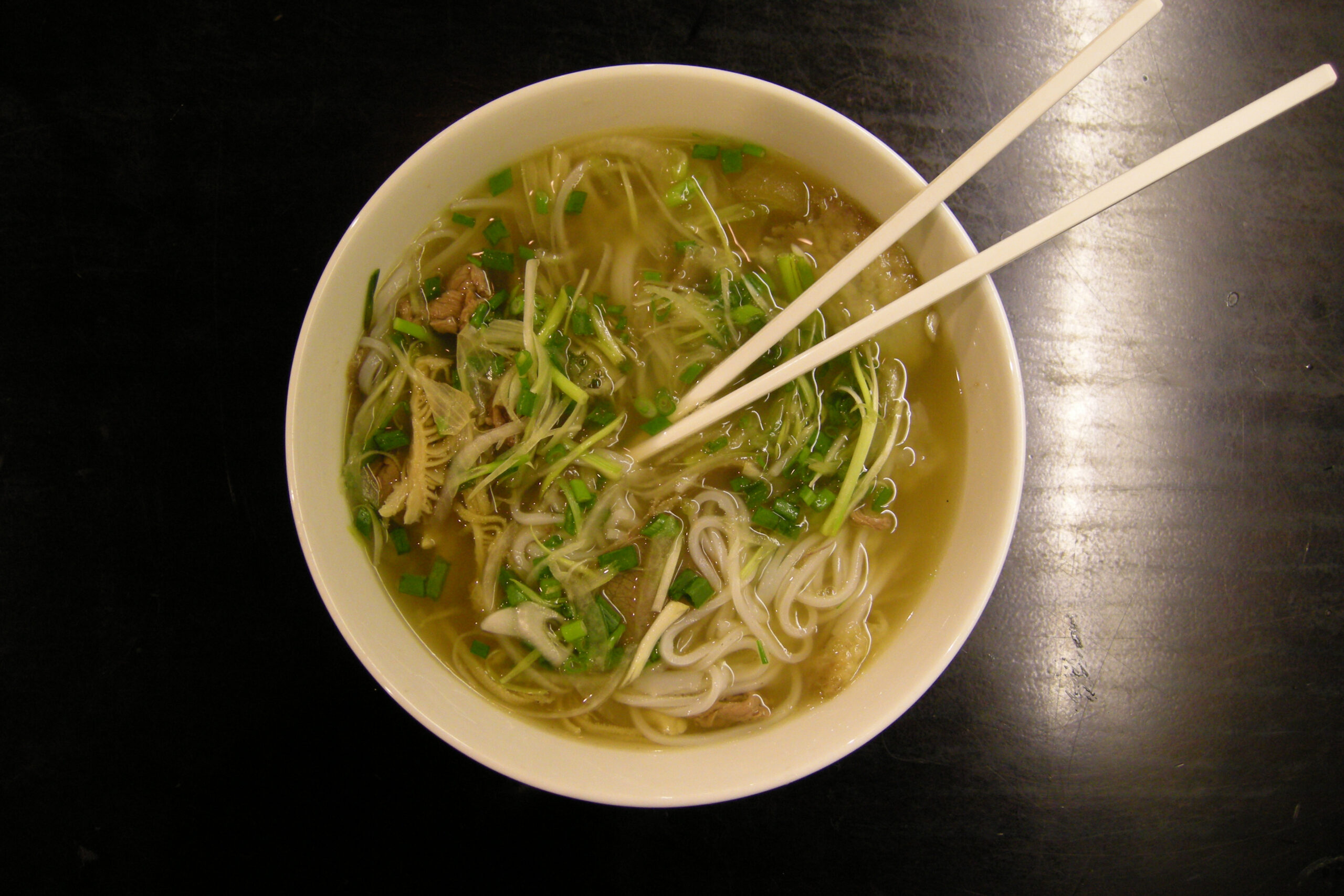
Everything else in the bowl is prep. The noodles are boiled and rinsed, the herbs are picked, the carrot is shredded, the pork is grilled or the shrimp are seared, and any of that can be done badly without wrecking dinner. The dressing cannot. Get the dressing wrong and four bowls of perfectly good components sit there tasting like a salad nobody finished.
The dressing is nuoc cham, and it is four ingredients in a ratio that people argue about across an entire country. Fish sauce, lime, sugar, water, with garlic and chile floating on top. It takes three minutes and it decides everything, which is a good trade for a Tuesday.
What follows is the ratio, the reason each element is there, and an assembly for four people that runs off one round of prep and one pan.
- The ratio: 1 fish sauce, 1 lime juice, 1 sugar, 2 to 3 water, adjusted by taste and by brand
- Clock: 35 minutes, with about 20 of it hands on
- Protein: six minutes, whichever of the three you choose
- Noodles: rice vermicelli, softened rather than boiled hard, rinsed cold
- Herbs: by the handful, not by the sprig, and four of them matter
- Keeps: the dressing a week in the refrigerator, the assembled bowl not at all
The ratio, written down once
Start at one part fish sauce, one part fresh lime juice, one part sugar and two parts water. That is the version that works with most bottles sold outside the region, and for four bowls it means three tablespoons of each of the first three and six of water, which makes a generous cup.
Nobody in Vietnam agrees on that ratio and nobody has to. Southern versions run sweeter and more diluted, northern versions sharper and saltier with less sugar, and every household adjusts to the bottle in the cupboard. Cookbooks that present one ratio as the correct one are describing a preference, usually a regional one, and the honest framing is that this is a set of proportions to start from rather than a fixed formula.
Taste it in a spoon, then taste it diluted, because the two are different experiences. It should be noticeably too strong on the spoon. Poured over cold noodles and raw vegetables it loses about a third of its intensity, so a dressing balanced in the jar arrives at the table flat.
Fish sauce is the variable, not the lime
Bottles of fish sauce differ enormously. A first-press Phu Quoc or Phan Thiet sauce with a high nitrogen rating is thin, amber and complex, while a cheaper bottle is darker, saltier and often has sugar and hydrolysed protein in it. Swapping one for the other in the same recipe changes the salt level by a wide margin.
Read the ingredient list. The short one, anchovy and salt and nothing else, is the one to buy, and it costs a few dollars more for a bottle that lasts months. The number on the label, if there is one, refers to grams of nitrogen per litre, and higher means more anchovy and less water.
Lime, by contrast, is fairly consistent. Use fresh juice, since the bottled kind carries a cooked note that sits badly here, and squeeze it into the sugar first. Rice vinegar is a common addition in some households and it is not a substitute for the lime, only a stretcher for it when limes are expensive.
Sugar dissolves in the lime juice, not in the bowl
Granulated sugar in cold water stays granulated for an annoyingly long time. Put the sugar in the mixing bowl first, add the lime juice, and stir until it is completely clear before anything else goes in. Thirty seconds of stirring at that stage saves a dressing with grit at the bottom of the jar.
Palm sugar is the traditional choice and it is worth the extra step. It comes as a hard disc or a soft paste, tastes faintly of caramel, and gives the dressing a rounder edge. Grate or chop it and dissolve it in a tablespoon of hot water before adding the lime, since it will not dissolve cold.
The sugar is not there to make the dressing sweet. It is there to hold the fish sauce and the lime in the same place, and a version made without it tastes like two ingredients shouting at each other. Cutting the sugar in half is a reasonable adjustment; cutting it out is a different sauce.
Garlic and chile go in last, and they float
Both go in raw and both go in after the liquid is balanced. Garlic pounded in a mortar with a pinch of the sugar breaks down into a paste that suspends through the dressing, while garlic minced with a knife sinks and delivers itself in lumps. The mortar is worth two minutes here.
The chile is a fresh red one, thinly sliced, seeds included or not depending on the table. Bird’s eye chiles are the standard and they are hot; one is a reasonable amount for a cup of dressing shared between four people, two makes a version that some people at the table will not finish.
Both float, which is the visual signature of the sauce and also a practical point. Stir the jar before every pour, and put the extra dressing on the table in a small bowl with a spoon so people can add their own. Heat is not a decision to make on behalf of four people.
A vietnamese noodle bowl for four, in one round of prep
- Mix the dressing: three tablespoons of sugar dissolved in three tablespoons of lime juice, then three of fish sauce and six of water. Taste and adjust the water. Set aside.
- Pound two garlic cloves with a pinch of sugar into a paste, slice one or two red chiles, and stir both into the dressing. Leave it to sit while you do everything else.
- Slice a pound of pork shoulder thin, or peel a pound of shrimp, or press and cube a block of firm tofu. Toss with a tablespoon each of fish sauce and sugar, a chopped shallot and black pepper. Fifteen minutes is enough.
- Shred a carrot and half a daikon into matchsticks. Toss with a teaspoon of sugar, a pinch of salt and two tablespoons of rice vinegar. Leave them in the bowl.
- Pick the herbs: a large handful each of mint, cilantro and Thai basil, plus a handful of perilla if the store has it. Leave the leaves whole.
- Shred a quarter of an iceberg or a romaine heart, slice a cucumber into half moons, and toast a handful of peanuts in a dry pan until they colour. Chop them roughly.
- Bring a large pot of water to the boil, take it off the heat, drop in eight ounces of rice vermicelli, and leave it four to six minutes until the strands are pliable with no chalky centre.
- Drain the noodles and rinse them under cold water until they are completely cool, then leave them in the colander to drain properly. Wet noodles dilute the dressing.
- Cook the protein in a very hot pan or under a grill: pork two to three minutes a side, shrimp about ninety seconds a side, tofu four minutes a side. Let the pork rest two minutes before slicing.
- Build: lettuce and cucumber at the bottom, noodles on top, protein, pickles, herbs by the handful, peanuts and fried shallots over everything. Pour a quarter cup of dressing per bowl at the table and toss.
Rice vermicelli is not cooked like pasta
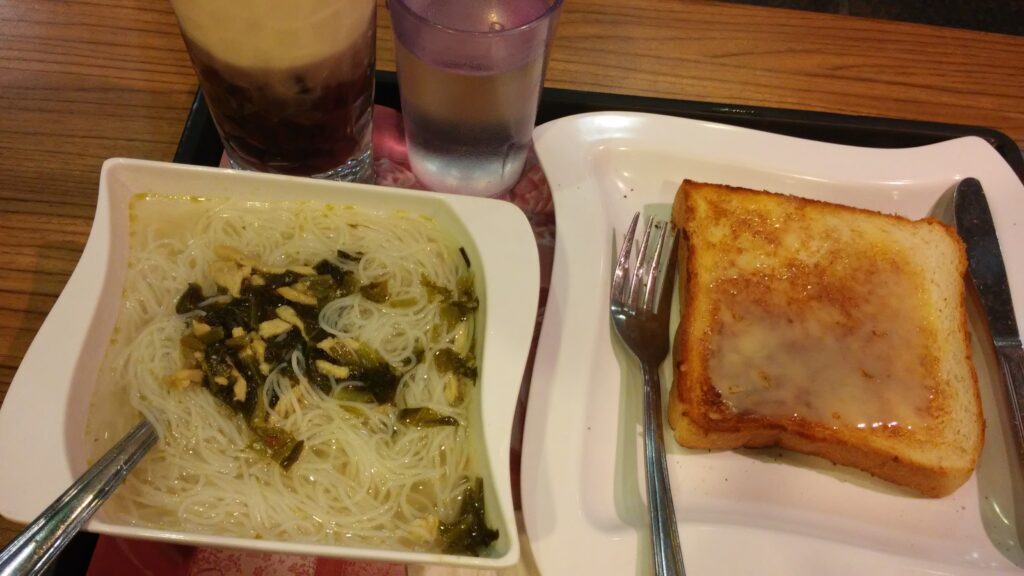
The thin round rice noodles sold as bun or rice vermicelli are dried extremely dry and they rehydrate faster than they cook. Boiling them the way you would boil spaghetti gives four minutes of hard boil and a colander of paste, which is the most common failure in the whole dish.
Bring the water to a full boil, kill the heat, and add the noodles to still water. Four to six minutes depending on thickness, tested by biting a strand. When it bends without snapping and has no white core, it is done, and it will keep softening for a minute after that.
The cold rinse is not optional. It stops the cooking, washes off surface starch that would otherwise glue the strands, and brings the noodles to the temperature the bowl wants, which is cool rather than cold. Let them drain for five minutes in the colander before they go into a bowl.
Herbs by the handful, and the four that matter
The quantity is the part that surprises people the first time. This is not a garnish of three mint leaves. Each bowl takes a loose handful of mixed herbs, and the whole dish is built on the assumption that a mouthful contains as much leaf as noodle.
| Herb | What it brings | Substitute | Per bowl |
|---|---|---|---|
| Mint | Cooling top note, the loudest of the four | None that works | A generous handful |
| Cilantro | Green, slightly soapy edge that cuts the fish sauce | Flat parsley, at a stretch | A handful |
| Thai basil | Anise and a faint pepperiness | Italian basil plus a fennel frond | Six to eight leaves |
| Perilla or shiso | Minty and grassy at once, hard to describe | Skip it rather than fake it | Three or four leaves |
Buy them from an Asian grocery if there is one within reach, where they come in bunches the size of a bouquet for the price of a supermarket clamshell. Wash them, spin them dry, and keep them stem-down in a glass of water with a bag over the top, which buys most of a week.
Six minutes of protein, three ways
Pork shoulder is the traditional choice and the best of the three. Sliced against the grain at about a quarter inch, marinated fifteen minutes in fish sauce, sugar, shallot and pepper, it caramelises fast because of the sugar and needs two to three minutes a side over high heat. Char is the point, so do not crowd the pan.
Shrimp is the fastest. Large ones, peeled, tossed in the same marinade, ninety seconds a side in a smoking pan, then off. They keep cooking on the plate, so pull them when the last of the grey is just disappearing rather than when they curl into rings.
Tofu needs a step first. Press a block of firm tofu under a weight for fifteen minutes while everything else happens, cube it, toss it in cornstarch, and fry it in a shallow layer of oil until three sides are golden. It takes the marinade poorly, so season it after the frying instead of before.
The pickle, the crunch, and the fried shallots
Carrot and daikon in a quick vinegar pickle is standard and it takes ten minutes to become useful. A teaspoon of sugar, a pinch of salt and a splash of rice vinegar on a bowl of matchsticks, tossed and left alone, gives something bright enough to cut through the peanuts and the fried shallot.
Peanuts do the crunching. Toast them dry rather than buying them roasted and salted, since the salt in this dish is already accounted for by the fish sauce, and chop them coarsely so some pieces are large enough to bite. A quarter cup covers four bowls.
Fried shallots are the one shortcut worth buying rather than making. A tub of them keeps for months, they cost very little at an Asian grocery, and they contribute a sweetness and a crispness that nothing else in the bowl provides. Frying your own works and takes twenty minutes of attention, which defeats the point on a weeknight, though the same principle runs through most of a pantry built for speed.
Raw ingredients, and what to know before serving
Most of this bowl is uncooked. Raw herbs, raw lettuce, raw cucumber and, in many versions, raw bean sprouts. Wash everything under running water and dry it, and treat bean sprouts with more care than the rest, since sprouts are grown in warm, damp conditions and public food safety guidance consistently flags them as a higher-risk raw food. Anyone who is pregnant, elderly, very young or immunocompromised is generally advised to eat them cooked, and dropping them into the hot pan for thirty seconds at the end costs nothing.
The protein needs to be cooked through rather than pink, particularly the pork, which is thin enough that this is not a hardship. Shrimp goes opaque and firm. Neither should sit at room temperature on the counter while the herbs get picked, so keep the marinating bowl in the refrigerator until the pan is hot.
Fish sauce is made from fish, which is worth stating plainly because it turns up in dressings where nobody expects it, and a shellfish or fish allergy at the table rules out both the dressing and most substitutes for it. Peanuts are the other obvious one. A vegan version using a light soy sauce with a splash of rice vinegar and a pinch of salt is a different sauce, and a decent one, and it is honest to call it that rather than pretending it is the same thing. The same caution applies across most fast dinners built on bottled seasonings.
Leftovers, and the jar that keeps a week
The dressing is the part that stores. In a sealed jar in the refrigerator it holds a week easily, though the raw garlic gets stronger by the day and the chile mellows, so a jar made on Sunday tastes different by Thursday. Make it without the garlic and chile and add them per use if that bothers you.
The components keep separately for two or three days. Noodles go hard and dry in the refrigerator and come back with thirty seconds in hot water. Herbs are the first thing to fail, usually the following day, so buy for the meal rather than for the week.
What does not keep is an assembled and dressed bowl. The salt in the dressing pulls water out of the vegetables within about twenty minutes, and by the next day the whole thing is sitting in a puddle. Dress at the table, one bowl at a time, which is also how the dish is eaten where it comes from and one of the ideas worth stealing from small-batch cooking generally.
Frequently Asked Questions
Can I make the dressing without fish sauce?
You can make a good dressing, but not this one. Light soy sauce with rice vinegar, sugar, water, garlic and chile lands in a similar place structurally and tastes cleaner and less complex. A spoonful of mushroom powder or a few drops of a fermented soybean liquid gets some of the depth back.
How much dressing does a bowl actually take?
About a quarter cup, poured over and tossed. That looks like a lot in the jug and it is correct, since the noodles and lettuce absorb most of it. Put half of it on, toss, taste, and add the rest, and keep the jar on the table.
What is the difference between this and a bun cha?
Bun cha, from the north, serves the grilled pork in a bowl of warm diluted dressing with the noodles and herbs alongside, and the diner dips. The southern style assembles everything in one bowl with the dressing poured over. The naming varies enough by region that arguing about it is a hobby rather than a settled matter.
Can I use the wide flat rice noodles instead?
Not well. Wide noodles are made for stir-frying and soup and they clump badly when cold. If the thin round vermicelli is not available, thin wheat somen or even angel hair rinsed cold will carry the dressing better than a wide rice noodle will.
Is it worth making the pickle the day before?
Only if the schedule demands it. Ten minutes gives crunch with a light sourness, which is what the bowl wants. Overnight gives something softer and more sharply pickled that starts to compete with the dressing rather than supporting it.
Make the dressing first, before anything else is cut, and let it sit while the rest of the prep happens. Twenty minutes with the garlic in it is a noticeably better sauce than one poured straight from the whisk, and that is the whole difference between a bowl that works and a bowl of ingredients.