The first time most people follow a recipe for this soup, they read the herb quantity twice and then halve it. Four large bunches of flat parsley and cilantro, chopped, going into one pot. It looks like a mistake on the page. It is not a mistake, and halving it produces a thin tomato and lentil soup that tastes vaguely of nothing.
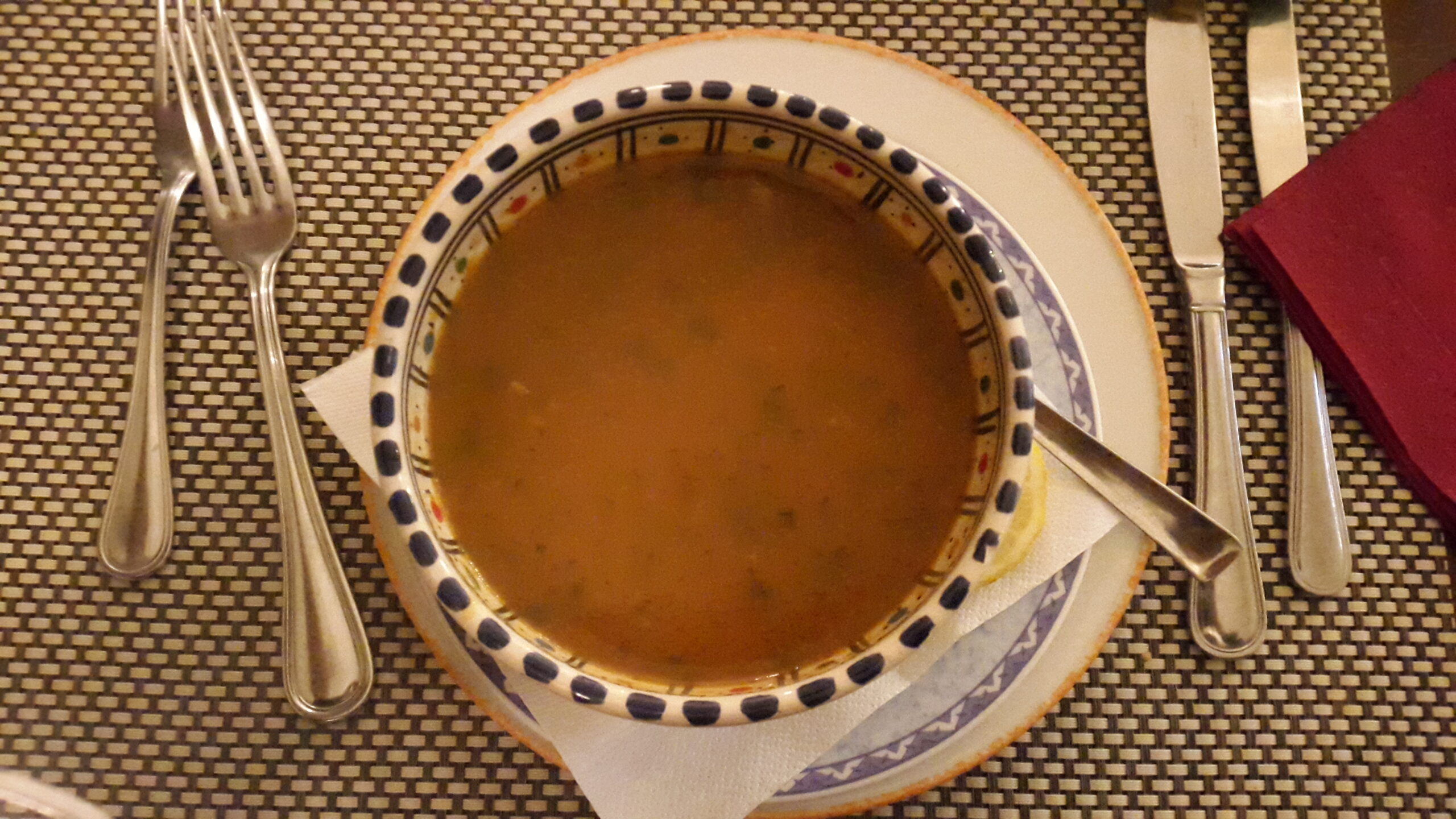
The herbs are structural. They go in early enough to break down and late enough to keep some colour, and by the time the pot is finished they have dissolved into the body of the soup rather than floating on it. A finished bowl is faintly green under the red, which is the visual sign that the quantity was right.
The other thing that surprises people is the thickening. No roux, no cream, no blender. A slurry of flour and water called tadouira goes in at the end and gets stirred for twenty minutes, and the result is a soup with weight to it that has almost no fat.
- Serves: eight generously, with leftovers that improve overnight
- Clock: about two hours, roughly forty minutes of it hands on
- The herbs: four large bunches, chopped, and no, that is not a typo
- Two legumes, two clocks: chickpeas soaked overnight, lentils straight from the bag
- The thickener: flour and water, whisked smooth, poured in slowly, stirred constantly
- The rule after that: it must not boil hard again, or it separates
What goes in the pot, and what varies house to house
The fixed elements are tomato, chickpeas, lentils, onion, celery, a large quantity of fresh herbs, and a spice profile built on ginger, turmeric, black pepper and often a little cinnamon and saffron. Beyond that, almost everything is negotiable and every family thinks their arrangement is the plain and obvious one.
Meat is the biggest variable. Lamb or beef in small pieces is common, cooked from the start so the broth carries it, and a version with no meat at all is equally common and is what many households make. Some pots take vermicelli in the last ten minutes, some take rice instead, some take neither.
Smen, a fermented preserved butter with a pungent aged smell, turns up in traditional Moroccan cooking and is an acquired taste that not everyone in the house acquires. Olive oil does the job for anyone who does not have it. The recipe below is written with lamb and without smen, and notes where to change it.
The Ramadan question, and what can actually be documented
This soup is strongly associated with the breaking of the fast, and in a great many Moroccan households it appears on the table every evening of the month alongside dates and honeyed pastries. That association is real and it is what most people outside the region know about the dish.
Whether harira began as a Ramadan food is a different question, and the honest answer is that nobody can show it. The dish is old, versions of it are documented across the Maghreb, and neighbouring Algeria has close relatives with their own names and their own claims. The sequence of who cooked what first is not something the record settles, and accounts that state it flatly are repeating a tradition rather than citing a source.
What is not in dispute is that it is eaten year-round, at weddings, after funerals, in cafes at midday, and as a plain supper in winter. Treating it as a once-a-year dish is a misreading of how it actually functions in the kitchens it comes from.
The herbs are measured in bunches, not spoons
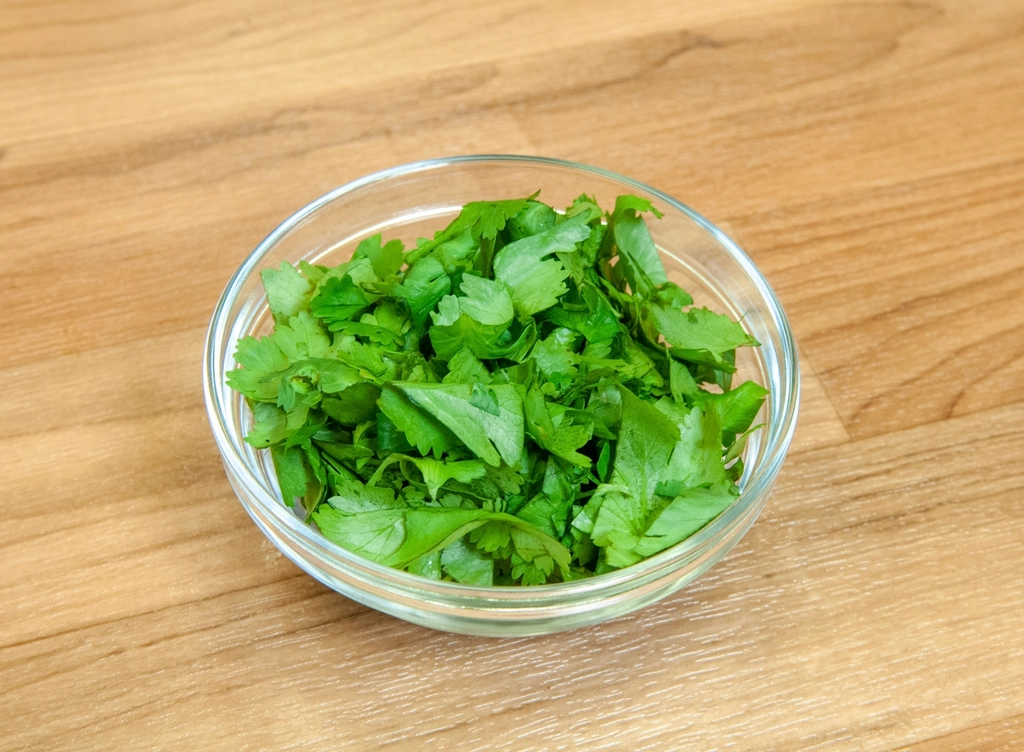
For a pot serving eight: two large bunches of flat-leaf parsley and two of cilantro, which is somewhere around six ounces of leaf and tender stem once the thick stalks are removed. Chop them together, fairly fine but not to a paste, and expect the result to fill a large mixing bowl.
Half goes in with the tomatoes, at the start of the long simmer, where it cooks down completely and becomes part of the base. The other half goes in during the last fifteen minutes, where it keeps some of its colour and its top note. Splitting the addition is the difference between a soup that tastes herbal and one that tastes green.
Celery leaf belongs in the same bowl. The pale inner leaves from the heart of a head of celery, chopped in with the herbs, contribute a savoury bitterness that is part of the dish and is often left out by cooks who only use the stalks. Use the stalks too, finely diced, in the base.
Chickpeas and lentils are on two different clocks
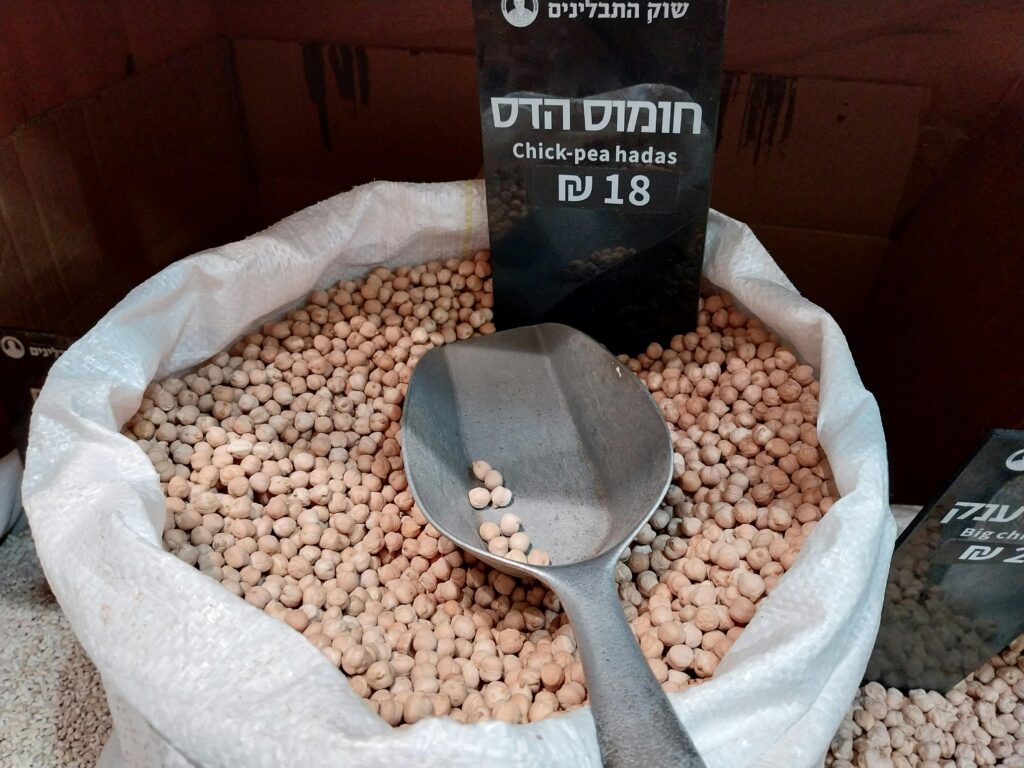
Dried chickpeas want an overnight soak and then an hour or more of cooking, depending on their age. Brown or green lentils want no soak at all and around thirty minutes. Putting both in at the same moment gives either hard chickpeas or lentils that have vanished into mush.
The straightforward fix is to cook the chickpeas separately, or to start them in the pot an hour before the lentils go in. Canned chickpeas are a legitimate shortcut and go in with the lentils, and the only real loss is the cooking liquid, which in the dried version adds body.
Skins are a matter of taste. Some cooks rub the soaked chickpeas between their palms and float off the skins, which gives a smoother soup and takes ten minutes. It is worth doing once to see whether the difference matters to you, and it is not worth doing every time.
A harira soup recipe for eight, with the tadouira at the end
- Soak a cup of dried chickpeas overnight in plenty of cold water. Drain them the next day.
- In a large heavy pot, brown three quarters of a pound of lamb shoulder cut into half-inch pieces in three tablespoons of olive oil. Take your time; the colour is the base of the broth.
- Add two finely chopped onions and three diced celery stalks, and cook until soft, about eight minutes. Add a teaspoon of ground ginger, a teaspoon of turmeric, a teaspoon of black pepper, half a teaspoon of cinnamon and a pinch of saffron threads crushed between your fingers.
- Add two pounds of ripe tomatoes blitzed to a puree, or a large can of chopped tomatoes plus a spoonful of tomato paste, and half the chopped herbs. Cook for ten minutes until it darkens.
- Add the drained chickpeas and three quarts of water. Bring to a boil, then drop to a steady simmer, cover, and leave for an hour, or until the chickpeas are properly tender.
- Add three quarters of a cup of brown or green lentils and a teaspoon of salt. Simmer uncovered for thirty minutes.
- Whisk half a cup of plain flour into two cups of cold water until there is not a single lump. This is the tadouira, and lumps at this stage become lumps in the soup.
- Bring the pot back to a gentle simmer and pour the slurry in a thin stream with one hand while stirring steadily with the other. Keep stirring for a good twenty minutes as it thickens.
- Add the remaining herbs, check the salt, and simmer very gently for another ten to fifteen minutes. If it is thicker than you want, loosen it with hot water rather than cold.
- Finish off the heat with the juice of half a lemon and a handful more chopped cilantro. Serve with lemon wedges and dates on the table.
The tadouira: flour, water, and twenty minutes of stirring
The slurry is simple and the technique is not forgiving. Cold water, not hot, whisked into the flour rather than the other way around, and whisked until it is the consistency of thin cream with no lumps at all. Straining it through a sieve into a jug is a reasonable insurance policy.
It goes in slowly. A thin stream, poured while the other hand keeps the soup moving, so the starch disperses instead of hitting the heat as a lump and setting. Rushing this is how a pot ends up with pale dumplings suspended in it that never dissolve.
The stirring afterwards is not optional and twenty minutes is the real number. Flour needs time and heat to lose its raw taste and to swell fully, and a soup thickened for five minutes tastes pasty. It also settles and catches on the bottom of the pot if left alone, so a wooden spoon across the base every thirty seconds is the job for that stretch.
Why it must not boil hard after the flour goes in
Once the starch is in suspension, a hard boil breaks it. The soup thins, then separates into a watery layer and a heavy layer, and no amount of further stirring puts it back together. The heat after the tadouira should be a lazy blip at the surface and nothing more.
The same applies to reheating. A bowl brought back on a high burner will split, and the fix is a low flame and patience. If it has already thinned overnight, which happens as the starch retrogrades in the cold, a few minutes of gentle heat and stirring usually brings the body back.
Some households use a beaten egg stirred in at the end instead of flour, and a few use both. The egg version wants exactly the same restraint about heat, for a different reason: too hot and it scrambles into threads rather than enriching the broth.
Tomato, and the difference fresh makes
Fresh ripe tomatoes, peeled and blitzed, give a lighter and sweeter soup with a cleaner acidity. A can of chopped tomatoes gives a deeper, flatter, more consistent one, and it needs a spoonful of tomato paste alongside it to make up the difference in concentration.
| Element | Traditional | Common substitution | What changes |
|---|---|---|---|
| Tomato | Fresh, peeled, pureed | Canned plus paste | Deeper colour, less brightness |
| Chickpeas | Dried, soaked overnight | Canned, added with the lentils | Slightly thinner body |
| Fat | Smen or olive oil | Olive oil | Loses a pungent aged note |
| Meat | Lamb or beef in small pieces | Omitted entirely | Needs more herbs and a firmer hand with salt |
| Starch at the end | Flour tadouira | Vermicelli or rice | Different texture, less body |
Whichever route the tomato takes, it has to cook down properly before the water goes in. Ten minutes of the puree bubbling with the spices and the first half of the herbs concentrates it and takes the raw edge off, and skipping that step leaves a sharpness that stays for the whole two hours.
What goes alongside it on the table
Dates and a wedge of lemon, at minimum. The lemon goes into the bowl by the drinker, and the amount that suits one person will be twice what suits another, so squeezing it into the pot is a decision better left unmade.
Chebakia, the sesame and honey pastry twisted into a flower shape, is the traditional partner during Ramadan and is sweet enough to be startling next to a savoury soup. Bread is universal. Hard-boiled eggs turn up in some households and not in others.
It is served hot rather than scalding, in bowls or in glasses, and it is drunk as often as it is spooned. That detail explains the consistency the tadouira is aiming for: thick enough to coat, thin enough to sip from the rim, which is a narrower target than most soups have. Anyone building a wider North African table will find the rest of the logic in how these meals are structured.
Holding a large pot safely across a long evening
A pot for eight is deep, and deep pots cool slowly, which is the practical food safety issue with this dish more than any ingredient in it. If it is going to sit out for several hours while people eat in shifts, keep it over the lowest possible heat so it stays properly hot rather than drifting into the warm range where bacteria multiply.
For storage, get it into shallow containers rather than putting the whole pot in the refrigerator, and get it cold within two hours of coming off the stove. Reheat portions to a full simmer, gently, and do not reheat the same portion twice. Lamb and a starch-thickened broth are both worth handling with that discipline.
Two other notes for a mixed table. The flour makes it unsuitable for anyone avoiding gluten, and swapping in cornstarch changes the texture noticeably rather than matching it. Anyone with a legume sensitivity has two of them in the same bowl here, and there is no version of this soup without at least one, which is worth mentioning before the bowls go round rather than after.
Frequently Asked Questions
Can I make it a day ahead?
Yes, and many households do. It thickens overnight and often needs a cup of hot water on reheating. Hold back the second half of the herbs and the lemon until the reheat, since both fade, and warm it gently so the thickened broth does not split.
Is there a version without meat?
There are several, and they are not a compromise. Leave out the lamb, use a good olive oil, add an extra half cup of chickpeas, and be more generous with the ginger and the black pepper. The pot loses depth from the browning step, and more herbs plus a firmer hand with salt covers most of the gap.
Why did mine turn out watery?
Usually one of three things: too much water at the start, a tadouira that was too thin, or a hard boil after the flour went in. The first two are fixable by simmering it down uncovered before the flour stage; the third is not really fixable once it has happened.
What can stand in for smen?
Nothing exactly. It is a salted butter fermented for months and it tastes closer to a strong cheese than to butter. A small knob of good butter plus a scrap of blue cheese melted in gets somewhere in the vicinity. Most cooks outside the region use olive oil and lose nothing they will miss.
How thick should it actually be?
Thick enough that a spoon dragged through leaves a track that closes slowly, and thin enough to drink from a glass. If it holds the spoon upright it is a stew, and if it runs off like a broth the flour did not have long enough.
Buy more herbs than seems sensible and use all of them. That single decision does more for the pot than any adjustment to the spice, and it is the one thing that separates the bowl served in Moroccan homes from the thin approximations that carry the same name elsewhere, a pattern that repeats across most dishes that travel.