The pot goes on at ten in the morning and comes off at four in the afternoon, and for most of those six hours nothing happens that anyone would call cooking. That is the whole design. What happens in the first forty minutes, when three different meats are browned one after another in the same pot, decides everything that comes after it.
The sausage is the part people get wrong. It goes in near the end, not at the beginning, and the reason is specific: fennel seed and the fat in a fresh Italian sausage give up their character in about an hour and then keep giving it up for three more, until the whole pot tastes like sausage and nothing else. In late, and it stays a distinct thing.
This is a Sunday dish for a table of eight to twelve, and it produces two courses out of one pot. Here is the sequence, the timings, and the arithmetic on how much pasta a full pot actually dresses, which is the number nobody writes down.
- Serves: eight to twelve, in two courses, from one heavy pot
- Clock: four hours minimum at a bare simmer, six is better
- Three meats: pork ribs or shoulder, beef braciole, fresh Italian sausage
- The order: pork first, braciole second, sausage in the last hour
- Tomato: three large cans of whole peeled, crushed by hand, plus a small can of paste
- Yield: roughly enough for three pounds of dry pasta, with meat served separately
What the name argues about
Call it gravy in one Italian-American household and sauce in another and you will get two different reactions, neither of them neutral. The split runs roughly along family and neighbourhood lines rather than along any clean geographic border, and people who grew up with one word tend to hear the other as an affectation.
The origin of the usage is not settled. One account holds that gravy translates the sense of a meat-cooked sauce, since the pot is defined by what is braising in it rather than by the tomato. Another holds it came from English-language kitchen vocabulary encountered in the United States and applied to something new. Both are plausible, neither is documented, and anyone presenting one as established fact is choosing a side.
What is documented is that the dish as it exists is American. Long-simmered pots of tomato with multiple cuts of meat, cooked in a quantity that assumes a large table, developed in the Italian-American cooking of communities where meat was cheaper and more plentiful than in the regions people had left. It has relatives in southern Italy, particularly the Neapolitan ragu, and it is not the same dish.
Three meats, browned in sequence
Each one goes into the pot alone, in a single layer, and comes out before the next goes in. It takes longer than browning everything together and it is the single biggest lever on the finished pot, because a crowded pan steams and a steamed pot of meat produces a flat sauce that four hours cannot rescue.
Pork first. Country-style ribs or a shoulder cut into large chunks, salted an hour ahead, browned hard on every surface in olive oil. Pork gives the most fat and the most collagen, which is what makes the finished sauce cling to pasta rather than run off it, and it is the meat that most rewards the long time.
Braciole second, in the fat the pork left. Sausage last and briefly, and only to colour the outside, since it will finish in the pot later. Between each round, if the bottom is going dark rather than brown, splash in a little wine and scrape before the next batch goes in.
The braciole, and what it adds that the others do not
Braciole is a thin slice of beef, usually top round, spread with a filling and rolled and tied. The filling varies by household and the common version is breadcrumbs, grated hard cheese, garlic, parsley, and often pine nuts or raisins. It goes into the pot tied and comes out four hours later as a soft roll that slices.
What it contributes to the sauce is different from what the pork and sausage give. Beef adds a savoury depth that pork does not, and the filling leaks: cheese and breadcrumb dissolve slowly into the surrounding liquid and thicken it, and the garlic and parsley inside spread outward. A pot without braciole is noticeably thinner in body.
Buy the beef sliced thin from a butcher, or slice a top round yourself and pound it between sheets of plastic to about a quarter inch. Two large rolls or four small ones is right for a pot this size. Tie them with kitchen string rather than toothpicks, since a toothpick lost in a pot of sauce is a genuine hazard at a crowded table.
Why the sausage goes in late
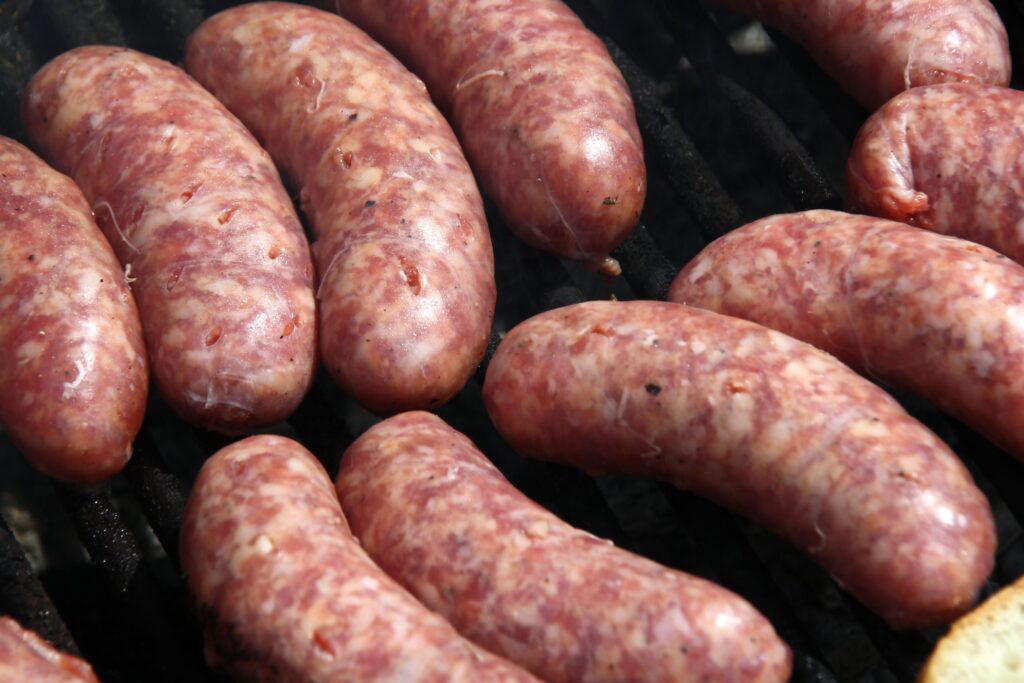
Fresh Italian sausage is seasoned meat in a casing, and the seasoning is loose. Fennel seed, red pepper, garlic and salt all migrate out into whatever surrounds them, and the fat renders and carries them further. Four hours of that and the pot tastes uniformly of fennel.
An hour is enough. Browned early and set aside, the links go back into the pot with about sixty to ninety minutes left, which is long enough for them to cook through and to give the sauce a modest amount of their character, and short enough that they stay a separate thing on the plate.
There is a second reason. Sausage in a pot for four hours turns dry and grainy inside the casing even while it sits in liquid, because the fat has left and nothing replaces it. A link added late is still juicy when it comes out, which matters because the meat is the second course.
Tomato: which can, and how much
Three twenty-eight-ounce cans of whole peeled tomatoes for a pot this size, crushed by hand in a bowl rather than blended. Hand-crushing leaves irregular pieces that break down over four hours into something with texture, while a blender emulsifies the seeds and the skin and gives a uniform sauce that reads slightly bitter.
A small can of tomato paste goes in earlier, cooked in the fat with the onions and garlic until it darkens from red to brick, which takes three or four minutes and is a step worth not rushing. Cooked paste is a different ingredient from raw paste, sweeter and deeper, and it is what keeps a long-simmered pot from tasting acidic.
Sugar is a subject of argument and the answer is usually no. A pot that needs sugar is either using poor tomatoes or has not cooked the paste properly. If the finished sauce still bites after four hours, a grated carrot cooked in with the onion is a better correction than a spoonful of sugar, since it adds sweetness without the flat note.
A sunday gravy recipe for a pot that runs four hours
- Salt three pounds of pork ribs or cubed shoulder and leave them out for an hour. Make the braciole: pound the beef thin, spread with breadcrumbs, grated pecorino, chopped garlic and parsley, roll, and tie.
- Heat a quarter cup of olive oil in a heavy eight-quart pot. Brown the pork in two batches, deeply, and set it aside. Brown the braciole on all sides and set it aside. Brown two pounds of sausage links briefly and set them aside separately.
- Pour off all but three tablespoons of the fat. Add two finely chopped onions and cook eight minutes, then six sliced garlic cloves for one minute more.
- Add a small can of tomato paste and stir over medium heat until it darkens, three to four minutes. Add a cup of red wine and scrape the bottom clean.
- Crush three large cans of whole peeled tomatoes by hand into the pot. Add two cups of water, swirled through the cans. Add a few basil stems, two bay leaves and a good pinch of salt.
- Return the pork and the braciole with any juices. Bring it to a boil, then drop the heat until the surface breaks only occasionally.
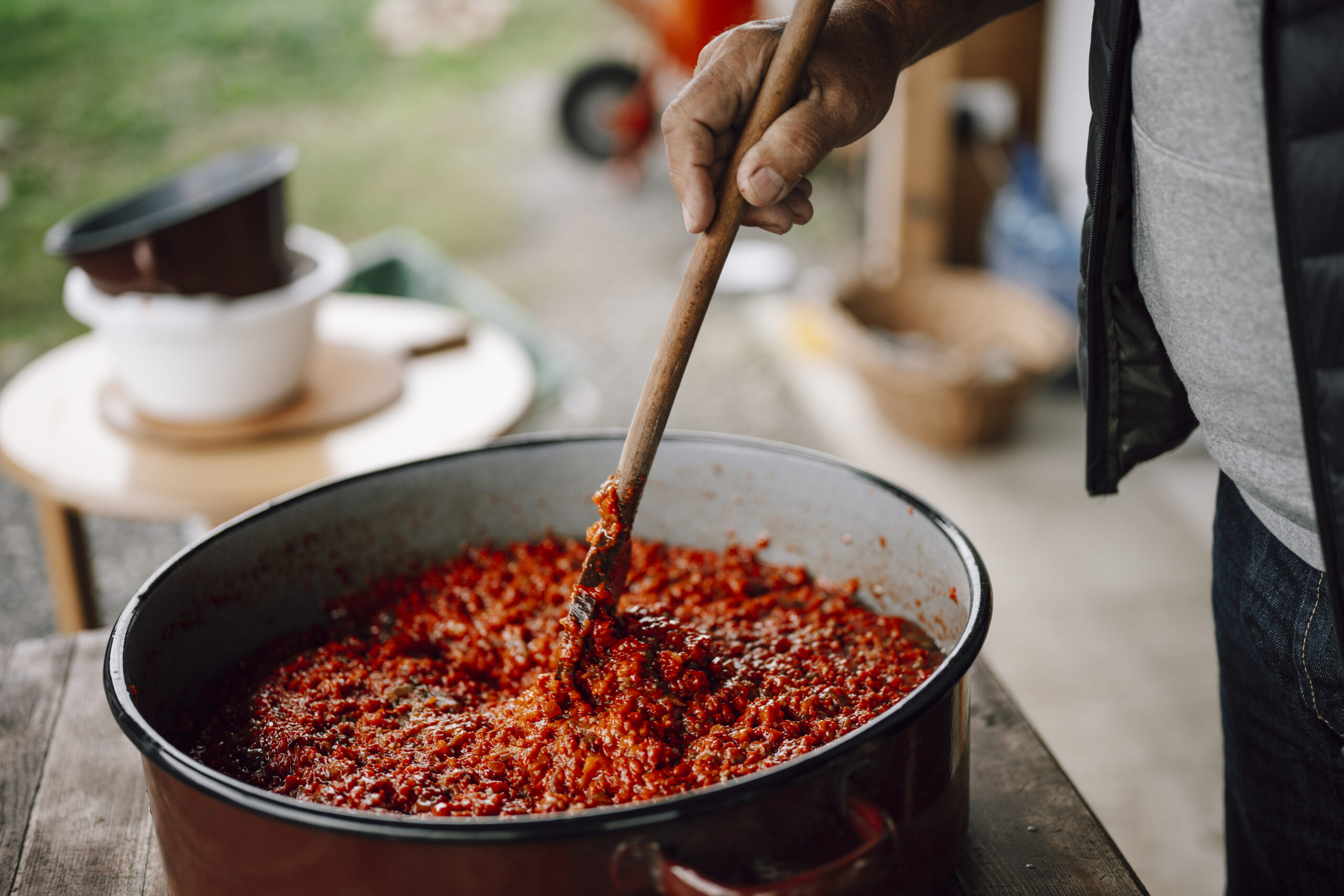
- Cook uncovered, or with the lid ajar, for three hours. Stir across the bottom every twenty minutes and adjust the heat down whenever it starts to bubble properly.
- Add the sausage and cook a further hour. The sauce should be visibly darker and thicker than it was at the start.
- Lift all the meat out onto a platter. Remove the string from the braciole and slice it. Cover the platter and keep it warm.
- Taste the sauce for salt, tear in a large handful of basil leaves off the heat, and let it sit ten minutes while the pasta water comes up.
Four hours at a bare simmer, hour by hour
| Hour | What is in the pot | What to do | What it looks like |
|---|---|---|---|
| 0 to 1 | Pork, braciole, tomato, wine | Get the heat down and leave it | Bright red, thin, tomato on top |
| 1 to 2 | Same | Stir the bottom every twenty minutes | Darkening, fat pooling at the edges |
| 2 to 3 | Same | Skim some fat if there is a lot | Brick red, starting to cling to the spoon |
| 3 to 4 | Sausage added | Check salt, keep the heat low | Deep and glossy, meat falling apart |
The heat is the discipline of the whole afternoon. A pot that bubbles steadily rather than occasionally reduces too fast, scorches on the bottom, and turns the pork stringy instead of soft. If the surface is moving in more than one place at a time, the burner is too high.
How much pasta a full pot actually dresses
An eight-quart pot built to this recipe yields somewhere around three and a half quarts of sauce once the meat comes out. The working ratio for dressing pasta properly is about a cup of sauce per pound of dry pasta plus a ladle of pasta water, which means a full pot dresses roughly three pounds and leaves a good deal over.
Three pounds of dry pasta feeds twelve people generously as a first course. The meat is the second course, served on its own platter with bread and something sharp alongside, which is how a pot this size is meant to be eaten and why the quantities look absurd if you imagine one plate per person.
Rigatoni, ziti and other tubes hold this sauce better than long shapes because the meat particles and dissolved braciole filling lodge inside them. Finish the pasta in the sauce for a minute over heat rather than ladling sauce over drained pasta in a bowl, which is the difference between coated pasta and pasta sitting in a puddle. The homemade route is a different afternoon entirely, and it is covered in the notes on rolling your own.
The meat as the second course
Everything that comes out of the pot goes on one large platter: pork falling off the bone, sliced braciole, whole sausages. A ladle of sauce over the top, chopped parsley, and it sits on the table after the pasta plates are cleared.
What goes with it is deliberately plain. Bread, a bowl of bitter greens dressed with lemon, maybe some pickled peppers. The meat has been in tomato for four hours and it does not need a second sauce or a rich side, and a table that has already eaten a plate of pasta does not want one.
The leftovers of that platter are the best sandwich of the week. Cold braciole sliced thin on bread with a spoonful of the sauce, or a sausage split and pressed. This is the part of the dish that most reliably converts people who thought a six-hour pot was excessive, and it belongs with the wider habit of cooking with the second meal in mind.
Scorching, and the two things that cause it
Once the bottom of the pot catches, the whole batch tastes of it and there is no recovery. Do not stir a scorched pot, since that distributes the burnt layer through everything. Pour the sauce carefully into a second pot without scraping, leave the last inch behind, and taste before you commit to it.
The two causes are heat and neglect. Heat has been covered. Neglect means going more than about twenty minutes without dragging a wooden spoon flat across the base, which is where the solids settle and where the burning starts. A heat diffuser under a thin pot fixes most of the problem for a few dollars.
A heavy pot is worth the money for exactly this dish. Thin aluminium develops hot spots that a four-hour simmer will find. Enamelled cast iron or a thick clad stainless pot spreads the heat and gives the cook a much wider margin for a wandering afternoon.
Cooling a gallon of sauce without leaving it on the stove
A gallon of hot sauce in a heavy pot placed in a refrigerator can take many hours to come down through the temperature range where bacteria multiply, and it will warm everything around it on the way. The public food safety guidance on this is straightforward: divide it into shallow containers no more than a couple of inches deep, and get it into the cold within two hours of coming off the heat.
Meat and sauce keep better stored separately. Three or four days refrigerated, three months frozen, and the sauce freezes better than the meat does, which goes slightly grainy. Reheat to a full simmer rather than to warm, and only reheat the portion you are going to eat.
One more note for a long table. A pot left on the stove at a low warm setting all afternoon while people come and go is a common arrangement and a reasonable one, provided it is genuinely hot rather than tepid, and provided it goes into the refrigerator rather than sitting on the cold stove overnight. Anyone cooking for a crowd should treat the cooling as part of the recipe rather than as cleanup, which is the same principle behind any pot built for a large table.
Frequently Asked Questions
Can I use only one kind of meat?
You can, and the pot will be good rather than remarkable. Pork alone gives the best single-meat version, because of the fat and collagen. Beef alone is leaner and needs more time. Sausage alone produces exactly the fennel-dominated sauce that the late addition is designed to avoid.
Does it really need four hours?
Three is the working minimum for the pork to give up its collagen and for the tomato to lose its edge. Two produces a decent weeknight sauce that is a different dish. Beyond five hours the returns flatten out and the meat starts to go from tender to shredded, which some households prefer.
Should the lid be on or off?
Ajar, mostly. A fully covered pot does not reduce and stays thin. A fully uncovered pot reduces too fast over four hours and needs water added, which dilutes the flavour you just spent the morning building. A lid set at an angle is the practical middle.
What is the wine for?
Deglazing and acidity. A cup of dry red lifts the browned bits off the bottom of the pot, which is where a large part of the flavour is sitting, and it contributes a sharpness that survives the long cook. Water or stock does the lifting but not the second part.
Can it be made in a slow cooker?
Partly. Brown the meat and cook the paste and onions in a pan first, since a slow cooker cannot do either, then transfer everything and run it on low for six to eight hours. What is lost is the evaporation, so the result is thinner and usually needs reducing in a pan afterwards.
Start the pot early enough that the four hours are not a source of anxiety at five in the afternoon. The cooking asks for almost nothing after the browning is done, and the difference between a pot that got its full time and one that got rushed is obvious in the first forkful.