
A head of cauliflower sold with its leaves still attached weighs about three pounds. The florets everybody cooks account for roughly half of that. The rest is a thick central stem and a dozen or more leaves, and in most kitchens both go into the bin within four minutes of the bag hitting the counter.
The leaves, roasted hot with oil and salt, come out somewhere between a kale chip and a charred cabbage wedge, sweet at the thick base and crisp at the frilled edges. They cost nothing, they cook in twelve minutes, and almost nobody has tried them, which makes them the most reliable surprise in a winter vegetable box.
What follows is four ways the head becomes a main course rather than a plate accompaniment, plus what to do with the two thirds of it that usually gets thrown out.
- One head, three ingredients: florets, stem and core, leaves, each with a different method
- The leaves: 425 degrees, oil, salt, twelve minutes, and they are better than the florets
- Four routes: whole roasted, steaks, braised, and a soup built on the stem
- The temperature floor: below 400 degrees it steams rather than browns
- What makes it dinner: a legume, a dairy element or an egg, not a bigger portion
- Buying: a head with leaves on is fresher and gives you more food for the same price
The head is two vegetables and most people cook one
Cauliflower is a cultivated form of the same species as cabbage, broccoli, kale and kohlrabi, bred so that the flower head arrests before it opens. That arrested head is the white curd everyone recognises. The plant around it is essentially a cabbage, and the leaves taste like one.
The stem is the third thing. It is denser than the florets, noticeably sweeter, and it holds together under long cooking in a way the curd does not. Sliced thin it takes a quick pickle well, and simmered it makes a smoother soup base than the florets do because it has less of the fibrous texture that survives blending.
Buying a trimmed head wrapped in plastic gets you the curd alone at a price calculated on the whole plant. Buying one with leaves intact, which most markets and box schemes still sell, gets a third more food and a better indication of freshness, since the leaves wilt long before the curd shows anything.
What the leaves taste like roasted
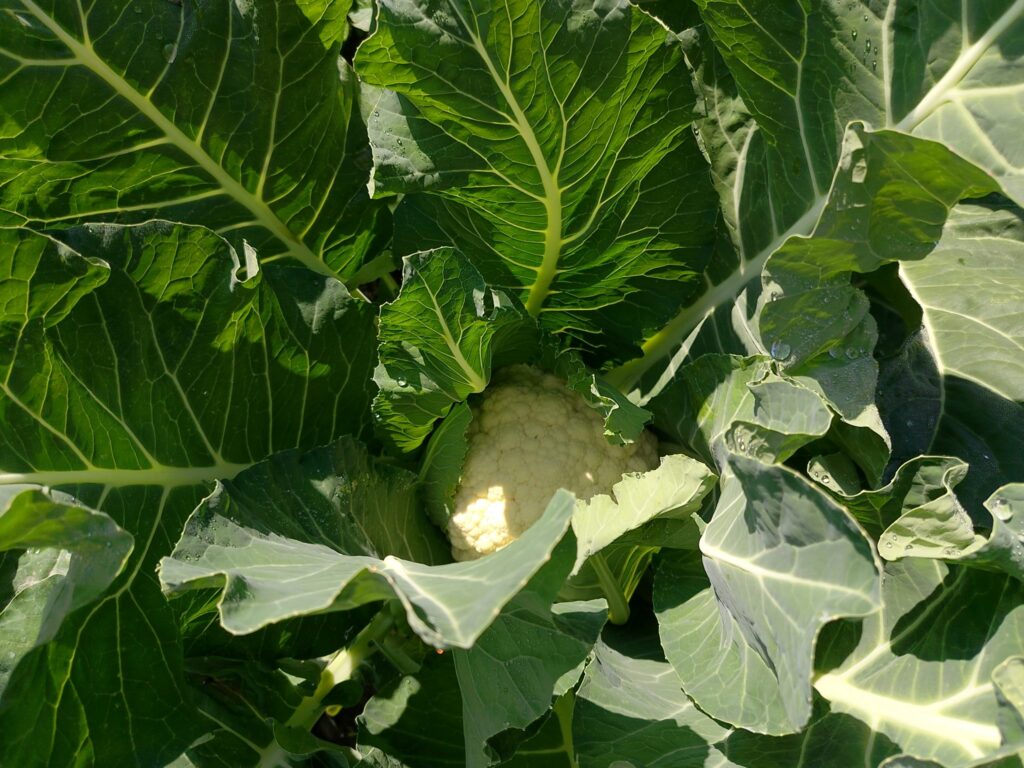
Pull them off at the base, keep everything including the thick pale ribs, wash and dry them properly. Toss with olive oil and salt in a bowl, using your hands so the oil reaches the crevices, and spread on a sheet pan in a single layer with as little overlap as you can manage.
Twelve minutes at 425 degrees, checked at ten. The thin frilled parts go dark and shatter like a crisp; the thick ribs stay tender and sweeten noticeably, closer to a roasted cabbage core than to anything green. The contrast between those two textures on one leaf is the point, and it is why chopping them small is a mistake.
They take strong flavours well. Grated hard cheese in the last three minutes, a squeeze of lemon on the way out, chile flakes, or a spoonful of anchovy mashed into the oil beforehand. Eaten straight off the tray they disappear before dinner, which is a known hazard, so cook more than seems necessary.
Four cauliflower main dish methods from one head
| Method | Part used | Time | Texture | Serves as dinner with |
|---|---|---|---|---|
| Whole roasted | Entire head, leaves on | 60 to 90 minutes | Custardy centre, dark crust | Tahini, chickpeas, herbs |
| Steaks | Two centre slices per head | 25 minutes | Firm, browned on both faces | Lentils, a fried egg, salsa verde |
| Braised | Florets and sliced stem | 35 minutes | Collapsing, sauce-like | Pasta, white beans, breadcrumbs |
| Soup | Stem, core, small florets | 30 minutes | Smooth, thick without cream | Croutons, brown butter, seeds |
The four are not interchangeable and the choice is mostly about how much time is available and how much of the head is left. A whole roast uses everything and needs an hour of oven. Steaks use the middle and leave a pile of florets, which is why they are best made on a day when the braise or the soup is also happening.
Whole roasted: the long version and the shortcut
The pure oven method takes an hour and a half. Trim the base so the head sits flat, leave the inner leaves on, rub the whole thing with oil, salt it heavily including down between the florets, and roast at 400 degrees. It is done when a knife slides into the core with no resistance and the outside is properly dark in patches.
The shortcut halves the time and improves the result. Simmer the whole head in heavily salted water, or in water with a splash of milk and a bay leaf, for twelve to fifteen minutes first. That cooks the interior through and seasons it, so the oven is only doing the browning, which takes thirty to forty minutes at 450 degrees.
Salt it more than feels reasonable. A head is dense and mostly water, and salt applied to the outside does not travel far, which is why so many whole-roasted cauliflowers look impressive and taste of nothing. The blanching water is the best opportunity to fix that, and it should taste like a well-seasoned soup.
Steaks: two per head, and the rest is florets
Stand the head on its base and cut down through the middle in inch-thick slices. Only the two or three central cuts hold together, because they include a section of the stem running through them, and everything outside those cuts falls apart into florets. Anyone promising four steaks from one head is not counting honestly.
Sear them in a hot ovenproof pan with oil, three to four minutes a side until properly brown, then move the whole pan into a 425-degree oven for twelve to fifteen minutes. The pan sear is what gives the flat faces their colour, and starting them in the oven skips that entirely and produces something pale.
They are firm enough to cut with a knife and fork, which is the appeal, and they need something underneath rather than beside them. A bed of brown lentils, a smear of yogurt or tahini, a salsa verde spooned over. On their own they are a large piece of vegetable on a plate, and that is not dinner.
The braise, where the florets are supposed to fall apart
This is the opposite instruction from everything above. Cut the florets small, add sliced stem, cook them in olive oil with garlic, anchovy and chile until they begin to colour, then add a splash of water, cover, and leave them for twenty-five minutes until they collapse completely into a rough, savoury mass.
What comes out is not a vegetable with pieces in it, it is a sauce. Tossed with orecchiette or rigatoni and a ladle of pasta water, finished with toasted breadcrumbs and parsley, it feeds four from half a head and costs almost nothing. This is the version to make when the cauliflower has been in the drawer a week and is starting to spot.
Anchovy is doing real work and is not optional in the way people assume. Two fillets dissolve into the oil and disappear, leaving a savoury depth that nothing else in this dish provides. For a version without them, a spoonful of white miso or a handful of chopped olives covers roughly the same ground, and both belong on the same shelf as the other savoury stand-ins worth stocking.
Soup from the stem, which is sweeter than the curd
The core and the thick stem, peeled of their toughest outer layer and chopped, plus whatever small florets are left over from the steaks. Sweat an onion, add the chopped stem, cover with stock, simmer twenty-five minutes until soft, and blend.
It thickens itself. Cauliflower blends to a genuinely creamy consistency with no cream, no potato and no flour, which is why it turns up so often as a substitute in dishes that want body without fat. A splash of milk or a spoonful of cream at the end is an improvement rather than a necessity.
Finish it with something that has texture and something that has char, since the soup itself has neither. Brown butter with sage, toasted hazelnuts, a spoonful of the roasted leaves crumbled on top, or a swirl of chile oil. Without a topping it is a smooth beige bowl, which is nutritionally fine and dull to eat.
The sulfur smell is a timing problem
The unpleasant smell people associate with this vegetable comes from sulfur compounds released when the cell walls break down, and the quantity released rises sharply the longer it cooks in water. A head boiled for twenty minutes fills a house; the same head roasted for forty does not, because dry heat drives off much of the volatile part rather than concentrating it in a pot of water.
That is the practical argument for roasting over boiling, beyond the browning. Where water is involved, keep it short. Twelve minutes of blanching is fine; thirty minutes of simmering in a covered pot is where the trouble starts, and it also produces grey, waterlogged florets.
Colour follows the same rule. Long contact with water and with aluminium or iron dulls the white curd toward grey. A stainless or enamelled pot, a short cook and a squeeze of lemon in the blanching water keeps it pale, which matters visually in the whole-roasted version and not at all in the braise.
Turning any of the four into an actual dinner
A head of cauliflower is around 150 calories and about six grams of protein for the whole thing, which is not a dinner however it is cooked. The four methods above all assume something else on the plate, and the addition matters more than the portion size.
Legumes are the most direct fix. Chickpeas roasted on the same tray, brown lentils under the steaks, white beans stirred into the braise. Dairy is the second route: yogurt or tahini underneath, hard cheese over the top, a soft-boiled egg on the soup. Nuts and seeds add texture and some fat without doing much for the protein column.
Grains work but they do not solve the problem on their own. A bowl of cauliflower over rice is still a low-protein dinner. Over farro with chickpeas and yogurt it is a complete one, which is the pattern behind most of the plates in a vegetable-led week.
Storage, and two cautions worth naming
A whole head keeps a week or more in the refrigerator in a loose bag, and the leaves are the first part to go. Cut florets last three or four days and start to develop brown spots at the cut edges, which can be trimmed. Anything that smells strongly sulfurous before it is cooked has gone too far.
Cauliflower is high in fibre and contains fermentable carbohydrates that some people digest poorly, which is the honest explanation for the discomfort that follows a large plate of it in certain households. Cooking it thoroughly helps, and eating a smaller portion helps more. Anyone managing a diagnosed digestive condition should follow the advice they have been given rather than any general rule here.
The second point concerns anyone taking a blood-thinning medication. Cauliflower and its leaves contain vitamin K, the leaves considerably more than the curd, and consistency of intake rather than avoidance is what medical guidance in that situation usually turns on. That is a conversation with a doctor or pharmacist, not something to settle from a recipe, and it applies equally across the whole winter vegetable shelf.
Frequently Asked Questions
Can I really eat the leaves?
Yes. They are the leaves of a brassica, the same as the ones sold separately as collards or kale, and there is nothing about them that requires special treatment. The only reason they are unfamiliar is that supermarkets trim them off before the head reaches the shelf.
Why does my roasted cauliflower come out soggy?
Almost always crowding or temperature. Florets touching each other release steam that has nowhere to go, and an oven below 400 degrees never gets the surface dry enough to brown. Use two trays rather than one, and give the oven twenty minutes to reach temperature properly.
Is frozen cauliflower any use?
For the soup and the braise, yes, and it is cheap. For roasting, no. Freezing ruptures the cell walls and the thawed florets release too much water to ever brown, so they steam in their own liquid regardless of how hot the oven is.
What about the purple and orange varieties?
They cook identically and they taste close enough that a blind test rarely separates them. The purple pigment fades badly in water and holds up better in dry heat, so those heads are worth roasting rather than boiling if the colour is the reason for buying them.
How do I keep a whole roasted head from burning outside before the middle is done?
Blanch it first. Fifteen minutes in salted water cooks the interior, after which the oven only has to brown the surface and can run hot and fast. The alternative, a lower oven for ninety minutes, works but gives a less interesting crust.
Buy the next head with the leaves still on and roast those first, before deciding what happens to the rest of it. Twelve minutes and a hot oven is a small enough investment to find out whether the part you have been throwing away is better than the part you have been cooking.