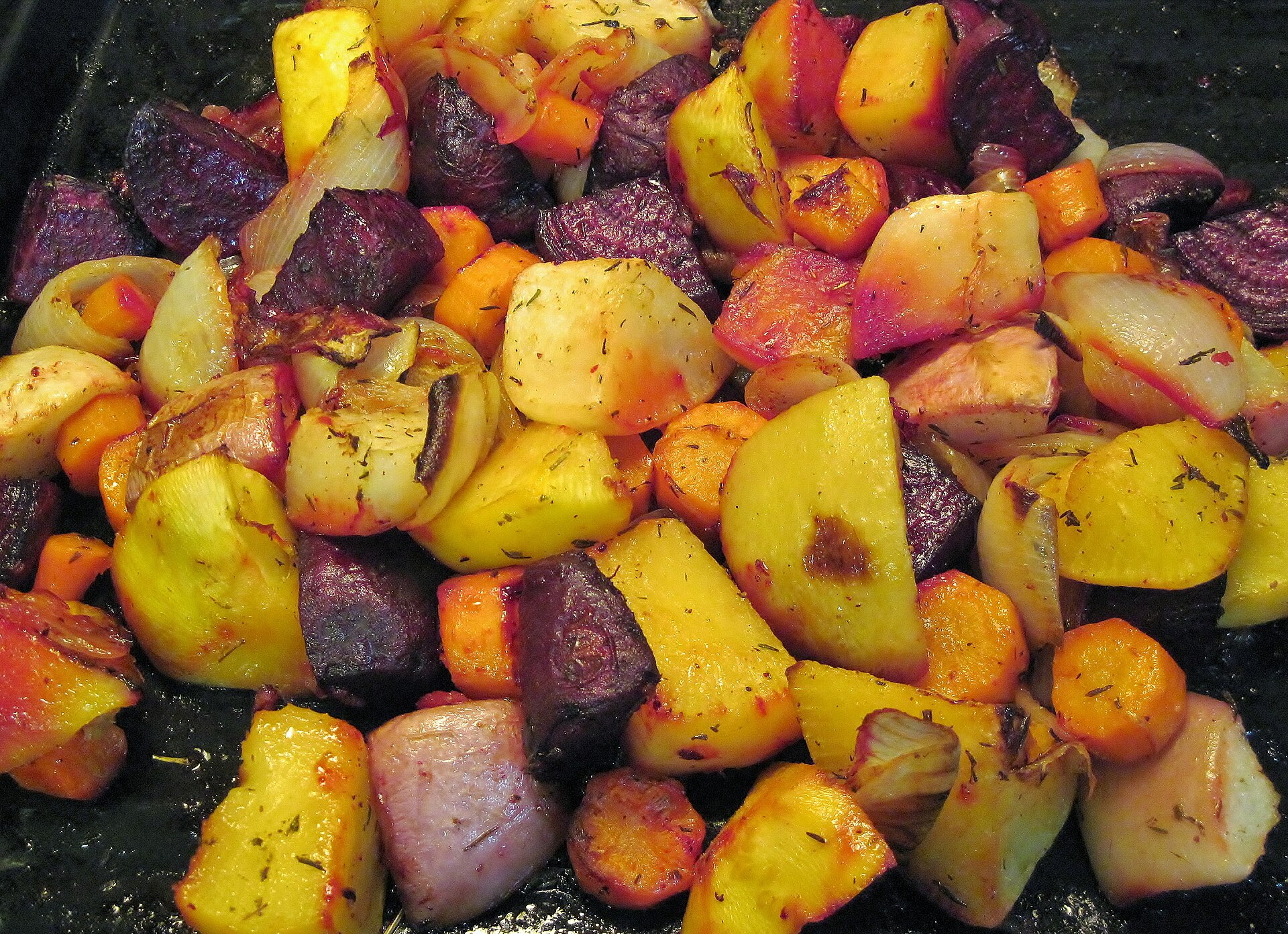
Carrots, beets, celeriac, turnips, parsnips, and rutabaga all roast well at the same oven temperature, cut to the same rough size, which means one tray and one timer can produce six distinct vegetables at once. What actually separates a forgettable roasted root from a dish worth returning to is not the roasting at all. It is the sauce spooned over it once the tray comes out.
Each of these six roots carries a different balance of sweetness, earthiness, and starch, and a sauce chosen to match that specific balance does more for the finished dish than any amount of extra roasting time or a fancier salt. A sweet root wants something sharp cutting against it; an earthy one wants fat and richness to round it out.
What follows is all six roots, cut and roasted at 425 degrees, and a specific sauce built for each one, chosen by testing several combinations against each root and keeping the ones that actually changed how the vegetable tasted rather than just sitting on top of it.
- One oven temperature: 425 degrees for all six roots
- Cut size: roughly one-inch pieces, for a consistent 30 to 40 minute roast
- Six sauces: each chosen to counter or complement one root’s specific character
- Make ahead: every sauce holds two to three days refrigerated
- Serves: the full tray feeds six to eight as a side
- Not a substitution plan: the vegetables stay simple; the sauces do the work
Why one oven temperature works for six different roots
Root vegetables share enough structural similarity, dense flesh, moderate water content, and a decent amount of natural sugar, that a single high oven temperature browns and softens all of them within a similar window, provided they are cut to a similar size. That consistency is what makes a mixed tray of several roots practical for a weeknight or a holiday table without juggling separate roasting times for each one.
425 degrees is hot enough to caramelize the natural sugars in all six before the inside turns mushy, and it is forgiving of a few minutes’ variance either way, which matters on a day when the oven is also busy with something else.
The six roots, cut for the same oven window
| Root | Character | Roast time at 425 |
|---|---|---|
| Carrot | Sweet, mild | 25 to 30 minutes |
| Beet | Earthy, sweet, deep color | 35 to 40 minutes |
| Celeriac | Mild, slightly nutty | 30 to 35 minutes |
| Turnip | Peppery, sharp raw, mellow cooked | 25 to 30 minutes |
| Parsnip | Very sweet, almost spiced | 25 to 30 minutes |
| Rutabaga | Sweet, dense, slightly bitter | 35 to 40 minutes |
Cut each root into pieces of roughly the same size, about an inch, and beets specifically should roast on a separate section of the tray or a separate sheet entirely, since their juice bleeds during roasting and will tint every other vegetable on the same tray a deep pink if they touch.
The roasted root vegetables sauce pairing chart
| Root | Sauce | Why it works |
|---|---|---|
| Carrot | Tahini and lemon | Acid and bitterness cut the sweetness |
| Beet | Herbed yogurt | Cool, tangy dairy against earthy sweetness |
| Celeriac | Brown butter and capers | Salt and richness lift a mild vegetable |
| Turnip | Miso and honey glaze | Umami rounds out the pepperiness |
| Parsnip | Chili crisp | Heat and crunch against heavy sweetness |
| Rutabaga | Anchovy and garlic oil | Salt and savoriness against dense bitterness |
The pattern across all six pairings is the same: each sauce is chosen specifically to supply whatever quality the root is missing on its own, sharpness for the sweet ones, richness for the mild ones, salt for the dense ones, rather than simply adding more flavor of the same kind the vegetable already has.
Carrot and tahini-lemon: cutting sweetness with fat and acid together
Roasted carrots concentrate their natural sugar to the point of tasting almost like candy at the edges, and a sauce built on tahini thinned with lemon juice, water, and a little garlic gives the dish something to push against. The tahini’s own slight bitterness does real work here alongside the lemon’s acidity, keeping the finished dish from tasting purely sweet.
Whisk two tablespoons of tahini with the juice of half a lemon, a small grated garlic clove, and enough water to loosen it to a drizzle-able consistency, then spoon it over the carrots while they are still warm so it sets slightly against the hot surface.
Beet and herbed yogurt: the classic pairing, done properly
Beets and yogurt is a pairing common enough to feel obvious, and it earns that reputation because plain yogurt’s tang and coolness are close to the ideal counterpoint to beet’s earthy sweetness. Stirring in chopped dill or parsley and a little lemon zest turns a plain dollop into something with more presence on the plate.
Season the yogurt itself with salt before serving, since unsalted yogurt spooned over an already well-seasoned roasted vegetable tends to taste flat by comparison, dragging the whole bite down rather than lifting it.
Celeriac and brown butter with capers
Celeriac’s flavor is mild and slightly nutty on its own, closer to a subtler potato than to its more assertive root relatives, which means it benefits more than any other root on this list from a sauce that adds real richness and salt rather than trying to balance an already strong flavor. Brown butter, finished with a spoonful of capers and their brine, supplies both.
Melt butter until the milk solids turn a deep gold and smell nutty, then stir in a tablespoon of capers off the heat, letting their acidity briefly sizzle in the hot fat before spooning the whole mixture over the roasted celeriac.
Turnip and a miso-honey glaze
Raw turnip carries a real peppery sharpness that mellows considerably once roasted, but a faint bitterness often remains, and a glaze built on miso and honey, brushed on in the last ten minutes of roasting the same way a glaze would be applied to salmon, gives the finished vegetable a savory-sweet depth that plain roasting alone does not reach.
Whisk a tablespoon of white miso with a tablespoon of honey and a teaspoon of water, brush it over the turnip pieces with ten minutes left in the oven, and watch the sugar in the honey the same way any sugar-based glaze needs watching, since it can move from caramelized to burnt quickly in a hot oven.
Parsnip and chili crisp: heat against the sweetest root
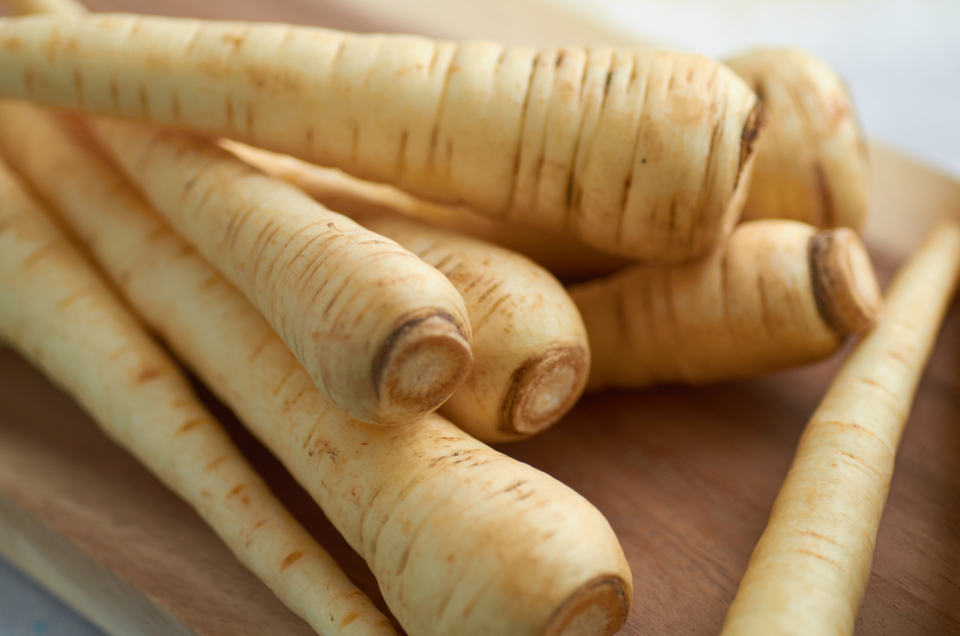
Parsnips are the sweetest of the six roots here once roasted, carrying a flavor some describe as almost spiced on its own, closer to a root vegetable trying to taste like dessert. A spoonful of store-bought or homemade chili crisp, with its crunchy fried garlic and shallot bits and a real chile kick, is one of the more effective counters to that sweetness on this whole list.
Spoon it on at the table rather than in the kitchen, since chili crisp’s crunch softens quickly once it sits on a hot, moist roasted vegetable, and the textural contrast is a real part of why the pairing works.
Rutabaga and anchovy-garlic oil
Rutabaga is dense, sweet, and carries a faint bitterness that some people find more challenging than any other root on this list, which is exactly why a sauce built on real savoriness, rather than more sweetness or more acid, works best here. Warm olive oil with minced anchovy and garlic, cooked gently until the anchovy dissolves into the oil, supplies a deep, salty backbone that rutabaga on its own does not have.
Anyone avoiding fish can substitute a teaspoon of soy sauce or a small amount of miso stirred into the warm garlic oil instead, aiming for the same savory, umami-forward effect rather than trying to replicate anchovy’s exact flavor.
Building one tray with several roots and several sauces
Roasting all six roots on one or two trays, keeping beets separated to avoid staining the others, and serving each with its own small bowl of sauce alongside rather than pre-sauced, turns this from a single side dish into something closer to a root vegetable tasting board, which works particularly well for a larger holiday table where guests can choose which combinations they want more of.
For a smaller weeknight version, picking two or three of the six roots and their matching sauces is plenty, and the same logic, matching a sauce to a vegetable’s specific character rather than defaulting to the same oil-and-salt treatment across everything, extends easily to whatever roots happen to be in the refrigerator that week.
Leftover roasted roots, tossed cold with any of the six sauces, also make a reasonably substantial lunch on their own the next day, added to a bed of greens or grains for something closer to a full meal than a side dish reheated on its own.
Salt, oil, and the roasting basics that make any sauce work better
None of the six sauces above can rescue a tray of roots that went into the oven under-salted or under-oiled, and skimping on either before roasting is the most common reason a finished dish still tastes flat even with a good sauce poured over it. Salt the vegetables directly before they go into the oven, not only after, since salt applied only at the end sits on the surface rather than seasoning the vegetable through.
A generous coating of oil, enough that the pieces look glossy rather than merely damp, is what allows the surface to brown properly instead of steaming in its own released moisture. A tray that looks slightly overdressed with oil going into the oven is closer to correct than one that looks lean and healthy but comes out pale and soft.
Spacing the pieces so they roast instead of steam
A tray crowded with root vegetables piled two layers deep will steam rather than roast, since the moisture released by the vegetables has nowhere to escape and instead condenses back onto the pieces sitting beneath it. Each piece needs a small amount of open space around it on the tray for hot air to actually reach all its sides.
For six roots’ worth of vegetables, this usually means two full sheet pans rather than one, or roasting in two batches if oven space and time allow. It is a more important variable than oven temperature itself in determining whether a tray comes out caramelized and browned or pale and merely cooked through.
Frequently Asked Questions
Can all six roots really go on one tray together?
Mostly yes, with beets kept separate or on their own tray to avoid staining the others pink. The rest can share space as long as they are cut to a similar size.
Do the sauces need to be made fresh each time?
No. All six hold two to three days refrigerated, and several, particularly the tahini-lemon and the herbed yogurt, taste just as good or better after a day for the flavors to settle.
What if I only have one or two of the six roots on hand?
Pick whichever sauces match what is available. The pairing logic, sweetness needs acid or heat, mildness needs richness, density needs salt, applies to almost any root vegetable, not only the six listed here.
Can these sauces work on other roasted vegetables besides roots?
Yes. The tahini-lemon sauce in particular works well on roasted cauliflower or squash, and the chili crisp is good on almost anything roasted and slightly sweet.
How far ahead can the vegetables themselves be roasted?
They hold reasonably well for a day, reheated in a hot oven for ten minutes to restore some crispness, though the texture is never quite as good as fresh from the oven. The sauces are the more reliable thing to make ahead.
Why does my beet turn everything else on the tray pink?
Beet juice releases as it roasts and spreads on contact with anything else on the same surface. Roasting it on its own square of parchment on the same tray, rather than loose among the other roots, contains the color without needing an entirely separate pan.
Six roots and six sauces is more of a framework than a fixed recipe. Once the pattern of matching a sauce to what a vegetable is missing clicks, it works on whatever root happens to be cheapest at the store that week.