
A Thanksgiving table in New Mexico or Arizona keeps the turkey, keeps the pie, and still manages to taste unmistakably like the region it comes from, because green chile finds its way into more of the meal than a single side dish ever could. It shows up in the gravy, in the mashed potatoes, in a stuffing variation, and often in a whole separate dish that stands in for one of the standard starches entirely.
None of this is a novelty add-on the way a splash of hot sauce might be at another table. Green chile is a pantry staple across the region for the entire year, roasted and frozen by the bushel every September, and by the time Thanksgiving arrives, using it across several dishes is simply how a Southwestern household cooks, holiday or not.
What follows is the full shape of that regional table: where posole replaces a standard starch, the four specific dishes green chile touches, and the order to prepare everything in so the day does not collapse under its own ambition.
- Core additions: posole in place of one starch, green chile gravy, green chile mashed potatoes, a green chile cornbread stuffing
- Where the chile comes from: roasted and frozen from the region’s own late-summer harvest
- The red-or-green choice: both appear on Southwestern tables, with green being the more common Thanksgiving default
- Make-ahead friendly: posole and the chile itself can be fully prepared days ahead
- Heat level: variable by chile variety, not automatically hot
- Safe handling: pork in posole needs a full cook to a safe internal temperature
A southwestern thanksgiving menu built around one ingredient, not one dish
What distinguishes this version of the holiday table from most other regional variations is that green chile is not confined to a single dish the way, say, oyster stuffing is confined to New England’s stuffing course. It threads through the gravy, the potatoes, a stuffing variant, and often stands as its own stew alongside everything else, which means the flavor of the region is present in nearly every bite of the meal rather than in one dish a guest could simply skip.
That pervasiveness is possible specifically because the region has spent generations building an infrastructure around green chile: roasting equipment at grocery stores every fall, home freezers stocked with a season’s worth of roasted pods, and a shared cultural fluency in how much heat a given batch actually carries before it goes into a large family meal.
Posole, and the starch it quietly replaces
Posole, a stew built on hominy, pork, and often red or green chile, appears on many Southwestern Thanksgiving tables in a role that is not quite an appetizer and not quite a side, closer to a starch course that displaces some of the mashed potatoes or stuffing a table elsewhere might serve in larger quantity. Hominy itself, dried corn treated with an alkaline solution to soften its hull, already carries a distinct, slightly mineral flavor that reads as more substantial than plain corn.
A big pot of posole simmering on the stove most of Thanksgiving morning also serves a practical purpose beyond flavor: it needs no oven space at all, which matters considerably on a day when the oven is already committed to the turkey for hours at a stretch. Guests often ladle a small bowl of it before the main meal even starts, which functions similarly to a soup course elsewhere.
Making posole safely, and the timing that gets it tender
Pork shoulder, cut into large chunks, simmered with dried or canned hominy, garlic, onion, and a red or green chile base for two to three hours until the meat shreds easily, is the standard method, and the pork needs to reach a full, safe internal temperature well before that shredding point, which the long simmer accomplishes naturally as long as the pot maintains a steady simmer rather than dropping below a true simmer for an extended stretch.
Posole reheats exceptionally well and in fact improves slightly the second day as the flavors continue to meld, which makes it one of the more forgiving make-ahead dishes on this entire list; a batch made two days ahead and reheated gently on Thanksgiving morning frees up real stovetop time on the day itself.
The four dishes green chile actually touches
| Dish | How the chile is used | Heat contributed |
|---|---|---|
| Gravy | Chopped roasted chile stirred into the pan drippings | Mild to moderate |
| Mashed potatoes | Folded in with butter and a little cheese | Mild |
| Cornbread stuffing | Diced chile mixed into the cornbread batter itself | Mild to moderate |
| Posole | The primary flavor base of the stew | Variable, chile-dependent |
None of these four uses is meant to make the meal aggressively spicy. Most Southwestern households calibrate the heat by choosing a milder or hotter chile variety at the roasting stage in September, which means the heat level of the whole Thanksgiving table is effectively decided months before the holiday itself, based on whatever batch was put up that harvest season.
Green chile gravy: the departure that surprises visiting guests
A standard turkey gravy, built on pan drippings, stock, and a flour or cornstarch thickener, becomes green chile gravy with the addition of finely chopped roasted green chile stirred in during the last few minutes of cooking, which shifts the color from the expected pale brown toward a mottled green-brown and the flavor from purely savory toward something with a genuine vegetal brightness underneath.
This is usually the dish that surprises a guest from outside the region most, since gravy is one of the more standardized elements of the holiday table nationally, and a version with real chile flavor and visible flecks of green stands out immediately next to the plain version most people expect.
Mashed potatoes and cornbread stuffing, the gentler introductions
Green chile mashed potatoes fold chopped, roasted chile and often a handful of shredded cheddar or jack cheese into an otherwise standard mash, and the dish reads as a comfort food update rather than a dramatic departure, which makes it one of the easier of the four dishes for a newcomer to the flavor to try without hesitation.
A cornbread stuffing with diced green chile worked directly into the batter before baking, rather than added to a finished bread stuffing, distributes the flavor more evenly throughout, and it pairs naturally with the same sage and onion base found in a more standard Southern-style dressing, borrowing structure from a similar method to the one covered in our piece on the South’s own cornbread dressing baked in its own pan, with chile standing in for part of the seasoning.
The red-or-green question, and why green is the Thanksgiving default
New Mexican cuisine famously offers diners a choice between red and green chile sauce, made from the same pepper at different stages of ripeness and prepared through different processes, red typically dried and rehydrated, green typically roasted fresh. Both are legitimate options on a Thanksgiving table, and some households serve a small dish of each alongside the meal for guests to choose.
Green tends to be the more common default specifically for the holiday, in part because the region’s own green chile harvest happens in September, close enough to Thanksgiving that freshly roasted chile from that year’s crop is often still available or recently frozen, giving the green version a seasonal freshness the dried red chile, however good, cannot quite match at this particular time of year.
A full menu with the make-ahead order
Roast and freeze the chile in September, well ahead of the holiday itself, which is standard practice across the region regardless of Thanksgiving and removes the single most time-consuming step from the holiday schedule entirely. Make the posole up to two days ahead and reheat gently. Prepare the cornbread for the stuffing a day or two ahead and let it dry slightly, following the same logic that any bread-based stuffing benefits from a base that is not fresh from the oven.
On the day itself, the gravy and mashed potatoes are the only two dishes on this list that genuinely need last-minute attention, since both depend on the turkey’s own drippings and both are best served immediately rather than held. That leaves the day-of workload lighter than the ingredient list initially suggests, since three of the four chile dishes are substantially finished before Thanksgiving morning starts.
Buying and roasting chile outside the region
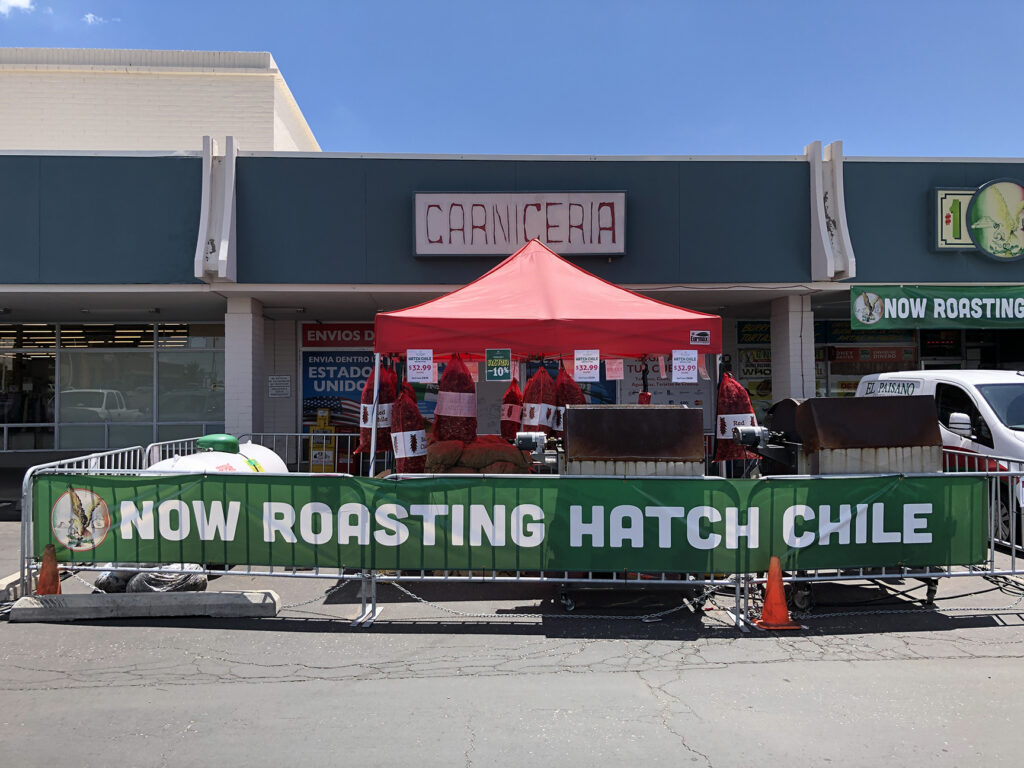
Anyone outside New Mexico or Arizona without access to a fall chile roasting stand can find frozen roasted green chile, often labeled Hatch or New Mexico chile depending on the specific growing region, in the frozen or international aisle of many larger grocery stores, particularly ones serving a Southwestern or Mexican customer base. Canned diced green chile is a widely available and reasonable substitute, though its flavor and texture are noticeably milder and softer than freshly roasted chile.
Roasting fresh poblano or Anaheim peppers at home, charring the skins under a broiler or over a gas flame until blackened, then steaming them in a covered bowl before peeling, approximates the process closely enough for someone building this menu from scratch without regional chile on hand, though the specific variety and terroir of true Hatch chile is difficult to replicate exactly outside the growing region itself.
What a mixed-heritage table adds beyond these four dishes
Beyond the four core dishes, many Southwestern households layer in a few smaller touches that do not rise to the level of a full separate recipe but still shape the table: a bowl of pico de gallo set out alongside the cranberry sauce as an alternative condiment, warm flour or corn tortillas offered in the bread basket next to dinner rolls, and a dessert course that sometimes includes a spiced pumpkin empanada alongside the standard pie.
None of these smaller additions are load-bearing the way posole or the chile gravy are, and a household short on time typically drops these first while keeping the four core dishes intact, which says something about which parts of the regional table are considered essential and which are treated as a bonus in a busy year.
Oven space, and why this menu manages it better than most
A useful side effect of building the regional flavor into gravy, mashed potatoes, and a stew rather than into a second oven-baked dish is that none of the four core additions actually compete with the turkey for oven space beyond the cornbread baked ahead of time for the stuffing. Posole, the gravy, and the mashed potatoes are all stovetop dishes, which leaves the oven free for the turkey and whatever pie needs to bake, without the scheduling conflict that a table piling on multiple oven-dependent regional dishes would create.
That is arguably the quiet reason this particular regional menu has stayed so consistent across generations: it adds real, distinctive flavor to the holiday without adding real logistical strain to a day that already asks a lot of a single kitchen.
Frequently Asked Questions
How spicy is a typical Southwestern Thanksgiving table?
It varies considerably by household and by the specific chile variety used that year, but most versions built for a mixed family table lean mild to moderate rather than aggressively hot, since the goal is flavor across every generation at the table rather than a heat challenge.
Can the posole be made vegetarian?
Yes, a version built on hominy, chile, and vegetable stock without pork is a reasonable adaptation, though it loses some of the body the meat provides. A can of white beans added near the end helps restore some of that heartiness.
Is canned green chile a real substitute for fresh roasted?
It works and is widely used even within the region for convenience, though the flavor is milder and the texture softer. For the gravy and mashed potatoes specifically, where the chile is one ingredient among several, canned works reasonably well.
How do I know the pork in posole is safely cooked through?
The pork should be tender enough to shred easily with a fork, which typically corresponds to well past the minimum safe internal temperature after two to three hours of a steady simmer. An instant-read thermometer confirming at least 145 degrees, with the extended simmer for tenderness, covers both safety and texture.
Can green chile dishes be made ahead and frozen?
Posole freezes well for up to three months. The mashed potatoes and gravy are best made fresh, since both lose texture significantly after freezing and reheating.
A table built this way does not ask anyone to give up a single expected dish. It simply asks the region’s own defining ingredient to show up in four places instead of one, which is closer to how a Southwestern kitchen already cooks every other day of the year.