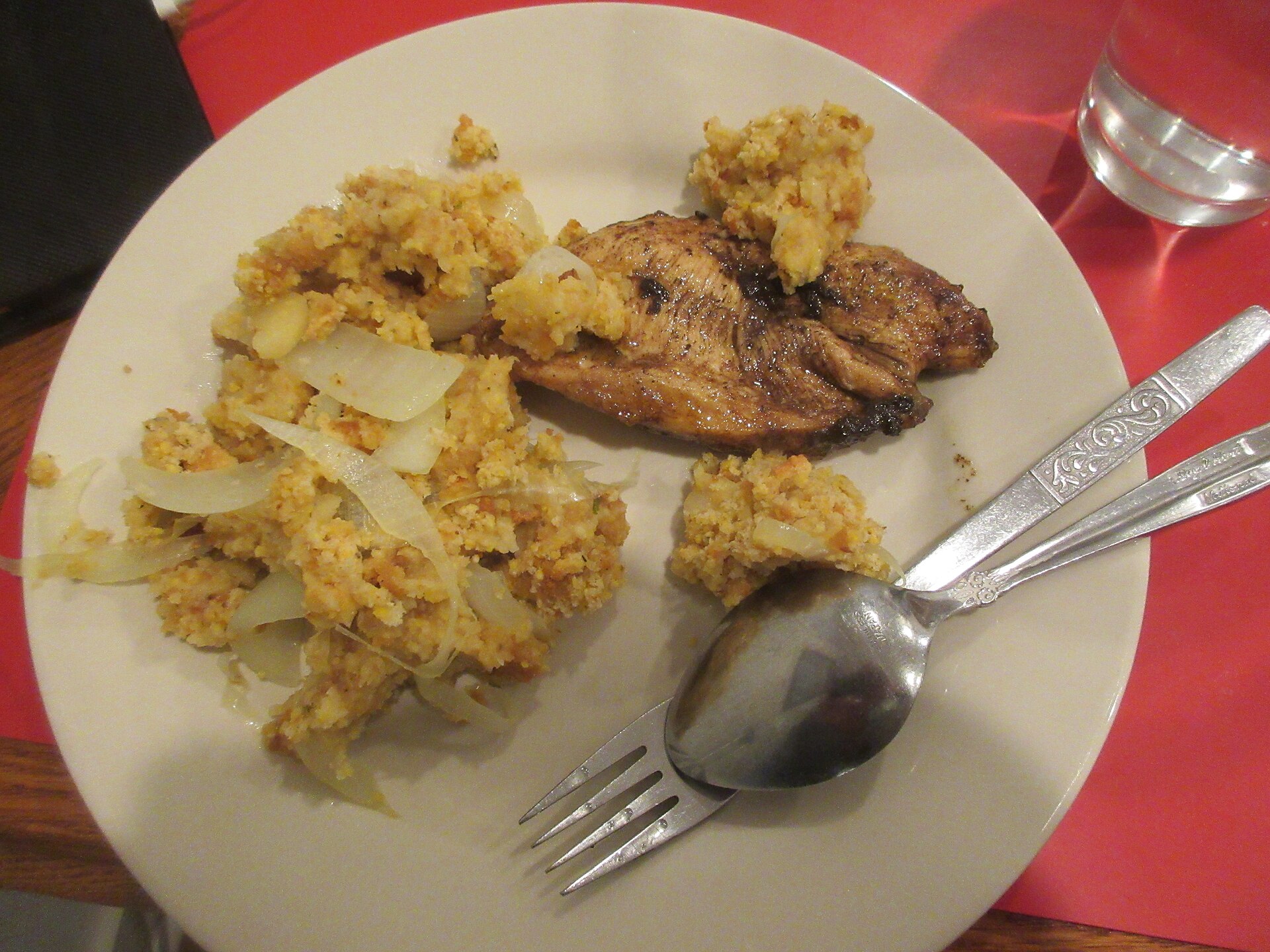
Say the word stuffing at a table in Georgia or the Carolinas and somebody will correct you before the plate even gets passed. It is dressing, baked in its own pan, and the distinction is not just regional pride over a word. It is a real difference in how the dish is made, and calling it the wrong name in the wrong kitchen tells the table something about where the cook is from.
Southern cornbread dressing starts from crumbled cornbread rather than cubed white bread, leans harder on sage than most other regional versions, and is built with the assumption that it will never go inside a bird. That last point is not a modern food-safety concession; it has been the standard practice in a great many Southern kitchens for generations, tied to how the cornbread itself behaves once it meets stock. The same regional stubbornness over a single dish shows up in the naming dispute covered in our piece on Virginia and Georgia’s two versions of brunswick stew.
What follows is the method built around that cornbread base, the ratio of sage to onion that keeps it from tasting like a version from somewhere else, and the two most common additions, oysters and sausage, along with where each one comes from.
- Base: crumbled cornbread, baked two days ahead and dried out
- Binder: two or three eggs, beaten into the stock before it meets the bread
- Seasoning: sage and onion in a ratio that favors the sage
- Bake temperature: 375 degrees, until the center reaches 165 and the top is crisp
- Never inside the bird: baked separately, in its own dish, by long-standing habit
- Two variations: with oysters, or with sausage, depending on the family and the region
Southern cornbread dressing, and why it is never called stuffing
Southern cornbread dressing gets its name from being baked in a separate pan rather than stuffed inside the turkey, and in the South that word choice tracks a real, longstanding distinction rather than a regional preference for one synonym over another. Stuffing, in the traditional sense, refers specifically to a mixture cooked inside the cavity of a bird, and dressing refers to the same general category of dish baked on its own.
Cornbread’s crumbly, delicate structure is part of the reason the Southern version leans toward the pan rather than the bird. Cubed white bread holds together reasonably well packed into a cavity; crumbled cornbread falls apart more easily and cooks unevenly in that environment, which gave Southern cooks a practical reason, on top of the naming preference, to bake it separately long before food safety guidance made a formal recommendation either way.
The naming distinction is old enough that plenty of Southern families use dressing as the only word they have ever known for the dish, and hear stuffing as the odd, slightly foreign term used elsewhere in the country. Neither word is more correct; they describe a dish cooked two different ways, and the South settled on the pan a long time ago.
The cornbread has to be two days old, and here is why
Fresh cornbread, straight from the oven and crumbled the same day, holds too much moisture and turns the finished dressing gummy once stock is added, since there is nowhere for the added liquid to go. Baking the cornbread two days ahead and letting it sit out, loosely covered, dries it enough to properly absorb the stock without collapsing into paste.
If two days ahead is not possible, crumbling the cornbread onto a sheet pan and drying it in a low oven, around 250 degrees for twenty to thirty minutes, approximates the same effect in an afternoon. Either way, the cornbread should feel noticeably drier and slightly stale to the touch before it goes anywhere near the stock.
A cornbread baked specifically for dressing is also usually made without added sugar, unlike a sweeter, cake-like cornbread meant to be eaten on its own with butter. Using a sweet cornbread by mistake throws the whole dish toward dessert rather than a savory side, which is one of the more common complaints about a version that otherwise followed the recipe correctly.
Sage and onion, and the ratio that keeps it from tasting like Thanksgiving elsewhere
A New England-style bread stuffing tends to balance sage against thyme, celery seed, and a milder overall herb profile. Southern cornbread dressing leans harder on sage specifically, often a full tablespoon of dried sage or several tablespoons of fresh chopped leaves for a dish serving eight to ten, alongside a generous amount of cooked onion and celery.
The onion should be cooked until fully soft and translucent before it meets the cornbread, never added raw, since raw onion in a baked dressing stays crunchy and sharp in a dish meant to be uniformly soft. Two full cups of diced onion, cooked down in butter for a good fifteen minutes, is not an unusual amount for a large pan, and skimping on it is one of the more common reasons a dressing tastes flat.
Fresh sage, where it can be found, gives a brighter, less musty result than the dried version most recipes default to, and a household that grows even a small pot of it on a windowsill has an easy upgrade available for very little effort. Chop it fine, since whole leaves left in large pieces turn tough once baked.
The stock: how much, and the mistake of adding it all at once
Chicken or turkey stock, added gradually rather than poured in all at once, is what turns dry crumbled cornbread into a cohesive dish rather than either a dry, crumbly casserole or a wet, dense one. Start with less than seems necessary, mix it through, and add more only until the mixture holds together when pressed but is not swimming in liquid.
A large pan serving ten to twelve people generally takes somewhere between four and six cups of stock, though the exact amount depends heavily on how dry the cornbread was to begin with, which is exactly why adding it gradually and checking the texture by hand matters more than following a fixed measurement.
Egg as the binder, and what happens without one
Two to three beaten eggs, whisked into the stock before it meets the crumbled cornbread, give the dressing enough structure to hold a slice-able shape rather than falling apart into a loose scoop the moment a serving spoon touches it. The egg sets during baking the same way it does in a custard, binding the crumbs together around the moisture the stock provides.
A dressing made without egg is not ruined, but it stays looser and more like a wet stuffing than a dish that holds together when served, and many older family recipes that omit egg entirely simply accept that looser texture as correct. Either approach is legitimate; knowing which one a specific recipe intends before adjusting the liquid keeps the result from turning to soup.
A dressing intended to be sliced and served in neat squares needs the egg. A dressing intended to be scooped, closer in spirit to a savory bread pudding, can skip it, and recognizing which style a family recipe is aiming for before changing the ratio of stock to bread avoids a result that neither looks nor tastes like what was expected.
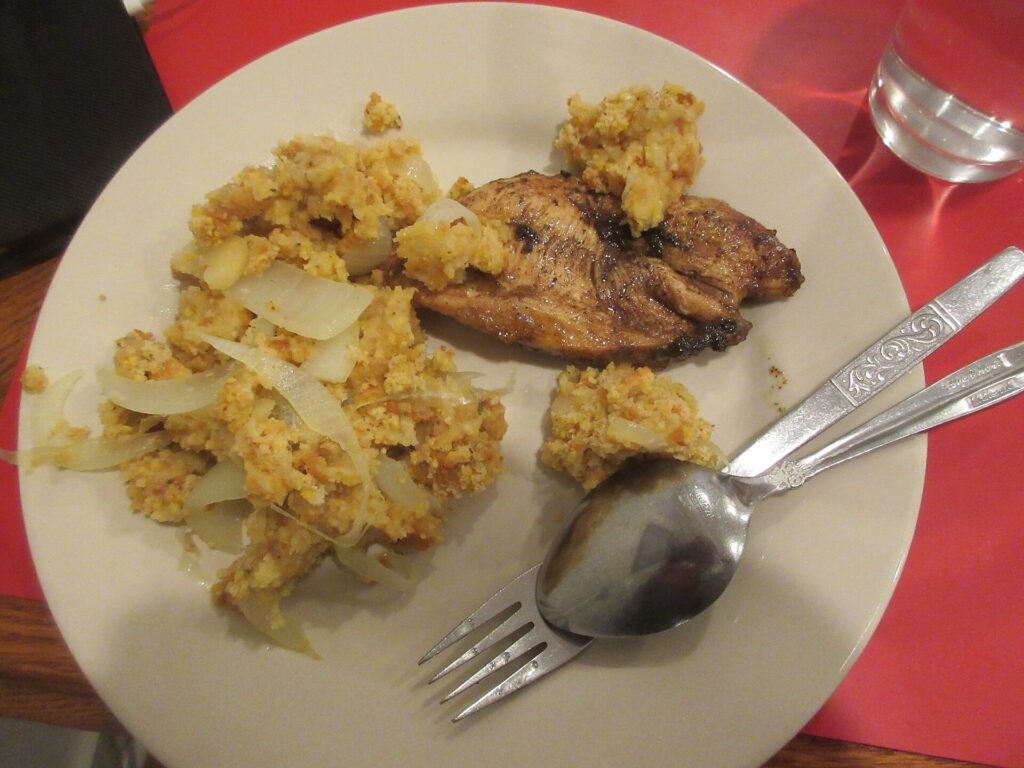
Cornbread dressing, step by step
- Bake a pan of cornbread two days ahead. Leave it out, loosely covered, to dry.
- Crumble the dried cornbread into a large bowl.
- Cook two cups of diced onion and two cups of diced celery in half a cup of butter until fully soft, about fifteen minutes.
- Add the cooked onion and celery to the crumbled cornbread, along with a tablespoon of dried sage and salt and pepper to taste.
- Whisk two to three eggs into four cups of warm chicken or turkey stock.
- Pour the stock mixture over the cornbread gradually, mixing as you go, until the mixture holds together but is not swimming in liquid.
- Spread the mixture into a buttered baking dish.
- Bake at 375 degrees for 40 to 50 minutes, until the top is golden and crisp and the center reaches 165 degrees Fahrenheit.
The oyster version, and the debate around it

Oyster dressing is common along the Gulf Coast and in coastal Carolina and Virginia households, where fresh oysters were historically cheap and plentiful relative to other proteins. A pint of shucked oysters, drained and roughly chopped, folded into the dressing just before it goes into the oven, adds a briny depth that divides tables sharply between people who consider it essential and people who find the combination strange.
Reserve the oyster liquor, the liquid the oysters were packed in, and use it as part of the stock rather than discarding it, since it carries real flavor that plain stock does not replicate. Oysters should be added raw and allowed to cook fully in the oven along with everything else, rather than pre-cooked separately, since overcooking them twice turns them rubbery.
The sausage version, and where it comes from
Sausage dressing, built on browned breakfast sausage crumbled into the mixture along with its rendered fat, is more common further inland and across a broader swath of the South generally than the oyster version, since pork sausage was a more universally available protein than fresh oysters for households away from the coast.
Browning the sausage separately first, then using a portion of its fat in place of some of the butter for cooking the onion and celery, layers the flavor through the whole dish rather than leaving it concentrated in isolated crumbles. A pound of sausage for a large pan is standard, and it turns the dressing from a side dish into something substantial enough to serve as a main course for anyone skipping the turkey. It is the same all-day, low-effort logic behind the three-meat mixture in our piece on Kentucky burgoo.
Baking it safely: the temperature that matters, in the pan and not in the bird
Because Southern cornbread dressing is baked in its own dish rather than inside the turkey, it avoids one of the classic food safety concerns around stuffing: a stuffed bird’s cavity often does not reach a safe temperature by the time the meat around it is done, leaving the stuffing undercooked in a way that is easy to miss. Dressing baked separately heats evenly throughout and reaches a safe temperature reliably.
The internal temperature to check for, particularly with an egg-and-stock mixture that includes raw egg before baking, is 165 degrees Fahrenheit at the center, verified with an instant-read thermometer rather than judged by appearance alone. Cool leftovers within two hours of coming out of the oven, refrigerate in a shallow container, and reheat to 165 degrees again before eating, the same rule that applies to any cooked dish built on eggs, dairy, or stock.
Frequently Asked Questions
Can cornbread dressing be made a day ahead of the holiday meal?
Yes, assembled the day before, covered, and refrigerated unbaked, then baked fresh the day of. This is a common approach for a large holiday meal with limited oven space, since it moves one dish’s active cooking time off the day itself.
Can it be frozen?
It freezes reasonably well unbaked, wrapped tightly, for up to a month. Thaw it overnight in the refrigerator before baking, and expect the texture to be slightly softer than a version made and baked fresh.
What if I do not have buttermilk cornbread on hand?
Any plain, unsweetened cornbread works, though a version made with buttermilk gives a slightly tangier base that many Southern recipes specifically call for. Avoid a sweet, cake-like cornbread, which throws off the balance of the finished dressing.
Is it safe to put dressing inside the turkey if I want to?
It can be done safely if the whole bird, including the stuffing at its center, reaches 165 degrees Fahrenheit, checked with a thermometer in the center of the stuffing itself rather than just the meat. Because that is harder to guarantee evenly, baking the dressing separately remains the more reliable and, in the South, the more traditional approach regardless.
Can both the oyster and sausage versions be combined?
Some family recipes do combine them, though the combination is less common than either on its own, since the two proteins compete for the same role in the dish. If combining them, use half the standard amount of each rather than a full portion of both.
Bake the cornbread two days ahead and the rest of the dish takes less than an hour of active work on the day itself. That two-day lead time is the one step most rushed holiday versions skip, and it is the one that actually decides whether the dressing holds together on the plate, the same kind of patience covered in our broader piece on comfort food classics built to be made properly.