The night before Thanksgiving is the worst possible night to make a complicated dinner, and also the night most households manage to do exactly that anyway, dirtying every pot in the kitchen the evening before they need all of them clean and empty. The oven is already reserved in most people’s heads for tomorrow, even if nothing is actually in it yet, and the refrigerator is either already full of a brining turkey or about to be.
A night before Thanksgiving dinner needs three specific things to actually work: one burner, so the oven stays untouched and free of mental clutter even before it is physically busy; one pot, so cleanup takes five minutes instead of thirty; and nothing that needs to sit in the refrigerator overnight, competing for space with a turkey, a pie, or four side dishes already staged for tomorrow.
What follows are three dinners that meet all three rules, plus how to fold their shopping into the same trip as everything else on the list, so this is not a separate errand.
- The three rules: one burner, one pot, nothing needing fridge space overnight
- Three dinners: a pantry tomato pasta, a beans-and-greens skillet, a clear-out-the-fridge quesadilla
- Time: all three finish in under thirty minutes
- Shopping: every ingredient fits into the same grocery run as Thursday’s list
- What to skip: anything requiring the oven, a slow cooker, or advance marinating
- The actual goal: an empty sink and a clear counter by bedtime
Why the night before Thanksgiving dinner needs its own rules
Most weeknight dinner logic assumes an available oven and an open shelf in the refrigerator, and neither assumption holds the night before a holiday that has already claimed both. A turkey might already be dry-brining on a rack. A pie might already be cooling and taking up counter space that would otherwise hold a cutting board. The oven, even if genuinely free tonight, is the one appliance every cook wants to walk into tomorrow morning with zero cleaning owed to it.
The rules exist to protect tomorrow’s kitchen, not tonight’s convenience alone. A dinner that dirties three pots and a sheet pan tonight is a dinner that steals ten minutes from tomorrow morning’s actual cooking window, when ten minutes matters far more than it does on any ordinary Wednesday, especially on a day already carrying the oven-space math worked out in our plan for six sides that do not compete for the oven.
Rule one: one burner, and the oven stays completely untouched
Committing to a single burner does more than save space; it forces a dinner that cooks in one vessel from start to finish, which is exactly the kind of dinner that also cleans up fastest. A skillet or a wide, shallow pot handles nearly anything that would otherwise need a saute pan plus a saucepan plus a strainer.
This also means skipping anything that wants to finish under a broiler or crisp in a hot oven for the last five minutes, a step recipes add constantly without much thought to whether an oven is actually available. Each of the three dinners below finishes entirely on the stovetop, with no oven step tucked in at the end.
Rule two: nothing that competes for the refrigerator overnight
A dinner is only truly one-night-friendly if none of its leftovers need refrigerator space competing with a turkey or a pie, and if none of its ingredients required overnight marinating that would have claimed a shelf the night before that. Anything eaten fully at dinner, with maybe one small container of leftovers, clears this bar. Anything requiring a bowl of raw meat marinating for six hours does not.
This rule also cuts in the other direction: nothing tonight should require pulling something out of the refrigerator that is staged for tomorrow. A dinner built entirely from pantry cans, dried pasta, and whatever produce needs using up before it turns keeps tomorrow’s carefully organized shelves undisturbed.
Three dinners that fit the rules
All three of these finish in one pan, on one burner, in under thirty minutes, and leave nothing behind that needs a place in an already crowded refrigerator. None of them requires a special trip, a specific brand of anything, or more than a handful of ingredients most kitchens already have on a normal week, which matters more than usual on a night when energy for cooking is already running low.
Each one also scales in either direction without much fuss, which is worth knowing on a night when the exact headcount at the table might still be in flux, with relatives arriving at different times and some people already snacking on things staged for tomorrow.
Dinner one: pantry tomato pasta with whatever vegetable needs using
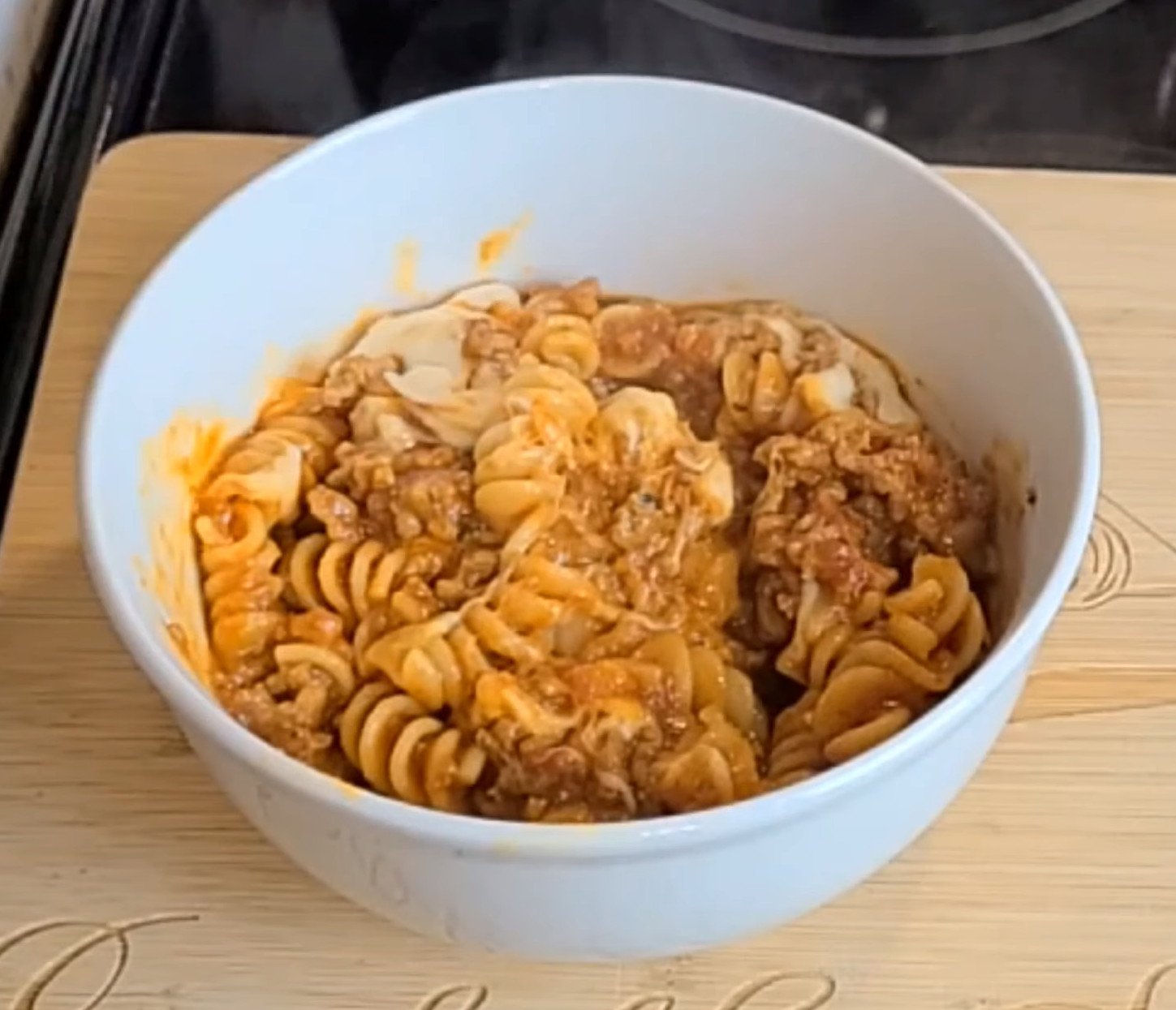
A can of crushed tomatoes, a pound of dried pasta, and a vegetable that has been sitting in the crisper drawer looking at its expiration date, sauteed first in olive oil and garlic before the tomatoes and a splash of pasta water go in, makes a full dinner in one pot if the pasta is cooked directly in the sauce with extra water added as needed. Grated cheese on top and it needs nothing else.
This is also the easiest of the three to scale up or down depending on how many people are eating the night before, since a box of pasta and a can of tomatoes stretch or shrink without any real adjustment to technique.
Dinner two: white beans and greens in one skillet
A can of white beans, a bag of sturdy greens like kale or chard, garlic, and a splash of good olive oil, cooked together in one wide skillet until the greens wilt and the beans warm through, makes a dinner that is faster than the pasta option and needs almost no attention while it cooks. A poached or fried egg on top, cooked in the same pan afterward, turns it from a side dish into a full meal.
This is the version worth choosing on the busiest night before, when even twenty minutes of active cooking feels like too much, since most of its time is unattended simmering rather than active stirring. A splash of chicken or vegetable stock added along with the beans keeps the whole thing from drying out if it needs to sit on low heat for a few extra minutes while someone finishes a phone call or wrangles a child into pajamas.
Dinner three: quesadillas that clear out the refrigerator door
Whatever cheese, leftover roasted vegetable, or half a can of beans is sitting in the refrigerator door goes between two tortillas and into a dry skillet until the cheese melts and the tortilla crisps, which both makes dinner and does genuine, useful work clearing space in the exact refrigerator that needs it most before tomorrow’s shopping and prep take over every shelf.
This is less a recipe than a method, and it is the most flexible of the three for a household with different tastes at the table, since each quesadilla can be built to order from the same small pile of ingredients, the same clear-the-shelf logic behind the cabbage skillet in our piece on feeding four for under ten dollars.
Shopping it in the same trip as everything else
None of these three dinners requires a separate errand. A can of crushed tomatoes, a bag of dried pasta, a can of white beans, and a bag of sturdy greens are all shelf-stable or long-lasting enough to toss into the same cart as cranberries, a bag of potatoes, and a stick of butter for Thursday, with no risk of anything going bad from sitting in the pantry for a day or two extra.
The quesadilla option needs no shopping at all by design, since its entire premise is using what is already in the refrigerator rather than adding to it. Planning around that option specifically, when the fridge is already fuller than usual heading into the holiday, solves two problems with one dinner.
What to skip entirely the night before a big cooking day
Anything that requires the oven, even for just the last five minutes, breaks rule one and is worth swapping for a stovetop-only version instead. Anything that needs to marinate overnight breaks rule two, since it claims refrigerator space exactly when that space is most contested. And anything that dirties more than one pot plus a cutting board undercuts the entire point of keeping tonight simple.
A takeout order is also a completely legitimate answer to this particular night, and choosing it over any of the three dinners above is not a failure of planning. The three options exist for the nights when cooking still sounds better than a phone call, not as an obligation, the same permission given in our roundup of pantry-only dinners for the week leading up to Thursday.
Doing double duty: light prep for tomorrow while tonight’s dinner cooks
The twenty minutes a pot of pasta water takes to boil, or the ten minutes greens spend wilting in a skillet, is dead time worth filling with something useful for tomorrow, as long as it does not violate the no-fridge-space rule. Peeling potatoes and leaving them submerged in a bowl of cold water on the counter overnight, rather than refrigerated, is one of the few prep tasks that genuinely works this way, since submerged peeled potatoes hold their color for many hours at room temperature without spoiling.
Measuring out dry ingredients for a pie crust or a cornbread into labeled bowls, without anything perishable mixed in yet, is another task that fills dead stovetop time without needing a single inch of refrigerator space. Anything involving raw egg, dairy, or meat should wait until tomorrow regardless of how much idle time tonight’s dinner offers, since those ingredients need to stay cold until they are actually being cooked.
A short note on holding food safely overnight
Whatever gets eaten from tonight’s dinner should either be finished at the table or refrigerated within two hours of coming off the stove, the same standard guideline that applies to any cooked, perishable food left sitting at room temperature. A small container of leftover pasta or beans-and-greens takes up far less shelf space than most people assume, and tucking it onto a door shelf rather than the main compartment keeps it out of the way of tomorrow’s bigger items.
If a turkey is already brining in the refrigerator overnight, keep tonight’s dinner and its leftovers on a separate shelf, ideally below the raw poultry rather than above it, to avoid any drip contaminating food that will not be cooked again before it is eaten. This is standard kitchen practice any night a raw bird shares fridge space with anything else, not something specific to the holiday itself.
Frequently Asked Questions
Can I make a double batch of one of these and eat the leftovers on Thanksgiving morning?
The pasta and the beans-and-greens skillet both reheat well in a small amount the next morning if there is a spare five minutes before the real cooking starts, though neither is designed as a make-ahead dish for the big meal itself.
What if the oven is genuinely free and I want to use it?
The one-burner rule is about protecting tomorrow’s mental space as much as the appliance itself. If the oven is free and staying clean is not a concern, any ordinary weeknight dinner works fine instead of these three.
Is it safe to leave the quesadilla ingredients out while assembling several at once?
Cheese and cooked vegetables can sit out briefly during active assembly, but anything containing raw meat should stay refrigerated until it goes directly into the hot skillet, following the same two-hour room-temperature guideline that applies to any perishable food.
Can I use fresh tomatoes instead of canned for the pasta?
Canned crushed tomatoes cook down faster and more reliably into a sauce, which matters on a night built around speed. Fresh tomatoes work but need longer to break down into the same texture.
What is the fastest of the three dinners if I only have fifteen minutes?
The quesadillas. There is no simmering or boiling involved, just assembly and a few minutes in a hot skillet per batch.
Tonight’s dinner has exactly one job: get everyone fed without adding a single dish to tomorrow’s workload. Any of these three does that, and none of them will still be on your mind by the time the turkey goes in.