A single head of cabbage costs less than almost anything else in the produce section for most of the fall and winter, and paired with a pound of smoked sausage, it turns into a full dinner for four without needing a second vegetable, a side starch, or much more than a lid and a stove. The whole thing, ingredients included, usually comes in under ten dollars.
The method is almost embarrassingly simple: brown the sausage, wilt the cabbage down in the same fat, add a splash of vinegar, cover, and let it finish. What makes it worth returning to rather than just functional is the vinegar at the end, which keeps the dish from tasting flat the way a plain braised cabbage often does, and the two spice directions below, which turn the same base into two genuinely different dinners.
This is a real weeknight dish, not a stretched-thin version of a more expensive one. Cabbage holds its own against smoked sausage’s richness in a way thinner, more delicate vegetables cannot, which is part of why this particular pairing has stayed a budget staple for so long.
- Time: about 30 minutes, one skillet
- Serves: four
- Cost: typically under ten dollars total for both main ingredients
- Key step: the splash of vinegar added right before the lid goes on
- Two directions: a smoky paprika version and a caraway-mustard version
- Safe finish: sausage that is not pre-cooked needs to reach 160 degrees internal
Cabbage and sausage skillet, step by step
- Slice one pound of smoked kielbasa or another fully cooked smoked sausage into half-inch rounds.
- Heat a tablespoon of oil in a large, deep skillet over medium-high heat. Brown the sausage rounds for about four minutes, until they pick up real color on both sides. Remove to a plate.
- In the same fat, add one sliced yellow onion and cook for three minutes until it starts to soften.
- Cut one medium head of cabbage into thick wedges or wide ribbons and add it to the pan in batches, letting each addition wilt down before adding more, since a full head will not fit into most pans all at once.
- Season with salt, pepper, and whichever spice direction is being used, then add a quarter cup of chicken stock or water and two tablespoons of apple cider vinegar.
- Return the sausage to the pan, cover, and cook on medium-low for 12 to 15 minutes, until the cabbage is tender but still has a little bite at the core.
- Uncover, raise the heat briefly to let any excess liquid cook off, and taste for salt and vinegar before serving.
Why the vinegar matters more than any other single ingredient here
Braised cabbage without any acid added tends toward a flat, slightly sulfurous flavor that even a generous amount of salt does not fully correct, since cabbage’s own natural sweetness needs something to cut against it the same way many other braised vegetables do. Apple cider vinegar, added in the last few minutes before the lid goes on, brightens the whole dish in a way that is easy to underestimate until a batch is made without it for comparison.
Two tablespoons for a full head of cabbage is a reasonable starting point, and tasting once the dish is fully cooked, then adjusting with a little more vinegar directly at the table if needed, is a better approach than guessing at the exact amount before the flavors have had time to meld during the covered simmer.
Picking the sausage, and what changes with a different one
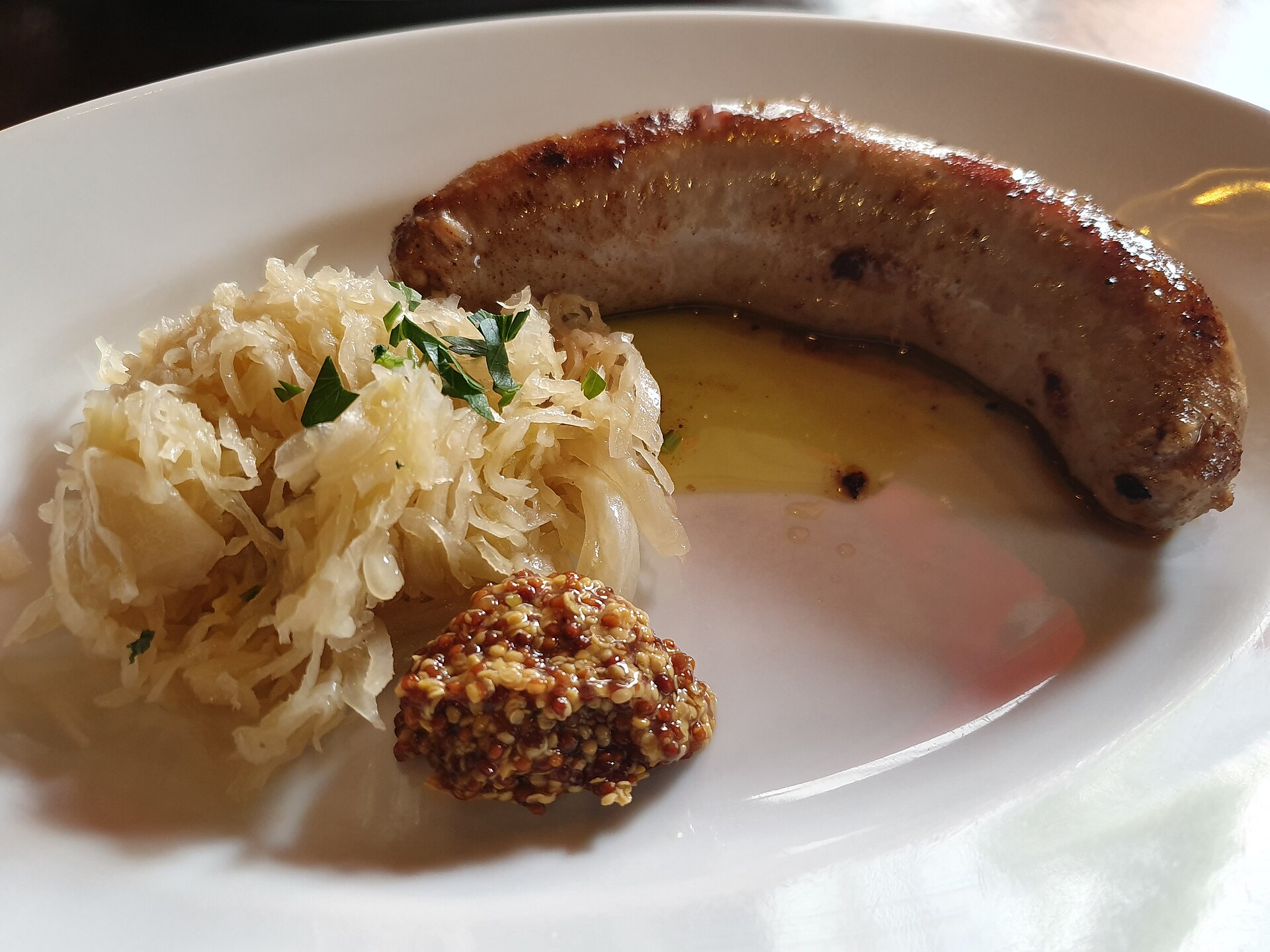
Smoked kielbasa is the standard choice here specifically because it is already fully cooked, which means the browning step is purely for flavor and color rather than for food safety, and the whole dish can move quickly without worrying about the sausage’s internal temperature during a relatively short cook time. Andouille brings more heat and a rougher, spicier profile if a sharper dish is wanted.
A raw, uncooked sausage, whether a fresh Italian sausage or a raw bratwurst, changes the safety calculus meaningfully: it needs to reach a full 160 degrees Fahrenheit internal temperature before the dish is considered done, which usually means browning it in larger pieces or whole links first and confirming doneness with a thermometer rather than relying on color and time alone, since a raw sausage cut into rounds too early can look done on the outside while remaining underdone at the center.
Two spice directions from one base recipe
| Direction | Spices added | Character |
|---|---|---|
| Smoky paprika | 1 tsp smoked paprika, 1/2 tsp caraway | Deeper, more Spanish-leaning smokiness |
| Caraway-mustard | 1 tsp whole caraway seed, 1 tbsp grain mustard stirred in at the end | Sharper, more classically Eastern European |
Both directions use the same base method and the same core ingredients, and the choice between them comes down mostly to what else is planned for the week. The smoky paprika version pairs well with rice or crusty bread, while the caraway-mustard version leans naturally toward boiled or roasted potatoes on the side.
Cutting the cabbage for even cooking
Wide ribbons, cut about an inch thick, cook more evenly than very thin shreds, which tend to overcook and turn mushy before the thicker core pieces have softened. Cutting through the core rather than removing it entirely, leaving each wedge held together at the base, also helps the cabbage hold its shape better during the covered simmer rather than collapsing into a uniform mass.
A very fresh, tightly packed head of cabbage takes slightly longer to wilt down than an older one that has already started to soften in storage, which is worth factoring in if the first attempt at this recipe seems to need a few extra minutes under the lid.
Why a lid changes everything about how this cooks
Covering the pan traps the steam released by the cabbage itself, which finishes cooking it gently without needing much added liquid, and it is the difference between a fifteen-minute braise and cabbage that dries out and scorches on the bottom of an uncovered pan long before it becomes tender. Lifting the lid periodically to stir, rather than leaving it sealed the entire time, prevents any one section from sticking to the pan while the rest cooks evenly.
The final uncovered step, letting excess liquid reduce for a minute or two once the cabbage is tender, is what keeps the dish from being watery on the plate, and it is worth doing even if the dish looks nearly done at the covered stage, since a small amount of extra liquid makes a real difference in the final texture.
Stretching it further for a bigger household or better leftovers
A can of white beans or a diced potato, added along with the stock and vinegar, extends the dish to feed more people without buying a second cabbage or more sausage, and both take on the dish’s flavor well during the covered simmer. This is a reasonable way to feed six from the same pound of sausage rather than doubling the whole recipe.
Leftovers reheat well and, like several braised cabbage dishes, arguably improve the next day once the flavors have had more time to settle, which makes this a good candidate for a slightly larger batch made specifically with next-day lunch in mind. The same improve-with-time logic applies to the longer-braised cabbage covered in our piece on cabbage as a main dish rather than a side.
Building the same dish from what happens to be on sale
The base ratio here, roughly one pound of sausage to one medium head of cabbage, is forgiving enough to flex with whatever is cheapest that particular week. A larger head of cabbage can absorb a little more sausage without needing a recipe rewrite, and a smaller one simply means a slightly more vegetable-forward version of the same dish.
Onions, carrots, or a diced apple are all reasonable additions if they happen to be on hand and need using up, added at the same point as the onion in the main method, since all three soften on a similar timeline to the cabbage itself and will not throw off the overall cook time.
Storing and reheating safely
Refrigerate leftovers within two hours of cooking, in a shallow container so they cool quickly rather than sitting warm at room temperature for an extended stretch. The dish keeps about four days refrigerated, and reheating on the stovetop over medium-low heat, with a splash of water or stock to loosen it, restores the texture better than a microwave does.
Because the sausage in this recipe is smoked and fully cooked to begin with, reheating leftovers only needs to bring the dish back to a steaming hot temperature throughout rather than requiring a full re-cook, which makes this one of the faster leftovers to turn back into a meal on a night with even less time than the original cook required.
Why cabbage specifically stays this cheap through the cold months
Cabbage stores far longer than most vegetables without special handling, which keeps it consistently inexpensive from early fall through the end of winter in a way delicate greens or out-of-season produce cannot match. A whole head, kept in the crisper drawer, holds up for two to three weeks without significant loss of quality, which also means one purchase can anchor more than a single dinner.
That combination, a low and stable price plus a long shelf life, is a large part of why cabbage keeps showing up in budget-focused cooking across so many different culinary traditions rather than any one region claiming a special affinity for it. It is simply one of the most reliable vegetables available for the price, in nearly every part of the country, for a large stretch of the year.
What to serve alongside, if anything at all
This dish is substantial enough to stand on its own as a full dinner, but a slice of crusty bread for soaking up the pan liquid or a small pot of boiled potatoes rounds it out further for anyone wanting a heartier plate. Rice works well under the smoky paprika version specifically, absorbing the pan juices in a way that a plain side of bread does not.
Avoid a heavy second vegetable side, since cabbage itself already fills that role for the meal, and a table with this dish plus another rich vegetable side risks feeling repetitive rather than well rounded.
Frequently Asked Questions
Can I use red cabbage instead of green?
Yes, though red cabbage takes a few minutes longer to soften and will tint the sausage and any liquid in the pan a deep purple. The flavor profile stays similar, slightly earthier than green cabbage.
What if I do not have apple cider vinegar?
White vinegar or a squeeze of lemon both work as a substitute, though apple cider vinegar’s slight sweetness suits this dish particularly well. Start with a little less of either and taste before adding more.
Is it safe to leave the lid off the whole time instead?
The dish will take considerably longer to soften the cabbage and risks scorching on the bottom without the added moisture a lid traps. Covering it for most of the cook is strongly recommended for both speed and safety of the pan.
Can this be made vegetarian?
A plant-based smoked sausage works reasonably well as a substitute, and a teaspoon of smoked paprika helps replace some of the smokiness a meat sausage naturally provides. The overall method stays the same.
How do I know a raw sausage has reached a safe temperature?
An instant-read thermometer inserted into the thickest part of a whole link should read 160 degrees Fahrenheit for pork or beef sausage. Color and firmness alone are not a reliable substitute for checking with a thermometer.
This is the kind of dinner that earns a permanent spot in a weekly rotation less because it is exciting and more because it rarely disappoints, comes together from ingredients that keep well, and costs less than takeout for one person, let alone four.