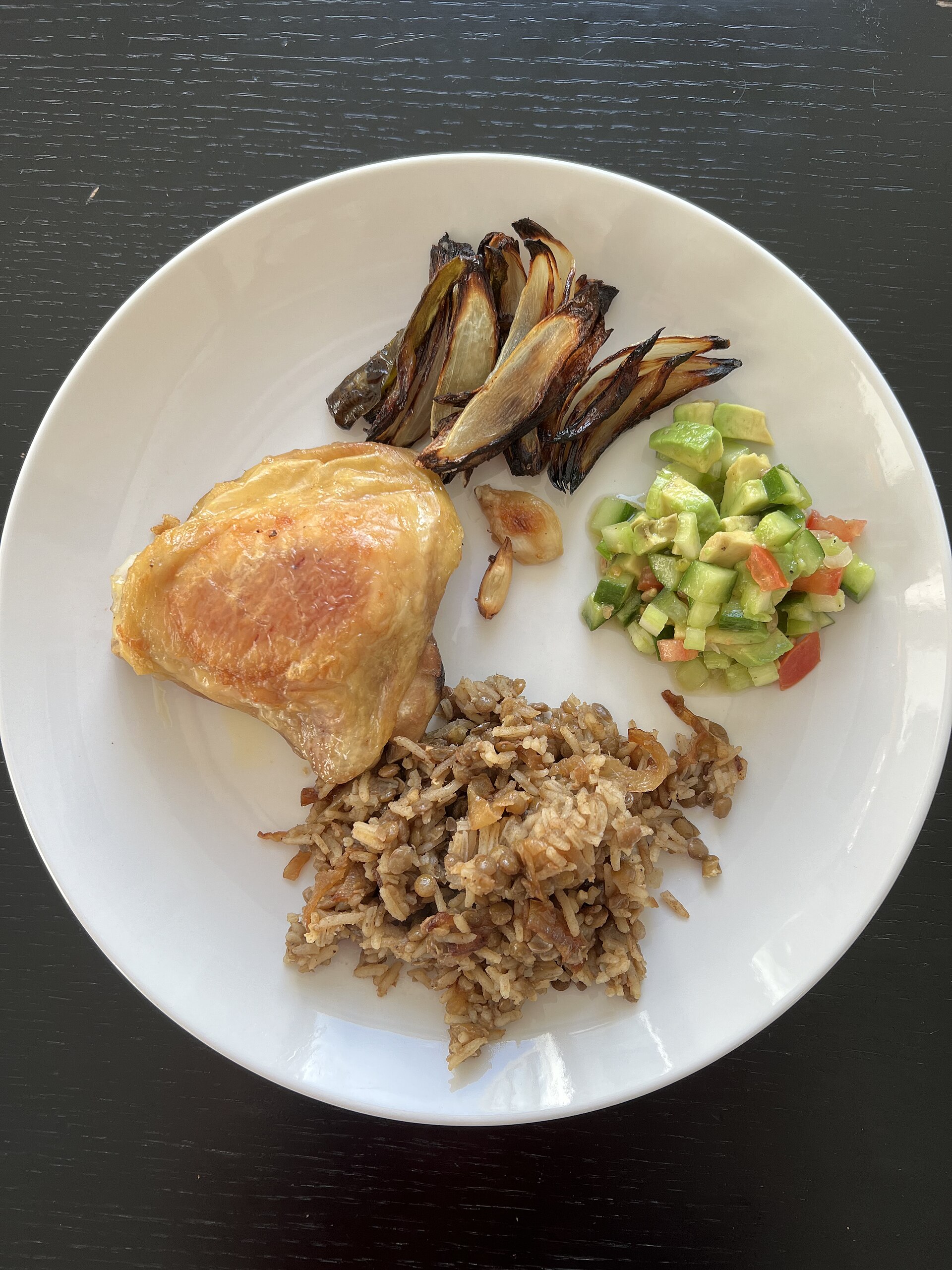
Ask ten Levantine cooks what makes a good mujadara and nine will start talking about the onions before they say a word about the lentils or the rice, which is backwards from what the dish’s name suggests but exactly right about what actually separates a good pot from a forgettable one. Mujadara is lentils and rice, cooked together until soft, but the dish is remembered for the onions on top, and it is judged almost entirely by how dark and how sweet the cook managed to get them without burning a single piece.
A mujadara recipe done properly uses onions twice, in two completely different states. One batch melts slowly into the lentils and rice themselves, sweetening the whole pot from the inside. A second batch, sliced thin and fried separately until deeply, almost dangerously dark, goes on top at the very end, and it is this second batch, more than anything simmering underneath it, that a good mujadara actually tastes like.
What follows is both onion techniques, the lentil-to-rice ratio that keeps the dish from turning to porridge, and the cool yogurt and cucumber that a plate of mujadara is built to sit beside.
- Two onion batches: one melted into the pot, one fried dark for the top
- Base: brown or green lentils and rice, roughly equal parts by volume
- Time: about an hour total, most of it unattended simmering
- Served with: plain yogurt and a simple cucumber and tomato salad
- Serves: four as a main, six as a side dish alongside other meze
- The one mistake: rushing the fried onions and pulling them before they’re dark enough
A mujadara recipe built on two onion batches, not one
The first batch of onions, sliced and cooked slowly in oil until soft and translucent, goes into the pot along with the lentils, rice, and water, where it dissolves almost entirely into the finished dish over the course of the simmer, leaving behind sweetness and a faint golden color rather than any visible piece of onion. This batch is about flavoring the base, not garnishing the top.
The second batch is a separate, more demanding project: onions sliced thin and fried in a generous amount of oil until they turn a deep mahogany brown, verging on what looks like burnt to anyone who has not made this dish before. This is the batch that actually defines mujadara on the plate, and it is worth treating as its own small recipe rather than an afterthought stirred together at the last minute.
Lentils and rice: the ratio that keeps the texture right
Brown or green lentils, never red, hold their shape through a full simmer and give mujadara its slightly toothsome base; red lentils collapse into a thick soup that has nothing left of the dish’s intended texture. A roughly equal measure of lentils to long-grain rice, both simmered together in stock or water with the first batch of softened onions, is the standard proportion most versions build from.
The lentils go into the pot first with extra water, since they take longer to soften than rice does, and the rice follows ten minutes later once the lentils are partway tender. Adding both at once risks rice that turns to mush by the time the lentils finally catch up.
Frying the second batch dark, without burning it
Slice the onions for this batch thin and evenly, since uneven pieces cook at different rates and the whole point of this step is getting every piece to roughly the same deep, dark color at roughly the same moment. A wide skillet with enough oil to come partway up the onions, rather than a shallow film, fries them more evenly than a dry saute would.
The color to aim for looks alarmingly dark to anyone frying onions for the first time, a deep reddish brown well past the pale gold most other recipes call for. Pull them a shade before they look perfectly done, since residual heat continues darkening them for another minute or two off the burner, and the line between deeply caramelized and actually burnt is a matter of seconds once they reach this stage.
Cooking the pot: order, timing, and the one adjustment worth making
Once the first batch of onions has softened in the pot, the lentils and enough water or stock to cover generously go in first, at a bare simmer, lid ajar, for about fifteen minutes before the rice joins. From there, the whole pot simmers together for another fifteen to twenty minutes, until both the lentils and the rice are tender and most of the liquid has absorbed.
A cinnamon stick or a pinch of cumin added along with the lentils is a common addition in some households and entirely absent in others, and both are correct depending on which family recipe a given cook grew up with. Taste before deciding, since neither spice should dominate a dish that gets most of its character from the onions rather than a spice blend.
Salt goes in gradually and gets checked again at the very end, since lentils absorb a surprising amount of seasoning as they cook and a pot that tasted correctly seasoned twenty minutes in can taste flat by the time it finishes. A final taste with the pot off the heat, adjusting salt and a squeeze of lemon if the whole dish reads a touch heavy, is worth the extra minute before it goes to the table.
Olive oil, stirred in at the very end rather than only used for frying earlier in the process, adds a final layer of fruitiness that cooking oil alone does not provide, and a good, flavorful oil is worth reserving specifically for this last step rather than using it up earlier in the cooking.
Some households finish the pot with a scattering of toasted pine nuts alongside the fried onions, adding crunch and a mild, buttery note that plays well against the onions’ sweetness without competing with it directly.
The cucumber and tomato that cuts through the richness
A simple salad of diced cucumber, tomato, a squeeze of lemon, and a little olive oil and salt, served cold alongside the warm lentils and rice, does the same job a bright pickle does next to a rich braise: it resets the palate between bites of a dish that leans heavily on fried onion oil and slow-cooked starch. No dressing more complicated than lemon and oil is needed here.
Diced red onion added to this salad, on top of the two onion preparations already in the main dish, is not excessive; it reads as a fresh, sharp counterpoint to the two cooked versions rather than a repetition of the same idea.
Yogurt: the cooling element mujadara is built to sit beside
Plain, thick yogurt, served in its own small bowl rather than drizzled over the top, gives each person the choice of how much cooling richness to add to their own plate. Stirring in a little crushed garlic and a pinch of salt turns the plain yogurt into something closer to a sauce, though a version served completely plain is equally traditional and lets the mujadara’s own flavor lead.
Straining a regular yogurt through a cheesecloth-lined sieve for twenty minutes thickens it noticeably if only a thinner variety is available, giving a result closer to the dense yogurt most Levantine households use for this specific pairing.
Serving it: as a main, or as one plate among several
As a vegetarian main course, a full plate of mujadara topped generously with the fried onions, a scoop of yogurt on the side, and the cucumber salad alongside, is a complete dinner on its own with no protein missing from the plate, since the lentils carry real protein and the rice carries the starch a meal needs. It is a dish worth remembering for a table serving a vegetarian guest, the same role gigante beans play in our piece on a braised bean main built to hold its own.
As part of a larger spread, mujadara sits comfortably next to grilled meats, other vegetable dishes, and flatbread, the same way it appears in the eight-plate spread covered in our piece on building a full meze table. It holds at room temperature well enough to be one of the earliest dishes set out.
Storing and reheating leftover mujadara
Leftover mujadara keeps refrigerated for three to four days in a sealed container, and it reheats well with a small splash of water stirred in to loosen the rice and lentils, which firm up and dry out somewhat once cooled. Bring it back to a full simmer or a thorough reheat in the microwave until steaming throughout, rather than warming it only partway, since it is built on grains and legumes that should be reheated fully before eating.
The fried onions, kept separate rather than mixed into the stored portion if possible, hold their character far better added fresh at serving than they do sitting in the refrigerator absorbing moisture from the lentils overnight, which softens their crunch considerably.
Where mujadara comes from, and how far it travels
Mujadara has roots that stretch across the Levant and into medieval Arab cooking manuscripts, where versions of lentils and grain cooked together show up centuries before the dish took the shape eaten today. Lebanon, Syria, Jordan, and Palestine each claim their own household version, differing mostly in the spice added to the pot and in exactly how dark the fried onions are expected to go, a regional variation not unlike the disputed lines drawn around adobo’s soy and vinegar balance across the Philippines.
The dish’s name comes from an Arabic word meaning pockmarked or speckled, a reference to how the lentils look scattered through the rice once the pot is finished, which is a more literal and less romantic origin than most people guess before learning it. It has long been considered a poverty dish in some tellings, built from cheap, shelf-stable ingredients, and a celebrated one in others, served at both everyday tables and larger gatherings without much distinction.
Scaling mujadara up for a crowd
The lentil and rice base scales up cleanly by simply multiplying every ingredient, since the ratios and cook times stay roughly the same whether the pot holds enough for four people or fourteen, with only a slightly longer simmer needed for a much larger volume of liquid to come to temperature. A wide, heavy pot rather than a narrow one helps a large batch cook evenly without scorching at the bottom.
The fried onions are the one part that does not scale as smoothly, since frying a large volume at once in a single pan tends to steam the onions rather than fry them, slowing the browning and giving a paler, softer result than a smaller batch fried in stages. For a large gathering, frying the onions in two or three separate batches, rather than one oversized one, gets a more reliable dark, crisp result across the whole quantity needed.
Frequently Asked Questions
Can I use pre-fried or store-bought crispy onions instead of frying my own?
They will work in a pinch, but the flavor is noticeably different, thinner and often saltier than a batch fried fresh in olive oil. Homemade is worth the twenty extra minutes for how much of the dish’s character rides on this one component.
What if my fried onions burn before they get dark enough?
The heat was likely too high. Lower it and start a fresh batch, since burnt onions taste bitter in a way that cannot be corrected once it happens, and a bitter batch will ruin the whole topping.
Can I make mujadara ahead for a gathering?
The lentil and rice base can be made a day ahead and reheated with a splash of water. Fry the onion topping fresh the day of serving, or at most a few hours ahead, kept at room temperature rather than refrigerated so they stay crisp.
Is mujadara traditionally vegan?
Yes, the base dish contains no animal products. The yogurt served alongside is the one traditional addition that is not, and it can simply be left off or swapped for a plant-based yogurt without changing the dish itself.
Why did my rice turn out mushy?
It likely went into the pot too early, before the lentils had a head start, or the pot had too much liquid relative to the grains. Adding the rice ten minutes after the lentils and checking the liquid level partway through the simmer both help.
The lentils and rice underneath are the frame, but the dish lives or dies on that second batch of onions, fried dark enough to look like a mistake and tasting like exactly the opposite.