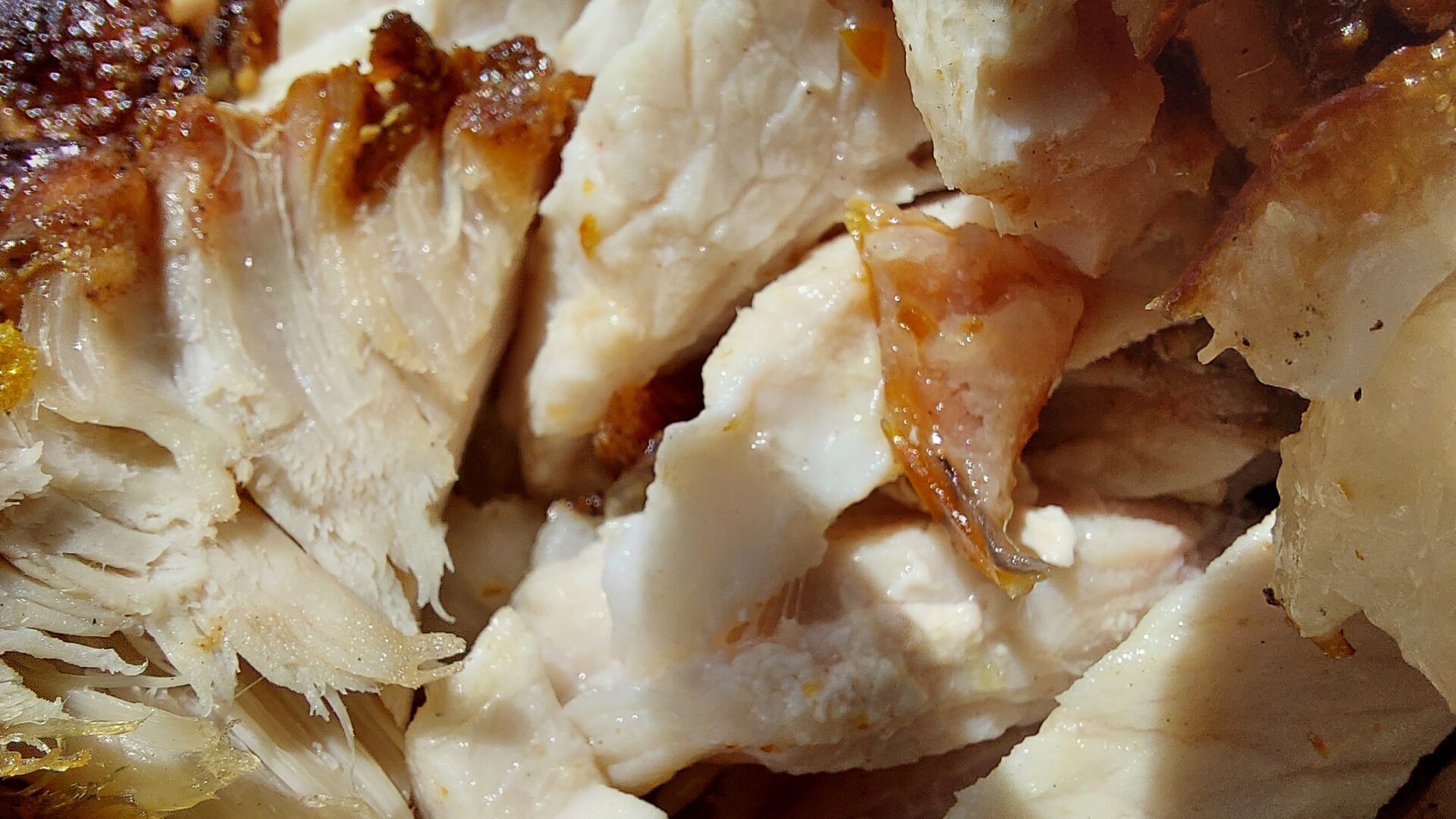
A Puerto Rican Christmas or New Year’s table without pernil is not really a holiday table, the same way a Thanksgiving without a turkey reads as incomplete no matter what else is on offer. The dish is pork shoulder, skin on, rubbed the night before with a thick garlic adobo and roasted low and slow the next day until the meat pulls apart and the skin, if it was handled correctly the night before, shatters like a cracker under a fork.
Most of what separates a good pernil recipe from a mediocre one happens before the oven is ever turned on: an overnight rest under a thick garlic paste that actually penetrates the meat, and a skin that gets lifted and scored the night before so fat renders out from underneath it during the long roast rather than trapping moisture against it. Skip either step and the pork still tastes fine; the skin, however, comes out chewy rather than crackling, which for a dish this centered on that exact texture is a real failure.
What follows is the full timeline, from the overnight adobo through the skin work, the slow roast, and the rice that finishes cooking in the pan drippings once the pork comes out.
- Cut: bone-in pork shoulder, skin on, six to eight pounds
- Marinade: garlic, oregano, vinegar, and adobo, applied the night before
- Roast: low and slow, around 325 degrees, roughly 45 minutes per pound
- Finish: a final high-heat blast to crackle the skin
- Doneness: internal temperature of at least 195 degrees for proper pulling
- Timing for a 4 PM meal: the pork goes into the oven around 8 AM
A pernil recipe built around two things: the adobo and the skin
A pernil recipe succeeds or fails on two decisions made well before the oven is involved: how thoroughly the garlic adobo gets worked into the meat, including under the skin rather than only on its surface, and whether the skin itself is prepared in a way that lets it actually crisp during the long roast rather than staying rubbery from trapped moisture underneath it.
Everything else about the dish, the roasting time, the temperature, the final blast of heat, exists to support those two decisions rather than to compensate for skipping them. A pernil marinated for only an hour or roasted with the skin left completely untouched can still turn out edible, but it will not be the dish Puerto Rican households have spent generations perfecting.
The overnight adobo, and marinating raw pork safely
The adobo, a thick paste of crushed garlic, dried oregano, black pepper, olive oil, and vinegar, gets worked directly into slits cut into the meat itself, not just rubbed across the surface, so the flavor actually penetrates rather than sitting on top as a crust. This goes on the night before roasting, and the pork rests, covered, in the refrigerator for at least twelve hours, ideally closer to twenty-four.
Raw pork marinating overnight needs to stay refrigerated at all times, in a covered dish or a sealed bag set on a plate or in a pan to catch any drips, never left out on the counter to marinate at room temperature regardless of how much faster that would let the flavor develop. Any surface, hands, or utensil that touches the raw meat during this step should be washed thoroughly before touching anything else in the kitchen, the same basic handling that applies to any raw pork or poultry.
Lifting the skin: the step that decides whether it crisps
Pernil‘s skin needs to be loosened from the fat layer beneath it, using a sharp knife to carefully separate the two without cutting all the way through, and then scored in a crosshatch pattern across its surface. This lifting step, done the night before alongside the adobo, lets rendered fat escape from underneath the skin during the long roast rather than pooling there and steaming the skin from below.
A skin left flat against the fat, with no scoring and no separation, traps that fat in place and produces a soft, chewy result no matter how long or hot the final roasting blast runs. This single step, more than any spice or roasting temperature, is the one most home versions skip and the one that most reliably explains a disappointing pernil.
Choosing the cut: bone-in pork shoulder, skin on
A bone-in pork shoulder, sometimes labeled pernil specifically at a grocery store serving a Puerto Rican or broader Caribbean community, with the skin still attached, is the correct cut for this dish. A boneless shoulder or one sold with the skin already removed will not produce the same result no matter how the rest of the recipe is followed, since both the bone and the skin contribute meaningfully to the finished texture and flavor.
A six to eight pound shoulder feeds a table of eight to ten generously, with leftovers, and larger gatherings are usually better served by two smaller shoulders roasted side by side rather than one oversized piece that cooks unevenly in a home oven.
The slow roast: temperature and time
A low oven, around 325 degrees, for roughly forty-five minutes per pound, is the standard approach, giving the connective tissue in the shoulder time to break down slowly into that characteristic fall-apart texture without drying out the meat around it. A covered roast for the bulk of this time, foil tented loosely over the top without touching the skin directly, keeps the meat moist while the skin continues developing underneath.
Basting is not traditionally necessary here the way it is for a leaner cut, since the pork shoulder’s own fat content keeps it self-basting through most of the roast, though checking the pan periodically for any dry spots along the edges is worth doing on a very large piece of meat.
Getting the skin to crackle at the end
For the final thirty to forty-five minutes, remove any foil and raise the oven temperature to 425 or 450 degrees, watching closely rather than walking away, since the difference between perfectly crackled skin and burnt skin at this stage is a matter of minutes rather than a wide margin. The skin should bubble, blister, and turn a deep golden brown, audibly crackling when tapped with a spoon.
If the skin is browning faster than the rest of the roast needs, a loose foil tent over just the skin, removed for the final few minutes, buys some extra time without sacrificing the crackle entirely.
Checking doneness: the internal temperature that matters
Pernil is cooked well past the minimum safe temperature for pork, which sits at 145 degrees Fahrenheit with a rest, because the dish is meant to pull apart rather than slice cleanly, and that texture only develops once the internal temperature climbs to somewhere between 195 and 205 degrees, the same range used for pulled pork and brisket. Checking with an instant-read thermometer inserted into the thickest part of the shoulder, avoiding the bone, is the only reliable way to confirm this rather than judging by time alone.
A shoulder pulled at the minimum safe temperature of 145 degrees will be safe to eat but tough and difficult to pull, since the connective tissue that needs to break down for that texture has not had enough time and heat to do so. Patience past the minimum safe mark is what actually makes this specific dish work.
Arroz con gandules cooked in the drippings
Once the pork comes out to rest, the flavorful drippings left in the roasting pan, strained of any burnt bits, become the cooking liquid for a pot of rice and pigeon peas, arroz con gandules, giving the rice a depth that plain stock or water cannot match. This is the traditional pairing on a Puerto Rican holiday table, and using the actual pan drippings rather than discarding them connects the two dishes directly.
Sofrito, a blend of onion, pepper, garlic, and cilantro, sautéed first before the rice and drippings go in, is the other component that gives arroz con gandules its base flavor, and most households keep a batch of it in the freezer for exactly this kind of holiday cooking, the same seasonal staple mentality behind the sauce base in our piece on a Sunday gravy built from browned meat in sequence.
Timing it backward from a 4 PM meal
A six to eight pound shoulder needing roughly six to seven hours of total cooking time, including the final high-heat finish and a rest afterward, means the pork needs to go into the oven around 8 AM for a meal served at 4 PM, with the adobo and skin work having already happened the night before. Building in an extra thirty to forty-five minutes of buffer, since ovens and individual cuts of meat vary, keeps the timeline from feeling like a race against the clock late in the afternoon.
The rice, needing only about forty-five minutes including sofrito preparation, is one of the last things to start, timed to finish resting alongside the pork’s own rest period rather than sitting done and cooling for an hour before anyone sits down.
Resting, carving, and serving
The pork needs at least twenty to thirty minutes of rest, loosely tented, before carving, both for food safety reasons and because cutting into it immediately releases juices that would otherwise redistribute through the meat during that rest. Carve or pull the meat away from the bone, keeping pieces of the crackled skin separate to distribute deliberately rather than letting it get buried under the meat.
Serve pieces of skin on top of or alongside the pulled meat rather than mixed entirely through it, since the skin loses its crackle quickly once it sits in contact with the meat’s moisture, and a guest who wants extra crackling skin should be able to see and reach for it directly, the same instinct behind keeping chimichurri on the side rather than tossed through a whole roast.
Storing leftover pernil safely
Leftover pernil should go into the refrigerator within two hours of coming off the table, stored in a sealed container, where it keeps for three to four days. It also freezes well for up to three months, particularly the pulled meat portion separated from any remaining crackled skin, which does not freeze or reheat with the same texture.
Reheat leftover pork gently, covered, with a small splash of the reserved pan drippings or stock to keep it from drying out, warming it through to steaming rather than just until it feels warm to the touch.
Frequently Asked Questions
Can I make pernil without the skin, using a boneless shoulder?
It will still taste good as a roast pork dish, but it will not be pernil in the traditional sense, since the crackled skin is a defining feature of the dish rather than an optional garnish.
What if my skin does not crackle even after the high-heat finish?
The skin likely was not dried and separated properly the night before, or there was still too much moisture on its surface going into the oven. Patting it very dry before the overnight rest helps considerably.
Can I marinate the pork for less than twelve hours if I am short on time?
A few hours will still add some flavor, but the full overnight rest, closer to twenty-four hours where possible, gives noticeably more depth since the garlic and vinegar need real time to work into the meat through the cut slits.
Is it safe to stuff garlic cloves directly into slits in the raw pork?
Yes, this is a standard and safe technique as long as the pork reaches a safe internal temperature during roasting, which the long, slow cook here easily accomplishes.
Can I cook a smaller pernil for a smaller gathering?
A smaller shoulder, four to five pounds, works with the same method and a shorter total roasting time, though the skin-to-meat ratio changes slightly and a smaller piece can dry out faster if left too long in the oven.
The oven does most of the visible work, but the night before decides most of the outcome. Lift the skin, work the adobo in properly, and the actual roasting day mostly takes care of itself.