
There are four sesame products on the shelf above my stove and none of them substitutes for another in any direction. Two are oils, two are pastes, and the error people make is always the same one: treating each pair as a single ingredient that happens to come in a light version and a dark version.
The expensive mistake is tahini standing in for Chinese sesame paste. It looks right in the jar. It stirs into a bowl the same way. Then the sauce comes out pale and faintly bitter instead of dark and roasted, and nothing added afterward brings it back. The seeds in one jar were barely warmed. The seeds in the other were roasted until they were nearly brown.
The oils split along the same line, and there the consequence is louder. Pour toasted sesame oil into a hot pan the way you would pour a neutral oil and it smokes almost immediately, turns acrid, and puts a burnt note over everything in the pan that no amount of soy sauce covers.
- The four: untoasted oil, toasted oil, tahini, Chinese sesame paste
- Never swap: tahini for Chinese paste, in either direction, at any ratio
- Toasted oil: a finishing condiment, off the heat, measured in teaspoons
- Untoasted oil: a plain frying oil with a high smoke point and nothing to say
- Storage: paste in the refrigerator once opened, oil in a dark cupboard, never above the stove
- Label check: sesame is a declared major allergen in the United States and turns up in more jars than people expect
Sesame oil vs sesame paste: four jars from one seed
Everything below starts as the same crop. What separates the four products is how hard the seeds were roasted before pressing or grinding, and whether the hull came off first. Those two decisions set the color, the flavor, and the temperature the product can survive.
| Product | Seed treatment | Color | Where it belongs |
|---|---|---|---|
| Untoasted sesame oil | Raw or barely warmed, refined | Pale straw | Frying, sauteing, salad oil |
| Toasted sesame oil | Roasted dark, unrefined | Deep amber to brown | Finishing, dressings, dipping sauces |
| Tahini | Hulled, raw or lightly toasted | Ivory to light beige | Hummus, dressings, halva, sauces with lemon |
| Chinese sesame paste | Unhulled, roasted dark | Grey brown | Cold noodles, hot pot dips, sesame sauces |
| Japanese neri goma | Roasted to order, white or black | Beige or near black | Dressings for greens, tofu sauces, sweets |
Read that table as two axes rather than five entries. Roast level runs from tahini at the pale end to Chinese paste at the dark end, and processing runs from refined and neutral to unrefined and loud. A recipe that specifies one is usually specifying a position on both.
Untoasted sesame oil is a cooking oil and nothing more
Sold as light sesame oil, plain sesame oil, or simply sesame oil in stores that carry only one, it is pressed from seeds that were not roasted, then refined. The result is pale, faintly nutty, and largely neutral. It behaves like sunflower or peanut oil in a pan and costs about the same.
Its practical advantage is heat tolerance. Refined sesame oil holds well past 400 degrees, which puts stir-frying and shallow frying comfortably inside its range. It is the default cooking fat in a large part of Asian home cooking for exactly that reason, and it is what a recipe means when it says to fry aromatics in sesame oil, a line that sends people reaching for the wrong bottle constantly.
It is also good raw, in a plain vinaigrette or brushed onto vegetables, where its mild character does not fight anything. If a kitchen keeps only one bottle, though, this is not the one. Any neutral oil already in the cupboard does the same job.
Toasted sesame oil is a condiment with a short fuse
This is the dark bottle, pressed from seeds roasted until brown and then left unrefined so the roast comes through. It smells like the inside of a sesame bun and tastes like it, with a bitterness at the back that becomes the whole flavor if the oil gets hot.
Unrefined and roasted means the smoke point drops considerably, into the neighborhood of 350 degrees. That is below a working stir-fry, which is why it goes in at the end, off the heat, and why the standard restaurant move is a teaspoon swirled into a dish on the way to the plate. Used as a frying medium it is both wasteful and unpleasant.
Amounts are small. A teaspoon dresses a bowl of noodles for two. A tablespoon in a marinade for a pound of meat is generous. Adding more does not add more sesame, it adds more bitterness, which is the single most common failure I see with this bottle. The same restraint governs most strong finishing fats, and it is the reasoning behind adding an aromatic fat at the last possible moment rather than at the start.
Tahini: hulled seeds, ground pale, built for lemon
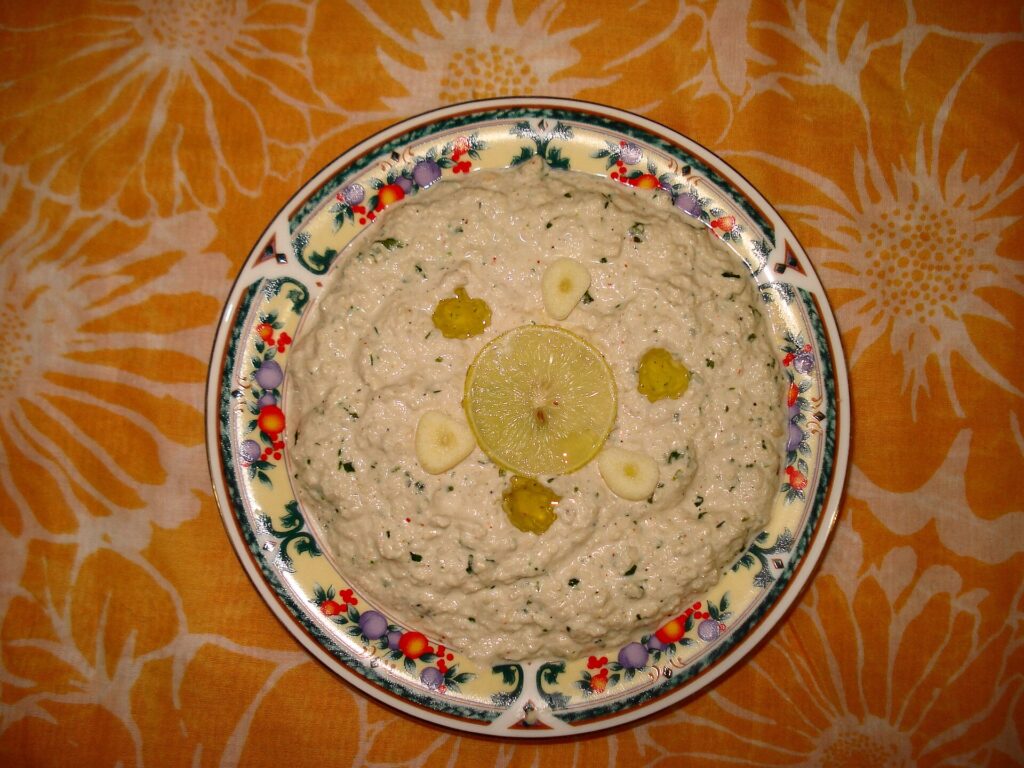
Levantine tahini is made from hulled seeds, ground either raw or after a short light toast, into a loose paste that pours. The hull carries most of the bitterness in a sesame seed, so removing it is what makes the paste pale, smooth, and mild enough to eat by the spoonful.
Quality varies more than the price suggests. The best jars are Ethiopian or Humera seed ground in Lebanon, Palestine, or Israel, and they pour like heavy cream at room temperature. A stiff, chalky, grey paste that will not stir is either old or made from a poor lot, and no amount of whisking rescues it.
Tahini is built to meet acid. Whisk it with lemon juice and cold water and it seizes, thickens, then loosens into a pale sauce with a texture nothing else reproduces. That reaction is the basis of hummus, of the tahini sauce that goes over falafel, and of halva. Use it in a Chinese noodle sauce and you get the texture without the roast, which reads as unfinished.
Chinese sesame paste is roasted dark and behaves differently
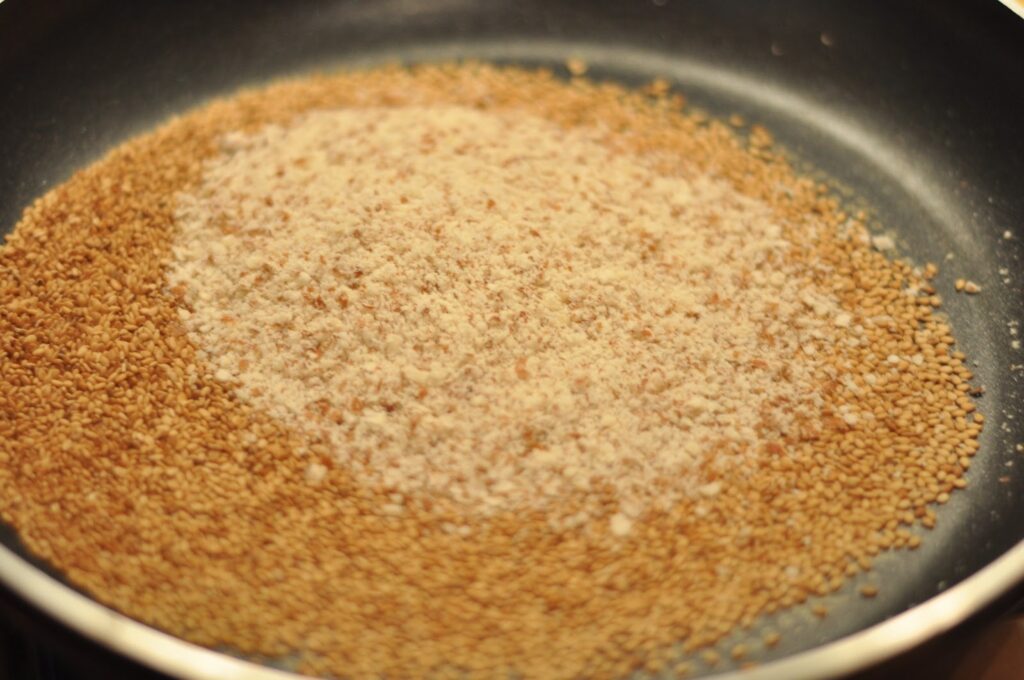
Zhi ma jiang starts with unhulled seeds roasted until they are genuinely brown, then ground, often with a little sesame oil stirred back in. It is thicker than tahini, darker, and separates aggressively in the jar, with a layer of oil that can be an inch deep.
The flavor is closer to peanut butter than to tahini, which is why so many home versions of cold sesame noodles use peanut butter and get within range. It is not a substitute, but it is a much closer one than tahini is, and in a pinch a mixture of peanut butter with a half teaspoon of toasted sesame oil per tablespoon lands somewhere reasonable.
It belongs in cold noodle sauces, in hot pot dipping bowls where it is thinned with sesame oil and fermented tofu, and in dressings for cooked greens. Thin it with warm water, a spoonful at a time, whisking between additions, and it goes from cement to a pourable sauce in about a minute. Add the water all at once and it stays lumpy.
Neri goma, and the third paste that confuses everyone
Japanese sesame paste sits between the other two on roast and is usually ground finer. White neri goma, from hulled seeds, is close to a well-toasted tahini. Black neri goma, from black sesame, is nearly the color of ink, more bitter, and used as much in sweets as in savory dishes.
Its main home is goma-ae, the dressing for blanched spinach or green beans, where the paste is loosened with soy, sugar, and a splash of dashi. It is also the base of a sauce for shabu-shabu, and black sesame paste turns up in ice cream and steamed buns.
If a recipe calls for neri goma and there is none, tahini plus a quarter teaspoon of toasted sesame oil per tablespoon gets the roast level roughly right. Going the other direction is harder, because the Japanese paste brings a sweetness the Levantine one does not have.
Five dishes, run both ways
I made each of these twice, once with the correct product and once with the obvious substitute, over a stretch of a few weeks. The results were not subtle.
| Dish | Correct product | Swapped with | What happened |
|---|---|---|---|
| Hummus | Tahini | Chinese sesame paste | Grey, heavy, tasted scorched |
| Cold sesame noodles | Chinese sesame paste | Tahini | Thin and sour, no depth at all |
| Spinach goma-ae | Neri goma | Tahini | Acceptable, flatter, needed sugar |
| Stir-fried greens | Untoasted oil | Toasted oil | Smoked at once, bitter throughout |
| Dumpling dipping sauce | Toasted oil | Untoasted oil | Tasted of nothing, read as unseasoned |
The pattern in that table is that swaps toward less roast are recoverable and swaps toward more roast are not. A pale product missing depth can be corrected with a few drops of toasted oil. A dish carrying a roast it was not built for cannot be walked back.
How much, and when it goes in
Toasted oil goes in off the heat, always, in quantities between a quarter teaspoon and a tablespoon depending on how many people are eating. In a marinade it can go in at the start, since the roast survives moderate oven heat better than it survives a hot pan.
The pastes go in at the point where liquid is available to thin them. Whisk paste with a little of the warm cooking liquid, the soy, or the water first, then add the rest of the liquid, then the acid last. Reversing that order is what produces the lumps that never dissolve.
A working ratio for a noodle sauce is two tablespoons of Chinese paste, one of soy, one of black vinegar, a teaspoon of toasted oil, and roughly three tablespoons of warm water, which dresses noodles for two. For a lemon tahini sauce it is three tablespoons of tahini, the juice of a lemon, a small grated garlic clove, salt, and cold water added until it pours, which is often more water than seems plausible. Both of these hold their place in a working pantry the same way a few reliable flavor pairings do.
Rancid before it smells rancid
Sesame is unusually stable for a seed oil because it carries its own antioxidant compounds, which is why an unopened bottle keeps well past a year without much change. That stability makes people careless, and the failure is quiet when it comes.
Rancid sesame oil smells of crayons, old nuts, or paint rather than of anything obviously spoiled. Taste a drop off the back of a spoon before it goes near food. If it leaves a scratchy, waxy feeling at the back of the throat, the bottle is finished, and cooking with it will put that note into everything.
Paste goes first at the surface, where the oil layer meets air. A dark ring around the inside of the jar, a bitter edge that was not there before, or a smell of stale nuts all mean the same thing. Buy small jars of what gets used slowly. A pint of tahini in a household that makes hummus twice a year is a bad purchase no matter what it cost.
Storing the jar, and the separation that is not a fault
Oil separation is normal and is not a defect. Both pastes settle, and Chinese paste settles hardest. Stir the whole jar back together with a sturdy knife or a chopstick when it is first opened, then keep it in the refrigerator, where it will stiffen but stop separating.
Cold paste is difficult to spoon. Take the jar out twenty minutes before it is needed, or scoop with a warm spoon. Storing a jar upside down between uses redistributes the oil and makes the next opening easier, which is a small trick worth adopting.
Both sesame oil bottles belong in a dark cupboard away from the stove. Heat and light are what turn them, and the shelf directly above a range is the worst spot in the kitchen despite being the most convenient. Toasted oil in particular is worth buying in the smallest bottle sold.
Sesame on a label, and one caution at the table
Sesame is a declared major food allergen in the United States, which means packaged foods sold there have to name it plainly rather than bury it in a list of spices or flavorings. Reactions can be serious, and the allergy is not rare among children.
That matters more than usual with these products because sesame hides. It is in hummus, in halva, in za’atar, in many burger buns, in tahini-based dressings that are described only as house dressing, and in dipping sauces at hot pot restaurants where nobody thinks to ask. If someone at the table avoids sesame, the paste and the toasted oil both have to be named out loud, and a shared dipping bowl is not a safe place for them.
The other point worth naming is storage temperature rather than allergy. Opened jars of paste that live at room temperature for months develop off flavors, and a paste stirred with a spoon that has been in something else is a jar that will not keep. Use a clean utensil, close it properly, and refrigerate it, which is ordinary practice with any high-fat food that will sit for a long time.
Frequently Asked Questions
Can I use peanut butter instead of Chinese sesame paste?
It is the best available substitute and it is genuinely close. Use natural peanut butter with no added sugar, and stir in about half a teaspoon of toasted sesame oil per tablespoon to bring back the roast. The sauce will read slightly sweeter and rounder than the original, which most people at the table will not identify.
Why did my tahini sauce turn thick and grainy when I added lemon?
That is the expected reaction and it is not a failure. Tahini seizes when acid hits it, then loosens again once enough water goes in. Keep whisking and keep adding cold water a spoonful at a time. It will pass through a stage that looks ruined and come out pale, smooth, and pourable.
Does toasted sesame oil need to be refrigerated?
No, and refrigeration makes it cloudy without extending its life much. A dark cupboard away from heat is enough. What shortens its life is the cupboard above the stove, a clear bottle sitting in daylight, and buying a size that takes two years to finish.
Is black sesame paste just a darker version of the white one?
It is a different seed, not a different roast. Black sesame carries more bitterness and a stronger, slightly mineral flavor, and it is used deliberately for both the color and that edge. Swapping it into a recipe written for white paste changes the appearance dramatically and the taste noticeably.
How long does an opened jar of tahini last?
Refrigerated, several months without much change, and the way it fails is a slow turn toward bitterness rather than anything dramatic. At room temperature the window is shorter and depends heavily on the kitchen. Taste it before committing it to a batch of hummus rather than after.
Line up the two pastes side by side on a spoon before deciding anything. One is pale and sharp and wants lemon; the other is dark and heavy and wants soy and vinegar. Once that difference has been tasted directly, no recipe will ever send you to the wrong jar again.