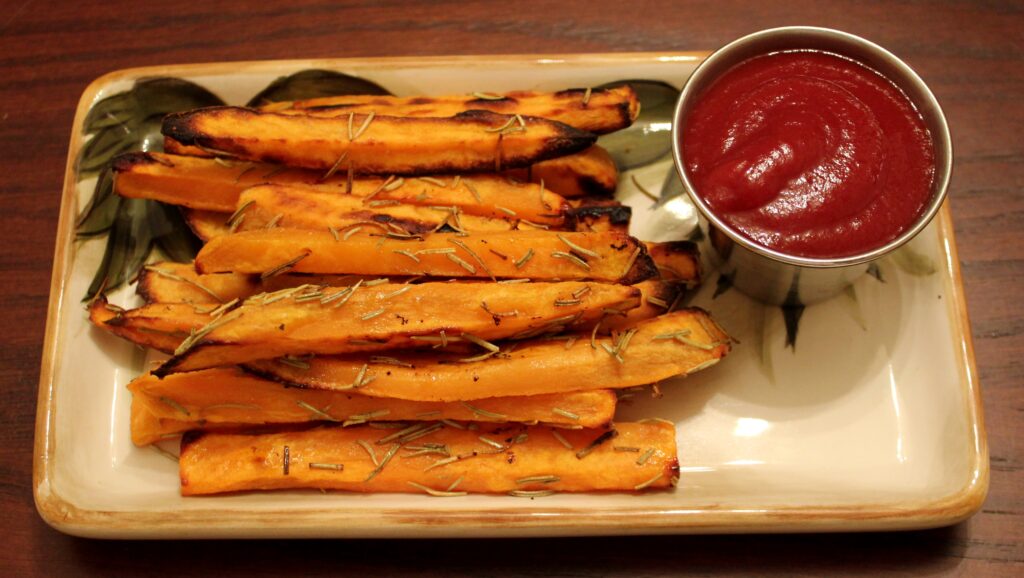
The standard treatment is a wedge on the side of a plate, roasted with olive oil and thyme, in the space a potato would otherwise occupy. It works, and it is why most households buy two at a time and use them up over a fortnight without ever thinking about the vegetable again.
Handled differently it carries a whole plate. Stuffed and baked long enough for the flesh to turn genuinely sweet, cubed into a curry where it holds its shape, simmered into a groundnut stew that has fed people for a very long time, or grated raw and fried into a hash that actually crisps. Four routes, four textures, one tuber.
What decides which route works is the variety and the water in it, and American supermarkets label these badly enough that most people have never noticed there is more than one kind on the shelf.
- Four routes: stuffed and baked, curried, stewed with peanut, and hashed
- The variable: moisture, which runs from the wet orange kinds to the dry pale ones
- The long bake: an hour at 400 degrees, not forty minutes, and the difference is sugar
- What makes it dinner: beans, peanut, egg or yogurt, added deliberately
- Storage: a cool cupboard, never the refrigerator, which ruins the texture
- Two cautions: peanut in the stew, and oxalate for anyone with a stone history
The problem with treating it as a side
A sweet potato is starchy, filling and almost devoid of protein and fat, which makes it a poor centrepiece on its own and an excellent base for one. Roasted in wedges next to a piece of meat it is a garnish. Split open and filled with black beans, yogurt and pickled onion it is a plate that people finish.
The other issue is sweetness. A vegetable this sweet needs a counterweight, and the reflex to add maple syrup, brown sugar or marshmallow pushes it further in the direction it was already going. Every one of the four methods below leans on salt, acid, heat or fat to pull it back.
Portion size is the third point. A medium sweet potato is a side; a large one, or two medium, plus something with protein is a main course. Trying to make a small one into a meal by adding a bigger sauce does not work and is the usual reason these dishes leave people hungry an hour later.
Orange, white, purple, and the one called a yam
Most American stores sell orange-fleshed varieties with copper skin, which are moist, sweet and soft when cooked. Paler varieties with tan or purple skin and white or cream flesh are drier, starchier and less sweet, closer in texture to a chestnut, and they behave quite differently in a pan.
Purple-fleshed types, sold as Okinawan or Stokes purple, are the driest of the three and hold their shape best in a stew. They also take considerably longer to cook, sometimes half again as long, which catches people out when they substitute one for another without adjusting the timing.
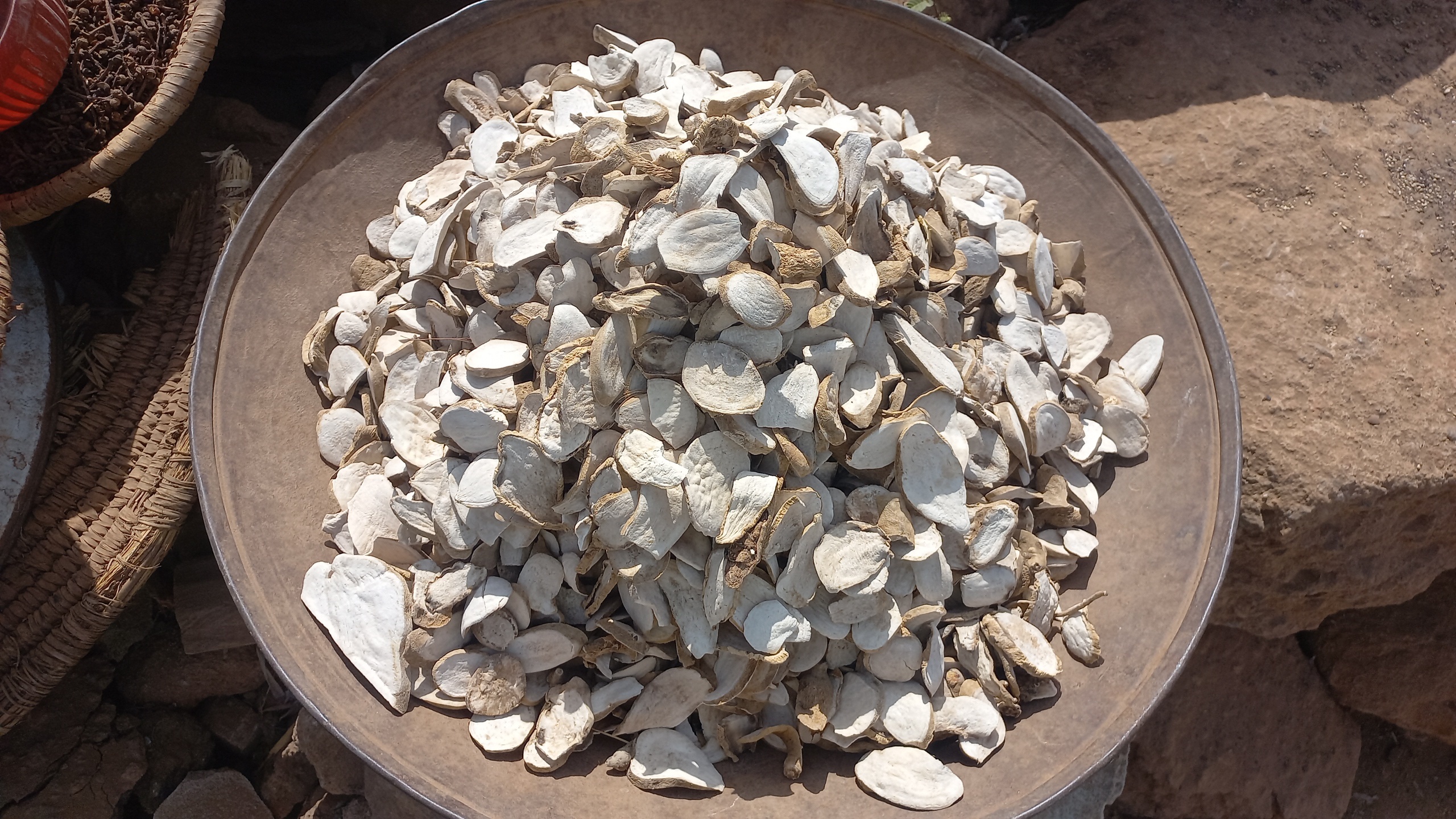
The word yam on a label in an American supermarket almost always means an orange sweet potato. A true yam is a different plant entirely, from a different family, with rough bark-like skin and starchy white flesh, and it is sold in West African, Caribbean and Latin American groceries. The labelling confusion is a long-standing marketing convention rather than a botanical claim, and it matters here because a recipe written for a true yam will not work on a sweet potato.
Four sweet potato main dish routes, measured the same way
| Method | Best variety | Time | Texture | The protein |
|---|---|---|---|---|
| Stuffed and baked | Orange, large | 60 to 75 minutes | Soft, sweet, slightly caramelised | Black beans and yogurt |
| Curried in cubes | Pale or purple | 30 minutes | Holds its shape, absorbs sauce | Chickpeas or lentils |
| Groundnut stew | Orange or pale | 50 minutes | Soft, thickening the pot | Peanut, plus chicken if you want |
| Grated hash | Pale, firm | 15 minutes | Crisp outside, tender inside | Fried or poached egg |
The pairing of variety to method in the second column is the part worth following. A wet orange variety grated into a hash will steam rather than crisp no matter how hot the pan is, and a dry pale one baked whole comes out mealy rather than soft. Neither is a failure of technique.
Stuffed: the bake has to go long and low
An hour at 400 degrees, minimum, for a large potato. Not forty minutes, which is enough to make it soft and not enough to make it good. The extra twenty minutes is when the starch converts to sugar, the skin tightens, and syrup starts to bubble out at the ends, which is the visual signal that it is ready.
Bake them directly on the oven rack with a tray underneath to catch the drips, not wrapped in foil. Foil traps steam and produces a boiled texture with a pale skin, and the skin is worth eating if it has been allowed to crisp. Prick each one twice with a fork before it goes in.
Split and fill while hot. The version that has converted the most sceptics: black beans warmed with cumin and lime, plain yogurt or sour cream, quick-pickled red onion, cilantro, and a hot sauce with vinegar in it. Salt the flesh directly before the fillings go on, since nothing on top will season what is underneath.
Curried: cubes that hold, and the coconut milk question
Inch cubes, and a drier variety if there is a choice. They go into the pot after the aromatics and the spices, get coated in the fat, and then take twenty to twenty-five minutes with the lid on and a modest amount of liquid, which is enough to cook through without collapsing.
Coconut milk is the usual liquid and it needs handling. Full-fat, added in the last fifteen minutes rather than at the start, and kept below a hard boil so it does not split. Half a can plus half a can of water or stock is a better balance than a full can, which makes something very rich that flattens the spices.
The pot needs acid at the end without exception. Lime juice, tamarind or a spoonful of yogurt, stirred in off the heat, is what stops a sweet vegetable in a sweet coconut sauce from becoming cloying. Chickpeas or red lentils go in alongside and turn it into a full plate rather than a side dish, the same structure behind most vegetable-led dinners that hold up.
Stewed: groundnut stew, and the peanut ratio
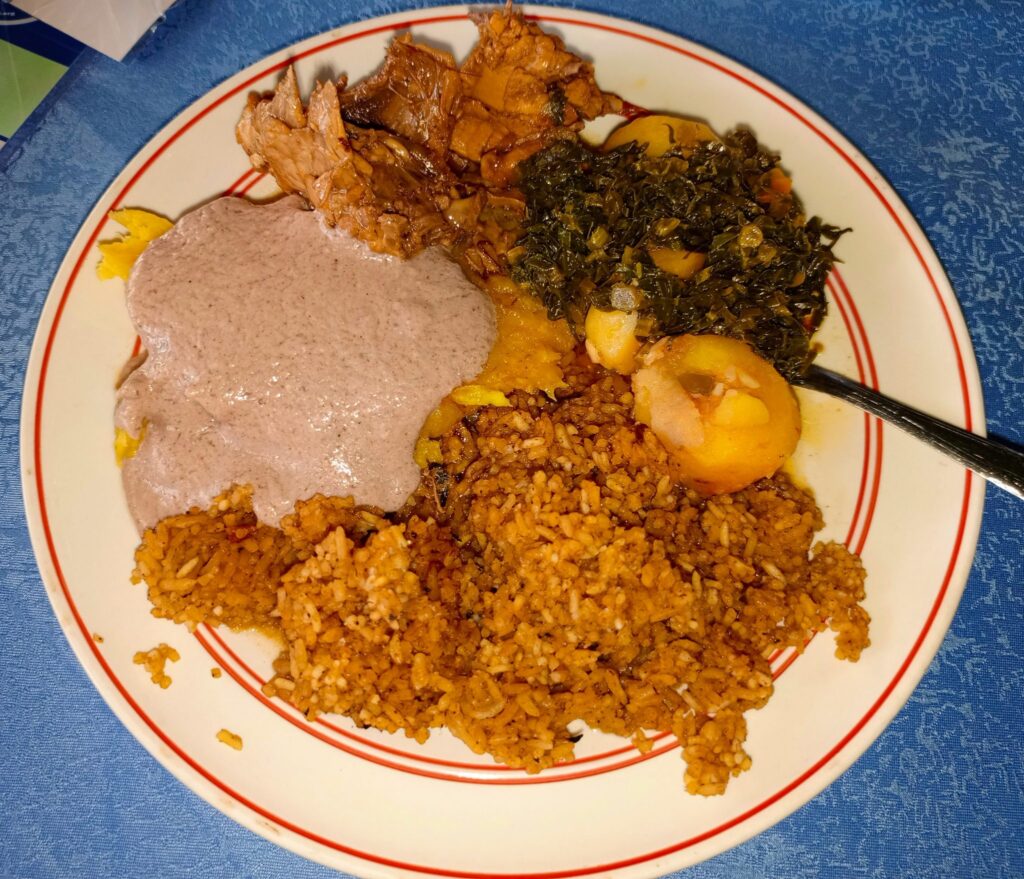
Groundnut stew is a family of West African dishes, with versions across Ghana, Nigeria, Senegal, Mali and beyond under a range of names, and the details differ enough by country and by household that presenting one version as the definitive one would be wrong. What they share is a base of tomato, onion and ground peanut, thickened by the peanut itself.
The ratio that works for a pot serving six: three quarters of a cup of smooth natural peanut butter, or ground roasted peanuts, into about six cups of liquid. Whisk it with a ladle of the hot broth in a separate bowl first, then stir that back in, since spooning it straight into the pot gives lumps that never disperse.
Onion, garlic, ginger, chile and a good deal of tomato paste cooked down make the base. Two pounds of cubed sweet potato and, if you want it, chicken thighs. Fifty minutes at a low simmer, and it thickens noticeably in the last fifteen as the peanut fat emulsifies. Greens wilted in at the end, spinach or chopped collards, are standard and stop it being monotonous.
Hashed: the raw-grated version that actually crisps
The common failure here is boiling or roasting the potato first and then trying to fry the pieces. Precooked sweet potato is full of water and soft starch and it turns to mush in the pan every time. Grated raw, it crisps in twelve minutes.
Use the large holes of a box grater or a processor disc, then squeeze the shreds hard in a clean towel, which removes a surprising amount of liquid. Season, then press into a hot pan with a generous amount of fat and leave it alone for five or six minutes before attempting to turn it.
Leaving it alone is the technique. A hash stirred every thirty seconds never develops a crust and ends up as a pan of soft orange shreds. Press it flat, wait, flip in sections, wait again. An egg on top makes it dinner, and a spoonful of something sharp, kimchi or pickled chile or a mustardy dressing, keeps it from being one flat sweet note.
Roasting temperature, sugar, and why they burn
Sweet potatoes contain an enzyme that converts starch into maltose during cooking, and it works within a specific temperature band on the way up. A slow rise through that band means more sugar; a fast one means less. That is the real reason a low, long roast tastes sweeter than a fast, hot one, and why microwaving produces something bland.
The consequence for cut pieces is that they burn at temperatures a regular potato tolerates. Above about 425 degrees the exposed sugars scorch before the interior is cooked through, so cubes and wedges want 400 to 425 with a full sheet pan, spread out, and turned once.
Salt goes on before roasting, oil goes on generously, and crowding is the usual mistake. Pieces that touch release steam and stew in it, and the difference between one crowded tray and two spacious ones is the difference between browned edges and a pale soft pile, a point that applies across nearly every roasted root.
Storage: never the refrigerator
Cold damages them. Below about 50 degrees the flesh develops a hard core that stays hard however long it cooks, and the flavour turns flat. A refrigerated sweet potato is not spoiled and it is noticeably worse, and this is the single most common storage error with this vegetable.
The right place is a cool, dark, ventilated cupboard, ideally somewhere around 55 degrees, in a paper bag or a basket rather than plastic. Stored that way they keep for several weeks and often longer. Alongside onions is a bad idea, since both release gases that shorten the other’s life.
Cooked, they keep four days refrigerated and freeze well as puree. Sprouting eyes are harmless and can be cut off. Soft, wet or dark shrunken patches mean it has gone, and a sweet potato that smells fermented should go in the bin rather than get trimmed.
What they deliver, and two cautions worth naming
Orange-fleshed varieties are an unusually concentrated source of beta-carotene, which the body converts to vitamin A, and one medium potato covers a large share of a day’s requirement. They also supply fibre, potassium and vitamin C, and they carry a moderate amount of protein at around two grams each, which is why every method above adds a legume, an egg or dairy.
The first caution is about oxalates. Sweet potatoes contain a moderate to high amount, and anyone with a history of calcium oxalate kidney stones is often advised to watch total oxalate intake and to keep fluid intake up. That advice comes from a doctor rather than from a recipe, and it is worth raising rather than assuming that a vegetable is automatically fine in any quantity.
The second is more immediate. Groundnut stew is built on peanut, which is among the most serious of the common food allergens, and a pot of it is not something to serve at a table without saying so plainly. Substituting sunflower seed butter changes the flavour considerably and works structurally. Cross-contamination in shared kitchens matters too, and it is worth checking the same way you would check any label, which is the habit behind cooking for a mixed table.
Frequently Asked Questions
Do I need to peel them?
Only for the curry and the stew, where the skin separates and floats. For baking whole and for the hash, leave it on: the skin holds fibre, it crisps in a hot oven, and grated skin in a hash is unnoticeable. Scrub properly either way.
Why is my roasted sweet potato soggy?
Crowding, temperature or a wet variety. Use two trays, keep the oven at 400 to 425, and dry the cut pieces before oiling them. If it still steams, the variety is a moist orange one and it will never brown the way a drier pale one does.
Can I substitute a regular potato in these?
In the hash and the curry, yes, with a shorter cook and more salt. In the stuffed version it works but loses the sweetness that the beans and lime are balancing against. In the groundnut stew a regular potato goes floury and clouds the pot.
Are the purple ones worth buying?
For texture, yes. They are dry and firm and they hold their shape in a stew where an orange variety would collapse, which makes them the best of the three for anything simmered. They take longer to cook and they are noticeably less sweet.
How much is a serving as a main course?
Roughly ten to twelve ounces of raw potato per person, which is one very large one or two medium, plus whatever protein the method calls for. That is about double what most people put on a plate as a side, and it is the difference between a filling dinner and a snack.
Pick the method by what is in the cupboard rather than by what looks impressive. The hash takes fifteen minutes and an egg, the stuffed version takes an hour of oven and almost no attention, and both are dinner rather than an accompaniment to one.