Most weeknight curries are made the same way and they all taste the same way. Open a can of coconut milk, shake it, pour it in, stir in a few spoons of paste, drop in the chicken, simmer. Twenty minutes later there is a thin orange sauce that tastes of coconut and heat and very little else, and the paste tastes faintly raw at the back of it.
The step that is missing takes three minutes and happens before anything else goes in the pan. The thick cream from the top of an unshaken can is simmered on its own until the fat splits out of it, and the paste is fried in that fat. Aromatics in a curry paste are oil soluble. Dropped into watery liquid they never fully release; fried in coconut fat they do, and the pan smells like a different dish within ninety seconds.
What follows is that method, timed for a Tuesday, with the can to buy, the protein and vegetable order, and the three corrections that go in at the very end.
- Time: 30 minutes total, with the rice going on first
- Serves: four, from one 13.5-ounce can and one pound of protein
- The critical step: three to five minutes cracking the cream, then two to three frying the paste in it
- The can: full fat, unshaken, with a short ingredient list and no added gums
- Paste: start at 2 tablespoons per can, since heat varies between products by roughly three times
- Finish, in this order: fish sauce, then sugar, then lime, all off the heat
Why frying the paste first changes the whole pot
A red curry paste is dried red chile, galangal, lemongrass, makrut lime zest, coriander root, shallot, garlic, white pepper, and usually shrimp paste, all pounded together. Almost everything that gives those ingredients their smell sits in volatile oils, and oil moves into fat far more readily than into water.
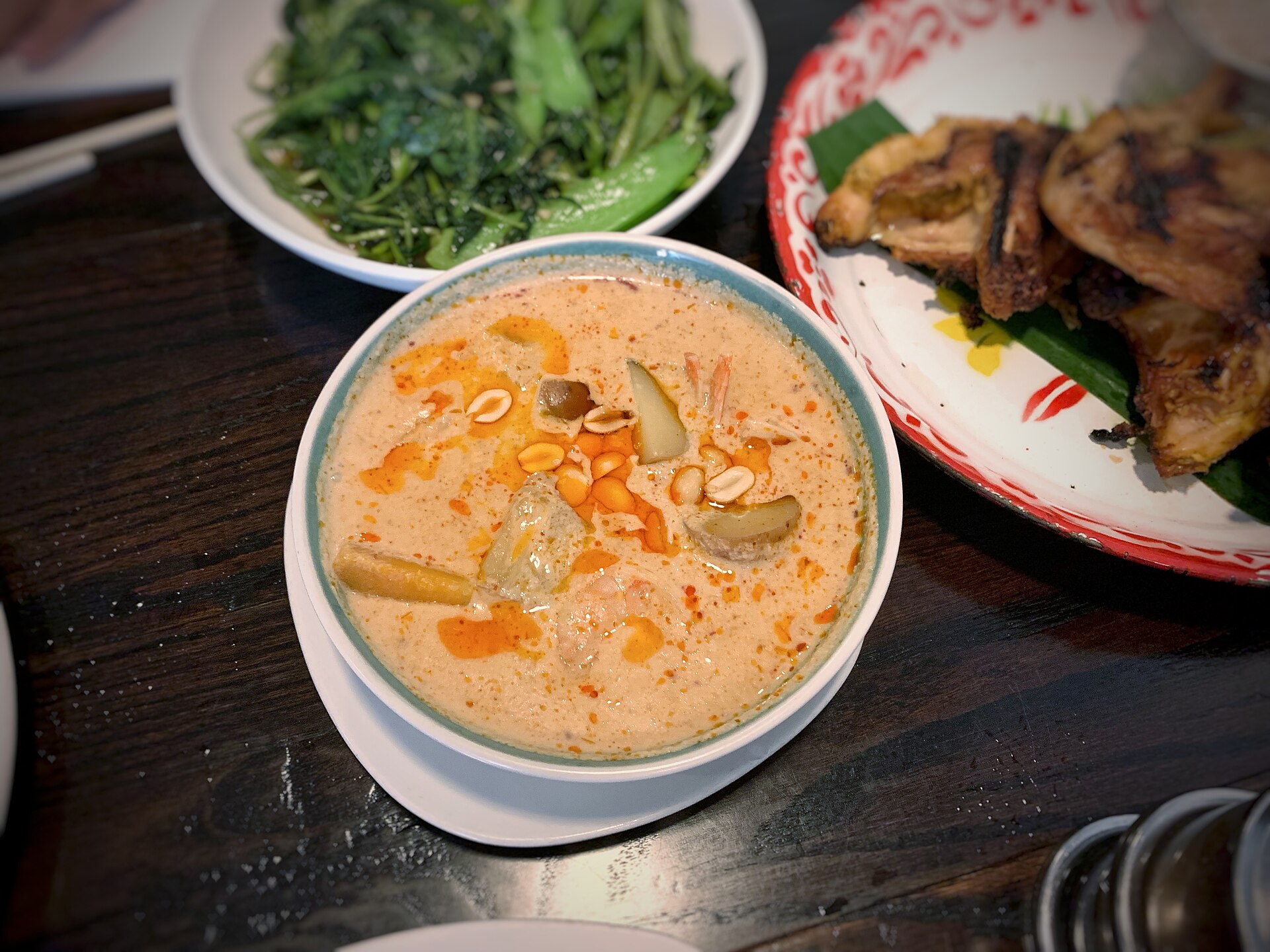
Coconut cream is roughly a quarter fat, and when you simmer it hard on its own, the emulsion breaks and that fat pools out. Thai cooks call the moment the oil breaks, and it is visible: the cream stops looking like cream, sputters instead of bubbling, and a clear slick shows at the edge of the pan. That slick is your frying medium.
Two or three minutes of paste in that fat is the whole difference. The color deepens from bright orange-red to brick, the raw allium smell burns off, and the oil takes on the color of the chile. Everything poured in afterward gets seasoned by an oil that already tastes finished, rather than by a spice mixture suspended in water.
The can matters more than the jar
The method depends on the cream splitting, and a great many cans on the shelf are engineered specifically to stop that from happening. Emulsifiers and stabilizers, usually guar gum, carrageenan, or polysorbate, hold the fat in suspension so the can looks uniform when it is opened. Those cans will not crack no matter how long you simmer them.
Look for the shortest ingredient list in the aisle: coconut extract and water, and ideally nothing else. Full fat, never light, since light coconut milk has had the cream removed and there is nothing left to break. Do not shake the can. Give it half an hour in the refrigerator first if there is time, which firms the cream into a solid cap you can spoon off cleanly.
If the only can in the house is a stabilized one, the workaround is direct: put two tablespoons of coconut oil or a neutral oil in the pan, fry the paste in that for two minutes, then add the coconut milk. You lose a little of the coconut character in the fried layer and you keep the entire benefit of frying the paste, which is the part that matters.
Reading the label on a jar of paste
Homemade paste is better and takes forty minutes with a mortar, which is not a Tuesday project. Jarred and canned pastes are genuinely good if you buy the right one, and the label tells you most of what you need before you taste it.
Start with the order of ingredients, since they are listed by weight. A paste that begins with dried chile, lemongrass, galangal, and garlic is a paste. One that begins with water, sugar, oil, or salt is a sauce, and it will need twice as much to register and will sweeten the pot on the way. Skip anything listing curry powder, since that belongs to a different cuisine entirely.
Format is a fair proxy. Small four-ounce cans and squat tubs from Thai producers tend to be concentrated, unsweetened, and about three times stronger than the mild jars sold in the international aisle of a supermarket. That strength is a feature once you know it, but it is the reason a recipe written for one product scorches with another. Check for shrimp paste in the ingredients if anyone at the table avoids shellfish, because it is standard in a traditional formula and it is not always obvious on the front of the label.
The quick Thai red curry, step by step
One 13.5-ounce can of full-fat coconut milk, 2 to 3 tablespoons of red curry paste, a pound of protein, about three cups of prepared vegetables, 1 1/2 tablespoons of fish sauce, 2 teaspoons of palm or brown sugar, and half a lime. Serves four over jasmine rice.
- Rinse and start the rice. Everything else is timed against it.
- Open the unshaken can and spoon the thick cream from the top into a cold wide skillet or wok, about half to two-thirds of a cup. Reserve the thin liquid underneath.
- Bring the cream to a hard simmer over medium-high heat, stirring, for three to five minutes. It thickens, then sputters, then a clear slick of oil separates at the edges. That is the signal.
- Add the paste to the split cream. Fry it two to three minutes, pressing it against the pan and stirring constantly. It darkens by a shade and the oil turns deep red. Do not let it go past that or the chile turns bitter.
- Add the protein that needs the longest cooking and turn it in the paste for one minute so every piece is coated.
- Pour in the reserved thin coconut milk plus half a cup of water or stock. Bring it to a bare simmer, not a boil.
- Add the hard vegetables. Simmer uncovered, at a lazy bubble, until they are nearly tender.
- Add the quick vegetables and any fast protein. Three to five minutes more.
- Take the pan off the heat. Add fish sauce, then sugar, then lime juice, tasting after each one.
- Tear in makrut lime leaves and a large handful of Thai basil, put the lid on for one minute, and serve.
The only step with a real failure mode is the fourth. A pan that is too cool leaves the paste sitting in fat without changing color, and a pan that is too hot scorches it in forty seconds. Medium-high on a home burner, stirring the entire time, is the setting.
Protein timing, by the minute
The single most common fault in a home curry is not seasoning, it is a piece of chicken breast that went in with the squash and spent eighteen minutes turning to string. Everything below is timed from the moment it enters the pot.
| Protein | Cut | Goes in | Minutes in the pot |
|---|---|---|---|
| Chicken thigh | Sliced 1/4 inch | Straight after the paste | 8 to 10 |
| Chicken breast | Sliced thin on the bias | With the hard vegetables | 5 to 6 |
| Pork loin | Thin slices | After the paste | 6 to 7 |
| Beef flank or sirloin | Sliced thin against the grain | Last | 2 to 3 |
| Shrimp, peeled | Whole, medium | Last | 3 |
| Salmon | 1-inch pieces | Last | 4 to 5 |
| Firm tofu | Cubed, pressed, browned separately | Last | 2, just to heat |
Chicken and pork should reach 165 degrees at the center, and shrimp is done the moment it turns opaque and curls into a loose C rather than a tight spiral. Poultry is the one place worth using a thermometer rather than a guess, and the federal food safety guidance on minimum internal temperatures is the reference for the rest of the table.
Vegetables, and the order they go in
Same principle, shorter list. Group them by how long they need and add them in waves rather than all at once.
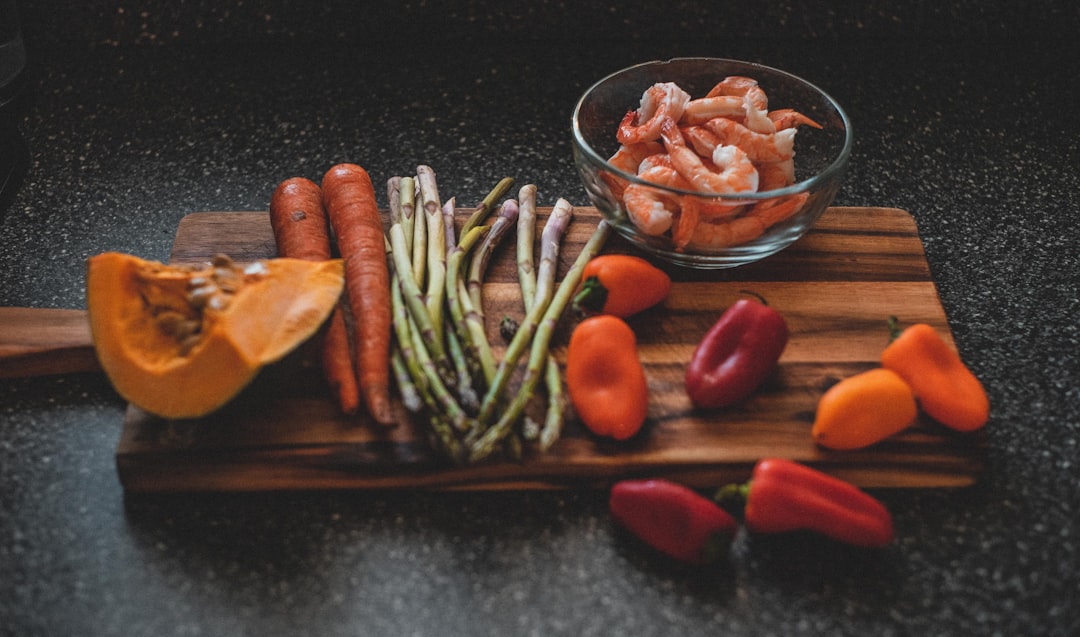
- 12 minutes: kabocha or butternut in 1-inch cubes, carrot coins, waxy potato
- 8 minutes: Thai eggplant quartered, cauliflower florets, sweet potato
- 5 minutes: green beans, canned bamboo shoots (rinsed first, or they taste of the can), broccoli
- 3 minutes: red bell pepper, snap peas, zucchini
- Off the heat: Thai basil, makrut lime leaves torn along the vein, spinach, cilantro
Squash is the one worth choosing on purpose. Kabocha holds its shape and gives back a little sweetness that balances the chile, while zucchini collapses into the sauce and waters it down. If you want one vegetable and no decisions, use a pound of kabocha and nothing else.
The correction at the end: fish sauce, sugar, lime
A finished Thai curry is balanced across salt, sweet, and sour, and the order you adjust in decides how many corrections it takes. Salt first, sugar second, acid last, always off the heat.
Fish sauce carries the salt and a fermented depth that plain salt cannot supply. Start with a tablespoon and a half per can and taste. Under-salted curry is the most common problem in a home kitchen and it reads as flat rather than bland, which is why people reach for more paste and end up with something hot and still dull.
Palm sugar, or brown sugar as a stand-in, is not there to make the dish sweet. Two teaspoons rounds off the edge of the chile and pulls the coconut forward, and you should not be able to identify it in the finished bowl. Lime goes in last and off the heat, because lime juice held at a simmer turns dull and slightly bitter within a couple of minutes. Two teaspoons, tasted, then more if the pot still feels heavy. If the balance still refuses to land, the problem is nearly always salt, which is the same diagnosis that fixes most flat dishes on a thirty-minute weeknight schedule.
The rice goes on before anything else
Jasmine rice, rinsed in three changes of water until the water runs nearly clear, which takes about a minute and keeps the grains separate. One cup of rice to one and a quarter cups of water in a small pot with a tight lid.
Bring it to a boil uncovered, then drop to the lowest setting the burner has, cover, and leave it alone for twelve minutes. No lifting the lid. Off the heat for ten more minutes with the lid still on, then fluff with a fork. Those last ten minutes are not optional, and they line up almost exactly with the time the curry needs.
One cup of dry rice feeds three generously or four alongside a full pot of curry. Cook a cup and a half if anyone at the table is likely to want a second bowl, and refrigerate leftovers within two hours rather than leaving the pot on the stove, since cooked rice held warm is a reliable way to grow bacteria. The mechanics of the ratio are covered further in our piece on what actually happens in a covered pot of rice.
Five ways it goes wrong
Shaking the can. There is then no cream to crack, and the whole method collapses into the ordinary version. Buy two cans and keep one in the refrigerator so the cream is always ready to spoon.
Boiling after the thin milk goes in. A hard boil breaks the coconut into grainy curds and drives the protein past tender in the same minute. Once the liquid is in, the surface should barely move.
Too little paste. Two tablespoons is the floor for a can, not the ceiling, and a mild supermarket jar may want four. Taste after the frying step, while there is still time to add more and fry it in.
Lime in a simmering pot. Off the heat, always. The same rule applies to the basil and the lime leaves, which go grey and lose their smell in under a minute of boiling.
Everything in at once. Pepper and squash in the same handful means one of them is wrong. Two waves is the minimum and three is better.
Leftovers, freezing, and half a jar of paste
The curry keeps three to four days refrigerated and is better on day two, once the fat has re-emulsified and the chile has spread through the whole pot. Reheat it gently, covered, with a splash of water, and never at a boil. Shrimp is the exception and does not survive a reheat, so cook shrimp only for the portion going on the table that night.
It freezes acceptably for about three months, with one caveat: coconut milk often separates on thawing and looks broken in the container. Whisk it over low heat as it warms and it comes back together. Curries with squash freeze better than curries with green beans, which go soft.
An open jar of paste keeps a month refrigerated with the surface smoothed flat and covered with a film of oil. Better still, freeze it in a tablespoon-per-well ice tray on the day you open it, bag the cubes, and pull two out on a weeknight. It keeps months that way and turns the entire dish into a pantry decision rather than a shopping one, which is the same argument for keeping a short list of high-leverage staples stocked.
Frequently Asked Questions
Can I use light coconut milk?
Not for the frying step, because the cream has been removed and there is nothing to break. If light is what you have, fry the paste in two tablespoons of coconut oil instead and then add the milk. The sauce will be thinner and will need a couple of extra minutes of reduction.
How hot will three tablespoons of paste be?
That depends entirely on the product, which is the honest answer. Concentrated Thai-market pastes can be three times the heat of a supermarket jar at the same volume. Start at two tablespoons the first time you open a new one, taste after frying, and write the number you settled on inside the lid.
Can this be made without fish sauce or shrimp paste?
Yes, but read the paste label, since shrimp paste is standard in a traditional formula and vegetarian versions are sold separately and marked as such. In place of fish sauce, use light soy sauce plus a small spoon of white miso for the fermented note. It is a different dish rather than a copy, and it works.
Is red curry hotter than green?
Usually the opposite. Green paste is built on fresh green chiles and tends to run hotter, while red paste takes its color and a moderate heat from dried red chiles. Individual products vary enough that the rule is a starting assumption, not a guarantee.
Can I cook the rice in the same pot?
No. Rice needs undisturbed steam under a sealed lid, and a curry needs stirring and uncovered reduction. The two are incompatible in one vessel, and the rice pot is the smallest thing in the sink at the end of the night anyway.
Make it once with the cream cracked properly and the shortcut version stops being tempting. It is three extra minutes at the front of a thirty-minute dinner, and it is the only part of this that a jar cannot do for you.