There is a small saucepan on my stove that exists for one purpose. It is about seven inches across, it holds a single portion, and four times a week it holds the same four ingredients: dashi, soy sauce, mirin, and a spoonful of sugar. What goes into that liquid changes. The liquid does not.
Japanese rice bowls are organized around exactly this idea. One simmering sauce, one shallow pan, one topping, poured over hot rice. Change the protein and the name of the dish changes with it, but the sauce underneath is the constant, and learning it once buys four dinners instead of one.
Total time from a cold stove is about twenty-five minutes if the rice is already cooked, or forty if it is not. The part that intimidates people is the egg, and the egg is a two-minute skill with a rule attached.
- The sauce: 4 parts dashi, 1 soy, 1 mirin, plus sugar, per bowl
- The pan: small and shallow, one portion at a time, never a big skillet
- Clock: 25 minutes with rice ready, 40 from nothing
- The egg: poured in two additions, lid on, off the heat before it looks done
- Ratio: roughly a cup and a half of cooked rice under each topping
- Skip the soft egg if anyone at the table is pregnant, very young, elderly, or immunocompromised
The sauce is four bottles and one ratio
The simmering liquid has a name in Japanese kitchens, warishita, and it is dashi, soy sauce, mirin, and sugar in a proportion that shifts a little by household and hardly at all in principle. A working ratio for one bowl is four tablespoons of dashi, one of soy, one of mirin, and a teaspoon of sugar.
That comes out mildly sweet and clearly salty, which is correct, because it is going to be diluted by whatever it cooks and then absorbed by plain rice. Tasted alone off a spoon it should seem slightly too strong. If it tastes right on its own, it will taste like nothing over rice.
Adjust in one direction at a time. More sugar pushes it toward the version most people know from restaurants; more soy pushes it savory and darker; a splash of sake thins it and adds depth without adding sweetness. Write down whatever ends up working, because the difference between a good bowl and a dull one is about half a teaspoon.
Dashi, and three ways to get it inside ten minutes
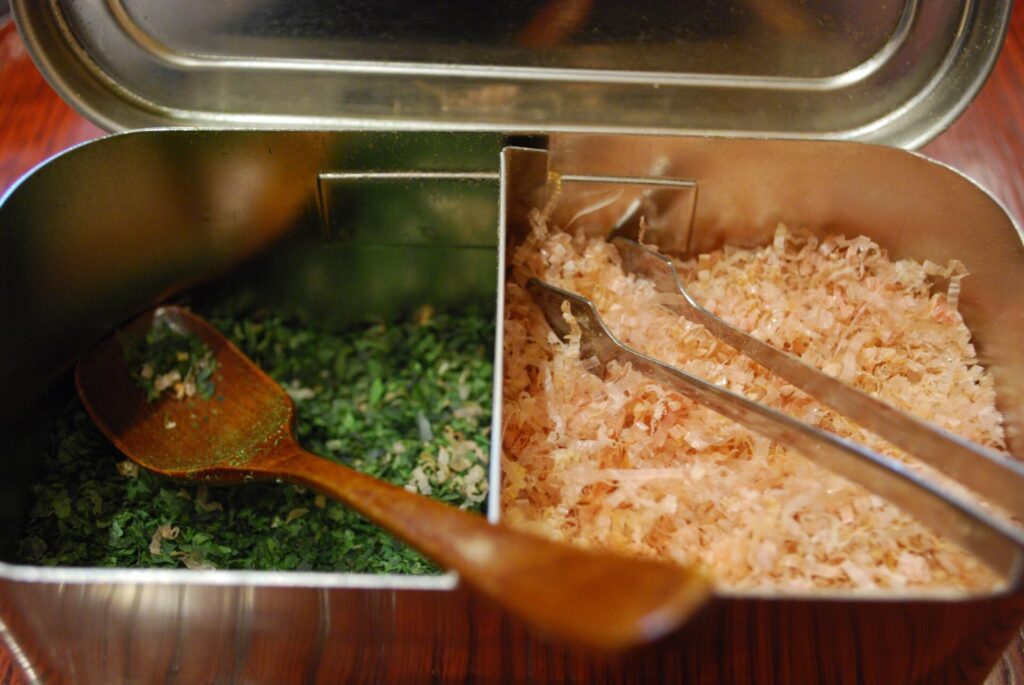
Dashi is the broth underneath most of Japanese home cooking, made from kombu, a dried kelp, and katsuobushi, shavings of dried and smoked skipjack. It is not a long stock. From cold water to finished it takes about fifteen minutes, and there are shorter routes.
The full version: a strip of kombu steeped in cold water for half an hour, brought to just under a simmer, kombu removed before it boils, a handful of katsuobushi added off the heat, steeped for a minute or two, strained. Boiling the kelp turns the broth slippery and slightly bitter, which is the one mistake to avoid.
The fast versions are legitimate and widely used in Japan. Instant dashi granules dissolve in hot water in seconds. Sealed dashi packs work like a tea bag and take three minutes. Cold-brewing kombu overnight in a jar of water in the refrigerator takes no attention at all and makes a clean, gentle broth that suits tofu especially well.
Mirin, and the bottle labeled aji-mirin
Real mirin, sold as hon-mirin, is a brewed rice product with roughly fourteen percent alcohol and a sweetness that comes from starch converted during fermentation. It contributes gloss, a rounded sweetness, and a faint depth that sugar alone cannot reproduce.
Most supermarket bottles are labeled aji-mirin or mirin-style seasoning. These are largely water, corn syrup, and a small amount of alcohol with salt added, and the salt is why substituting them one for one throws off the seasoning of a sauce. They work, but the soy should be pulled back slightly to compensate.
If neither is available, a tablespoon of sake with an extra half teaspoon of sugar covers the gap for a single bowl. Dry sherry is the common stand-in and it is not quite right, since it brings an oxidized note that reads as European. It is still better than leaving the mirin out entirely, which produces a sauce that tastes harsh.
An easy donburi recipe that runs on one clock
This is the chicken and egg version, scaled for two bowls, cooked one bowl at a time. Everything below happens in a small shallow pan, and the whole sequence takes about six minutes once the rice is on.
- Start the rice first. Short-grain Japanese rice, rinsed until the water runs nearly clear, then cooked. Nothing else in this sequence waits for anything, so the rice has to be ahead.
- Slice half an onion thinly with the grain. Cut two boneless chicken thighs into pieces about an inch across. Beat two eggs loosely, only about ten strokes, so streaks of white and yolk are still visible.
- Combine the sauce in the pan: eight tablespoons dashi, two soy, two mirin, two teaspoons sugar. Bring it to a simmer over medium heat.
- Add the onion and let it soften for three minutes. It should go translucent and start to sweeten, not brown.
- Add the chicken in a single layer. Simmer for four to five minutes, turning the pieces once, until they are cooked through to 165 degrees at the thickest point.
- Pour about two-thirds of the beaten egg over the surface in a slow circle. Cover the pan and leave it for forty-five seconds.
- Pour the last third over the top, cover again, and take the pan off the heat entirely after another thirty seconds. Residual heat finishes it.
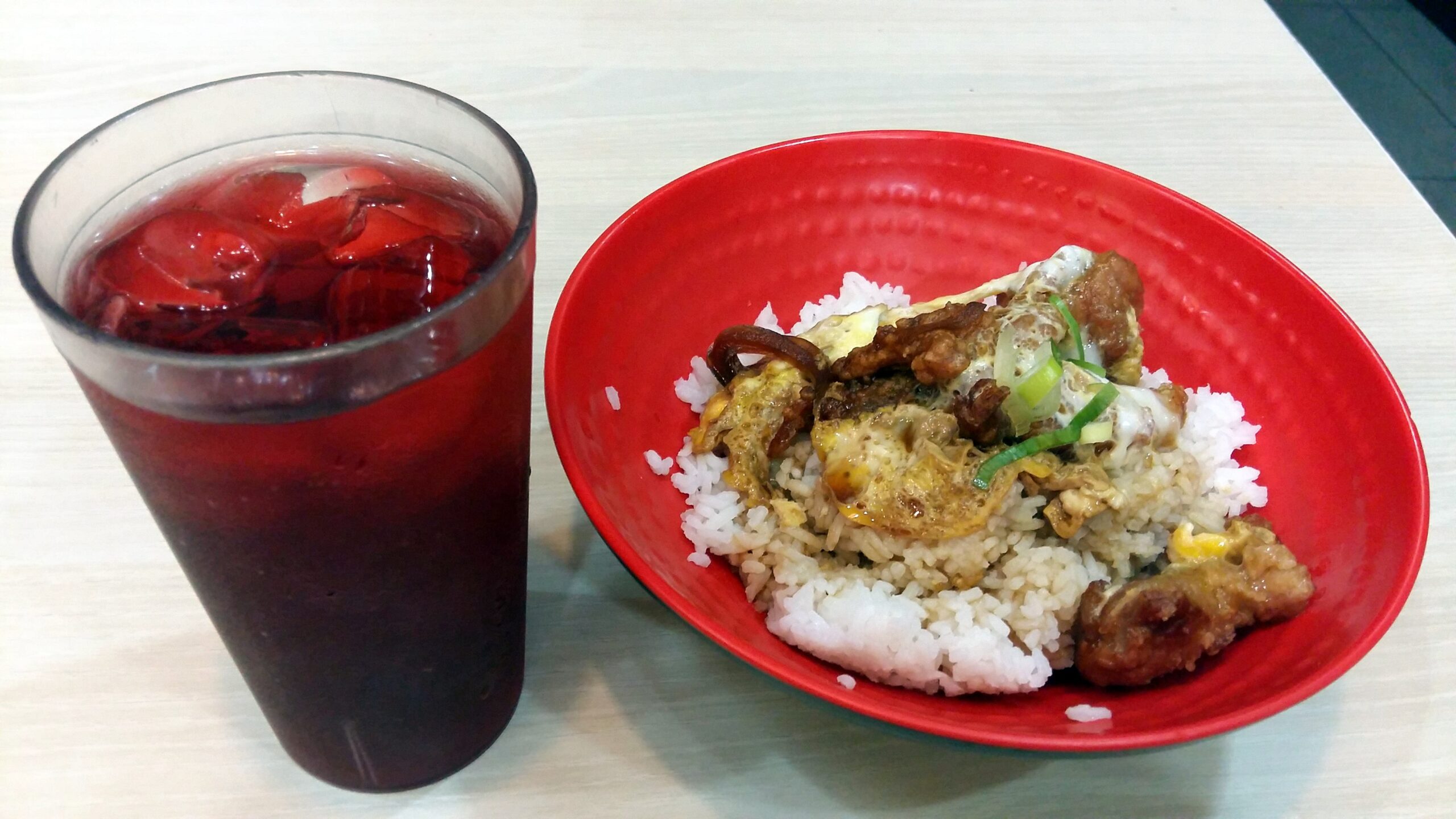
- Slide the whole thing onto a bowl of hot rice, sauce and all. Scatter scallion over it and eat immediately.
The single most common error in that list is step seven. Waiting until the egg looks finished in the pan guarantees it will be rubbery by the time it reaches the table, because it keeps cooking on the way there.
The pan decides the shape of the bowl
A wide skillet spreads the sauce into a thin layer that evaporates before the topping is cooked, and it spreads the egg so thin that it sets into a sheet. The specialized pan sold for this job is small, shallow, straight-sided, and has a handle set at an angle so the contents can be slid out in one piece.
A seven- or eight-inch nonstick pan or a small saucepan does the same work. What matters is that the sauce comes up around the topping rather than under it, which is what keeps everything moist and lets the egg set in layers rather than as a film.
Cook one bowl at a time. Doubling the batch in a bigger pan is the obvious shortcut and it is the reason most home attempts turn out wrong, because the egg cannot be controlled across a large surface. Two bowls back to back takes about twelve minutes total, and the first one stays hot under a lid, which is the same logic that makes single-pan cooking worth the discipline.
Chicken and onion, the version the sauce was built for
Thighs, not breasts. Chicken breast dries out inside the four-minute window and there is nothing in this dish to hide it. Thigh meat stays soft in the simmering liquid and its fat enriches the sauce, which then soaks into the rice.
The onion is not a garnish. It goes in first and softens for a full three minutes, releasing sugar into the liquid and softening its edges. Skipping that step leaves raw onion crunch in a dish that is meant to be entirely tender.
The traditional finish is a small amount of mitsuba, a Japanese herb that tastes something between parsley and celery leaf. Scallion is the everyday substitute and works fine. A pinch of shichimi togarashi at the table adds heat without changing the balance of the sauce.
Beef sliced thin, and where the pre-sliced kind lives
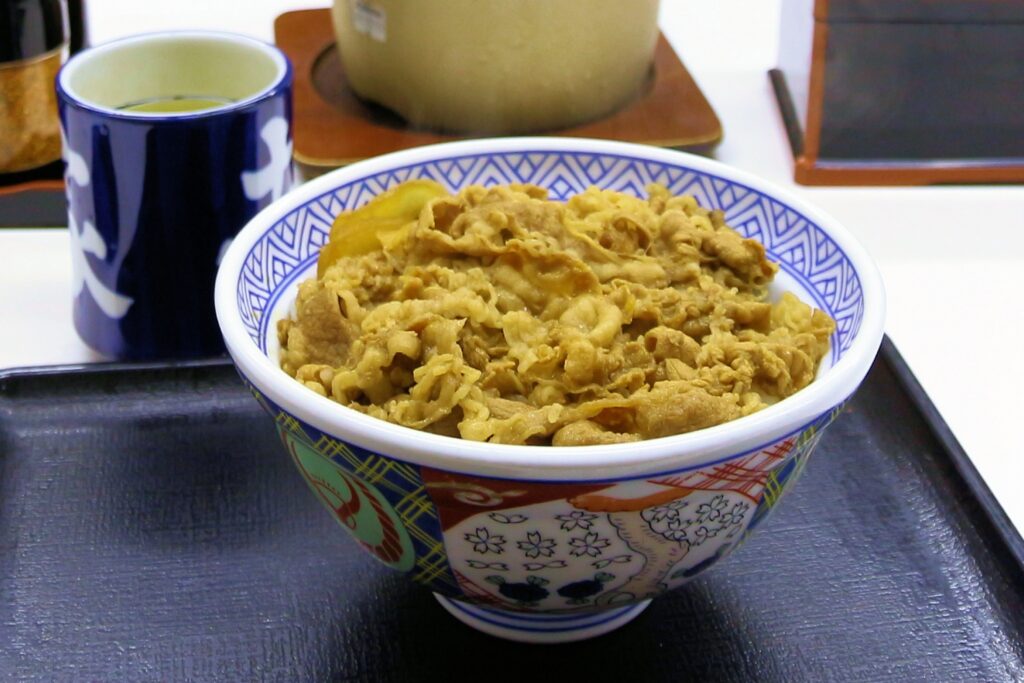
The beef version uses paper-thin slices of a fatty cut, ribeye or chuck, simmered in the same sauce with onion for about three minutes. The slices are thin enough that they cook almost instantly, and they should be pulled while still faintly pink in the middle rather than simmered into gray.
Buying it pre-sliced is the practical route. Any Japanese or Korean grocery sells frozen trays labeled for shabu-shabu or sukiyaki, cut on a machine at a thickness no home knife will match. It thaws in about ten minutes and separates easily.
Cutting it at home is possible with one trick: freeze the piece of beef for forty to fifty minutes until firm at the edges but not solid, then slice across the grain as thinly as the knife allows. The sauce for beef benefits from a splash of sake and slightly more sugar than the chicken version takes.
Pork cutlet and tofu, the two that need a step first
The pork version starts with a breaded cutlet that has already been fried, sliced into strips, then laid into the simmering sauce with onion for barely a minute before the egg goes on. The point is to keep some of the crust intact, so the cutlet meets the liquid at the last possible moment. Pork should reach 145 degrees with a short rest before it is sliced.
Frying the cutlet fresh takes about fifteen minutes and reheating a leftover one in a hot oven for six or seven minutes works better than a microwave, which softens the coating completely.
Tofu is the version that most rewards attention to a single step. Use extra-firm, press it under something heavy for twenty minutes to drive out water, cut it into thick slabs, and brown it in oil before it goes anywhere near the sauce. Unpressed tofu releases water into the pan and dilutes everything. Pressed and seared, it absorbs the sauce and holds together, and it is the version that most benefits from a good kombu dashi, since there is no meat contributing depth.
The egg pour that sets in ribbons
Three things separate a good egg from a bad one here, and none of them are difficult. First, beat it badly on purpose. Ten strokes with chopsticks or a fork, leaving visible streaks of white, is what produces the marbled look rather than a uniform yellow curd.
Second, pour it in two stages, roughly two-thirds and then one-third. The first pour sets into the topping and thickens the sauce; the second sits on top and stays softer, which is where the texture contrast comes from. Pour in a slow spiral rather than dumping it in the middle.
Third, stop early. The pan comes off the heat while the surface still looks underdone and slightly wet, because carryover heat in a covered pan will finish it during the thirty seconds it takes to get to the table. Anyone who wants the egg fully set should simply leave the lid on over low heat for another minute or two, which costs nothing but the ribboned texture.
Rice to topping, and the bowl the ratio assumes
The standard is roughly a cup and a half of cooked short-grain rice per bowl, about two hundred grams, with the topping covering the surface and the sauce soaking down into the top third. The rice is plain, unseasoned, and hot. Cold rice from the refrigerator turns the whole bowl gummy.
| Version | Topping per bowl | Simmer time | Sauce adjustment |
|---|---|---|---|
| Chicken and egg | 1 thigh, quarter onion | 4 to 5 minutes | Base ratio as written |
| Thin-sliced beef | 4 ounces, half onion | 3 minutes | Extra sugar, splash of sake |
| Breaded pork cutlet | 1 cutlet, quarter onion | 1 minute | Base ratio, slightly less liquid |
| Seared firm tofu | 6 ounces pressed | 2 minutes | Stronger dashi, extra soy |
A deep bowl beats a wide plate, because the sauce needs somewhere to collect. Everything else on the table should be small and sharp: pickled ginger, a cucumber salad, or quick-pickled daikon, all of which cut the sweetness and take three minutes, the same principle behind building a weeknight plate out of very few parts.
Soft egg, raw egg, and who should not have either
The traditional finish leaves the egg deliberately underset, and in some households a raw yolk is broken over the top as well. That is a real food safety consideration rather than a technicality. Eggs that are not cooked through can carry salmonella, and the risk falls hardest on people who are pregnant, very young, elderly, or living with a weakened immune system.
There are two straightforward answers. Use pasteurized shell eggs, which are sold in most large supermarkets and behave identically in the pan. Or keep the lid on over low heat for an extra minute or two until the egg is firm throughout, which changes the texture and nothing else. Standard guidance on egg handling and cooking temperatures is set out by public food safety authorities.
The other components have ordinary rules. Chicken thighs to 165 degrees, pork to 145 with a rest, and any leftover sauce and topping refrigerated within two hours. Rice in particular should not sit at room temperature for long, and a rice bowl assembled and then left out is not a dish to reheat the next day.
Frequently Asked Questions
Can I make the sauce without dashi?
Chicken stock works and the result is recognizably the same dish, just heavier and less clean. What it loses is the particular savory note kombu and katsuobushi contribute, which is the background of the whole bowl. Instant dashi granules cost very little and take five seconds, which makes the substitution unnecessary in most kitchens.
What rice should I use?
Japanese short-grain, sold as sushi rice, rinsed well before cooking. Its stickiness is structural here: it holds the sauce instead of letting it run to the bottom of the bowl. Long-grain rice stays separate and the sauce pools underneath, which is a different and less satisfying experience.
Why did my egg turn into scrambled egg?
Almost always too much stirring, too much heat, or both. The egg is poured over the surface and then left alone under a lid, never agitated. If the sauce is at a hard boil when the egg goes in it will seize into curds before it has a chance to set in sheets.
Can this be made in advance?
The sauce keeps in the refrigerator for about a week and improves the second day, which makes it worth mixing a batch of six or eight portions at once. The assembled bowl does not keep at all. Cook the topping to order; it is a six-minute job once the sauce exists.
Is there a version without any egg?
Yes, and the beef version is traditionally served that way, with pickled ginger on top instead. Tofu also works well without egg if the dashi is strong and there is something crisp alongside. The egg adds richness and body to the sauce, so a bowl without it wants a little more fat elsewhere.
Mix a jar of the sauce on Sunday and the decision on a Tuesday evening shrinks to which protein is in the refrigerator. That is the entire trick, and it survives most weeks intact.