Nobody at a nabe table eats the same thing at the same time. One person is fishing out a piece of napa cabbage that has been in the pot for ten minutes, another is dropping in raw beef that will be ready in twenty seconds, and the pot itself sits in the middle doing very little except staying at a bare simmer. That looseness is the entire design.
A single pot, one broth, and a platter of raw ingredients arranged so that people cook their own portions in whatever order they like is the whole structure of a Japanese hot pot, or nabe. It survives a cold night with almost no active cooking from whoever hosts it, and it ends with a course most Western dinners have no equivalent for: rice or noodles added to the leftover broth once the meat and vegetables are gone.
What follows is how to build one properly at home, from the broth to the order things go in, the arrangement of the platter, and the rice course that closes the pot rather than being served as a separate side.
- One pot, one broth, shared by everyone at the table
- Four broth options: plain kombu, miso, soy-mirin, and a citrus-forward version
- Cooking order: roots and sturdy vegetables first, quick proteins last
- Equipment: a portable burner and a heavy pot, ideally a donabe
- The rule at the table: a serving spoon for the pot, separate from the chopsticks people eat with
- The finish: rice or noodles cooked in what is left of the broth
What a japanese hot pot nabe actually needs
A japanese hot pot nabe needs surprisingly little equipment: a portable gas burner or induction plate set in the middle of the table, a heavy pot that holds heat evenly, and a platter of ingredients prepared in the kitchen beforehand and brought out raw. The cooking itself happens at the table, in front of everyone, rather than finishing in the kitchen and arriving plated.
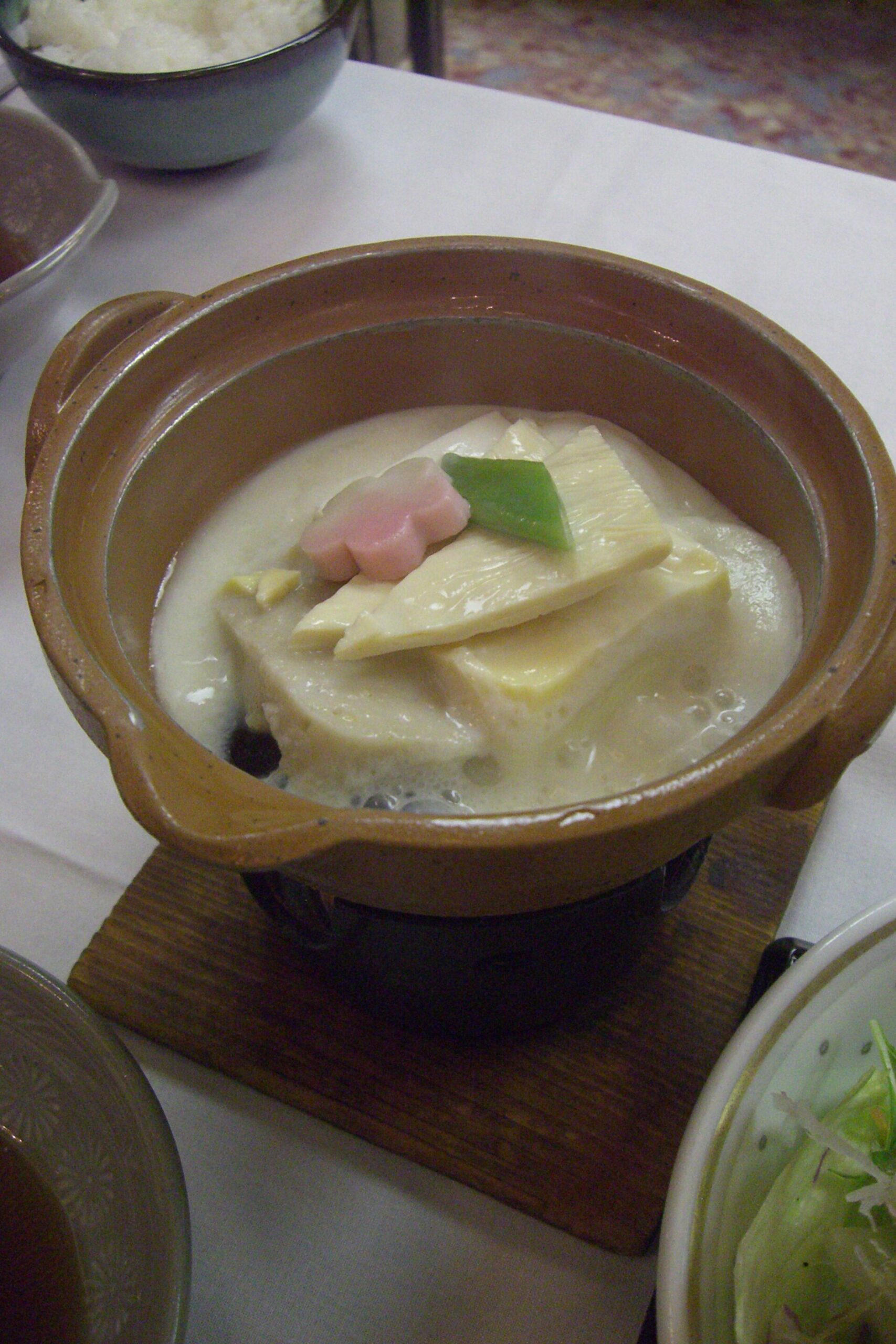
A donabe, the traditional glazed clay pot made for this kind of slow tabletop cooking, holds heat longer than a metal pot and looks the part, though a wide, heavy-bottomed metal pot works nearly as well for a first attempt. What matters more than the pot itself is a burner strong enough to bring the broth back to a simmer quickly after a round of ingredients goes in and cools it down.
A lid is worth having on hand even if it rarely goes on during the meal itself. Covering the pot for a minute after a large batch of vegetables goes in brings the broth back up to temperature faster than leaving it open, which matters most in the first ten minutes before the pot has built up any thermal momentum of its own.
Four broths, and which pot each one wants
Mizutaki is the plainest of the four, built on little more than kombu and water, sometimes with chicken bones added for body, and it lets the ingredients carry the flavor rather than the broth. It suits a platter heavy on delicate seafood and tofu, where a stronger broth would overwhelm rather than season.
Miso nabe carries more weight, built on a dashi base with miso stirred in, and it pairs well with pork, salmon, and root vegetables that can stand up to it. A dashi base is also the backbone of the simmering sauce in our one-pot donburi method, which draws on the same pantry. A soy-mirin broth, closer to what shows up in a yosenabe, or mixed pot, works as a middle ground and is the most forgiving for a first attempt with a wide mix of ingredients. A citrus-forward version finished with yuzu or sudachi at the table brightens a broth that has been simmering long enough to turn rich, and it is the one worth trying once the basic method feels familiar.
None of the four is more correct than another, and households tend to settle on one through habit rather than a rule about which protein demands which broth. A cook new to the format is better off picking the one that matches what is already in the refrigerator than searching out a specific dashi powder or miso brand for a first attempt.
Building the platter: what goes on it and how it is arranged
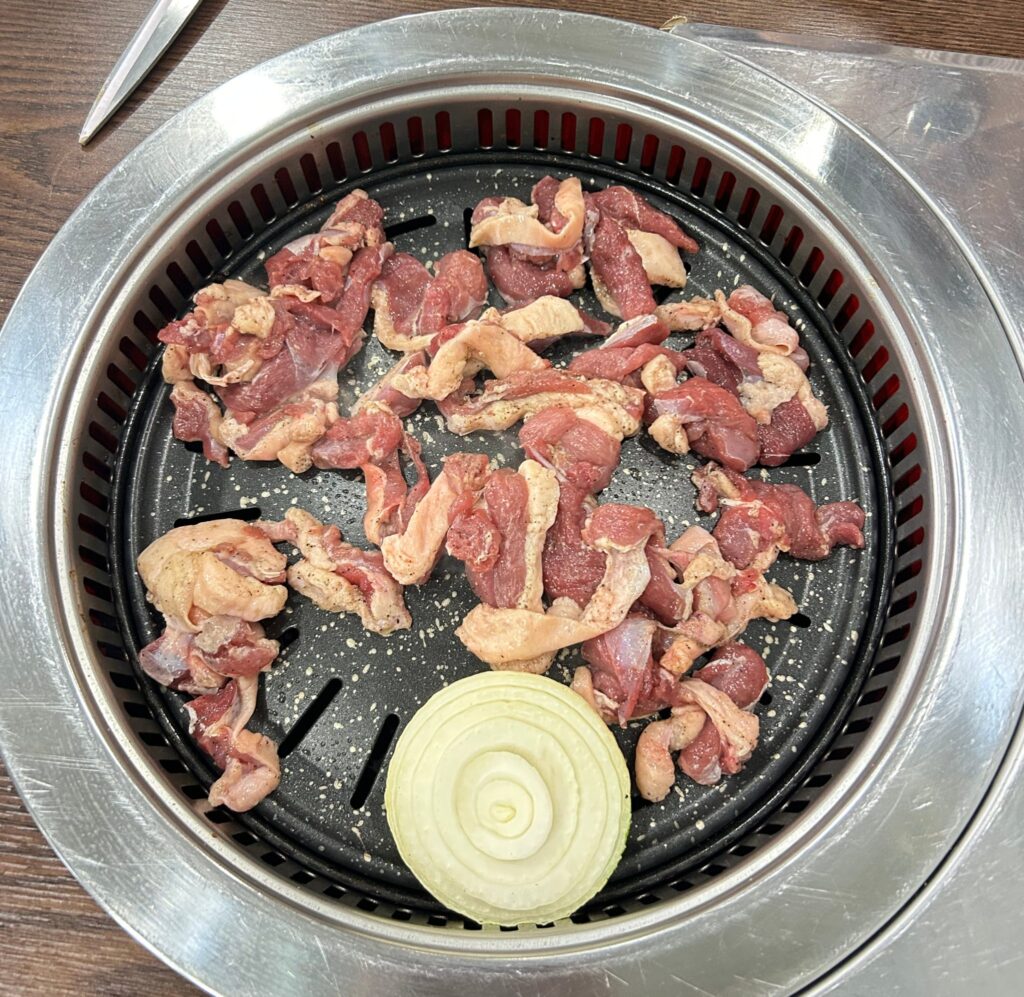
The platter is prepared entirely in the kitchen before anyone sits down. Thin-sliced protein, whether beef, pork, or a firm white fish, goes on one side, arranged in a single layer rather than a pile, since raw meat sitting in a heap on top of itself is both harder to portion and slower to chill evenly beforehand. The same thin-slicing technique is what makes the marinade work in our quick Korean beef bowl.
Vegetables get their own section: napa cabbage in wide pieces, sliced shiitake and enoki mushrooms, a block of tofu cut into cubes, and something starchy like a wedge of kabocha squash or a peeled taro root. Arrange everything so a diner can see the whole spread and choose freely, rather than digging through a mixed pile, and keep the raw protein visually and physically separate from anything that will not be cooked, such as a dipping sauce or a garnish.
A rough guide for four people is a pound of thin-sliced protein, half a head of napa cabbage, one package each of two kinds of mushroom, a block of tofu, and one starchy vegetable. That amount fills a large platter without leaving so much left over that the second half sits out too long waiting its turn.
The cooking order that keeps the pot clean
Root vegetables and anything dense go in first, since they need the longest time and the broth is at its cleanest before anything else has been added. Kabocha, taro, and carrots can simmer for ten to fifteen minutes without falling apart, and starting with them means the broth has already picked up some sweetness by the time faster ingredients arrive.
Napa cabbage, mushrooms, and tofu go in next, needing only a few minutes. Thin-sliced meat and seafood go in last, in small batches, cooked for as little as twenty to sixty seconds depending on the cut, since the point of slicing it thin is precisely so it cooks almost instantly in a simmering broth rather than needing to sit.
Nabe, step by step, from cold broth to the table
- Make the broth of choice in a separate pot in the kitchen, then transfer it to the tabletop pot, or heat kombu and water directly in the donabe before bringing it to the table.
- Arrange the platter: protein in one section, vegetables and tofu in another, kept visually separate.
- Set the pot over the tabletop burner and bring the broth to a gentle simmer.
- Add root vegetables and dense items first. Simmer ten minutes.
- Add cabbage, mushrooms, and tofu. Simmer another five minutes.
- Add thin-sliced protein a few pieces at a time, letting each diner cook their own portion directly in the pot.
- Skim any foam that rises, and top up with hot water or extra broth if the level drops.
- Once the meat and vegetables are gone, strain or leave the broth as is, and add rice or noodles for the closing course.
Raw ingredients, shared chopsticks, and the rule that keeps a dinner safe
A platter of raw meat, seafood, and vegetables sitting on a table for the length of a meal is the one part of nabe that needs real care. Keep the platter refrigerated until just before serving, and do not leave raw protein out at room temperature for more than about an hour over the course of the meal, refilling from a chilled backup portion in the kitchen rather than leaving the whole batch out from the start.
The other rule, just as important and far easier to forget after a drink or two, is that the serving spoon or chopsticks used to move raw meat and seafood into the pot should never be the same ones anyone eats with. Set out a separate serving utensil for the platter, and make sure everything that goes into the pot is fully cooked, especially chicken and pork, before it comes back out. This single habit is what keeps a genuinely enjoyable communal meal from becoming a source of cross-contamination.
Rice closes the pot: making zosui from what’s left
Once the meat and vegetables are gone, the broth left behind has absorbed the flavor of everything that simmered in it, and throwing it away is close to the biggest mistake a first-time host can make. Add cooked rice directly to the simmering broth, a cup or so per two remaining servings, and let it simmer for a few minutes until it has absorbed some of the liquid and turned soft and slightly porridge-like.
A beaten egg stirred in at the very end, off direct heat, thickens it further and turns the closing course into something closer to a savory rice porridge than a soup. A scattering of scallions and a few drops of soy sauce finish it. Getting the rice itself right matters just as much here as it does in our notes on cooking rice properly. This dish, called zosui, or ojiya in some regions, is treated as the actual ending of the meal rather than an optional extra, and skipping it is considered wasting the best part of the broth.
The dipping sauces, ponzu and sesame
Ponzu, a citrus and soy sauce mixture, is the standard dip for lighter broths and delicate proteins, cutting through richness with acidity. A sesame-based sauce, closer to what accompanies shabu shabu specifically, built on ground sesame, soy sauce, and a little sugar, suits richer meats and stands up better against a stronger miso-based broth.
Both are set out in small individual bowls rather than one shared dish, partly for practicality and partly because everyone dips their own portion at their own pace throughout the meal rather than plating a full dish at once.
Where it goes wrong
A cloudy, greasy broth by the end of the meal usually means the heat ran too high rather than at a gentle simmer, which breaks down fat and protein into the liquid faster than skimming can keep up with. Keep the burner at a level that maintains a soft simmer rather than a rolling boil throughout the meal.
Mushy vegetables mean they went in too early relative to how dense they actually are; a thin-cut carrot cooks much faster than a thick wedge of kabocha, and cutting everything to a consistent thickness within each category helps more than following a fixed clock. Overcrowding the pot with too much at once also cools the broth below a simmer, which is why ingredients go in in stages rather than all together.
A broth that tastes weak by the end despite everything that has gone into it is usually a case of starting with too little dashi or kombu relative to the amount of water, since the ratio has to be strong enough at the outset to survive an hour of ingredients diluting it. Err toward a more concentrated broth than seems necessary, since it only gets milder as the meal goes on.
Frequently Asked Questions
Can nabe be made on a regular stovetop instead of a tabletop burner?
Yes, and it loses none of its flavor, only the communal cooking part of the ritual. A pot finished on the stove and served already cooked is still a good meal, though the experience of cooking your own portion at the table is the part most people come to enjoy about it.
What is the difference between nabe and shabu shabu?
Shabu shabu is one specific style of nabe, built on very thin-sliced meat swished briefly through a plain broth and dipped in sesame or ponzu sauce. Nabe is the broader category that includes shabu shabu along with miso-based, soy-based, and other regional versions.
How many people does one pot serve?
A standard donabe serves four to six comfortably with a full platter, though the format scales easily with a bigger pot and platter, since the cooking happens continuously rather than needing to be timed to finish all at once.
Is it safe to reuse the same broth for a second round of guests later in the evening?
Only if it has not sat at room temperature for more than two hours and is brought back to a full boil before serving again. For a long evening, refrigerating the pot between rounds and reheating it fully is the safer approach.
Can the meal be made vegetarian?
Yes, using a kombu-only broth, extra tofu, mushrooms for depth, and a wider vegetable selection. The cooking order and the rice-closing course work exactly the same way without any meat on the platter at all.
Buy one cut of thin-sliced meat, one broth base, and whatever vegetables are in the refrigerator, and the whole structure works on the first attempt. The rice at the end is what tells a guest the meal was planned properly rather than assembled at the last minute.