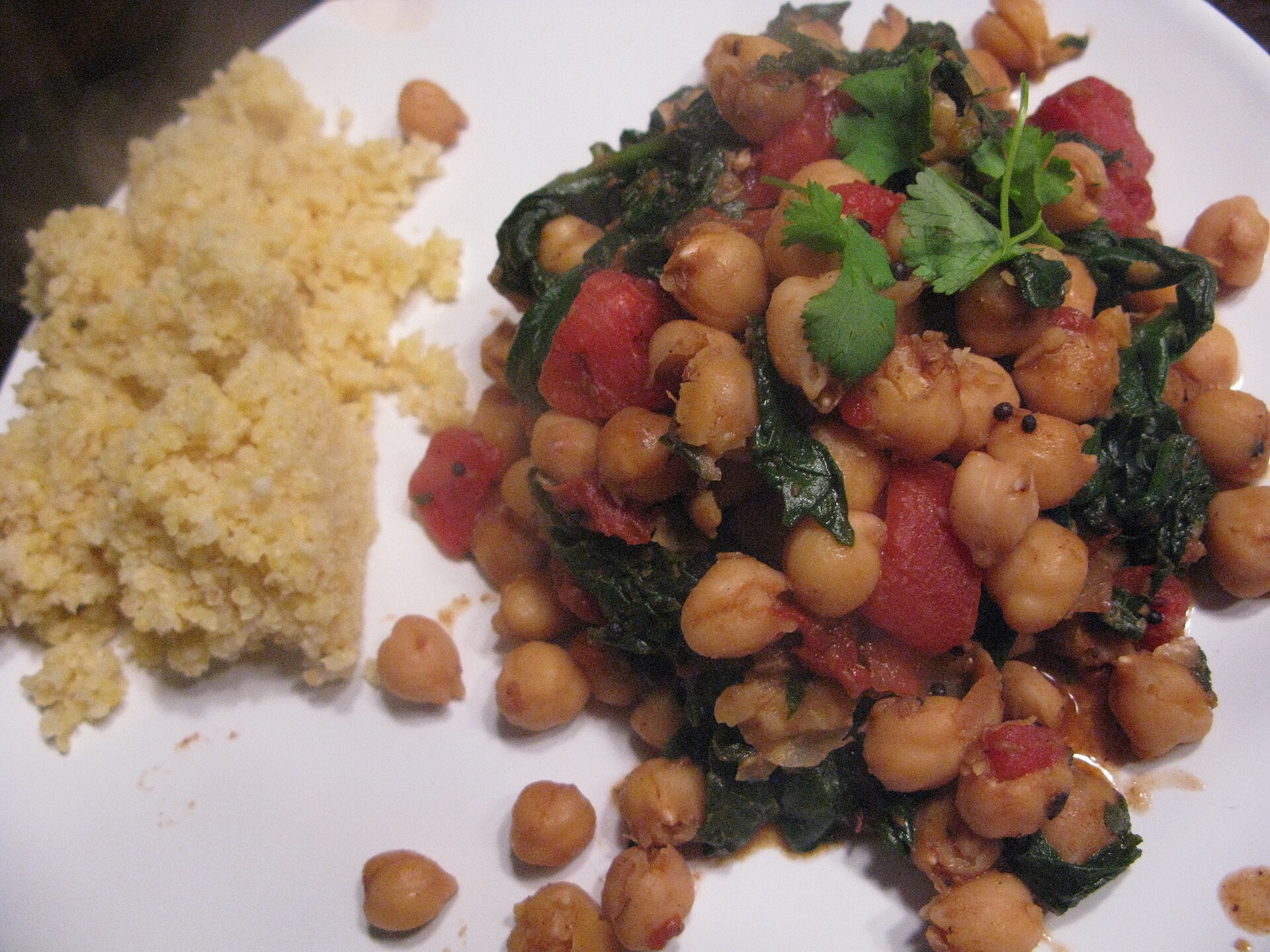
Every tapas bar in Seville has a version of this dish sitting in a metal tray behind the glass, and it is never the one anyone photographs. No shellfish, no ham, no showy plating, just chickpeas and spinach in a sauce the color of rust. It is also the dish regulars order twice, because the sauce is doing something a lot busier plates never bother with.
The thickening comes from a piece of bread fried in the same oil as the garlic, then pounded into a rough paste and stirred back into the pan. That step, closer to a picada than to anything most home cooks associate with tapas, is what turns a pot of beans and greens into something with real body, and it is the part most home versions skip.
Scaled up from a small plate shared among four to an actual dinner portion for the same four, the dish barely changes. What follows is the tapa-sized method first, then the adjustments that make it a full meal.
- Base: chickpeas, spinach, and a paste of fried bread, garlic, and spices
- Time: about 25 minutes, most of it hands-on
- Heat source for the paste: the same oil the garlic and bread just cooked in
- Spices: cumin and smoked paprika, plus a splash of sherry vinegar
- Scales to dinner: with bread on the side or a fried egg on top
- One caution: spinach reheated repeatedly loses more than flavor, so cool and portion it properly
What espinacas con garbanzos actually is
Espinacas con garbanzos is a Seville tapa built on two cheap, shelf-stable ingredients: dried or canned chickpeas and a large quantity of fresh spinach. It sits in the same family as other Andalusian dishes that turn legumes into something substantial with very little meat, and it is usually served with bread for scooping rather than with a fork doing all the work. It belongs on the same shelf as the five bean stews built without any pork from other traditions that lean on legumes the same way.
What separates it from a plain chickpea and spinach stew is the thickening method. Instead of building body with flour, cream, or a long reduction, the dish leans on a fried bread and garlic paste stirred in near the end, a technique with roots in the broader Spanish tradition of using bread to thicken sauces, seen in versions of romesco and in plenty of regional stews.
The dish has Moorish-influenced roots, tracing back to a period of Andalusian cooking where chickpeas, olive oil, and cumin were pantry staples long before tomatoes and peppers arrived from the Americas. That timeline is one reason the seasoning leans so heavily on cumin and toasted spice rather than on the tomato base so many other Spanish stews now carry.
The bread-and-garlic paste that does the thickening
Fry two thick slices of stale bread, torn into pieces, in olive oil until deep golden, along with two whole garlic cloves added toward the end so they do not burn. Lift both out of the oil, leaving the oil itself in the pan for the next step, and let the bread and garlic cool for a minute.
Pound them together in a mortar, or pulse briefly in a small food processor, with a teaspoon of cumin seeds and a pinch of salt, until it forms a rough, slightly oily paste. It should not be perfectly smooth. This is the ingredient doing the work that flour or cornstarch does in other sauces, and it adds a toasted depth that a starch thickener cannot.
Cumin, paprika, and the vinegar most recipes forget
Cumin belongs in the paste itself, toasted briefly with the bread and garlic rather than added raw later, which mellows its edge. Smoked paprika goes into the pan separately, off direct heat for a few seconds after the onions are cooked, since paprika scorches fast and turns bitter the moment it sits over high heat too long. The same caution applies to the smoked spices covered in our guide to adding smoke to a dish without a smoker.
A splash of sherry vinegar at the very end is the ingredient plenty of simplified recipes leave out, and it is what keeps the dish from tasting flat and purely earthy. A tablespoon stirred in off the heat brightens the cumin and paprika without turning the dish sour, and it is the same principle behind finishing many long-cooked Spanish stews with a hit of acid at the table rather than in the pot from the start.
Chickpeas: canned is fine, and here is why
Dried chickpeas cooked from scratch have a slightly firmer bite and a nuttier flavor, but this is not a dish where the difference matters as much as it does in a dish built entirely around the chickpea’s texture. Two cans, drained and rinsed, work well and cut the cooking time from an overnight soak and an hour of simmering down to fifteen minutes total.
If cooking from dry, a cup and a half of dried chickpeas soaked overnight and simmered until tender, about an hour to ninety minutes depending on their age, yields roughly what two cans provide. Either way, add the chickpeas to the pan early enough that they pick up the paprika and cumin rather than arriving at the very end as an afterthought.
Rinsing canned chickpeas is worth the extra thirty seconds. The liquid they are packed in is starchy and slightly metallic tasting, and leaving it in the pan dulls the paprika and cumin more than most people expect from something so small.
Spinach: fresh by the bag, wilted in the same pan
A pound of fresh spinach looks like far too much for one pan and cooks down to almost nothing within two minutes over medium-high heat. Add it in two batches if the pan is crowded, stirring the first batch down before adding the second, rather than trying to force the whole bag in at once.
Frozen spinach works as a substitute in a pinch, thawed and squeezed dry first, though the texture is softer and the dish loses some of the bright green color fresh spinach keeps even after wilting. Whichever is used, add it after the chickpeas and the paste are already in the pan, since spinach needs almost no cooking time and oversaturating it early leaves the whole dish watery.
Espinacas con garbanzos, step by step
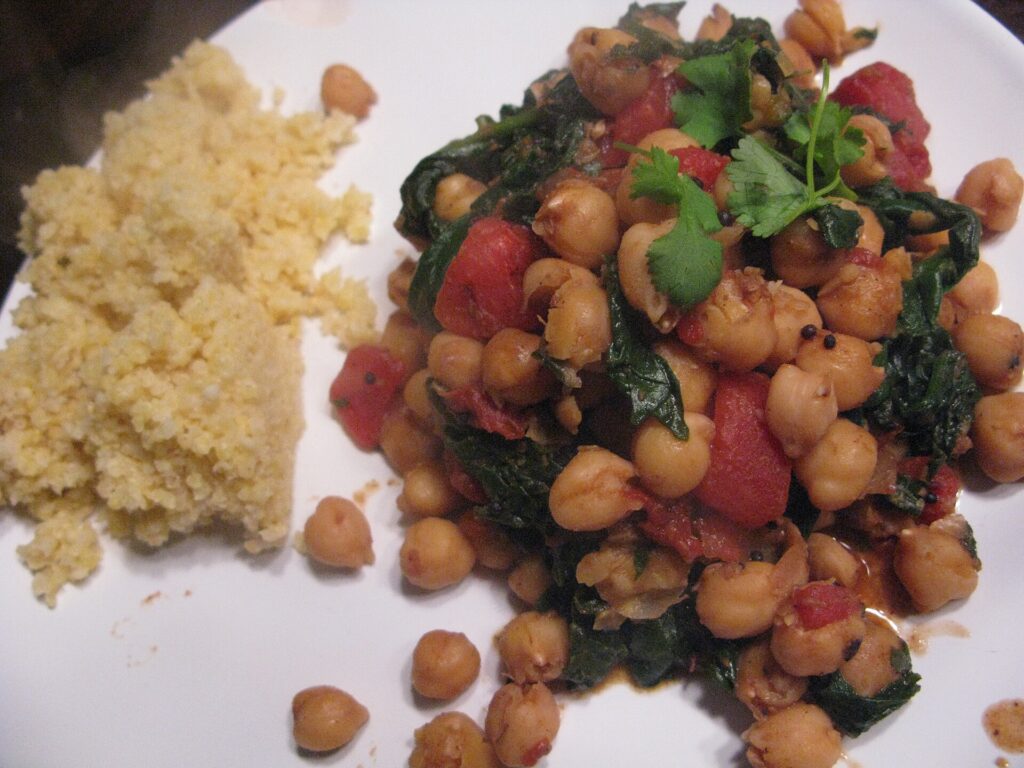
- Fry two slices of torn stale bread and two whole garlic cloves in three tablespoons of olive oil until golden. Remove both, leaving the oil in the pan.
- Pound the bread and garlic with a teaspoon of cumin seeds and a pinch of salt into a rough paste.
- In the same oil, cook a diced onion over medium heat for eight minutes until soft and just starting to color.
- Take the pan off the heat for a few seconds and stir in a tablespoon of smoked paprika, then return it to low heat.
- Add two cans of drained, rinsed chickpeas and a cup of vegetable stock. Simmer for ten minutes.
- Stir the bread paste into the pan until it dissolves into the liquid and the sauce visibly thickens.
- Add a pound of fresh spinach in two batches, wilting each down before adding more.
- Off the heat, stir in a tablespoon of sherry vinegar and taste for salt.
- Serve hot, with bread for scooping and a drizzle of good olive oil over the top.
Scaling the tapa into a dinner for four
As written above, this already serves four as a light dinner alongside bread, which is closer to how it is eaten as a main course than as one small plate among many. To make it more substantial without changing the character of the dish, a fried or poached egg on top per serving adds protein and a runny yolk that mixes into the sauce the way the bread does at the table.
A third can of chickpeas stretches the dish further for a hungrier table, and a side of rice under it turns the sauce into something closer to a full plate than a tapa reheated at a larger scale. None of these additions change the timing by more than a few minutes. It sits comfortably alongside the other quick dinners in our roundup of meals finished in under thirty minutes.
A thicker cut of crusty bread, toasted and rubbed with a raw garlic clove, does double duty as both the scooping bread and a second textural note next to the soft chickpeas and spinach. This is closer to how the dish tends to appear on a table at home, where it is eaten as a full plate rather than divided among several smaller ones.
What to serve alongside, and what not to
Crusty bread is close to mandatory, both for scooping and because the dish is built with the expectation that bread will finish whatever sauce is left in the pan. A simple green salad with a sharp vinaigrette is a good counterpoint to the smoky, cumin-forward sauce.
A glass of dry sherry, the same category of drink poured behind most tapas bar counters in the south of Spain, cuts through the olive oil and the fried bread better than a fuller-bodied wine would, and it keeps the meal in the register the dish was actually built for.
Avoid pairing it with another heavily spiced or smoky dish on the same table, since the paprika and cumin here are already doing a lot of work and a second dish competing for the same flavor space makes both taste muddled rather than complementary.
Where it goes wrong
A thin, watery sauce almost always means the bread paste was skipped or added too sparingly. Two full slices are the right amount for a pan serving four; a single slice pounded thin does not carry enough starch and oil to thicken properly.
Bitter paprika means it scorched in the pan, usually because it went in over direct high heat rather than off the heat for a moment first. A sauce that tastes flat despite the spices means the vinegar was left out or added too early and cooked off; add it at the very end, off the heat, every time.
Reheating spinach safely, and the two-hour rule
Spinach is naturally high in nitrates, and while eating it fresh or reheated once poses no meaningful risk for most healthy adults, food safety guidance generally recommends not repeatedly reheating spinach dishes multiple times, since nitrates can convert to nitrites with prolonged warm storage, and cooling it down properly the first time matters more than most people assume. Cool leftovers in a shallow container rather than leaving the whole pot to cool slowly on the stove, and refrigerate within two hours of cooking.
Reheat only the portion being eaten rather than warming and re-cooling the entire pot repeatedly, and eat refrigerated leftovers within about three days. This is a minor caution rather than a reason to avoid the dish, and it is the same discipline that applies to any cooked leafy green kept for more than a day.
Frequently Asked Questions
Can I make the bread paste ahead of time?
It keeps for a day in the refrigerator, covered, though the oil in it can separate slightly. Stir it back together before adding it to the pan, and it will dissolve into the sauce the same way a freshly made batch does.
Is there a gluten-free version?
A gluten-free bread fries and pounds the same way, and a slice of cooked potato mashed with the garlic and cumin works as an alternative thickener that skips bread entirely, though the toasted flavor the fried crust adds will be missing.
Why do some recipes add raisins?
A small handful of raisins is a common addition in some households and restaurants, giving a point of sweetness against the smoky paprika. It is a regional variation rather than a required ingredient, and the dish is complete without it.
What kind of bread works best for the paste?
A dense, plain white or country-style loaf works better than a soft sandwich bread, which can turn gummy rather than crisp when fried. A day or two of staleness helps it fry without soaking up excessive oil.
Can I use baby spinach instead of the mature bunched kind?
Yes, and it wilts even faster, in under a minute. Reduce the batches to avoid overcooking it into mush, since baby spinach has thinner leaves and less structure to hold up under heat.
Is this dish traditionally vegetarian?
It is, and it predates a great deal of the modern vegetarian cooking movement in Spain by centuries, having developed in a period when meat was expensive and dried legumes were a practical, storable staple for most households.
Make the paste once and the rest of the dish takes fifteen minutes from a cold pan. It is a strange amount of flavor to get from bread, garlic, and a can of chickpeas, and that is exactly the point of the tapa.