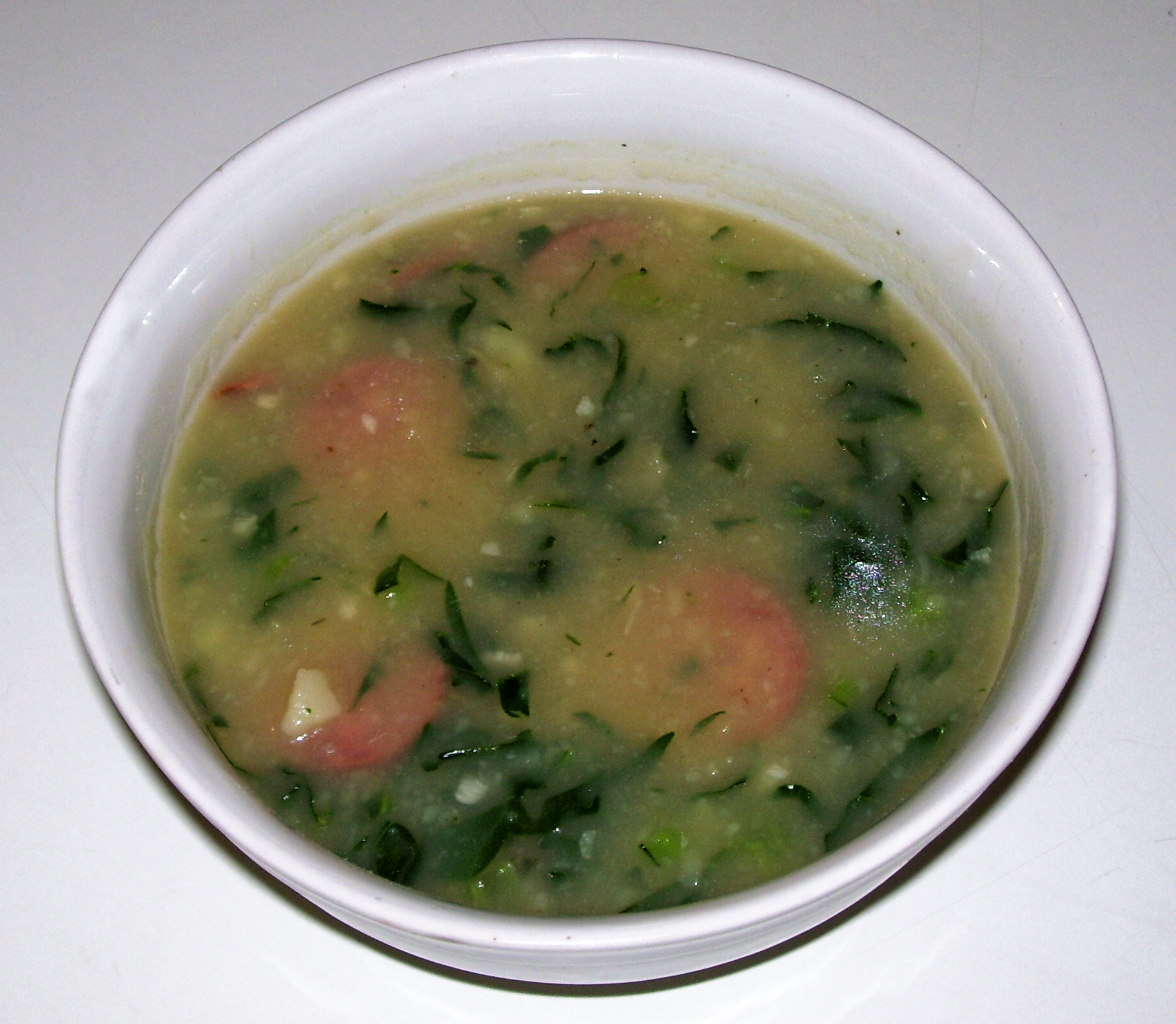
Order goulash in Budapest and a bowl of soup arrives. There is broth, there are cubes of beef, there is potato, and there may be small irregular noodles pinched off by hand floating in it. It is eaten with a spoon and nothing is served under it.
Order goulash in most of the English-speaking world and a thick stew arrives, dark red, meat and sauce and not much else, over egg noodles. That dish is real and it is good and it has a Hungarian name of its own. The name is not goulash.
The confusion is worth untangling, because the two pots are built differently from the first ten minutes and the technique that separates them is one step that almost every English-language recipe leaves out.
- Gulyas: a soup. More liquid, less onion, potato and carrot, often pinched noodles
- Porkolt: a stew. Almost no added liquid, onion in near equal weight to the meat
- Paprikas: a porkolt finished with sour cream, usually chicken or veal
- The thickener: onion, in both. No flour, no roux, no cornstarch
- The critical step: the pot comes off the heat before the paprika goes in
- Cook time: two to two and a half hours for either, mostly unattended
The mistake, stated plainly
Take any ten English-language recipes titled goulash and most of them describe a thick stew with little liquid, served over noodles. That is porkolt, written in Hungarian with an umlaut and pronounced closer to purkurlt than to anything an English speaker would guess. The dish is correct; the label is not.
A third of the remainder describe something else again: ground beef, macaroni, tomato sauce and paprika, baked or simmered in one pot. That is an American dish with its own history and no meaningful connection to either Hungarian one beyond the name and a jar of paprika.
None of this matters at a family table and all of it matters when following a recipe, because the two pots want different amounts of liquid, different amounts of onion, and different accompaniments. Cook a porkolt with the liquid quantity from a soup recipe and the result is thin and disappointing, with no obvious explanation for why.
Goulash vs porkolt, side by side
| Gulyas (the soup) | Porkolt (the stew) | |
|---|---|---|
| Liquid | Covers the meat by two inches | Barely to the top of the meat, often none added |
| Onion to meat | About one to four by weight | Close to one to one |
| Meat cut | Shin or chuck, small cubes | Shin, chuck or shoulder, larger cubes |
| Vegetables | Potato, carrot, parsnip, green pepper | Green pepper and tomato only |
| Starch | Potato in the pot, csipetke noodles | Served over noodles, dumplings or potato |
| Eaten with | A spoon, as a course on its own | A fork, over something |
| Thickener | Potato starch and reduction | Collapsed onion |
Everything else is shared: the same paprika, the same caraway, the same beef, the same slow simmer, the same absence of flour. The two dishes are close relatives and the differences are quantitative, which is exactly why they are so easy to blur.
Gulyas is named after the man, not the pot
The word means herdsman, specifically one who looked after cattle on the Hungarian plain, and the full name of the soup translates as herdsman’s soup. The standard account has it cooked outdoors in a kettle over a fire by men working with the animals they were eating, which is consistent with the ingredients and with the equipment.
How much of that account is documented and how much is national self-portrait is a fair question, and the honest answer is that the earliest written recipes are far younger than the practice they claim to describe. What can be said without argument is that the dish has been Hungary’s most exported culinary idea for well over a century, and that the export lost its liquid somewhere along the way.
Cooked properly it is a soup with real body: enough beef that each spoonful has some, potato broken down at the edges, and a broth stained deep orange. Caraway is essential and is the flavour most people cannot name when they taste it. It is a full meal with bread and nothing else.
Onion is the thickener, and the ratio is not a typo
A porkolt for four takes two pounds of beef and close to two pounds of onion. Written down that looks wrong. It is not. The onion cooks down over the first twenty-five minutes into a soft mass, then continues to break apart over two hours until it has disappeared entirely into a thick sauce that clings to the meat.
That sauce is the reason no flour is needed and the reason a porkolt made with one onion is thin and watery no matter how long it simmers. Cooks who add cornstarch at the end are compensating for onion they did not put in at the beginning, and the texture is not the same: starch gives a slick body, collapsed onion gives a rough, clinging one.
Slice the onion rather than dicing it, and cook it in lard or oil over medium heat until it is genuinely soft and pale gold, which takes longer than it seems. Rushing this stage is the second most common error in the dish, and there is no later step that fixes it.
Three jars of paprika, and which one to buy
Hungarian paprika is graded, and the grades are printed on the tin. Edesnemes, usually translated as sweet noble, is the standard export grade and the correct default for both dishes: bright red, sweet, mildly aromatic, no heat. Csemege is finer and milder still. Csipos or eros is the hot grade, used in small amounts alongside the sweet one rather than instead of it.
Smoked paprika is a Spanish product and a Spanish practice. It is excellent and it belongs in other dishes. In a Hungarian pot it announces itself immediately and pushes the whole thing toward a different cuisine, so it is a substitution to make deliberately or not at all.
Quantity is generous. Two to three tablespoons of sweet paprika for a pot serving four, which again looks like a misprint and is not. Paprika here is a bulk ingredient rather than a seasoning, and it supplies colour, sweetness and a good deal of the body. Buy it in a tin, keep it dark and cool, and replace it yearly, because it fades faster than almost anything else on the spice shelf.
The pot comes off the heat before the paprika goes in
This is the step, and it is the one that separates a pot that tastes sweet and round from one that tastes bitter and slightly burnt. Paprika is ground dried fruit and it carries sugar. Sugar scorches quickly in hot fat, well below the temperature a pan reaches over a live flame, and scorched paprika turns acrid in seconds and cannot be corrected.
The sequence: cook the onions, add the garlic, take the pot completely off the burner and let it sit for thirty seconds. Then add the paprika and stir it into the fat for about twenty seconds, until it is evenly distributed and smells sweet. Then add the liquid or the meat, which drops the temperature and ends the danger.
Twenty seconds in warm fat is enough to bloom it. Any longer and any hotter is risk without benefit. If a pot ever came out with a harsh bitter edge that no amount of salt or acid would fix, this was almost certainly why, and it is the single most useful thing to take from this article.
The meat, the cut, and how much liquid
Beef shin is the traditional and the best choice for both dishes, because the connective tissue melts into gelatin and gives the sauce a body that lean meat cannot. Chuck is the practical supermarket alternative. Round and other lean cuts produce dry, stringy meat and a thin sauce no matter how long they cook.
Cut it in one-inch cubes for the soup and inch-and-a-half for the stew. Do not brown the meat separately. In both dishes the beef goes into the paprika-stained onions and is stirred until it changes colour, then covered and left to release its own liquid, which becomes the base. Browning is a French habit and it is not how either of these is built.
For the porkolt, add no water at all at the start. The onion and the meat together release enough, and the pot simmers covered for two hours with only an occasional splash if it looks like catching. For the soup, add water or light stock to cover by two inches after the meat has released its juices, then the potato and carrot in the last forty minutes.
The two pots, written out
Both start identically for the first fifteen minutes, which is another reason they get confused. The fork in the road is at step five.
- Slice the onions. For a porkolt for four, two pounds of them; for the soup, half a pound.
- Cook them in three tablespoons of lard or oil over medium heat until soft and pale gold, 20 to 25 minutes. Do not rush this.
- Add two chopped garlic cloves and a teaspoon of caraway seed, crushed. One minute.
- Take the pot off the heat. Wait thirty seconds. Stir in three tablespoons of sweet paprika and a teaspoon of hot paprika for twenty seconds.
- Add two pounds of cubed beef shin and a heavy pinch of salt. Return to low heat and stir until the meat has changed colour.
- For a porkolt: cover and simmer two hours with no added liquid, checking every half hour. For the soup: add water to cover by two inches and simmer 90 minutes.
- For the soup only: add diced potato, carrot and parsnip and cook 30 minutes more, then drop in the csipetke for the last five.
- For the porkolt: uncover for the last twenty minutes if the sauce is looser than you want, and add a chopped green pepper and a small tomato.
- Check the salt at the end, not before. Both pots reduce and both taste undersalted at the halfway point.
- Rest the porkolt off the heat for ten minutes before serving over noodles or potato. Serve the soup straight from the pot with bread.
Paprikas, sour cream, and where it belongs
A paprikas is a porkolt finished with sour cream, and the sour cream is the only difference. It is made almost always with chicken or veal and almost never with beef, which is a genuine convention rather than a rule anybody enforces, and it is served with nokedli, the small soft dumplings scraped into boiling water.
Add the cream off the heat and temper it first: stir several spoonfuls of the hot sauce into the cream in a separate bowl, then return the mixture to the pot. Sour cream added cold to a boiling pot splits into grains, and no amount of stirring puts it back together.
Full-fat sour cream splits less readily than low-fat, and a spoonful of flour whisked into the cream is the traditional insurance. This is the only place flour has any business in the whole family of dishes, and it is going into the dairy rather than into the stew.
Five errors, one cause each
Bitterness. Paprika added over direct heat. Off the burner, thirty seconds, then in.
Thin sauce. Not enough onion. Near equal weight to the meat for a porkolt, and no substitute works.
Dry, stringy meat. A lean cut. Shin or chuck, and two full hours at a bare simmer rather than a boil.
Pale colour. Old paprika. It loses colour and aroma within a year and a faded tin cannot be compensated for with more of it.
Curdled cream. Added cold to a hot pot. Temper it, and take the pot off the heat first. The same failure turns up in other long-simmered stews that finish with dairy.
Keeping it, and the deep pot problem
Both dishes are better the next day, which is a real effect rather than a courtesy: the collapsed onion and the gelatin continue to distribute overnight and the paprika loses its raw edge. Cook it on Saturday for Sunday if there is any planning available.
A deep covered pot of stew holds heat for hours and cools far too slowly if it is put away as it is. Divide it into shallow containers, get it into the refrigerator within two hours of coming off the stove, and do not leave the covered pot standing on an unlit burner overnight. It keeps four days that way and freezes for three months.
Reheat to a full simmer rather than to warm, and add the sour cream after reheating rather than before if the dish is a paprikas, since dairy that has already been through one heating splits much more readily on the second. A splash of water usually helps, since the sauce thickens further in the refrigerator.
Frequently Asked Questions
So what should I call the thick one?
Porkolt, or beef porkolt if the meat needs specifying. If the audience will not recognise it, describing it as a Hungarian beef stew is accurate and avoids the collision with the soup. Reserving goulash for the soup is the useful convention even if half the menus in the country do not follow it.
Can I make either one with pork?
Porkolt is regularly made with pork, and with lamb, veal or chicken, and each is named after the meat in it. The soup is a beef dish by convention and the version with other meat is uncommon. Pork shoulder behaves like beef chuck and needs roughly the same time.
What are csipetke?
Small noodles made from flour, egg and salt, pinched off a stiff dough with the fingers into irregular pieces and boiled directly in the soup for a few minutes at the end. They are the traditional starch in gulyas and they take about ten minutes to make. Small pasta stands in acceptably.
Is tomato allowed in it?
A small amount, yes, along with a Hungarian wax pepper. Both are ordinary in modern versions and neither should be prominent. A can of tomatoes turns the pot into something else, and that is the point at which the dish has drifted into a general European braise rather than a specific regional one.
Can I use a pressure cooker?
Yes, and it works well for the meat. Cook the onions and bloom the paprika in the open pot exactly as described, then pressure cook thirty-five minutes and finish uncovered to reduce. The onion will not have broken down as completely, so expect to simmer another fifteen minutes at the end.
Cook a porkolt with two pounds of onion and the paprika added off the heat, and the difference against every previous attempt will be obvious before the meat has finished. Whether anybody at the table calls it goulash is a smaller matter.