The cone of meat turning in the window of a shop does two things at once. It bastes itself continuously, because the fat from the top runs down over everything below it. And it presents a dry, hot outer surface that gets shaved off in strips the moment it is ready, so every serving is edge.
A skillet can copy the second one exactly and cannot copy the first at all. That is the whole design problem, and it is solvable: slice the meat thin before cooking rather than after, use a cut with enough fat to baste itself in the pan, and get the surface hot enough to crust in ninety seconds.
No spit, no overnight marinade, one pan and a blender. Thirty minutes from the refrigerator to the table, and the garlic sauce is four of them.
- Serves: four, in bread or over rice
- Clock: 30 minutes, including a 15 minute marinade that happens while everything else gets ready
- Cut: boneless skinless thighs, sliced a quarter inch thick before marinating
- Pan: cast iron or heavy steel, screaming hot, two batches, no crowding
- Sauce: garlic, lemon, salt, neutral oil, blended into an emulsion
- Doneness: 165 degrees in the thickest piece, checked with a probe
What the spit does, and which half a pan can copy
Vertical rotisserie cooking is old and widespread, and the Levantine version shares an ancestry with several related spit dishes across the eastern Mediterranean and Anatolia. Which one came first is argued in more than one country and settled in none of them, and the sensible position is that the technique moved around the region rather than being invented once.
Mechanically it does three things. It cooks slowly from the outside in, over hours. It bastes, because rendered fat and marinade run down the cone. And it gets shaved, so what reaches the plate is the crusted outer eighth of an inch and nothing else.
The crust is the part worth chasing at home and the only part reachable in half an hour. Slicing the meat thin before it cooks means every piece is mostly surface, which is the same geometry the shave produces, reached from the other direction. The slow render is gone. Choosing thigh over breast buys back most of what it was contributing.
The spice mix, by ratio
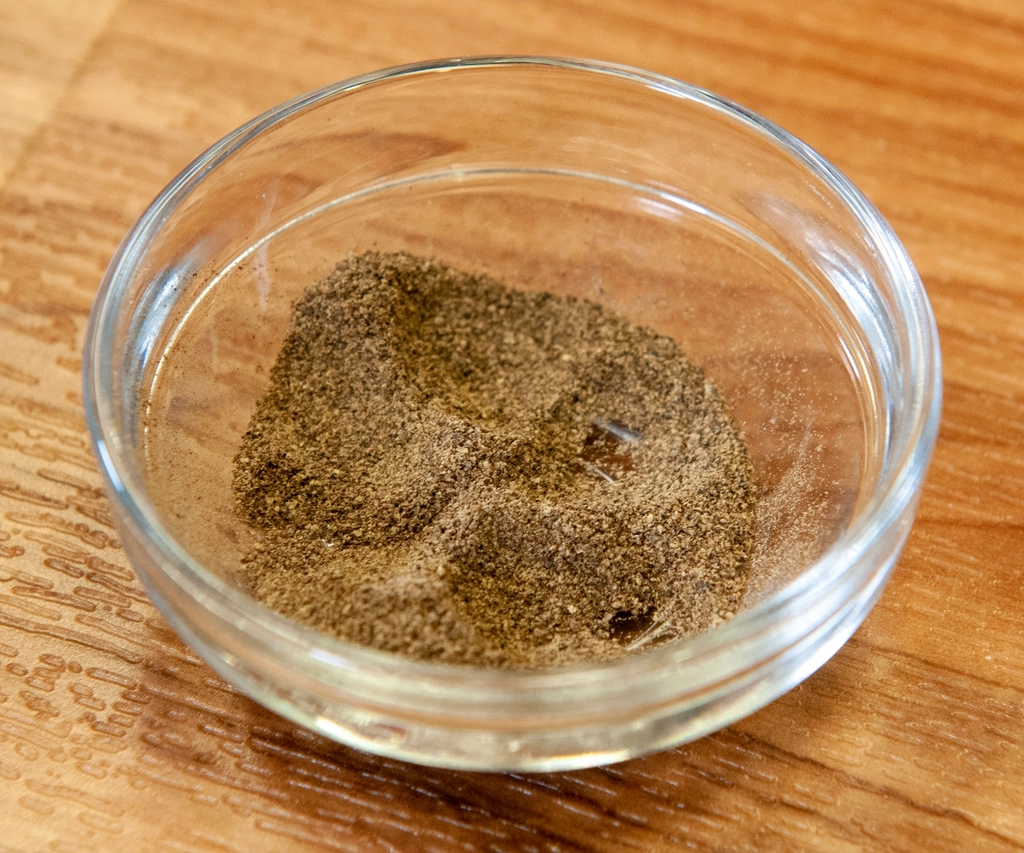
Every shop has its own and they differ, but the backbone is consistent: cumin and coriander in roughly equal parts, paprika for colour, turmeric for colour and a little earth, and a small amount of warm baking spice that most people cannot identify in the finished wrap.
For two pounds of chicken: two teaspoons each of ground cumin and coriander, two teaspoons of sweet paprika, one teaspoon of turmeric, one teaspoon of black pepper, half a teaspoon of ground cinnamon, half a teaspoon of allspice, a quarter teaspoon of cayenne, and two teaspoons of salt. Mix it dry before anything wet touches it.
The cinnamon and allspice are the two that get left out of hurried versions and they are the two that make it taste like a shop rather than like generic spiced chicken. Half a teaspoon is the correct amount and a full teaspoon is too much; past that the wrap starts to taste sweet. Grinding the cumin and coriander from seed the same week makes a larger difference than any other single change.
Fifteen minutes on thin slices beats eight hours on a breast
Marinades penetrate slowly and not far. What actually happens in most of an overnight marinade is that the surface takes on flavour and the interior takes on almost none, and the salt has time to work its way in. Slice the meat thin and the surface-to-volume ratio changes so much that the same job is done in a quarter of an hour.
The mix is the dry spice, three tablespoons of olive oil, the juice of a lemon, four grated garlic cloves, and two tablespoons of plain yogurt if there is some in the house. Toss it with the sliced thigh and leave it on the counter for fifteen minutes while the sauce and the salad get made.
Longer is not better here, and past a few hours the lemon starts to firm up the surface of the meat and turn it slightly chalky, the same way citrus firms fish. If the marinating has to happen in the morning, leave the lemon out and add it to the pan at the end instead. The general case for shorter marinades on thin cuts is covered in our notes on what a marinade can and cannot do.
Slice the thigh before, not after
Boneless skinless thighs, quarter inch thick, cut against the grain. Thighs have enough intramuscular fat to survive high heat and stay tender, and enough connective tissue that they forgive a cook who leaves them thirty seconds too long. Breast does neither and is the wrong cut for this.
Firm the meat first. Fifteen minutes in the freezer makes thighs much easier to slice thin, since raw thigh is floppy and slides under a knife. A sharp knife and a firm cold piece of meat produce even slices; a dull knife and a warm one produce ragged chunks that cook at different speeds.
Even thickness matters more than perfect appearance. A pan with quarter-inch and half-inch pieces in it will deliver some slices dry and some underdone at the same moment, and there is no way to correct for it once they are in. Slices that vary by more than about an eighth of an inch are worth trimming.
Skillet chicken shawarma, step by step
- Firm two pounds of boneless thighs in the freezer 15 minutes, then slice a quarter inch thick against the grain.
- Mix the dry spices. Toss the chicken with the spices, three tablespoons of olive oil, the juice of one lemon, four grated garlic cloves and two tablespoons of yogurt. Leave 15 minutes.
- Make the garlic sauce while it sits, and slice an onion, a tomato and some cucumber for the wrap.
- Heat a cast iron or heavy steel pan over high heat until a drop of water skitters and vanishes. Add a tablespoon of neutral oil.
- Lay in half the chicken in a single layer, with space between the pieces. It should sizzle hard immediately.
- Do not touch it for 90 seconds. The crust forms in that window and stirring destroys it.
- Turn each piece, cook 60 to 90 seconds more, and move it to a plate. Wipe the pan if it has gone dark, and repeat with the second batch.
- Return all the chicken to the pan for 30 seconds with a squeeze of lemon, tossing to pick up the fond.
- Check the thickest piece with a probe. It needs to reach 165 degrees.
- Warm the bread in the same pan for 20 seconds a side and build the wraps.
The pan, the heat, and the ninety seconds nobody should touch
The pan needs to be hot enough that the chicken sizzles the instant it lands and stays loud. If the sound drops away, the pan lost its heat when the meat went in, and the chicken is now poaching in its own liquid. That is the single most common failure and it produces grey, wet meat with no crust anywhere.
Two things cause it: too much chicken at once, and a pan that was not hot enough to start with. Cast iron holds heat better than thin stainless and is the right tool. Two batches for two pounds of meat is not optional, and the second batch benefits from the pan being wiped if the spices have started to blacken.
Once the meat is down, leave it. Ninety seconds of contact with dry hot metal is what builds the browned surface, and a spatula moving pieces around resets the clock every time. The urge to stir is strong and it is the enemy of the whole method. The same discipline applies to anything cooked over high heat.
The garlic sauce, and the two ways it breaks
Toum is a Lebanese emulsion of garlic, salt, lemon juice and neutral oil, with no egg in it at all. The garlic itself supplies the emulsifiers. Made properly it is opaque, thick enough to stand in a spoon, and startlingly strong. Made improperly it is a bowl of garlicky oil.
The method: half a cup of peeled garlic cloves with a teaspoon of salt in a food processor until finely minced, scraping down twice. Then two cups of neutral oil added in a very thin stream, alternating with three tablespoons of lemon juice and a tablespoon of ice water, over about four minutes. It goes from watery to thick and white in the last thirty seconds.
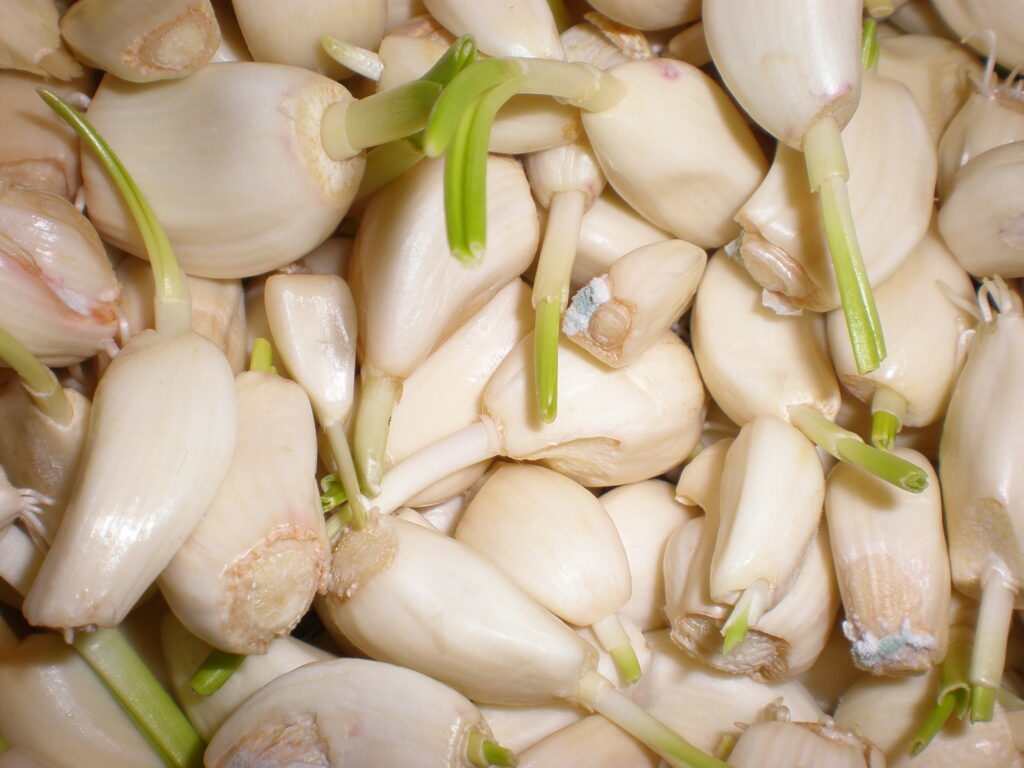
It breaks for two reasons. Oil poured too fast, which is the usual one, and too little garlic for the volume of oil, which leaves nothing to hold the emulsion together. Either way the fix is the same: start again with two fresh cloves and a pinch of salt in a clean bowl, and drizzle the broken mixture into it slowly as though it were the oil. Green sprouts inside old cloves are bitter and should be pulled out first.
Where the thirty minutes go
| Minute | What is happening |
|---|---|
| 0 to 5 | Thighs into the freezer, spices measured and mixed |
| 5 to 10 | Chicken sliced and tossed with the marinade |
| 10 to 16 | Garlic sauce in the processor, oil going in slowly |
| 16 to 22 | Onion, tomato and cucumber sliced. Pan heating |
| 22 to 27 | Two batches of chicken, 3 minutes each |
| 27 to 30 | Bread warmed, wraps built |
The only step that has to happen in order is the marinade going on before the pan gets hot. Everything else can be shuffled, and the sauce can be made a day ahead, which cuts the working time to about twenty minutes.
Bread, pickles, and what actually goes in the wrap
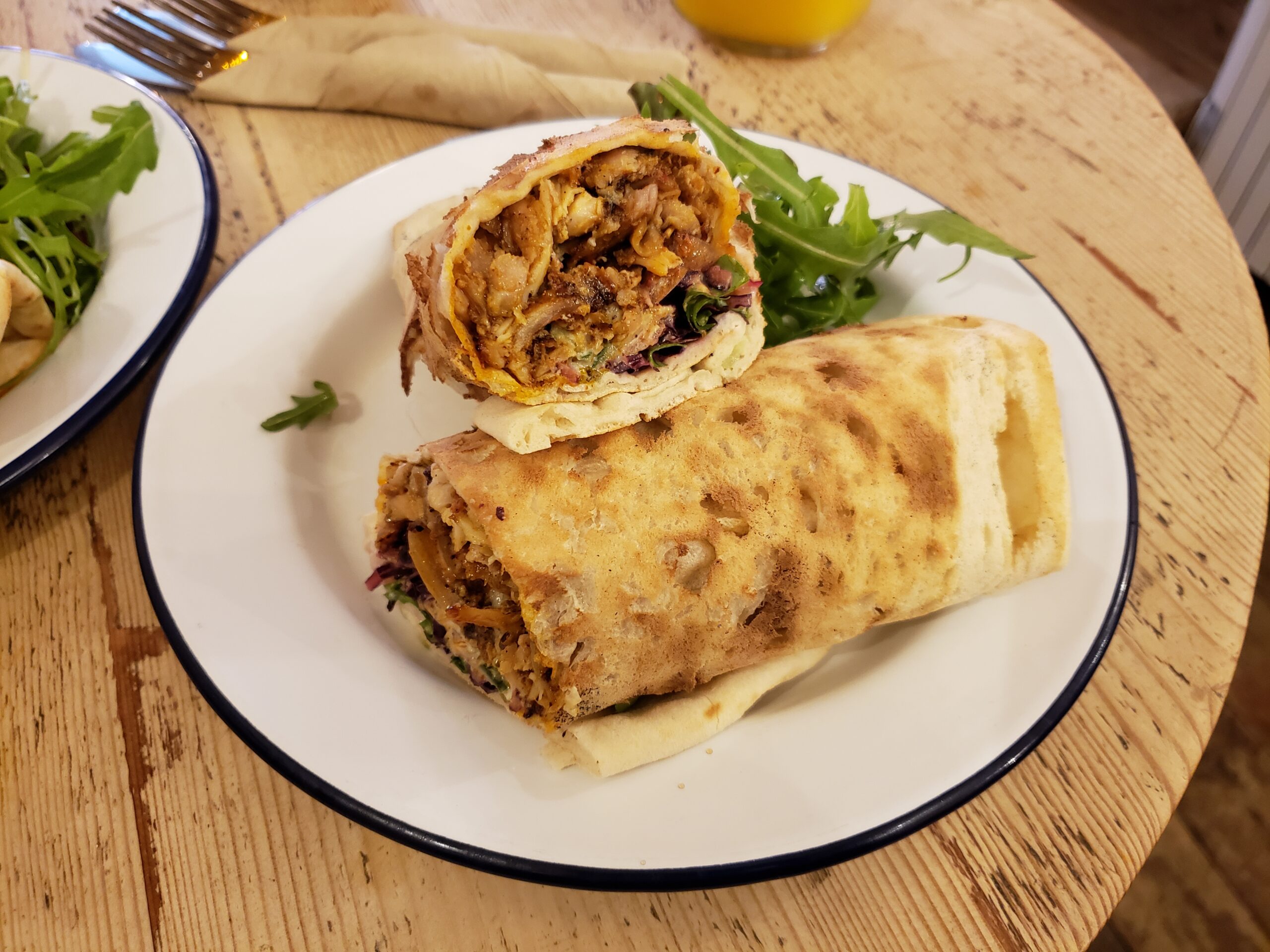
Thin flatbread rather than thick pocket pita. The wrap wants to be tight, and a puffy pocket bread makes a bundle that falls apart. Warm it briefly in the pan the chicken came out of so it picks up the fat, then build on it while it is still flexible.
Pickles are not a garnish. A wrap of spiced chicken and garlic sauce is rich and salty and it needs something sharp cutting through it, which is why pickled turnips stained pink with beet, or ordinary dill pickles sliced lengthways, appear in almost every version. Thinly sliced raw onion tossed with sumac does the same job.
Beyond that: tomato, cucumber, a handful of parsley, and tahini sauce alongside the garlic sauce if there are two people at the table who disagree about garlic. French fries inside the wrap is standard in a great many shops and is not a joke. Over rice with the same accompaniments is the other honest way to serve it.
Doneness, and three habits that keep it safe
Chicken is done at 165 degrees measured in the thickest piece, and with slices this thin a probe reaches that inside three minutes of total pan time. Thigh meat holds together well above that temperature, so there is no reason to gamble on colour. An instant-read thermometer is the only reliable way to know, and it takes four seconds.
The marinade bowl goes in the sink the moment the chicken leaves it, and nothing else touches it. Do not spoon leftover marinade over the cooked meat; if a sauce is wanted, set aside a clean portion before the chicken goes in. The board and the knife used for raw chicken get washed before they go anywhere near the cucumber, and public food safety guidance is worth reading once for anyone who cooks a lot of poultry.
The garlic sauce raises a separate point. Raw garlic held in oil is a known botulism risk at room temperature, and although toum is acidified with a good deal of lemon juice, it belongs in the refrigerator from the moment it is made and it should be used within about a week. Do not leave it on the counter overnight, and do not make a large batch to keep unrefrigerated.
Leftovers, and the second dinner
Cooked shawarma keeps three days and reheats badly in a microwave, which turns it rubbery. A dry pan over medium heat for ninety seconds is better, and it re-crisps rather than steaming. Adding a tablespoon of water and covering it for the last twenty seconds keeps it from drying out.
The best use of leftovers is not another wrap. Chop the cold chicken, toss it with chickpeas, chopped tomato, parsley and a lot of lemon, and spoon garlic sauce over the top. That is a bowl that eats better cold than the original does, and it takes five minutes on a night when nothing is planned, which is roughly the point of cooking on a short clock in the first place.
The sauce keeps a week refrigerated and the spice mix keeps months in a jar. Making a triple batch of the dry mix takes an extra two minutes and removes most of the friction from doing this again.
Frequently Asked Questions
Can I use chicken breast?
It can be done and it is worse. Breast has no intramuscular fat to render, so it goes dry in the window where the crust forms. If breast is what is in the house, slice it thinner, cut the pan time to about sixty seconds a side, and expect to rely more heavily on the sauce.
Do I need a food processor for the sauce?
A processor or a tall cup with an immersion blender both work. A mortar and pestle works too and takes about fifteen minutes of steady effort. A regular countertop blender is the worst of the options, because the blades sit too low to catch a small quantity.
What can I use instead of a cast iron pan?
Heavy carbon steel is just as good. A thin nonstick pan is the poor choice, because it cannot be heated hard enough and it will not hold its temperature when cold meat lands on it. A grill pan works and gives stripes rather than an even crust.
Is this the same as a doner or a gyro?
They are siblings rather than the same thing. All three are cooked on a vertical spit and each belongs to a different cuisine with its own spicing, bread and accompaniments. The pan method here works for any of them; what changes is the spice mix and what goes in the wrap.
Can I make it in the oven instead?
Spread the marinated slices on a sheet pan under a broiler set high, six inches from the element, for about four minutes a side. It is less crusty than the pan version and it handles a double batch without working in shifts, which makes it the better choice for six people.
Make the sauce first, once, and the rest of this becomes a weeknight habit rather than a project. The pan does not care that there is no spit in the kitchen, as long as it is hot and nobody stirs.