Nobody arrives at a Thanksgiving table asking to eat less stuffing. The more useful question is not what to remove from the plate but what to add, since a plate that is already half turkey and starch has very little room left for anything else by the time it is full.
Building a healthy thanksgiving plate is a proportion problem more than an ingredient problem. Every dish already on the table can stay exactly as written. What changes is how much space vegetables are given before the rest of the plate gets filled in, which is a decision made with the serving spoon rather than with the recipe card.
None of this requires a diet dish disguised as a classic, and nobody at the table needs to know a plan was involved at all. It requires enough vegetable dishes on the table, made well enough that people actually want a full serving, and a habit of building the plate in a specific order.
- The target: roughly half the plate in vegetables, a quarter in protein, a quarter in starch
- Not a substitution plan: every classic dish stays, no diet versions required
- The real lever: serving order and quantity, decided before the plate gets built
- Minimum vegetable dishes: at least three distinct options, not one token green bean casserole
- What to add, not remove: a raw or lightly dressed vegetable course alongside the cooked ones
- What this is not: a lower-calorie Thanksgiving, just a more balanced one
Why a healthy thanksgiving plate is a proportion problem, not a recipe problem
A standard Thanksgiving table already includes vegetables, in the green bean casserole, in the sweet potatoes, sometimes in a small salad. The problem is rarely their absence. It is that they are usually outnumbered, both in the number of dishes on the table and in how much space they are given once the plate is actually built, by turkey, stuffing, gravy, and rolls.
Fixing that does not require removing any of those dishes. It requires making sure vegetables have enough presence on the table, in variety and in quantity, that reaching for a full serving of them feels as natural as reaching for a second helping of stuffing currently does.
What actually fills the vegetable half
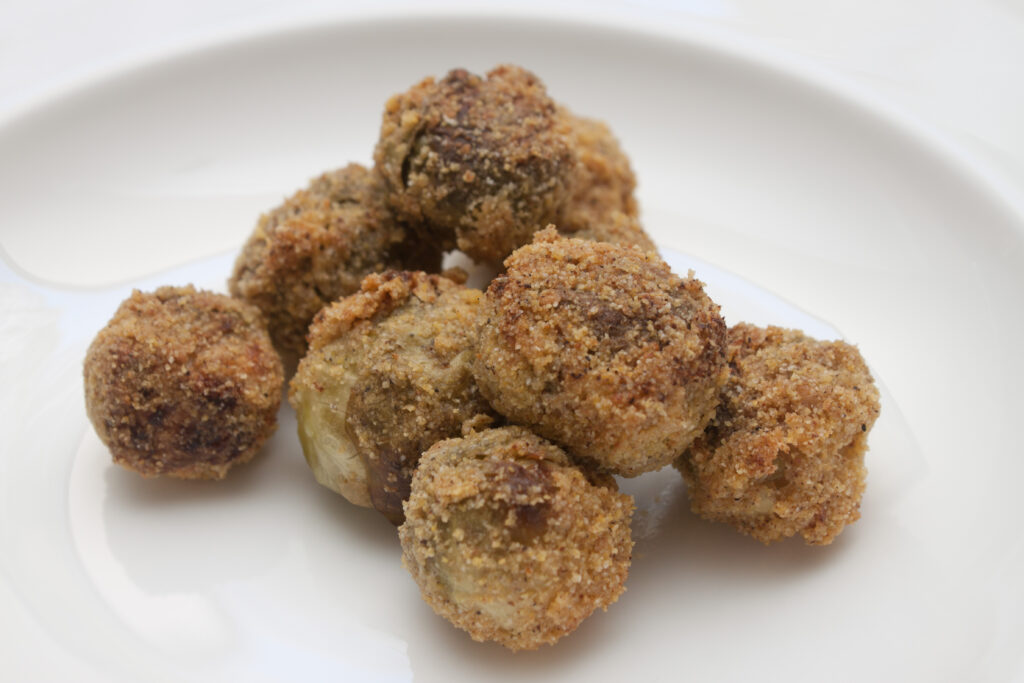
Three distinct vegetable dishes, not one, is the practical minimum for this to work, because a single green bean casserole competing against five other dishes will always lose half the table’s attention regardless of how good it is. Roasted root vegetables, a green like brussels sprouts or green beans, and something raw or lightly dressed together cover more ground, more color, and more texture than any single dish can.
The raw or lightly dressed piece matters more than it seems. Every other dish on a Thanksgiving table is cooked, often heavily, and a crisp, acidic component, a shaved fennel salad or a simple slaw, gives the palate something the rest of the meal does not, which also happens to make people want more of it rather than less.
Serving order, and why it changes what ends up on the plate
Most people build a Thanksgiving plate starting with turkey, then stuffing, then whatever gravy touches, and vegetables get whatever space is left once the rest has already claimed the plate. Reversing that order, starting with the vegetable dishes and moving toward turkey and starch last, changes the proportions without anyone announcing a rule.
This works particularly well at a buffet-style meal where dishes are laid out for guests to serve themselves, since the order dishes are arranged on the table directly influences the order most people load their plate. Putting the vegetable dishes first in the line, closest to where guests pick up a plate, is a small physical nudge that does real work.
Roasting, not steaming: the difference in whether people actually eat it
A plain steamed vegetable is the fastest way to make sure a dish gets skipped at a table already full of rich, well-seasoned food. Roasting at high heat, 425 degrees or higher, until vegetables are well browned at the edges, gives them a flavor that competes honestly with the rest of the table instead of tasting like an obligation.
Carrots, parsnips, brussels sprouts, and cauliflower all take well to a hard roast with nothing more than oil, salt, and a hot oven, and the color and char they develop make them look as considered as anything else on the table rather than like a health-conscious afterthought.
Salt earlier than seems necessary, and use more oil than a lower-fat instinct suggests. A vegetable roasted with too little oil steams in its own moisture instead of browning, and the resulting pale, soft texture is a bigger reason vegetables get passed over at a holiday table than any inherent dislike of the vegetable itself. A well-salted, well-oiled tray of roasted carrots reads as a deliberate dish rather than a health concession, and that perception alone changes how much of it gets eaten.
Sauces earn a vegetable dish its place on the table
A vegetable dish finished with nothing but salt is competing against a gravy-covered plate of stuffing, and it is a competition the plain vegetable usually loses. A simple sauce, a brown butter and sage, a sharp gremolata, or a light tahini dressing, gives a roasted vegetable the same kind of finishing touch that gravy gives the turkey, and it is often the single change that turns a skipped side into one people come back for seconds of.
None of these sauces need to be elaborate. A few tablespoons of good olive oil, lemon, and fresh herbs stirred together in the last five minutes before serving does more for a tray of roasted vegetables than an extra twenty minutes in the oven would.
The starch half: not smaller, just shared
The point is not to shrink the stuffing or the mashed potatoes to make room, since a plate that feels like it is missing its favorite dish is not a plate anyone enjoys. It is to make sure the vegetable dishes are compelling enough that a full plate naturally balances out across all three categories rather than the starch and protein crowding out everything else by default.
In practice this often means a slightly smaller portion of each starch, not because it was rationed but because there is genuinely less room left once a real serving of vegetables and protein have gone on first. That is a very different experience from a plate deliberately built around restriction.
Timing the vegetable dishes around a crowded oven
One of the quieter reasons vegetable sides lose ground on Thanksgiving is scheduling rather than taste: with the oven fully committed to the turkey most of the day, a vegetable dish that also needs forty minutes at 425 degrees often gets bumped to a stovetop reheat or skipped entirely when the schedule runs long. Planning at least one vegetable dish that finishes on the stovetop, alongside one or two that roast, avoids that entire problem.
A braised cabbage or a charred skillet of green beans needs no oven space at all and can be finished in the last fifteen minutes before serving, which makes it one of the more reliable dishes on the table precisely because it never has to compete with the turkey for a rack.
Protein beyond the turkey itself
Turkey breast is already a lean protein, and the quarter of the plate reserved for it does not need to change. What is worth adding, particularly for anyone at the table eating a smaller portion of turkey or none at all, is a vegetarian protein source with real substance, like a braised bean dish, so that quarter of the plate is not left empty by default for a guest who skips the bird.
A pot of braised gigante beans or a lentil dish serves this purpose well, standing in as a genuine protein source rather than another vegetable side, and it gives every guest at the table a way to fill that quarter of the plate regardless of what protein they are or are not eating.
Color as a shortcut for variety
A plate with orange squash, green brussels sprouts, red cranberry sauce, and pale mashed potatoes already looks more complete than one where every dish is some shade of brown and beige, and color is a genuinely useful shortcut for checking whether a table has real vegetable variety without doing any counting.
If a table’s dishes, laid out and looked at from across the room, mostly read as one or two colors, that is a fast, informal signal that the vegetable side of the menu needs another dish before Thanksgiving morning, not a nutritional calculation, just a glance.
What this looks like for a smaller holiday gathering
For a table of two or four rather than a dozen, the same proportion logic holds, just at a smaller scale. One roasted vegetable dish, one raw or dressed option, and a smaller turkey portion or a few turkey thighs rather than a whole bird still fills half the plate with vegetables without requiring six separate dishes’ worth of cooking for a small group.
A smaller gathering also has an advantage here: with fewer dishes competing for attention, it is easier to make sure the one or two vegetable dishes on the table are excellent rather than an afterthought, since there is less pressure to produce a large quantity of everything at once.
A rough proportion guide for the plate
| Section of the plate | Roughly | Examples |
|---|---|---|
| Vegetables | Half | Roasted roots, a green, a raw or dressed salad |
| Protein | A quarter | Turkey, or a braised bean dish for a vegetarian guest |
| Starch | A quarter | Stuffing, mashed potatoes, a dinner roll |
Treat this as a rough visual guide rather than a measuring exercise at the table. Nobody needs a scale on Thanksgiving; the point is simply to notice, while building the plate, whether the vegetable side has actually claimed the space this guide suggests, or whether it has quietly been pushed to a corner by everything else.
Leftovers, and keeping the same proportions the second time around
The days after Thanksgiving tend to skew even further toward starch and protein, since turkey sandwiches and reheated stuffing are the easiest leftovers to grab, while the vegetable dishes are often the first to run out or get overlooked in the refrigerator. Building a next-day plate or bowl with the same half-vegetable target, adding a quick raw slaw or a handful of greens to a turkey sandwich, keeps the balance going past the day itself.
Refrigerate all leftovers within two hours of the meal ending, in shallow containers so they cool quickly, and use them within three to four days, the same standard that applies to any cooked poultry and vegetable dishes held over from a large meal.
Frequently Asked Questions
Does this mean cutting stuffing or mashed potatoes from the table?
No. The plan works by adding vegetable presence and variety, not by removing the classic dishes anyone is looking forward to. Portions shift naturally once vegetables have real competition on the plate.
What if the only vegetable dish anyone wants is green bean casserole?
Keep it, and add one or two more vegetable dishes with a different texture and flavor alongside it, rather than trying to replace a dish people genuinely like. A raw fennel or cabbage slaw next to a casserole covers ground the casserole does not.
Is this approach lower in calories overall?
Not necessarily, and that is not really the point. It is about balance and variety across food groups rather than a calorie target, and several of the vegetable dishes recommended here use a genuine amount of oil and salt to taste good.
How do I keep vegetarian guests from ending up with just side dishes?
A braised bean or lentil dish with real substance, treated and portioned as a protein course rather than another vegetable, gives a vegetarian guest something to build a full plate around rather than assembling a plate entirely from sides.
Does the raw vegetable course need to be fancy?
No. A simple shaved cabbage or fennel salad with a sharp vinaigrette does the job. The point is contrast with the rest of the table, not complexity.
Nothing about this plan asks anyone to give something up. It asks the vegetable half of the table to show up with the same effort as everything else, and once it does, the proportions on the plate tend to sort themselves out without anyone having to enforce them.