The version of Thanksgiving taught in most American classrooms is a New England story, and the region’s own table has kept closer to that original outline than almost anywhere else in the country. That does not mean it has stood still. Several dishes that were once standard on a New England table have quietly disappeared from most modern spreads, even within the region, while the turkey and the pumpkin pie stayed put.
Three of those disappearing dishes are worth bringing back, not out of nostalgia alone but because they solve real problems a modern table still has: what to do with a vegetable everyone finds boring, how to add protein without another meat course, and what bread actually pairs with a meal this rich.
What follows is a checklist for the fuller New England version of the menu, the three dishes worth reviving, and what to check off before considering the table complete.
- Core menu: roast turkey, oyster stuffing, creamed onions, brown bread, cranberry sauce, pumpkin pie
- The three revivals: oyster stuffing, creamed pearl onions, steamed brown bread
- Why they faded: extra cost, extra pans, and unfamiliarity for guests who did not grow up with them
- Coastal advantage: fresh oysters were once cheap and local across the region
- Make-ahead friendly: two of the three can be fully finished the day before
- Safe handling: raw oysters need careful sourcing and a full cook-through in the stuffing
The new england thanksgiving menu checklist, before anything goes in the oven
| Dish | Status today | Make ahead |
|---|---|---|
| Roast turkey | Universal, unchanged | Brine a day ahead |
| Oyster stuffing | Faded outside coastal households | Assemble a day ahead, bake fresh |
| Creamed pearl onions | Rare on modern tables | Fully, 2 days ahead |
| Brown bread | Mostly forgotten | Steams a day ahead, reheats well |
| Cranberry sauce | Universal, unchanged | 3 to 5 days ahead |
| Pumpkin pie | Universal, unchanged | A day ahead |
Check off the three left-hand dishes before assuming the table is missing nothing. A New England table without them is not wrong, but it is a narrower version of the region’s own menu than what was standard two generations ago.
Why New England’s menu is the oldest continuous version in the country
New England’s claim to the original Thanksgiving table rests on geography as much as history: the region had turkey, native cranberries, pumpkins, and a coastline thick with oysters, all in the same autumn season, which is why so many of the foods considered classically American trace back to what was locally available there in the first place.
That continuity is also why the region’s table changed less dramatically than others as the holiday spread across a much larger and more varied country. Where a Southern or Southwestern table adapted heavily to local ingredients and traditions layered in later, New England’s version stayed closer to a menu built directly from what the region already had on hand.
Oyster stuffing, and the coastal logic behind it
Oyster stuffing folds shucked oysters, drained and roughly chopped, into a standard bread stuffing built on celery, onion, and stock, and it was common across coastal New England households for a simple economic reason: oysters were cheap, plentiful, and local in a way that made adding protein to a starch dish nearly free.
That economic reality changed substantially over the twentieth century as oyster populations declined and prices climbed, and the dish faded from many households not because tastes shifted but because the ingredient stopped being the inexpensive local staple it once was. Households that kept it tended to be closer to the water, where a fresh pint of shucked oysters remained more affordable and more available.
Making oyster stuffing, and handling the oysters safely
A pint of shucked oysters, drained with the liquor reserved, folded into cubed day-old bread, celery, onion, and enough of that reserved liquor mixed with stock to moisten everything, baked at 375 degrees until the top is golden and the center reaches 165 degrees, is the standard method. Add the oysters raw rather than pre-cooking them separately, since they finish fully during the bake and turn rubbery if cooked twice.
Buy oysters specifically intended for cooking from a reputable fish counter, keep them refrigerated until the moment they go into the stuffing, and confirm the finished dish reaches a full 165 degrees at the center with an instant-read thermometer before serving, the same standard that applies to any stuffing built around raw seafood or egg. Reserved oyster liquor carries real flavor and should go into the stock rather than down the drain, a detail also worth knowing for the sausage and oyster dressing variations covered in our piece on Southern cornbread dressing baked in its own pan.
Creamed onions, and the dish that used to be standard everywhere
Creamed pearl onions, small onions boiled until just tender and folded into a simple white sauce, were once close to a required dish on American holiday tables broadly, not only in New England, and they have faded almost everywhere over the last several decades in favor of roasted or raw vegetable sides that need less hands-on work.
The dish’s decline has more to do with the tedium of peeling a bag of pearl onions than with the flavor itself, which remains genuinely good: sweet, mild onions in a rich, simple sauce that most guests who try it again after years away describe as better than they remembered.
Getting the onions peeled without losing an hour
Blanching pearl onions in boiling water for one minute, then plunging them into ice water, loosens the skins enough that they slip off with light pressure rather than requiring a knife on each individual onion, cutting the most tedious part of the dish down to a few minutes of work rather than thirty.
Simmer the peeled onions in the white sauce, built on butter, flour, and milk, for about fifteen minutes until tender, seasoned with a little nutmeg, which is the traditional note that separates this sauce from a plain béchamel. The dish holds well in a low oven or a slow cooker on warm, making it one of the easier make-ahead sides on a crowded holiday table.
Brown bread, steamed rather than baked
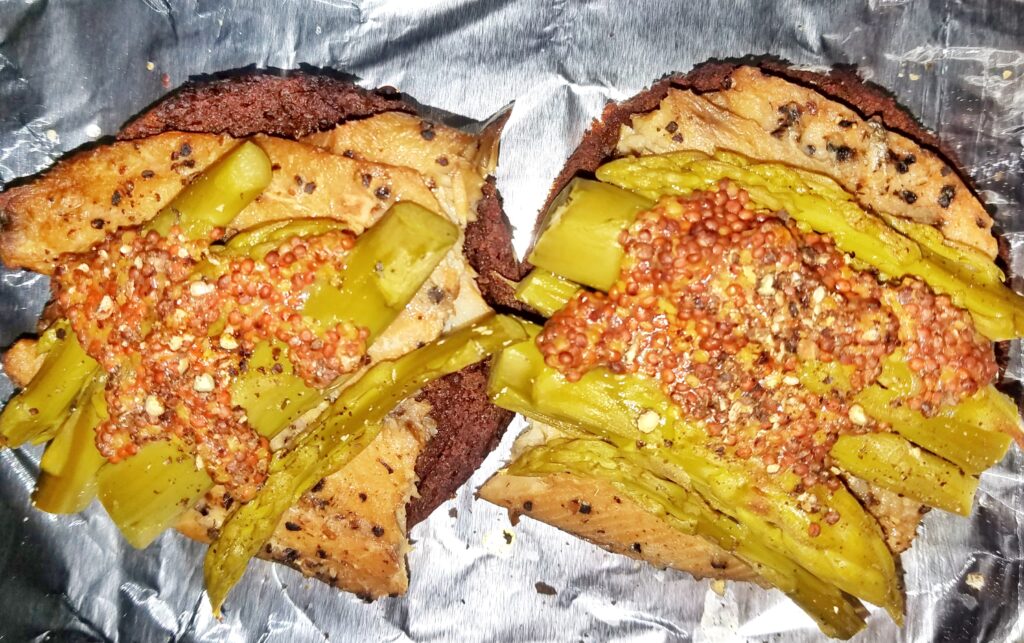
Boston brown bread, a dense, faintly sweet loaf made from a mix of rye flour, cornmeal, and whole wheat flour with molasses and often raisins, is steamed in a covered mold set in simmering water rather than baked dry in an oven, a method that gives it a moist, almost pudding-like crumb unlike any baked quick bread.
It traditionally accompanies baked beans rather than a turkey dinner specifically, but its dense, only mildly sweet character makes it a genuinely good match for a rich holiday plate, standing up to gravy and cranberry sauce better than a lighter dinner roll does, and it needs no oven space at all on a day when every burner and rack is already spoken for.
Steaming it without a dedicated mold
A large coffee can or a heatproof pudding basin, greased and covered tightly with foil, works as well as a purpose-made mold. Set it on a rack or a folded kitchen towel inside a large pot, add water halfway up the sides of the can, cover the pot, and steam at a steady simmer for about two and a half hours, checking the water level periodically so the pot does not run dry.
The bread is done when a skewer inserted through the foil comes out clean, and it keeps well wrapped at room temperature for a couple of days or refrigerated for up to a week, reheated by steaming briefly again or slicing and toasting.
Why these three faded, and the honest case for reviving them
Cost explains oyster stuffing’s decline more than taste. Tedium explains creamed onions. Unfamiliarity explains brown bread, since fewer households bake with steam at all anymore, and a recipe requiring an unusual method tends to lose ground to ones that only need an oven.
None of the three faded because they stopped being good, which is the actual argument for putting them back on a table that has room for one more dish. A single one of the three, added to an otherwise standard modern Thanksgiving menu, changes the table meaningfully without requiring anyone to abandon the rest of what already works.
Building the checklist into an actual day-of schedule
Steam the brown bread the day before, since it takes no oven space and reheats cleanly. Make the creamed onions fully the day before as well, refrigerated, and reheat gently on the stovetop or in a slow cooker on the day itself. That leaves only the oyster stuffing needing genuine oven time alongside the turkey, and it can go in during any window the bird’s own resting period opens up.
Structured this way, reviving all three dishes adds remarkably little to the day-of workload, since two of the three are essentially finished before Thanksgiving morning even starts.
Sourcing pearl onions and fresh oysters without a specialty trip
Fresh pearl onions show up in most well-stocked grocery stores specifically in the weeks around Thanksgiving, sold in mesh bags in the produce section rather than year-round, which is worth knowing since they can be harder to find in July. Frozen pearl onions, already peeled, are a legitimate shortcut that skips the blanching step entirely, though the texture is slightly softer once cooked.
Fresh shucked oysters are more of a planning problem than a sourcing one in most parts of the country now, since a real fish counter carries them but a general grocery store often does not. Calling ahead a day or two before Thanksgiving to reserve a pint, rather than assuming a counter will have enough in stock during the holiday’s peak demand, avoids a last-minute substitution with canned oysters that changes the dish’s character.
Where these three sit next to the rest of the table
None of the three dishes above is meant to replace anything else on a standard modern spread. Oyster stuffing sits next to, not instead of, a plainer bread stuffing if a household wants both, since some guests will always prefer the version without seafood. Creamed onions add a second vegetable option beside whatever roasted or raw side is already planned, and brown bread is simply another bread basket option alongside rolls.
The point of the checklist is not to crowd the table further but to make an informed choice about what a fuller version of the region’s own menu actually contained, and to decide deliberately which of that fuller version is worth the extra effort in a given year rather than defaulting to whatever was on the table last time by habit alone.
Frequently Asked Questions
Can oyster stuffing be made without fresh oysters?
Canned oysters work as a substitute, drained and rinsed, though the flavor is milder and less briny than fresh. Reduce the added salt slightly, since canned oysters often carry more of their own.
Is it safe to serve creamed onions to guests with dairy sensitivities?
Not as written, since the sauce is built entirely on butter and milk. A dairy-free butter and a plant milk with some body, like oat milk, can approximate the sauce, though the result is noticeably thinner.
Does brown bread need a special pan to make correctly?
No. Any heatproof container that fits inside a larger pot with room for water around it works, including a large coffee can or a metal mixing bowl covered tightly with foil.
How far ahead can the oyster stuffing be assembled?
Mix the dry ingredients and the oysters up to a day ahead, refrigerated separately from the liquid, and combine and bake close to serving time, since fully assembled stuffing sitting wet in the refrigerator overnight can turn soggy.
What is the safest way to know the oyster stuffing is fully cooked?
An instant-read thermometer at the center of the dish should read 165 degrees Fahrenheit. Because it contains seafood, checking this carefully matters more here than with a plain bread stuffing.
Pick one of the three to start with rather than all three at once. A single revived dish, done well, tells the story of the region’s older table better than three unfamiliar dishes rushed onto a plate that already has plenty on it.