A bowl of soup gets filed as a starter, something eaten before the meal that actually feeds you. That reputation comes from a specific kind of soup: a light broth with a few vegetables floating in it, maybe ten grams of protein if a person is being generous with the count. Soup is not the problem. The recipe is.
Build the same bowl on beans, lentils, tofu, or a hard cheese instead of a splash of stock and a few croutons, and the protein count changes completely. A pot of white bean and kale soup with a real parmesan rind simmered into it delivers close to twenty grams a bowl before any topping goes on. Add a poached egg or a spoon of yogurt and a bowl clears thirty without anyone treating it like a novelty.
Below are five soups built that way, with the protein counted rather than assumed, plus which ones hold up in a freezer bag and which lose their nerve after a few days in the refrigerator.
- Base: beans, lentils, tofu, or dairy, never vegetables floating in broth alone
- Protein per bowl: roughly 18 to 24 grams from the pot, more with a topping
- Time: 25 to 45 minutes, mostly unattended simmering
- The trick: a protein-dense topping added at the table, not cooked into the pot
- Freezes well: the bean-based three; the egg- and dairy-finished two need a note
- Cooling a full pot: shallow containers, not one deep mass left to cool slowly
The protein math nobody shows you
A cup of cooked lentils carries around eighteen grams of protein. A cup of white beans or chickpeas sits a little lower, around fifteen to seventeen, in the same range covered in our look at five bean pots built without any pork. A cup of cubed firm tofu is close to twenty. An ounce of parmesan is about ten, a large egg about six, and a cup of plain Greek yogurt anywhere from fifteen to twenty depending on how strained it is.
None of that matters if the soup is mostly stock and carrots. A base built on one and a half cups of beans or lentils per serving, finished with a protein-dense topping rather than a garnish, is what turns a starter into something that holds a person through an afternoon. The five soups here are built on that arithmetic rather than on the hope that vegetables alone will do the job.
There is a quality question underneath the quantity one, too. Beans and lentils run low in one or two of the amino acids a body needs, and grains tend to run low in the ones beans have plenty of. A bean soup served over rice, or finished with a hunk of bread, rounds out that gap without anyone needing to plan it as a deliberate pairing, which is roughly how bean-and-grain combinations became standard in kitchens on nearly every continent long before anyone wrote the chemistry down.
Five high protein vegetarian soup recipes, with the protein counted
| Soup | Base | Approx. protein per bowl | Freezes |
|---|---|---|---|
| White bean and kale, parmesan rind | White beans, parmesan | About 20g | Yes |
| Red lentil and coconut, peanuts | Red lentils, peanuts | About 18g | Yes |
| Tofu and miso, built to be a meal | Firm tofu, egg, miso | About 23g | Partly |
| Egg-lemon lentil soup | Brown lentils, egg | About 20g | No |
| Black bean, cotija and lime | Black beans, cotija | About 21g | Yes |
The numbers are estimates built from standard values for the ingredients involved, not a lab result on any single pot, and they move a few grams depending on how generous the topping is. Treat them as the order of magnitude they are meant to be.
White bean and kale soup with parmesan rind
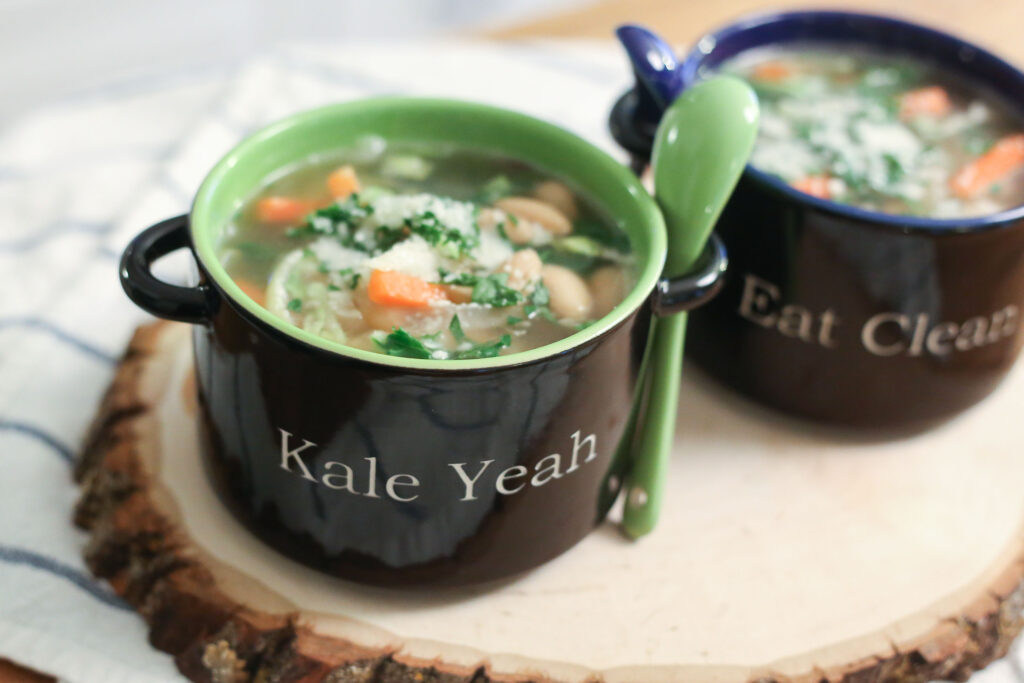
Soften a chopped onion, two carrots, and two celery stalks in olive oil for eight minutes. Add two cans of white beans, drained, or three cups of beans cooked from dry, along with six cups of vegetable stock and a real parmesan rind if there is one in the freezer. Simmer twenty-five minutes.
The rind is not a garnish. Simmered that long it softens, releases fat and amino acids into the broth, and gives the pot a body that a bouillon cube cannot supply on its own. Pull it out before serving, stir in a bunch of chopped kale for the last five minutes, and finish with a drizzle of good olive oil and black pepper.
Save rinds in a bag in the freezer whenever a block of parmesan runs out, since this is exactly the use they are for. A soup without a rind on hand still works with an extra handful of grated cheese stirred in at the end instead, though the body will be a little thinner and the flavor a little less rounded.
Red lentil and coconut soup with peanuts
Red lentils need no soaking and collapse into the broth in eighteen to twenty minutes, which makes this the fastest of the five. Cook a chopped onion, garlic, ginger, and a spoonful of curry paste or ground cumin and coriander until fragrant, add two cups of red lentils and six cups of stock, and simmer until the lentils have gone fully soft.
Stir in a can of coconut milk at the end rather than the start, off the heat, so the fat stays glossy instead of separating over a long simmer. A handful of crushed roasted peanuts on top adds crunch and a few extra grams of protein, and a squeeze of lime at the table keeps the coconut from tasting flat.
This is the soup to make on a weeknight when there is no time to plan ahead. There is no soaking, no long simmer, and no ingredient that needs a special trip to buy, and a full pot is usually on the table inside thirty minutes from a cold stove.
Tofu and miso soup built to be a meal, not a side
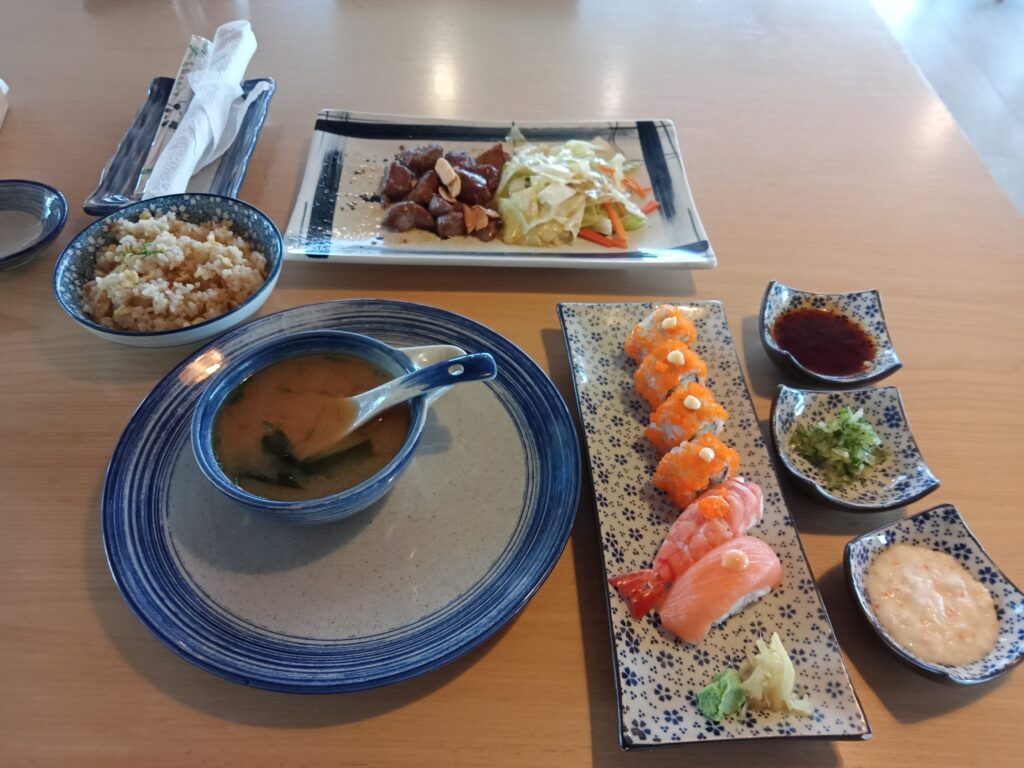
Standard miso soup is a garnish: a few cubes of tofu in a thin broth next to a larger dish. Scale the tofu up to a full block, cubed, add sliced mushrooms and a handful of spinach, and the same bowl becomes dinner. Simmer the mushrooms and dashi first, add the tofu to warm through, then whisk miso paste into a ladle of hot broth off the direct heat and stir it back in.
Miso loses its aroma if it boils hard, which is the one rule worth keeping. A soft-boiled egg halved into the finished bowl is what pushes the protein count past twenty, and it is a small enough step that it is worth doing every time rather than saving it for company.
Egg-lemon lentil soup, thickened the Greek way
Avgolemono, the Greek egg-lemon technique usually built on chicken and rice, works just as well over brown lentils. Simmer a cup and a half of brown lentils with onion, carrot, and stock until tender, about thirty minutes, then take the pot off the heat.
Beat two eggs with the juice of a lemon, ladle in a cup of the hot broth while whisking constantly to bring the eggs up to temperature, and stir that mixture back into the pot, using the same red lentils covered in our piece on a thirty-minute red lentil dal. The soup thickens into something silky rather than watery, and the egg adds real protein on top of what the lentils already carry. Do not let it boil again once the eggs are in, or it curdles into strands instead of staying smooth.
Black bean soup with cotija and lime
Black beans, cumin, a chopped chipotle in adobo for smoke and heat, and a few cups of stock, simmered twenty minutes and then partly blended so the soup has body without being fully smooth. Two cans of beans or three cups cooked from dry is the right amount for four servings.
Cotija, a firm crumbly Mexican cheese, holds its shape better than a soft melting cheese and adds a salty finish that a plain black bean soup is missing. A squeeze of lime and a spoon of diced avocado round it out, and the whole bowl reads considerably richer than the ingredient list suggests.
Cotija can be hard to find outside a well-stocked grocery or a Latin market. Feta is the closest common substitute in texture and saltiness, even though the flavor is not identical, and it works better here than a mild melting cheese would.
The dairy and egg toppings that push a soup over the line
A vegetable soup with only a cup of beans in the whole pot might land at twelve or fifteen grams a bowl, which is respectable but not the number this article is chasing. What closes the gap is almost never a change to the pot. It is what goes on top.
A poached egg adds about six grams. A generous dollop of full-fat or Greek yogurt adds five to eight, the same swap discussed in our roundup of plant-based meals that still feel filling. An ounce of a hard cheese, grated rather than a token sprinkle, adds seven to ten. Stacking two of those onto an already bean-based soup is how a bowl clears thirty without the pot itself changing at all, which is a useful trick for the weeks when the pantry only has half of what a recipe wants.
The tradeoff is sodium, and it is worth naming rather than ignoring. Canned beans, parmesan, miso, and cotija are all salty on their own, and stacking several of them into one bowl adds up faster than the soup tastes like it has. Salting the pot lightly and letting the toppings carry more of the seasoning is an easy adjustment, and rinsing canned beans before they go in removes a real amount of the sodium that came in the can.
Which of these freeze, and which separate
The three built entirely on beans freeze cleanly. Portion them before adding a fresh garnish, thaw in the refrigerator overnight, and reheat on the stove; the texture barely changes. This is the category worth doubling on a Sunday.
The egg-lemon soup does not freeze well. Egg-thickened liquids tend to separate into curds and thin broth once frozen and thawed, and there is no fixing that after the fact. The tofu and miso soup freezes only partly: the broth and mushrooms are fine, but frozen tofu changes texture into something spongier, which some people like in a stew and nobody wants in a delicate soup. Freeze the broth without the tofu and add fresh cubes when reheating if a freezer batch is the plan.
Cooling and reheating a big pot safely
A full pot of bean or lentil soup left to cool slowly on the stove spends too long in the range where bacteria multiply fastest. Divide it into two or three shallow containers rather than one deep one, leave them uncovered until the steam stops, and get them into the refrigerator within two hours of cooking, in line with standard public food safety guidance for cooked legumes and dairy-finished dishes.
Reheat bean and lentil soups to a full boil on the stove. Reheat the egg-lemon version gently over low heat instead, stirring constantly, since a hard boil is exactly what curdles it the second time as well as the first. None of these should sit out at room temperature for more than two hours, whether that is on the counter before refrigerating or on a table during a slow lunch.
Frequently Asked Questions
Can I use canned beans for all of these?
Yes, and it is the faster route for every recipe here except the lentil ones, which cook quickly from dry anyway. Drain and rinse canned beans, and add them later in the cooking process than dried ones, since they only need to warm through rather than soften.
Do the protein numbers include the topping?
Where a topping is described as part of the dish, such as the egg in the tofu and miso soup, yes. Where it is optional, such as the avocado on the black bean soup, the number reflects the pot without it. Adding an extra topping only raises the total.
Can these be made vegan?
Four of the five convert easily by leaving out the cheese or egg and using a splash of full-fat coconut milk or a spoon of blended silken tofu for body instead. The egg-lemon soup is the hardest to translate, since the eggs are doing structural work rather than just adding flavor, and a cornstarch slurry is the closest substitute, though it will not taste the same.
Why does my miso soup taste flat after reheating?
Miso’s aroma fades with repeated heating. Stir in an extra half spoon of fresh miso paste, off the heat, when reheating leftovers, rather than assuming the pot needs more salt.
Is thirty grams of protein in one bowl actually a lot?
It is a meaningful share of what an adult needs across a whole day, not the whole target on its own. The point of these five recipes is not to replace every other source of protein in a diet, only to stop a bowl of soup from supplying almost none of it, which is the more common failure.
Make the white bean version first if only one of these gets tried. It freezes, it reheats without fuss, and it makes the case for the whole approach in one pot.