A pound of sliced mushrooms goes into a hot pan with oil. Within two minutes the pan is full of grey liquid, the heat has dropped, and everything is simmering. Ten minutes later the mushrooms are soft, pale and slightly slimy, and they taste of almost nothing. This happens in a great many kitchens and it is not a skill problem.
Mushrooms are around ninety percent water. Every one of them, from the cheapest cremini to the most expensive maitake, is mostly liquid held in a spongy structure, and cooking one well means getting that water out before anything else can happen. Everything that separates a good mushroom dish from a disappointing one follows from that.
What differs between varieties is how much water there is and how fast it leaves, which is why five mushrooms want five methods and produce five different dinners.
- Wettest: cremini and oyster. Driest: king trumpet and maitake
- The rule: water out first, fat second, salt third
- The crowding limit: one pound per twelve-inch pan, and no more
- Washing: a quick rinse is fine and always better than grit
- Stems: three of these five have stems worth keeping, one has a stem worth stock
- Five dinners: one per mushroom, each built as a main course rather than a side
The water is the whole problem
The structure of a mushroom is not like plant tissue. There are no rigid cell walls holding a shape, which is why a mushroom shrinks so dramatically and why it can absorb seasoning the way a sponge does. What holds it up is mostly the water inside it.
Put that into a pan and the water has to go somewhere. If the pan is hot and uncrowded, it evaporates as fast as it appears and the surface stays dry enough to brown. If the pan is crowded or the heat is low, liquid pools, the temperature drops to boiling point, and browning cannot start until the pan is dry again, which may be ten minutes later.
Browning is not cosmetic here. The savoury depth people want from mushrooms comes almost entirely from the reactions that only happen on a dry surface above the boiling point. A steamed mushroom is not an underdeveloped browned one; it is a different food, and no amount of salt afterward supplies what was skipped.
Five mushrooms, and the method each one wants
| Mushroom | Water content | Best method | Time | The dinner |
|---|---|---|---|---|
| Cremini | High | Water first, then fat | 12 to 15 min | Ragu over polenta |
| Oyster | High, leaves fast | Hot dry pan, torn not sliced | 6 to 8 min | Crisp, in tacos |
| Maitake | Moderate | Roast in clusters | 18 to 20 min | Over rice with soy butter |
| Shiitake | Moderate to low | Sear caps, simmer stems | 8 min, plus stock | Noodles in broth |
| King trumpet | Low, dense | Sear like a scallop | 8 to 10 min | With white beans |
The column that matters most is the second one. Everything else in the table is a consequence of it, and once the water content of a mushroom is known, the method more or less selects itself.
Two methods: the dry sear and the water-then-fat pan
The dry sear is the simpler of the two. A hot pan, no oil, mushrooms in a single layer, left alone. They squeak, then release their water, then the water boils off, then they start to brown. Only at that point does the fat go in, along with garlic or thyme or whatever else. Adding oil at the start means the mushrooms absorb it while they are still wet, and a pound of mushrooms will drink an alarming amount.
The second method looks wrong and works better for the wetter varieties. Put the mushrooms in a pan with a quarter inch of water and a lid, and simmer them for five minutes. The water collapses the structure and drives out the internal liquid quickly, and once the pan is uncovered the remaining water evaporates in a couple of minutes. Then the fat goes in and the browning happens in a pan of already collapsed, dense mushrooms.
The advantage is that they cannot absorb oil during the process and they brown evenly rather than in patches. It is counterintuitive and it produces a better result with cremini than any dry method does. For the drier mushrooms, where there is less water to remove, the dry sear is faster and just as good.
Cremini: the one that needs the most help
Cremini are the brown version of the standard cultivated button mushroom, and portobellos are the same fungus grown to full size. They are the wettest and the mildest on this list, and they are also the cheapest and the most widely available, which makes them the ones most often cooked badly.
Slice them thick, a quarter inch at least, since thin slices lose too much volume. Use the water method: covered with a splash of water for five minutes, uncovered until dry, then a generous amount of oil or butter and eight minutes more without much stirring. Salt only at the end.
They take other flavours better than any mushroom here, which is their real strength. Garlic, thyme, red wine, soy, cream and anchovy all work. Treat them as a base that needs building on rather than as an ingredient with a lot of its own character to protect.
Oyster: tear it, and use a very hot pan
Oyster mushrooms grow in fan-shaped clusters with thin flesh and frilled edges, and they cook faster than anything else on this list. The thin parts crisp while the thick base is still tender, which is the whole appeal and the reason they are the best mushroom for anything that wants texture.
Tear rather than slice. Pulling the clusters apart along their natural lines gives ragged edges with more surface area, and those edges are what turn crisp and brown. A knife gives clean flat pieces that brown less and look manufactured.
They want the hottest pan of the five and very little time in it. Six to eight minutes dry, pressed down with a spatula for the first two, then oil and a pinch of salt at the end. Cooked properly they come out with browned frilled edges and a texture closer to a piece of fried chicken skin than to a vegetable, which is why they work so well in a taco or a sandwich.
Maitake: tear the cluster, roast the cluster
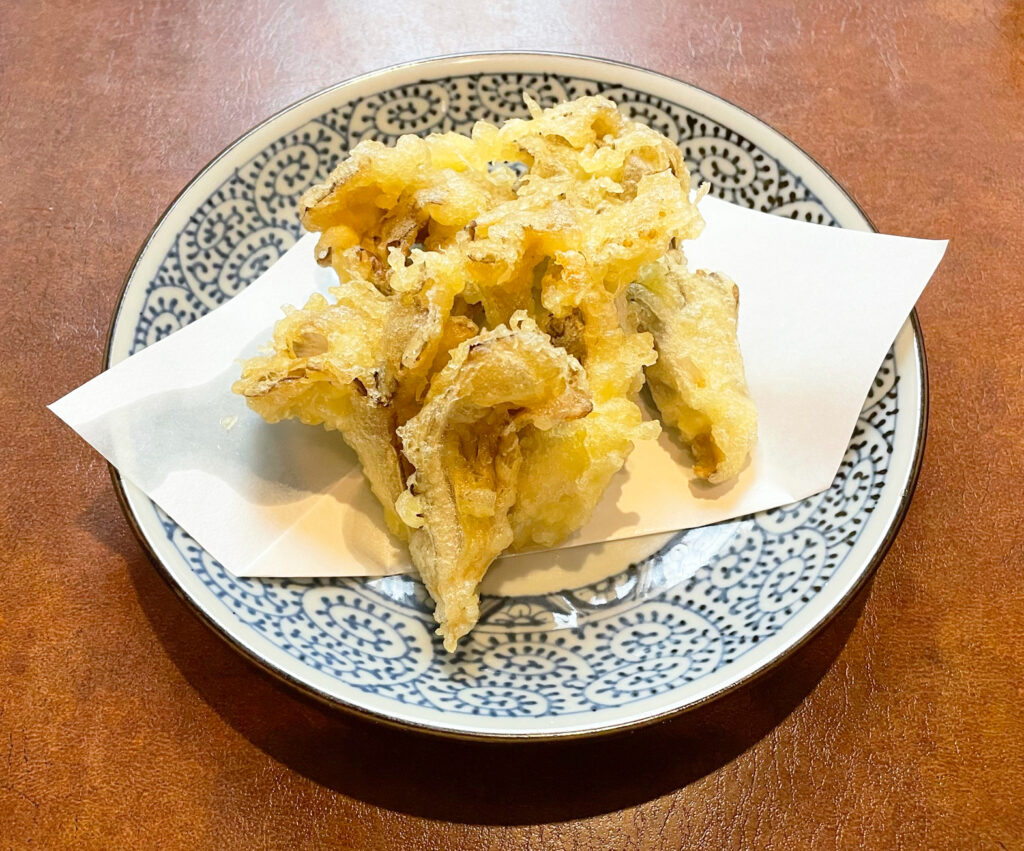
Maitake, also sold as hen of the woods, grows in overlapping fronds off a single base and looks more like a plant than a mushroom. It is drier and firmer than cremini and it has real flavour of its own, faintly peppery and deeply savoury.
The mistake is chopping it. Pull the cluster into large sections that hold together, brush them with oil, and roast on a sheet pan at 425 for eighteen to twenty minutes. The exposed fronds go crisp and dark while the base stays meaty, and the contrast between those two textures in one piece is the reason to buy it.
It is expensive and it is worth treating as the main event rather than as an addition. A single large cluster roasted and set on top of a bowl of rice is a full dinner for two, and it needs almost nothing beyond salt, butter and soy sauce added in the last two minutes.
Shiitake: the stem is stock, the cap is dinner
Fresh shiitake have firm caps and stems that stay woody no matter how long they cook. The stems come off and go into a bag in the freezer, where they accumulate until there are enough to make a stock that is worth more than most vegetable stocks: deep, dark and heavily savoury.
The caps take a hot dry pan well, scored or left whole, and they hold their shape better than any of the others. Eight minutes over medium-high, cut side down first, then a splash of soy and a knob of butter at the end.
Dried shiitake are a different and equally useful product. Soaked for twenty minutes in warm water they rehydrate into something chewier and more concentrated than the fresh version, and the soaking liquid is an ingredient in its own right. Strain it, since grit settles at the bottom, and use it as the base of the broth for the noodles below.
King trumpet: dense enough to be sliced into coins
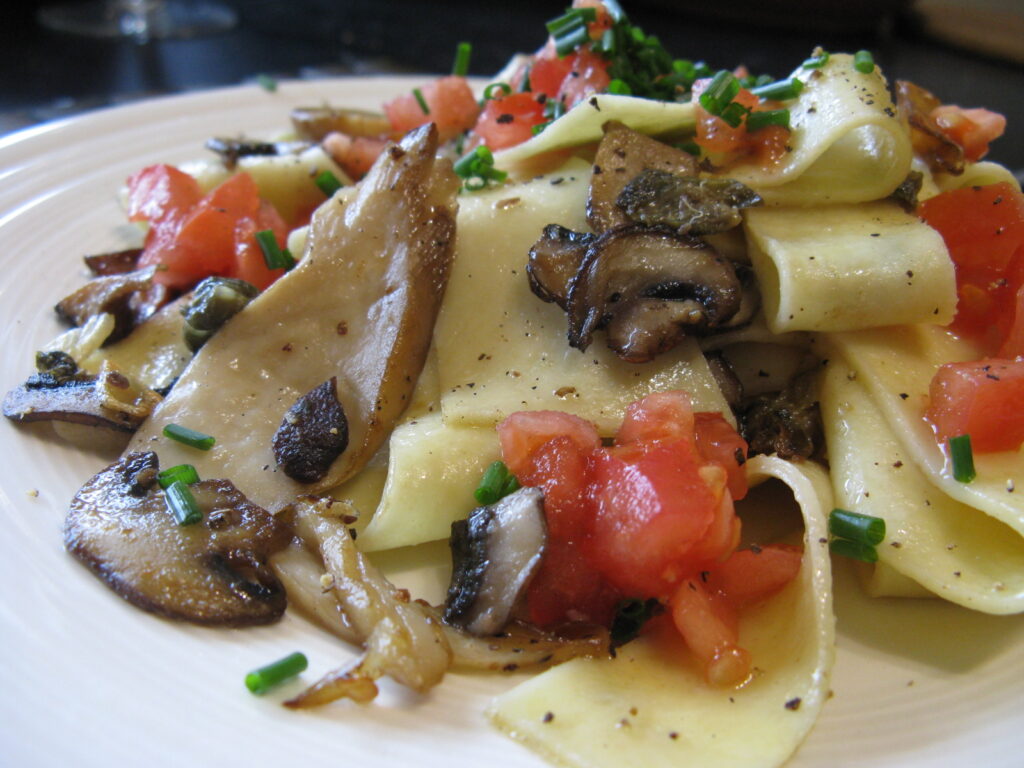
King trumpets are the driest and firmest of the five, with a thick white stem and a small cap, and almost all of the eating is in the stem. That density means they behave in a pan more like a piece of protein than like a vegetable, and they can take direct heat far longer than the others without collapsing.
Slice the stem crossways into three-quarter-inch coins and score a shallow crosshatch into each cut face. Sear in a dry pan four minutes a side, then add butter, garlic and thyme and baste for a minute. The scoring lets heat and fat into the interior and gives the surface something to hold onto.
The result is genuinely meaty, with a firm bite that none of the other four can produce, and it takes a pan sauce well because it does not fall apart when liquid arrives. It is the mushroom to reach for when the dish needs something to cut with a knife.
Five mushroom main dish recipes, one for each
Cremini ragu over polenta. A pound and a half of cremini by the water method, then a chopped onion, garlic, a glass of red wine reduced hard, a spoonful of tomato paste and a cup of stock, simmered twenty minutes. Over soft polenta with parmesan. Serves four and reheats well.
Crisp oyster mushroom tacos. A pound of torn oyster mushrooms seared hard, tossed with chipotle and lime, in warm corn tortillas with shredded cabbage, crema and a squeeze of lime. Fifteen minutes total and the best argument for the tear-do-not-slice rule.
Roasted maitake over rice. Two clusters roasted at 425, set on rice with a soy and butter pan sauce, a soft-boiled egg and scallions. The rice matters as much as the mushroom here, and the method for getting it right is covered in our notes on cooking rice properly.
Shiitake and tofu noodle bowl. Stems simmered with kombu and ginger for a twenty-minute broth, caps seared separately, firm tofu cubed, and udon or soba in the bowl. Assembled at the last minute so the noodles do not go soft.
Seared king trumpet with white beans. Coins seared and basted, set over cannellini beans warmed with olive oil, garlic and rosemary, finished with lemon zest and parsley. This is the one that convinces people who think mushrooms are not filling, and it belongs alongside the rest of the plant-based dinners that eat like meat.
Washing, salting, and how long they keep
The instruction never to wash mushrooms is close to a myth. A thirty-second rinse under running water adds a small amount of surface moisture that evaporates in the first minute of cooking, and it removes grit that no brush will get out of a frilled oyster cluster or the underside of a maitake. Rinse, shake dry, cook. What actually causes trouble is soaking them for several minutes, which they will not forgive.
Salt is a timing question. Salt draws water out through osmosis, so a pinch at the start of a dry sear floods the pan at exactly the wrong moment. Salt at the end, once the browning has happened. The exception is the water method, where the water is coming out anyway and a little salt in the pan does no harm.
Store them in a paper bag in the refrigerator, not in plastic, since trapped moisture is what turns them slimy. Cremini and king trumpet keep about a week, shiitake five or six days, maitake four or five, and oyster mushrooms the least of all at two or three. Any that have gone slippery or smell sour go in the bin rather than the pan.
What they actually deliver, and two cautions
Mushrooms are low in calories and reasonably high in fibre, and they supply B vitamins, potassium, copper and selenium. They are not a meaningful protein source despite frequently being described as one, so a mushroom dinner needs beans, eggs, tofu or a grain alongside it to be balanced, which is why every one of the five above is built with one of those included.
The vitamin D point is worth stating precisely, because it gets overstated constantly. Mushrooms contain ergosterol, which converts to vitamin D when exposed to ultraviolet light. A mushroom grown in the dark, which is most of them, contains very little. Some producers now expose their crop to UV deliberately and label the package accordingly, and those do contain a useful amount. An unlabelled package should not be counted on for it, whatever a general article about nutrient-dense eating may imply.
Two cautions. Cultivated mushrooms are best cooked rather than eaten raw in quantity; heat breaks down compounds that are present in the raw flesh, and cooked is also where the flavour is. And nothing on this list should ever be gathered from the ground on the strength of a photograph or a phone app, because several seriously toxic species closely resemble edible ones and identification is a skill learned in person from someone who has it. Anyone who reacts badly to a mushroom they have eaten before should stop eating it and ask a doctor rather than experimenting.
Frequently Asked Questions
Why do my mushrooms shrink so much?
Because most of what was in the pan was water and it left. A pound of raw mushrooms yields roughly a third of that cooked. Buy considerably more than looks reasonable, and plan on a pound of raw mushrooms per two people for a main course.
Can I substitute one variety for another?
Within similar densities, yes. Cremini and oyster can trade places in a braise, and king trumpet and shiitake in anything seared. Substituting oyster for king trumpet in a dish that wants a firm bite will disappoint, since the cooking times differ by half and so does the texture.
Are dried mushrooms worth buying?
Dried shiitake and porcini are both excellent and keep indefinitely. They are more concentrated than fresh and the soaking liquid is a free ingredient. What they cannot do is provide texture, so they belong in broths, braises and sauces rather than in anything seared.
Should I remove the gills from a portobello?
Only for appearance. The gills are edible and they darken any sauce they touch, which matters in a pale dish and not otherwise. Scraping them out with a spoon takes a minute if the colour is a concern.
Can mushroom dishes be made ahead?
Braised and saucy ones improve overnight. Seared and crisp ones do not, since the texture that took the effort is gone within an hour of leaving the pan. Cook the ragu on Sunday and cook the oyster mushroom tacos to order.
Buy two varieties you have not cooked before and treat each one the way the table says rather than slicing everything and putting it in oil. The difference shows up in the first pan, and after that the ninety percent water figure stops being a piece of trivia and starts being the instruction.