Set both pies on the same table and most guests reach for whichever one they grew up with, without much thought to the fact that they are reaching for two genuinely different desserts that happen to share a crust, a shape, and a season. Sweet potato pie vs pumpkin pie is not a debate over which version of the same recipe is better; it is two different vegetables, two different regional histories, and two different textures that only look alike from across the table.
Pumpkin pie traces back to New England and became, through decades of canned puree and standardized recipes, the version most of the country now considers the default. Sweet potato pie has its roots in the American South, tied closely to the root vegetable’s long history in Southern and African American cooking, and it remains the pie of choice on a great many tables regardless of what shows up on a supermarket display in November.
Baked side by side, using each pie’s traditional filling and spice ratio rather than treating one as a substitute for the other, the differences are far more obvious than the shared shape suggests.
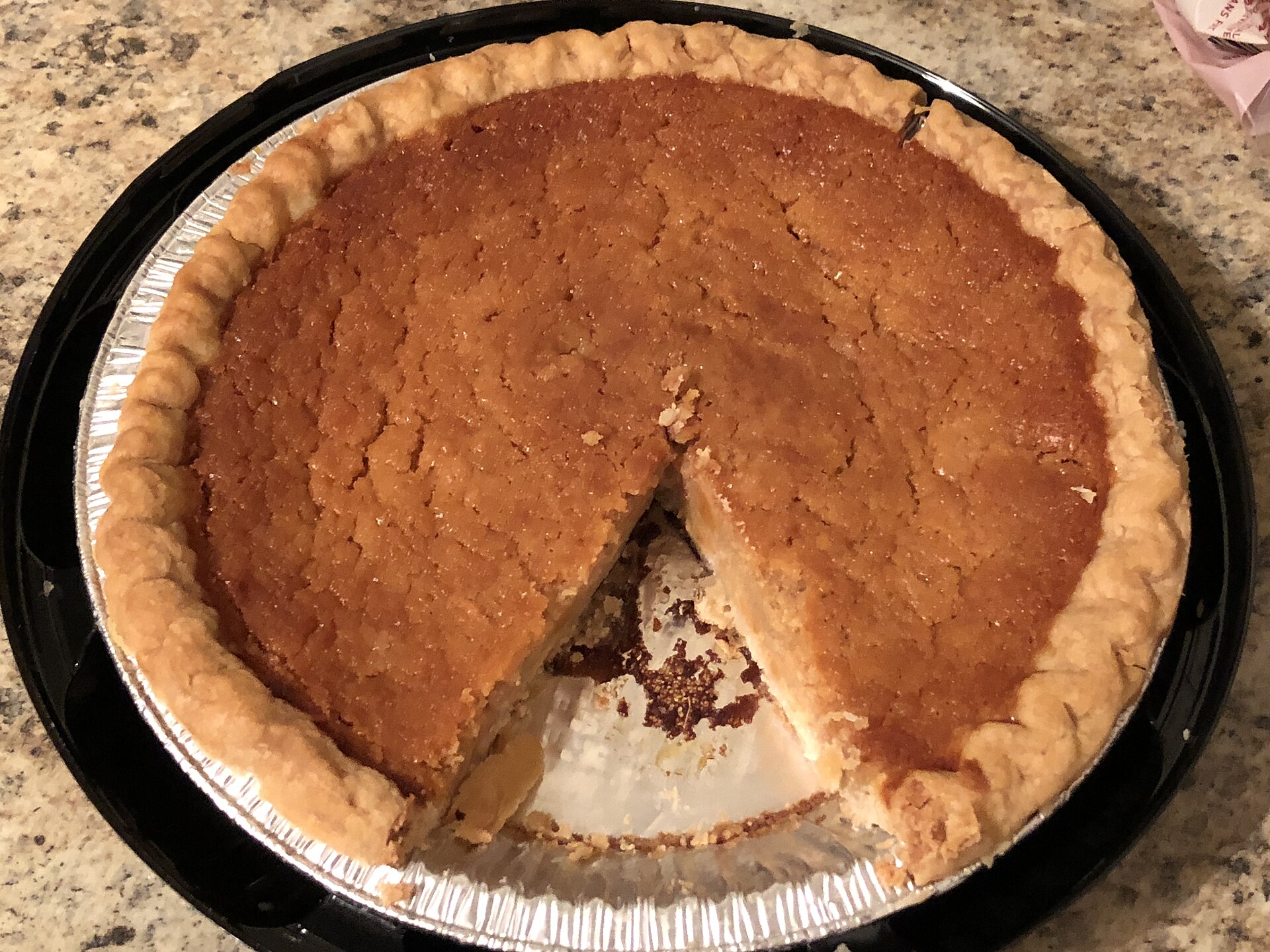
- Sweet potato pie: Southern origin, denser filling, nutmeg and vanilla forward
- Pumpkin pie: New England origin, lighter custard, cinnamon and clove forward
- Bake time: both around 45 to 55 minutes at 350 to 375 degrees
- Travel test: one holds its structure noticeably better in transit
- Shared step: both need a fully cooled, set custard before slicing
- Safe handling: both are egg-and-dairy custards that need refrigeration after baking
Sweet potato pie vs pumpkin pie: two pies, two histories
Sweet potato pie vs pumpkin pie is a comparison between two vegetables that Americans have long treated as interchangeable at the grocery store and almost never treated as interchangeable at the holiday table. Sweet potatoes, native to Central and South America but embraced early and thoroughly across the American South, became the base for a pie tradition that predates the more standardized pumpkin version found further north.
Pumpkin pie’s rise to being the default nationally owes a great deal to canned pumpkin puree, introduced commercially in the early twentieth century, which made a consistent, shelf-stable filling available everywhere regardless of local growing seasons. Sweet potato pie never had quite the same industrial standardization behind it, which is part of why it varies more from household to household even today.
Where each pie actually comes from
Sweet potato pie has deep roots in Southern cooking, carried forward through generations of African American culinary tradition specifically, where the sweet potato itself held a central place in the diet well before it became a holiday dessert. Its association with Thanksgiving and Christmas tables across the South runs at least as deep as pumpkin’s association with the same holidays in New England.
Pumpkin pie’s New England origin ties to the vegetable’s abundance in the region’s growing conditions and its early adoption by colonial cooks working with what was locally available, well before pumpkin pie became the nationally standardized dessert it is today. Neither pie is a regional variant of the other; each developed independently from what grew well where its cooks lived.
The filling: mashed roasted sweet potato against pumpkin puree
Sweet potato pie’s filling starts from whole sweet potatoes, roasted or boiled until soft and then mashed or pureed by hand, which retains more of the vegetable’s natural fiber and gives the filling a slightly coarser, denser body than a filling built from strained puree. Roasting rather than boiling concentrates the sweet potato’s natural sugars further, which is why many traditional recipes call specifically for a roasted base rather than the faster boiled version.
Pumpkin pie’s filling nearly always relies on canned puree today, smoother and more consistent than fresh pumpkin flesh, which can be watery and stringy if not handled carefully. This consistency is a large part of why pumpkin pie’s texture reads as more uniform from one bakery or household to the next than sweet potato pie’s does.
Texture side by side: dense and fudgy against light and custardy
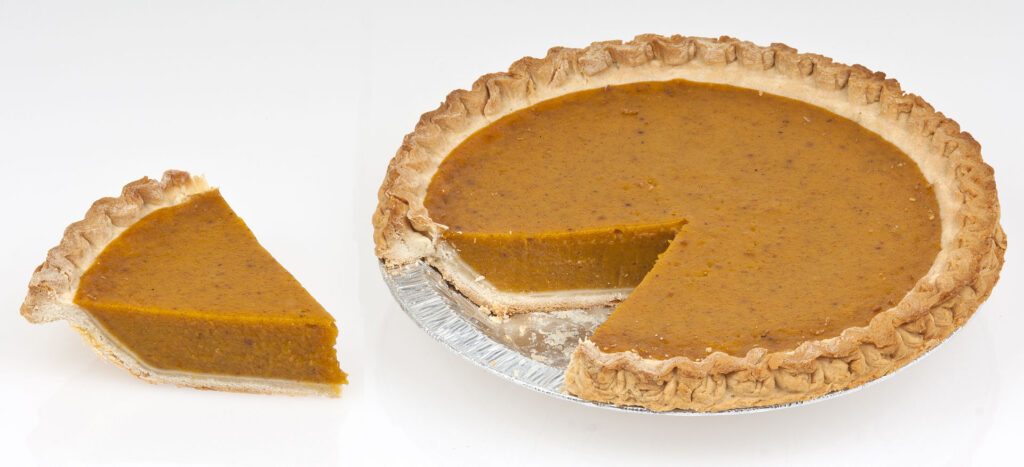
Baked and cooled, sweet potato pie sets into a dense, almost fudgy texture, closer in mouthfeel to a firm cheesecake than to a delicate custard, largely because of the sweet potato’s own starch content working alongside the egg and dairy in the filling. It holds a clean slice even slightly warm, without the wobble a fresh-from-the-oven pumpkin pie shows.
Pumpkin pie sets into a lighter, more genuinely custard-like texture, since pumpkin puree carries less starch than mashed sweet potato and the filling depends more heavily on egg and dairy for its structure. It needs a longer, more complete cool before slicing cleanly, since a warm slice tends to slump rather than hold its edge the way a warm slice of sweet potato pie mostly does.
Spice profiles: nutmeg and vanilla against cinnamon and clove
Sweet potato pie leans toward nutmeg, cinnamon in a smaller supporting role, and often a good amount of vanilla and a pat of butter worked into the filling, spices that complement the vegetable’s own natural sweetness rather than covering it. Some Southern recipes add a touch of lemon zest or juice, a brightening note rarely found in a traditional pumpkin filling.
Pumpkin pie’s spice blend, the mix sold pre-packaged as pumpkin pie spice, leans harder into cinnamon, ginger, clove, and allspice together, a blend built to season pumpkin’s blander, more neutral flavor into something that reads unmistakably as the holiday dessert. Using pumpkin pie spice in a sweet potato pie, or vice versa, produces something recognizable but noticeably off to anyone used to either traditional version.
Baking both side by side: temperature, time, and the doneness test
Both pies bake in a similar range, generally 350 to 375 degrees for 45 to 55 minutes, and both use the same basic doneness test: the edges should look set while the very center still holds a slight jiggle, since the residual heat finishes setting the middle as the pie cools on the counter. Pulling either pie only once the center is fully firm in the oven risks overbaking the edges into a cracked, dry ring.
Sweet potato pie’s denser filling is somewhat more forgiving of an extra few minutes in the oven than pumpkin’s lighter custard, which can crack more readily if pushed past its ideal bake time. Both benefit from a shielded crust edge, using foil or a crust guard, if the crust is browning faster than the filling is setting.
Which one travels better, and why
Sweet potato pie’s denser, sturdier filling holds its shape through a car ride far better than pumpkin pie’s lighter custard does, which can shift and slosh slightly in transit even when fully set and cooled, particularly over bumpy roads or sudden stops. A sweet potato pie arriving at a second Thanksgiving of the day generally looks close to how it looked leaving the first kitchen.
Pumpkin pie transported any real distance benefits from staying in its own dish, kept flat and level rather than tilted, and from a full chill in the refrigerator before the trip rather than being packed while still cooling on the counter, since a fully chilled custard holds its structure noticeably better than one still settling into its final set.
Handling both pies safely after baking
Both pies are built on egg and dairy custard fillings, which means both need to be treated the way any egg-based dish is treated once cooked: cooled at room temperature for no more than two hours before moving to the refrigerator, and kept refrigerated rather than left out on a counter for the remainder of the day, especially if the kitchen is warm from other cooking. A pie left out significantly longer than that window is not worth the risk over the alternative of simply chilling it and serving it cold or gently rewarmed.
Refrigerated, either pie keeps well for three to four days, covered loosely so condensation does not build up on the surface. Neither freezes particularly well once fully baked, since the custard’s texture tends to weep and separate slightly on thawing, though an unbaked, fully assembled pie can be frozen and baked directly from frozen with some added time in the oven, the same freeze-ahead logic that applies to the layered apple stack cake when a household is spreading holiday baking across several days.
Serving both, and what actually goes on top
Whipped cream, plain or lightly sweetened, suits both pies equally well and is the most common topping for either. Sweet potato pie sometimes gets a pecan or marshmallow topping in some Southern households, treatments that lean the dessert closer to a casserole-style sweet potato dish, while pumpkin pie almost never sees anything beyond whipped cream in its more traditional presentations.
Serving both on the same table, rather than choosing one over the other, is an increasingly common approach in mixed-heritage households and gives guests the chance to actually taste the difference side by side rather than only ever encountering whichever version their own family made, the same expanding-the-table logic behind the pancit, tahdig, and farofa that now sit beside more traditional dishes in plenty of American homes.
A side-by-side chart of the two pies
Lining up the two directly, rather than describing them one after another, makes the differences easier to hold in mind while standing in the kitchen deciding which to bake.
| Sweet potato pie | Pumpkin pie | |
|---|---|---|
| Origin | American South | New England |
| Base ingredient | Roasted, mashed sweet potato | Canned or fresh pumpkin puree |
| Texture | Dense, fudgy | Light, custardy |
| Dominant spice | Nutmeg and vanilla | Cinnamon, ginger, and clove |
| Sweetness | Higher, from the vegetable itself | Lower, more dependent on added sugar |
| Travels | Well, holds its shape | Needs to stay flat and fully chilled |
Neither column is objectively better than the other; the chart mostly confirms that a person’s preference for one pie over the other is really a preference for one texture and one spice profile over another, not a judgment about which pie is executed more correctly.
Why the sweet potato itself makes such a difference
Sweet potatoes carry meaningfully more natural sugar and a starchier flesh than pumpkin does even before either vegetable meets a cup of sugar and a carton of eggs, which explains a great deal of the textural gap between the two finished pies without needing to look at the rest of the recipe at all. That starch is also why a sweet potato pie filling can hold together with fewer eggs than a pumpkin filling typically needs to reach the same structural stability.
Pumpkin, by comparison, is mostly water once cooked down, which is part of why canned pumpkin puree, already reduced and concentrated during processing, produces a more reliable pie than fresh pumpkin flesh that has not been drained or cooked down sufficiently first. A home cook working from a fresh sugar pumpkin rather than a can needs to account for that extra moisture, usually by draining the cooked puree through a cloth before it goes anywhere near the egg and dairy.
Frequently Asked Questions
Can canned sweet potato puree replace fresh roasted sweet potato?
It works, though the texture comes out smoother and slightly less dense than a filling made from hand-mashed roasted sweet potatoes, closer to how canned pumpkin behaves in its own pie.
Why did my pumpkin pie crack down the center?
It was most likely overbaked. Pull it while the center still jiggles slightly; it finishes setting as it cools, and pushing it further in the oven dries and cracks the custard.
Is one pie generally sweeter than the other?
Sweet potato pie tends to taste sweeter overall, since the vegetable itself carries more natural sugar than pumpkin does, even before any sugar is added to either filling.
Can I use the same crust recipe for both pies?
Yes, a standard butter or shortening pie crust works for either filling without any adjustment needed on the crust side of the recipe.
Which pie is more traditional for Thanksgiving specifically, rather than Christmas?
Both appear at both holidays depending on region and family, though pumpkin pie holds a slightly stronger specific association with Thanksgiving nationally, largely from decades of marketing around the canned puree.
Baking both, on the same afternoon and in the same oven, settles the comparison faster than any amount of arguing about it ever could. Neither pie is a substitute for the other, and a table with room for both loses nothing by serving them side by side.