

Two pots on the same burner, twenty-five minutes, identical treatment. One is a smooth orange puree with no lentil left in it. The other is a pot of small dark beads, each one intact, sitting in clear liquid. Same legume, same clock, completely different food, and the only variable was which bag came off the shelf.
That difference is the useful thing to know about lentils and it is almost never printed on the packaging. Recipes say lentils the way they say vinegar, as though there is only one, and then the salad falls apart or the soup refuses to thicken and nobody can say why.
Below: what actually decides whether a lentil holds or collapses, the soaking question answered once and for all, and three dinners built on that difference, each on the table inside forty minutes.
- Collapse: red and yellow split lentils, 15 to 20 minutes, become soup and cannot be talked out of it
- Hold: green du Puy and black beluga, 20 to 25 minutes, stay whole
- In between: brown lentils, fine for 20 minutes and falling apart by 35
- Soaking: not required for any of them, ever
- Per cooked cup: roughly 18 grams of protein and about 15 grams of fiber
- Three dinners: a thick soup, a warm mustard salad, a roasted squash bowl, all under 40 minutes
Five types of lentils recipes rarely tell apart
Two properties decide almost everything: whether the seed still has its skin, and whether it is whole or split. A split, skinless lentil has nothing holding it together and will dissolve. A whole lentil with an intact skin has a wrapper that survives the heat.
| Lentil | Skin | Simmer time | What it does |
|---|---|---|---|
| Red or orange, split | Removed | 15 to 20 minutes | Dissolves completely |
| Yellow, split | Removed | 15 to 25 minutes | Dissolves completely |
| Brown | Intact | 20 to 30 minutes | Holds, then softens |
| Green du Puy | Intact | 20 to 25 minutes | Stays whole and firm |
| Black beluga | Intact | 20 to 25 minutes | Stays whole and firm |
One labelling note worth having. A bag marked yellow lentils is often not a lentil at all but a split pea, a mung bean, or a split chickpea, all of which are sold under similar names and cook to a similar puree. They are perfectly good and they are botanically different, which matters mainly when a recipe insists that a particular one is required.
Skin, starch, and what decides whether a lentil collapses
The seed coat is a physical barrier. It slows water entering, holds the two halves of the seed together, and stays largely intact through a simmer. Remove it, as processors do to make red and yellow lentils, and water gets to the starchy interior immediately, which then swells and breaks apart.
Splitting compounds it. A split lentil is already in two pieces, so there is no structure to preserve, and within fifteen minutes the pieces have thickened the liquid around them into a puree. This is a feature. It is why every dal in the world is built on split legumes and why no dal recipe asks you to keep them whole.
Age is the hidden variable that makes cook times unreliable. Lentils stored for two years take much longer to soften and sometimes never fully do. Buy from a store with turnover, and if a pot is still crunchy at forty minutes, the lentils are old rather than the method wrong.
Red and yellow: no skin, no shape, fifteen minutes
These are for anything meant to be thick and smooth. Soup, dal, a spread, a sauce, a filling. They are the fastest of the group and they need no attention beyond a rinse and an occasional stir to keep them off the bottom of the pot.
They also thicken far more than expected. A cup of dried red lentils in four cups of liquid produces something closer to a puree than a soup, so plan on five or six cups if a spoon is supposed to move through it. They will keep thickening as they cool and again in the refrigerator overnight.
Where they fail is any dish needing texture. Red lentils in a salad produce mush and no amount of gentle handling prevents it, since the collapse happens at the moment the skin is absent rather than because of anything the cook did. Their strength is that they carry spice extremely well, which is why they anchor so much of the subcontinent’s everyday cooking.
Green du Puy and black beluga: the two that stay whole
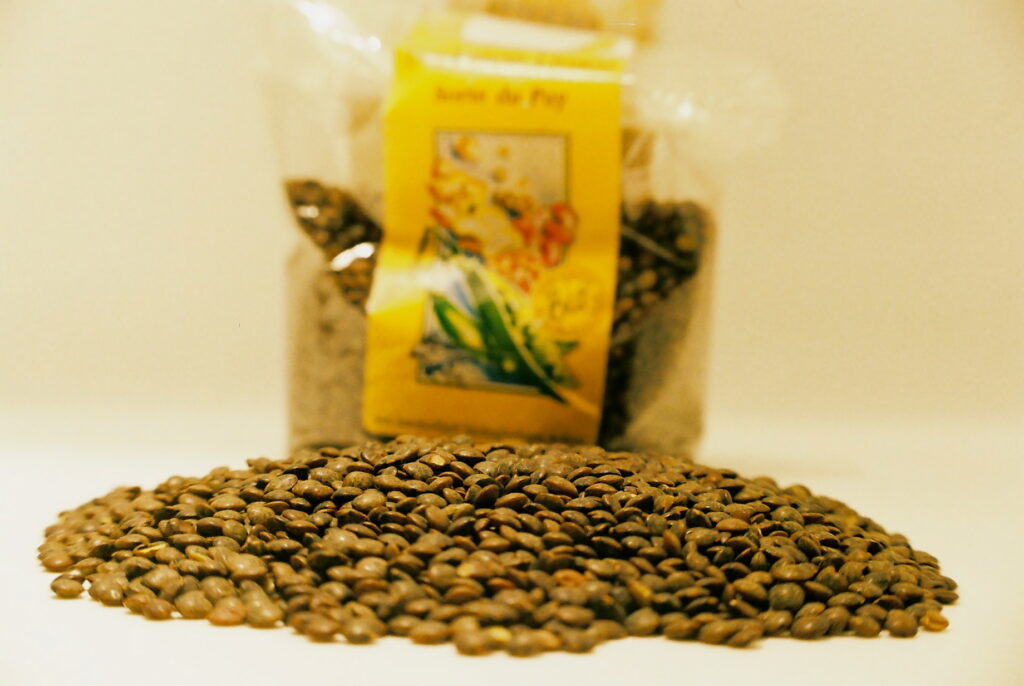
Lentilles vertes du Puy come from a defined area of the Haute-Loire in central France and carry a protected designation. They are small, slate green with darker mottling, and they hold their shape reliably at twenty to twenty-five minutes with a firm, almost peppery bite. Lentils grown elsewhere and sold as Puy-style behave similarly and are usually cheaper.
Black beluga lentils are small, round, and glossy, and they were named for their resemblance to caviar. They hold shape as well as du Puy, cook in about the same time, and turn the cooking liquid dark, which is worth knowing before putting them in a pale dish.
Both are the right choice for salads, for a bed under a piece of fish, for anything where individual lentils should be visible on the plate. Cook them in plenty of well-salted water like pasta, start tasting at eighteen minutes, and drain the moment they are tender with a slight resistance at the center.
Brown lentils sit in the middle and get blamed for it
The plain brown lentil is what most supermarkets stock and what most recipes silently assume. It is larger and flatter than the two above, and its behavior depends entirely on how long it is left alone. At twenty minutes it holds. At thirty it is soft. By forty it has begun to break down into the liquid.
That range is genuinely useful once it is understood as a range rather than a defect. Pulled early, brown lentils work in a salad. Cooked longer with a little more liquid, they thicken a stew or a bolognese without any other thickener. The mistake is putting them in a salad and walking away.
They are also the cheapest per pound and the most widely available, which makes them the sensible default for anyone cooking lentils weekly, provided the timer is taken seriously.
The soaking question, answered once
None of them need soaking. Not the red ones, not the brown ones, not the black beluga, not the du Puy. Lentils are small, thin, and low in the compounds that make dried beans require an overnight soak, and they cook from dry in twenty-five minutes or less.
A short soak of thirty minutes will shave a few minutes off the simmer and is occasionally worth it for very old lentils that are refusing to soften. It also has a modest effect on the oligosaccharides responsible for digestive complaints. Neither benefit is large enough to plan a dinner around.
Rinsing, on the other hand, is worth doing every time. Lentils are field-harvested and it is normal to find a small stone, a piece of stem, or a shriveled seed in a bag. Tip them onto a tray, take ten seconds to look, then rinse in a sieve until the water runs clear.
Salt and acid, and the timing rule attached to each
The old instruction not to salt legumes until they are tender has not held up. Salting the cooking water from the start seasons them from the inside, which no amount of salting afterward reproduces, and it does not meaningfully slow softening. Treat the water like pasta water and salt it properly.
Acid is the one that genuinely matters. Tomato, vinegar, lemon, or wine added before the lentils are tender will keep the skins firm and can stretch a twenty-five minute pot past forty-five. In a salad this is occasionally desirable; in a stew it is a trap, because the tomatoes go in early out of habit.
The practical order: cook the lentils in salted water or stock until tender, then add anything acidic. For a stew that needs tomato throughout, expect a longer cook and add water accordingly, or cook the lentils separately and combine them at the end.
Red lentil soup thick enough to hold a spoon upright
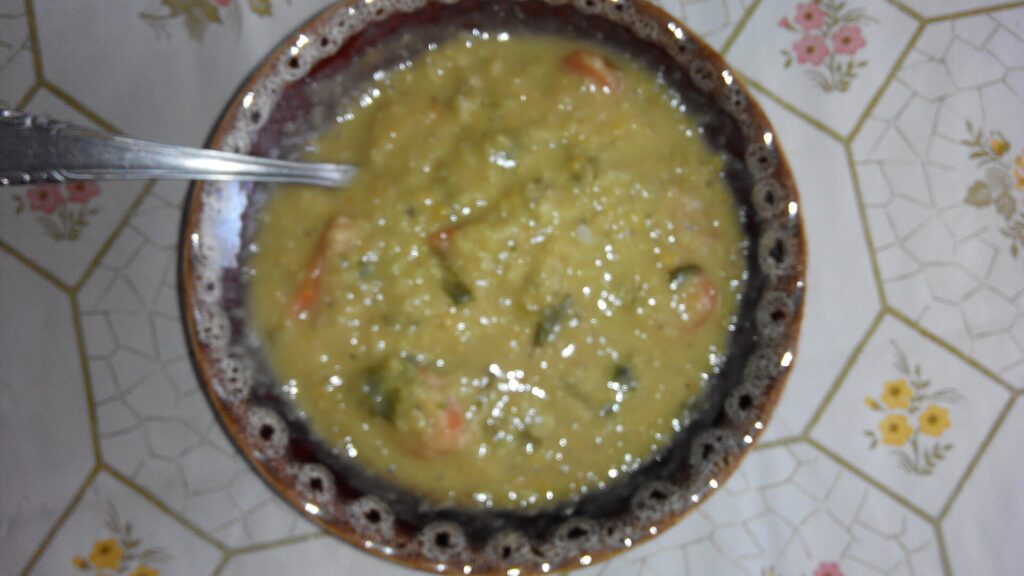
Serves four, about thirty minutes. Sweat a chopped onion and two chopped carrots in a generous amount of olive oil for eight minutes. Add three cloves of garlic, two teaspoons of cumin, a teaspoon of coriander, and a half teaspoon of Aleppo pepper or paprika, and cook for one more minute until it smells like something.
Add a cup and a half of rinsed red lentils and six cups of stock or water. Simmer for twenty minutes, uncovered, stirring occasionally, until the lentils have disappeared entirely. Salt properly. Then, off the heat, add the juice of a whole lemon, which is the step that makes the difference between this and a dull pot of orange soup.
Finish with a swirl of yogurt and either browned butter with dried mint or a spoonful of olive oil sizzled with a pinch of chili. Serve with flatbread. It thickens overnight to the point of being sliceable, so thin it with water on reheating rather than assuming something went wrong.
Warm green lentils with mustard and a fried egg
Serves four, about thirty-five minutes. Simmer a cup and a half of du Puy or Puy-style lentils in well-salted water with a bay leaf and a halved onion for twenty to twenty-two minutes, until tender with a slight bite. Drain, discard the onion and bay, and keep them warm.
While they cook, whisk a dressing that is heavier than a standard vinaigrette: a tablespoon of Dijon, two tablespoons of red wine vinegar, four of olive oil, a minced shallot, salt, and a lot of black pepper. Dress the lentils while they are still hot, which is the whole trick, because warm lentils absorb dressing and cold ones repel it.
Fold in a large handful of chopped parsley, a diced celery rib for crunch, and a small amount of something salty, either crumbled goat cheese or chopped cornichons. Top each bowl with a fried egg, the yolk left soft enough to run into the lentils. Anyone who should avoid a runny yolk can take the egg to firm without hurting the dish.
Black lentils with roasted squash and yogurt
Serves four, about forty minutes, most of it the oven. Cut a small squash or half a butternut into two-inch chunks, toss with olive oil, salt, and a teaspoon of cumin, and roast at 425 degrees for thirty minutes until the edges brown.
Meanwhile simmer a cup and a half of black beluga lentils in salted water for twenty to twenty-two minutes and drain. Dress them warm with olive oil, lemon juice, and salt so they are seasoned before anything else goes on.
Build the bowl: lentils on the bottom, roasted squash on top, a wide spoonful of thick yogurt seasoned with garlic and lemon, then toasted pumpkin seeds and a handful of herbs. It reheats well and holds three days, which makes it the most useful of the three for anyone who cooks once and eats twice, in the way a well-built plant-based bowl usually does. Leave out the yogurt or use a coconut version and nothing else changes.
What the three plates deliver, side by side
A cooked cup of lentils runs around two hundred and thirty calories and carries roughly eighteen grams of protein and about fifteen grams of fiber, which is a rare combination at that price. It is also a substantial source of folate, iron, and potassium.
| Dinner | Lentil | Protein per serving | Fiber per serving |
|---|---|---|---|
| Red lentil soup | Red split | About 15 grams | About 12 grams |
| Warm salad with egg | Green du Puy | About 20 grams | About 13 grams |
| Squash and yogurt bowl | Black beluga | About 18 grams | About 15 grams |
Figures are close estimates from the quantities above rather than laboratory values, and they shift with portion size. The iron in lentils is the non-heme form, which the body absorbs less readily than the iron in meat, and pairing it with something high in vitamin C improves that. The lemon in all three of these dishes is doing more work than it appears to, which is the sort of detail behind whether a plate delivers what it looks like it delivers.
Sprouts, digestion, and two cautions worth the space
Lentils should be cooked through, not eaten raw or barely warmed. They contain lectins, as most legumes do, at levels far below the amounts in raw kidney beans, and ordinary simmering deals with them entirely. The practical rule is simply to cook until tender rather than pulling them early for texture.
Sprouted lentils are the more specific concern. Raw sprouts of any kind, grown in the warm humid conditions bacteria also favor, have been linked to outbreaks, and guidance for people who are pregnant, elderly, young, or immunocompromised is to avoid them raw and eat them cooked instead. Standard handling advice is set out by public food safety authorities.
The digestive complaint is the common one and it is manageable. Lentils carry oligosaccharides that many people ferment rather than absorb. Rinsing well, cooking thoroughly, and increasing the amount gradually over a few weeks all help, and cooking with cumin, ginger, or asafoetida is a traditional response to the same observation. Anyone with a diagnosed digestive condition should treat their own guidance as the one that applies.
Frequently Asked Questions
Why are my lentils still hard after forty minutes?
Almost always age. Lentils that have been on a shelf for two or more years lose the ability to soften properly and no amount of extra time fixes it. The other cause is acid added too early, since tomato or vinegar in the pot keeps the skins firm. Buy from somewhere with turnover and add acid at the end.
Can I substitute one lentil for another?
Within a category, freely. Du Puy and black beluga are interchangeable in any dish, and red and yellow split lentils are interchangeable in any dal or soup. Across categories, no. Putting red lentils where the recipe wanted green produces soup, and there is no technique that prevents it.
Do canned lentils work?
For salads and quick bowls, yes, and they save twenty-five minutes. Drain and rinse them, since the canning liquid is salty and slightly slimy. They are usually brown lentils cooked past the firm stage, so they will not give the distinct bite of du Puy, and they are useless for a soup that needs to thicken.
How long do cooked lentils keep?
About four to five days refrigerated in a sealed container, and three months frozen. Cool them quickly in a shallow container rather than leaving a hot pot on the stove. Cooked and undressed lentils freeze well in portions and go straight into a soup or a pan from frozen.
Are lentils a complete protein?
On their own they are low in methionine, which is why the traditional pairing with rice or bread exists across so many cuisines. In practice this matters far less than it once seemed to, since the body draws on amino acids from everything eaten across a day rather than a single plate. Eating a varied diet handles it without any calculation.
Keep two bags rather than one: a split red for soup and a green or black for everything that needs to stay a lentil. That single distinction removes most of the ways this goes wrong, and both bags cost less than a package of chicken thighs.