A seven-ounce can of chipotles in adobo costs about two dollars and contains enough heat and smoke for four separate dinners. It is the highest return on shelf space in my pantry, and the dish that makes the case for it takes twenty-five minutes from a cold stove.
Tinga is shredded chicken in a tomato base built on those peppers and the sauce they are packed in. There is no browning step, no long braise, and no toasting of dried chiles, because the smoking and the drying already happened to the peppers before they went in the can. All that is left is to poach a bird, slice an onion, and blend four things.
The reason it works on a weeknight is that the two slow parts run at the same time. While the chicken poaches, the onions soften and the sauce goes into the blender, so the pot is waiting by the time the meat is ready to shred.
- Clock: 25 minutes, of which about 15 is the chicken poaching unattended
- Feeds: four generously, six on tostadas with something alongside
- Heat dial: one pepper is mild, three is assertive, five is genuinely hot
- The onion: sliced into half moons, never diced, and it stays visible in the pot
- Three services: tostada, taco, or over rice, from the same pot
- Poultry: shred at 165 degrees, and get leftovers cold within two hours
Twenty-five minutes, and where the time actually goes
Fifteen of those minutes are the chicken sitting in barely moving water, which requires nothing from the cook. That window is the whole budget for everything else, and it is enough if the order is right.
Start the poaching liquid first, before the onion is peeled. Put the pot on, get the chicken in, then slice the onion while it comes up to temperature. Soften the onion in a wide pan for eight to ten minutes over medium heat. Blend the sauce while it softens. By the time the chicken can be handled, the pan is ready to receive it.
The version that takes forty minutes is the one where the chicken is browned first, and browning does nothing useful here, because every surface gets torn apart and buried in sauce. Skip it. What browning would have contributed is already in the can in the form of smoke.
The can: what is around the peppers, and why it matters
A chipotle is a jalapeno that was left on the plant until it turned red, then smoke-dried. What comes in the can is that dried pepper rehydrated in adobo, a sauce of tomato, vinegar, onion, garlic, and spices, and the sauce is doing at least half the work.
Most cans hold somewhere between five and nine peppers depending on their size, packed tightly in about a quarter cup of adobo. The peppers carry the heat and the smoke. The adobo carries the acid, the sweetness, and a much gentler version of both, which is why a spoonful of sauce with no pepper at all is the correct move for a table with children at it.
Brands differ more than the label suggests. Some pack peppers that are seeded and mild, some pack whole ones with everything intact, and a few use a much sweeter adobo. Open the can, taste a scrape of the sauce off a spoon, and adjust from there rather than trusting a number in a recipe written for a different can.
Puebla claims it, and the name has never been explained
The dish is usually written as tinga poblana, which places it in Puebla, and that attribution is repeated almost everywhere. It is not the only claim. Cooks in Guerrero make a version they consider theirs, and the same argument turns up in a milder form in Michoacan.
What nobody has settled is the word. Tinga has been explained as an old term for disorder or a mess, as a reference to the appearance of the shredded meat, and as a borrowing from somewhere else entirely, and none of those accounts rests on a documented source. Recipes that state the origin confidently are stating a preference.
Where the dish sits culturally is clearer than where it started. It is street food and party food, made in volume, served on tostadas at a table where people build their own, and it belongs to the same category of cooking as the dishes that turn up at a table where everyone assembles their own plate.
Poaching beats roasting when the meat is going to be shredded
Shredded chicken needs to be moist enough to fall apart along the grain without turning to fibers. Poaching does that better than roasting because the meat never dries at the surface, and the liquid left behind becomes the thinner for the sauce.
Thighs are better than breasts and it is not close. Boneless thighs hold together while shredding, carry enough fat to stay soft in the sauce, and forgive a few extra minutes in the pot. Breasts work if that is what is in the refrigerator, and they need to come out the moment they hit temperature.
Keep the water at a bare shiver, not a simmer. Bubbles breaking the surface mean the outside is overcooking while the middle catches up, and the result shreds into dry strings. Add half an onion, two garlic cloves, and a teaspoon of salt to the water. That liquid is the only stock the dish gets.
A chicken tinga recipe that runs on one can
Scaled for four, using about a pound and a half of chicken thighs. Everything happens in one wide pan and one pot.
- Bring three cups of water to a bare simmer with half an onion, two garlic cloves, and a teaspoon of salt. Add the chicken thighs and hold the heat just below bubbling for fifteen to eighteen minutes, until they reach 165 degrees at the thickest point.
- While that runs, slice one large white onion into thin half moons and soften it in two tablespoons of oil in a wide pan over medium heat, eight to ten minutes, until translucent and just beginning to color at the edges.
- Blend a fourteen-ounce can of whole peeled tomatoes with two garlic cloves, two chipotle peppers, one tablespoon of the adobo sauce, half a teaspoon of dried oregano, and a quarter teaspoon of cumin, until smooth.
- Pour the blended sauce into the pan with the onions. It will spit. Raise the heat and cook it hard for six to eight minutes, stirring, until it darkens and thickens enough to leave a track behind a spoon.
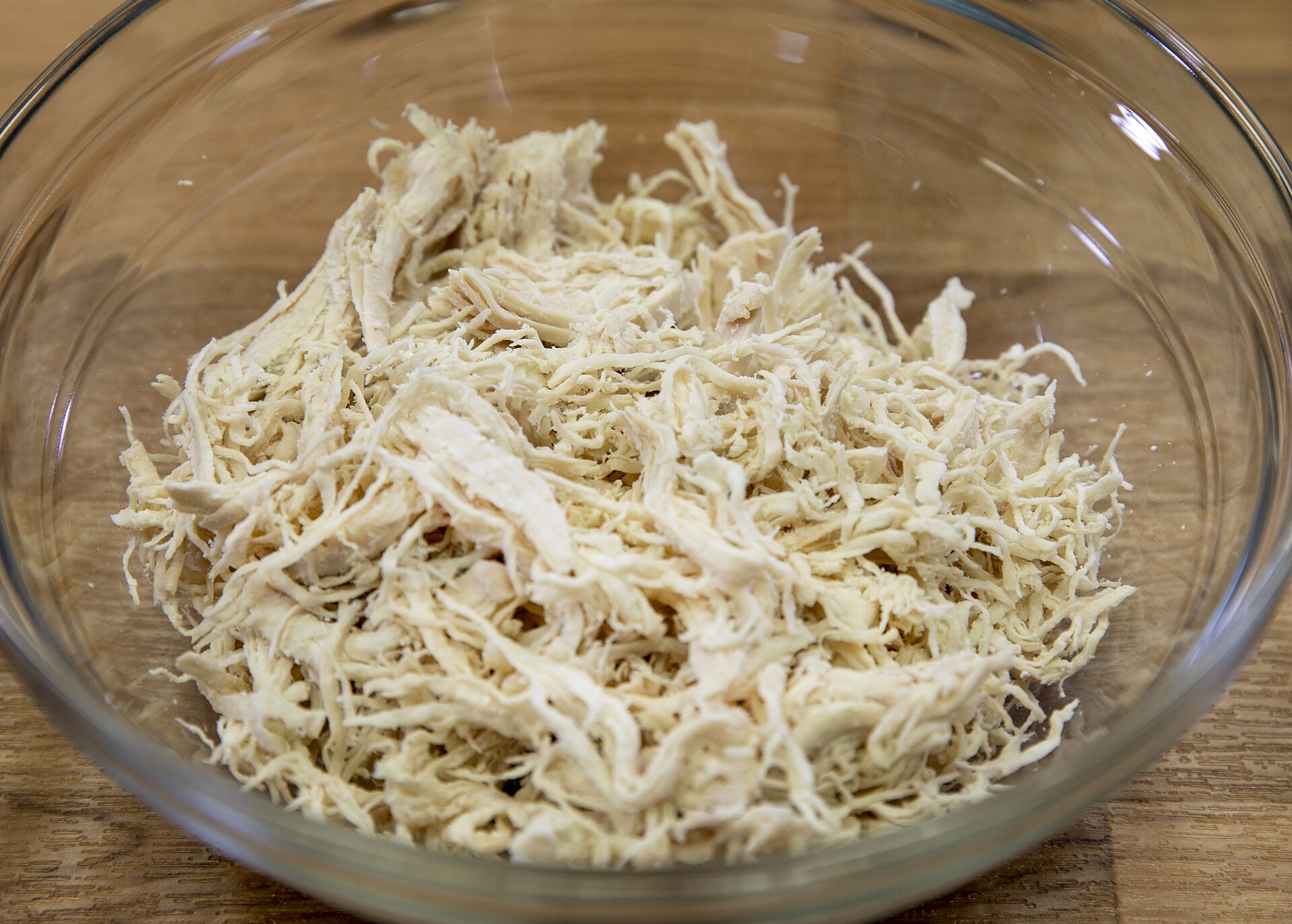
- Pull the chicken out, let it cool for two minutes, and shred it with two forks or with your hands, along the grain. Reserve a cup of the poaching liquid.
- Add the shredded chicken to the pan and stir it through the sauce. Add poaching liquid a splash at a time until the mixture is glossy and loose but not soupy, usually a third of a cup.
- Simmer together for five minutes so the meat takes on the sauce. Taste, salt, and add a squeeze of lime if it reads flat.
Step four is the one people cut short. A sauce that has not been cooked down still tastes of raw canned tomato, and no amount of chipotle covers that. Wait for the color change.
Heat control, counted in peppers
The dial has two independent settings: how many peppers, and whether their seeds go in. The adobo sauce is a third setting that adds smoke and almost no burn.
| Going in | Result | Suits |
|---|---|---|
| 1 tablespoon adobo, no peppers | Smoky, no real heat | Small children, cautious eaters |
| 1 pepper, seeded, plus adobo | Warm, background heat | A mixed table |
| 2 peppers, seeded | Clearly spicy, still comfortable | The version I make most |
| 3 peppers with seeds | Assertive, builds across a plate | People who order hot on purpose |
| 5 peppers with seeds | Genuinely hot | A small crowd that asked for it |
Blend in fewer than you think and adjust upward. A pepper can be minced and stirred into the finished pot in thirty seconds, and heat that is already in the sauce cannot be taken out. If it does go too far, a spoonful of sour cream or a handful of crumbled cheese on the plate pulls it back further than water will.
The onions are sliced, not diced
This is not a decorative preference. Diced onion disappears into the sauce and contributes only sweetness. Sliced onion stays visible as soft strands running through the shredded meat, and the texture of those strands against the chicken is part of what the dish is.
Slice a large white onion pole to pole into half moons about an eighth of an inch thick. White rather than yellow, because it stays sharper and cleaner in a sauce this acidic. Red onion is the wrong choice here and turns a dull violet.
Soften it slowly and stop before it browns. Deep caramelization brings a sweetness that fights the vinegar in the adobo. What you want is translucent with a little color at the edges, which is eight to ten minutes at a genuine medium and not four minutes on high.
Three ways to serve the same pot
The pot does not change. What changes is what is underneath it and how much of it goes on.
| Service | Base | Per person | Best for |
|---|---|---|---|
| Tostada | Fried or baked corn tortilla | 2 tostadas, a scant half cup each | A table that builds its own |
| Taco | Warm soft corn tortilla, doubled | 3 tacos, a third of a cup each | Standing up, fastest option |
| Bowl | White rice or beans | A cup over a cup of rice | Stretching the pot to six |
For tostadas, spread a thin layer of refried beans on the shell first. It is not traditional in every household and it is structurally useful, because it glues the meat down and keeps the shell from shattering at the first bite. Bake shells at 400 degrees for six minutes with a brush of oil rather than frying them if the stove is already busy.
What goes on top, and what does not
Three things are close to obligatory: something cool and creamy, something salty and crumbly, and something raw and sharp. Mexican crema or thinned sour cream, queso fresco or cotija, and shredded lettuce or thin-sliced onion cover all three.
Avocado belongs, sliced rather than mashed, because guacamole is too heavy against a sauce this rich. Lime wedges on the table are not optional. Radishes sliced paper thin add crunch and cost almost nothing.
What does not belong is shredded yellow cheese, which turns the whole thing into something else, and anything sweet. Corn salsa, mango, and pineapple all fight the vinegar in the adobo. Keep the additions cool, sharp, and salty and the plate stays balanced.
Chorizo, and the version with more going on
A large number of households in Puebla put chorizo in, and the argument about whether it belongs is old and unresolved. Where it goes in, it goes in early: render four ounces of fresh Mexican chorizo in the pan, remove it, cook the onions in the fat, and return it at the end with the chicken.
It changes the dish considerably. The pot becomes richer, redder, and heavier, and it needs less oil and a little more lime to stay balanced. It also makes the same amount of chicken stretch to six people, which is presumably part of why it took hold.
Fresh chorizo, the soft kind sold in a casing that gets squeezed out and crumbled, is what this means. The cured Spanish sausage of the same name is a different product entirely and will not break down in the pan.
Doneness, cooling, and the rest of the can
Poultry needs to reach 165 degrees, and a poached thigh at a bare simmer for fifteen minutes clears that comfortably. Check the thickest piece with a probe rather than judging by color, because meat cooked in liquid can look done at the surface while the center lags. Guidance on poultry temperatures and safe cooling is published by public food safety authorities and applies to any large batch cooked ahead.
A full pot of tinga is dense and holds heat for a long time. Divide it into shallow containers rather than refrigerating the whole pan, get it cold within two hours, and use it inside three or four days. It also freezes well for about three months and reheats with a splash of water.
The rest of the can should not sit in the tin. Metal and acid together will put a metallic edge on the sauce within a day. Spoon the remaining peppers and adobo into a small jar in the refrigerator, where they keep a couple of weeks, or freeze them individually on a tray and bag them, which is the better habit and turns the can into six weeks of use. They go into mayonnaise, into a pot of beans, into a marinade for the grill, and into anything else that wants smoke, which makes them one of the more useful things to have left over from another dish.
Frequently Asked Questions
Can I use a rotisserie chicken instead of poaching?
Yes, and it cuts the dish to twelve minutes. Pull the meat off a whole cooked bird, discard the skin, and use a cup of chicken stock in place of the poaching liquid. The result is slightly saltier and a little less tender, since the meat was roasted rather than poached, and it is a completely reasonable weeknight trade.
What if I cannot find chipotles in adobo?
Dried chipotle pods rehydrated in hot water for twenty minutes get most of the way there, with a tablespoon of tomato paste and a teaspoon of vinegar added to stand in for the adobo. Chipotle powder works too, about a teaspoon to start, though it brings the smoke without the fruit and the sauce ends up thinner.
How do I keep tostada shells from shattering?
A layer of refried beans under the meat holds everything together, and keeping the topping to a scant half cup per shell stops the load from breaking it. Warm shells are more brittle than cool ones, so let them sit for two minutes after baking. Some breakage is expected and is not a sign anything went wrong.
Does the sauce have to be blended?
Not strictly. Chopping the tomatoes and mincing the chipotles gives a rustic, chunkier pot that plenty of cooks prefer. Blending produces the smooth clinging sauce most people picture, and it also distributes the heat evenly, which matters when the peppers are doing all of it.
Can this be made ahead for a party?
It is better the next day, so making it ahead is the right call. Cook it fully, cool it in shallow containers, refrigerate, and reheat gently with a splash of water or stock. Fry or bake the shells the same day, and keep the cream, cheese, and lettuce separate until people are actually at the table.
One can, one onion, one pot, and a table that assembles itself. It is the dish I fall back on when the plan for Tuesday collapses at six, and nobody has ever treated it as a compromise.