The instruction on the box takes eight words: pour boiling water over, cover, wait five minutes. What comes out is a bowl of damp yellow grit that clumps at the bottom and dries out at the top, and most people conclude they do not like couscous much.
The grain is not the problem. Boiling water poured onto semolina granules gelatinizes the starch on the outside of each one and glues them together while the inside is still hard. Steam does the opposite: it arrives slowly, from below, as vapor rather than liquid, and each granule swells on its own without touching its neighbor.
Setting a colander over the stew you were already making costs nothing, adds no pot to wash, and puts the flavor of the pot into the grain instead of leaving it in the bowl underneath. Here is the whole method, with a chickpea and squash stew built to sit under it.
- Serves: four, with enough stew for a second lunch
- Clock: 45 minutes start to finish, about 20 of them hands on
- Equipment: a deep pot, a metal colander that sits inside its rim, a lid or a plate, a damp towel
- The grain: medium couscous, steamed twice, never boiled
- The stew: chickpeas, squash, onion, ginger, warm spice, preserved lemon at the end
- Leftovers: reheats by steam without turning to paste, which the boiled version does not
What is actually in the box
Couscous is not a grain. It is durum wheat semolina rolled by hand or by machine with water and a little fine flour until it forms small round granules, then dried. It is closer to a pasta than to rice, which is why it behaves like a pasta when it gets wet too fast.
Almost every box sold in an American supermarket is precooked. The manufacturer steams the granules, dries them again, and sells the result, which is why five minutes in hot water produces something edible. Traditional couscous across North Africa is not precooked and takes three steamings and the better part of an hour.
Steaming the precooked kind is not a purist exercise. It is a correction. The factory did the cooking; what it could not do was rehydrate the granules evenly, and that step is the one that decides whether the bowl is fluffy or pasty. Two short steamings over a pot you already have going is the difference, and it costs about six minutes of attention.
The colander is the couscoussier you already own
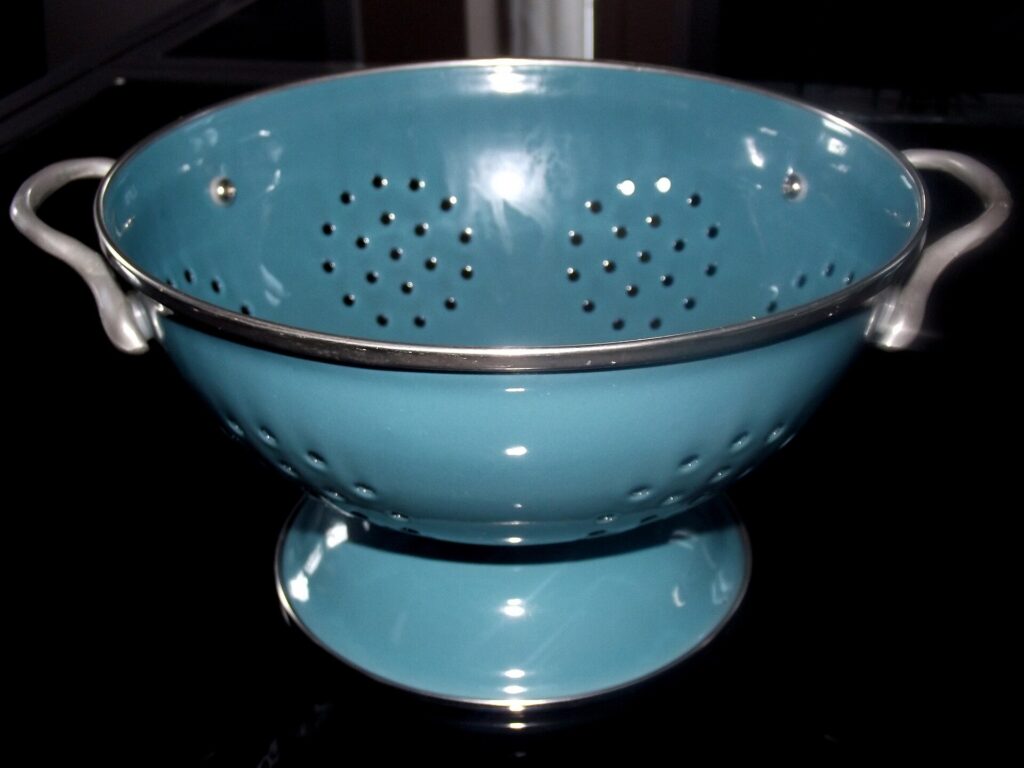
The traditional vessel is a two-part pot: a wide bottom for the stew and a perforated basket that seats on top of it, sold across the Maghreb and in most Middle Eastern groceries. Anything that holds the grain above the liquid and lets steam through will do the same job.
A metal colander inside a stockpot is the usual improvisation. What matters is that the bottom of the colander sits at least two inches above the surface of the stew, because splashing liquid onto the grain undoes the whole point, and that the two rims meet closely enough that steam goes up through the holes rather than out around the edge.
If there is a visible gap, seal it. A strip of damp kitchen towel pressed into the joint works, or a length of foil crimped around the rim. Keep the towel ends away from the burner, and lift the lid away from your face every time: escaping steam is hotter than boiling water and it is the single most common burn in this method.
The stew goes on first, and it seasons the grain
For four people: one large onion sliced, three garlic cloves, a pound and a half of butternut or another dense winter squash in one-inch cubes, two cans of chickpeas drained, a can of chopped tomatoes, a tablespoon of grated fresh ginger, and about three cups of water or stock.
The spice is a teaspoon and a half of ground cumin, a teaspoon of coriander, a teaspoon of sweet paprika, half a teaspoon of turmeric, a pinch of cayenne, and one cinnamon stick that comes out at the end. Bloom the ground spices in the oil with the onion for thirty seconds before the liquid goes in.
The liquid level is the thing to watch. It has to be deep enough to make steam for twenty minutes and shallow enough to stay two inches below the colander. Three cups in an eight-quart pot is about right. If it looks close, take a ladle out and add it back at the end.
A quick couscous dinner, step by step
- Put two cups of couscous in a wide bowl. Add half a cup of cool water and a teaspoon of salt, and rub the grains between your palms for a minute until every one is damp and none are stuck together. Leave it ten minutes to drink.
- Meanwhile, soften the sliced onion in three tablespoons of olive oil over medium heat, six minutes. Add garlic and ginger, one minute more.
- Add the ground spices and stir for thirty seconds, until they smell cooked rather than dusty.
- Add tomatoes, squash, chickpeas, the cinnamon stick, a teaspoon of salt and three cups of water. Bring to a boil, then drop to a steady simmer.
- Rub the couscous through your fingers again to break any clumps, then tip it into the colander in an even layer. Do not press it down.
- Seat the colander over the pot, seal the joint, and cover. Steam twelve minutes from the moment vapor comes through the grain.
- Tip the couscous back into the bowl. Add half a cup of water and a tablespoon of olive oil, and rake it apart with a fork, then with your hands once it is cool enough. Break every lump.
- Return it to the colander and steam a second time, eight minutes. The stew underneath is finishing at the same time.
- Check the squash with a knife tip. It should give without falling apart. Pull the cinnamon stick.
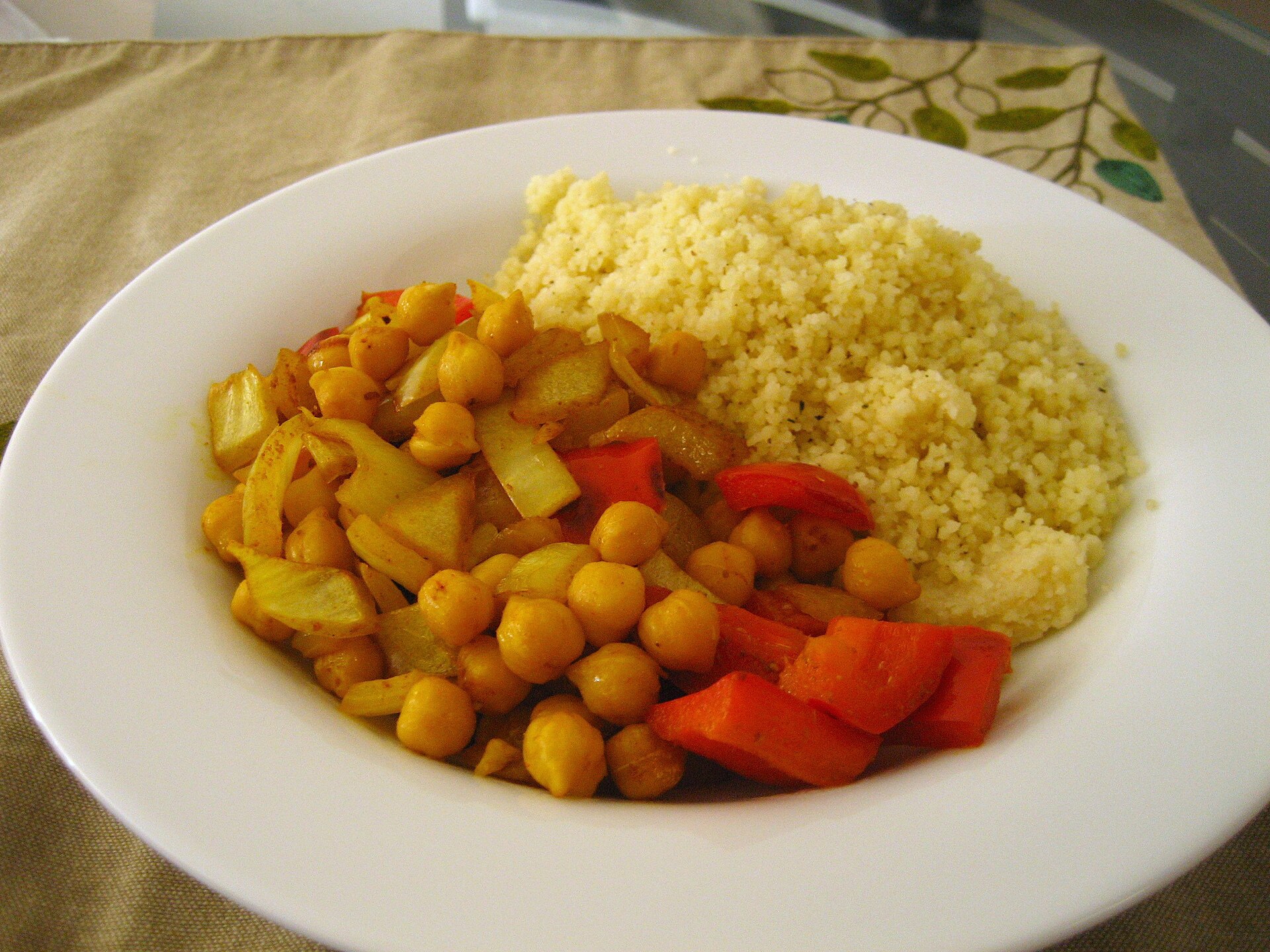
- Stir the chopped preserved lemon and most of the herbs into the stew off the heat. Fluff the couscous one last time with a fork and serve it in a mound with the stew ladled into a well in the middle.
The rest between the two steamings
The interval is not a formality. After twelve minutes the outside of each granule is hydrated and the center is not, and if the grain went straight back over the steam that gradient would set. Taking it off, adding a small amount of water, and raking it apart lets the moisture equalize inward while the mass cools.
Use a fork first, because the grain is hot, and switch to your hands as soon as it is bearable. Fingers find lumps that a fork rides over. The oil goes in at this stage rather than at the start, since a coating of fat applied to dry semolina keeps water out rather than helping it in.
Two steamings is the working minimum for the precooked kind. Three is what an uncooked traditional couscous needs, at fifteen to twenty minutes each. Nobody is going to notice a third round on a weeknight, and skipping the second one is immediately obvious.
Preserved lemon, and the part of it you use
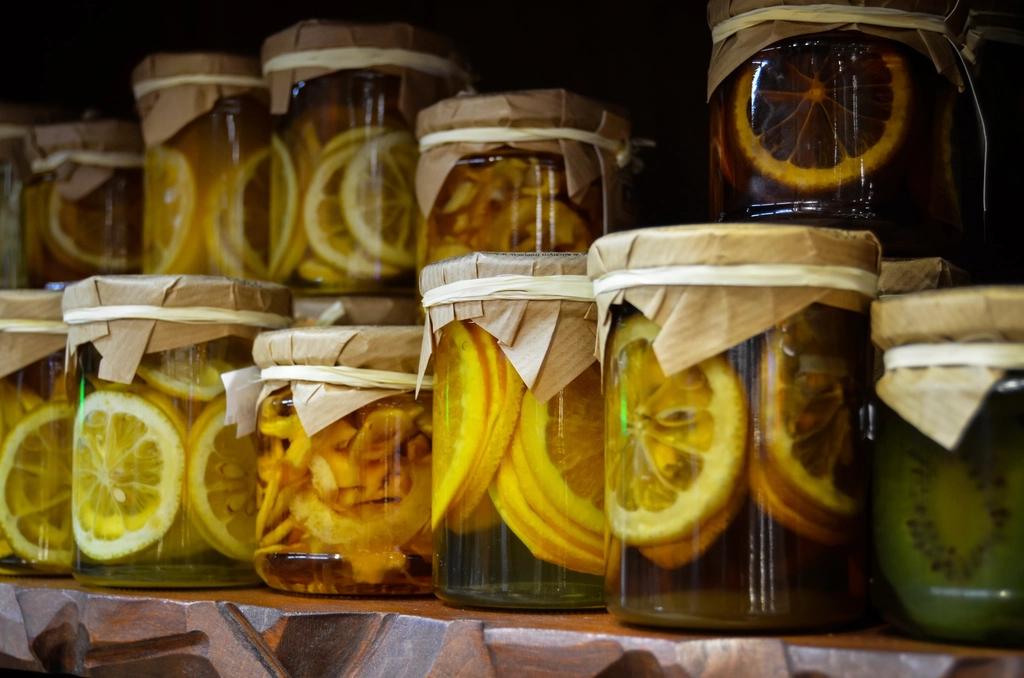
Preserved lemons are whole lemons packed in salt and their own juice for a month or more until the peel goes soft and translucent. The flavor is not sour in the way a fresh lemon is. It is salty, faintly bitter, and floral, and it does something to a chickpea stew that fresh juice cannot.
Use the peel. Scrape out and discard the pulp, which is mostly salt and softened membrane, rinse the peel briefly, and chop it fine. A quarter of one lemon is enough for a pot for four. Add it off the heat, because the aroma is volatile and five minutes of simmering takes most of it away.
Jarred ones are sold in Middle Eastern groceries and keep for a year in the refrigerator once opened. If there are none, the closest approach is a strip of fresh lemon zest plus an extra pinch of salt, which gets the brightness without the fermented depth. It is a different dish, and still a good one.
Heat goes on the table, not in the pot
The stew is seasoned but not hot, and that is deliberate. In the places this dish comes from, the chile is handed round separately: a spoonful of broth stirred into harissa, thinned to the consistency of loose paint, and passed so each person adjusts their own bowl.
There is a practical reason beyond tradition. Chile heat builds during a simmer and it cannot be walked back, so a pot seasoned to the cook’s taste at fifteen minutes is often too hot at forty and always too hot for somebody at the table. Keeping it separate solves both problems and costs one extra dish.
Two tablespoons of harissa loosened with three of the cooking liquid is the right amount for four people. If there is no harissa, a rough paste of cayenne, garlic, olive oil, a pinch of caraway and a little of the pot liquid does the same job. Chopped cilantro and flat parsley go on at the same moment, by the handful, off the heat.
Making it a bigger plate
As written this is a vegetable dinner and it eats like one. Two changes turn it into something heavier without adding a pot. The first is browning a pound of cubed lamb shoulder in the oil before the onion goes in, then adding an extra cup of water and an extra twenty-five minutes before the squash joins.
The second is merguez, which needs no extra time at all. Brown four sausages in a separate dry pan while the second steaming runs, slice them into coins, and drop them into the stew at the very end. They shed enough fat and paprika to change the character of the broth in about two minutes.
Both versions want more liquid than the vegetable one, since the meat drinks and the grain above is drinking too. Check the level when the colander comes off for the rest. A pot that has fallen below an inch will stop making steam halfway through the second round and the top layer of couscous will finish hard.
Where the time actually goes
| Minute | Stew | Couscous |
|---|---|---|
| 0 to 10 | Onion softening, spices blooming | Rubbed with water and salt, resting |
| 10 to 15 | Liquid in, brought to a simmer | Raked apart, into the colander |
| 15 to 27 | Squash cooking through | First steaming |
| 27 to 32 | Simmering, lid off | Out, watered, raked, rested |
| 32 to 40 | Reducing to the right thickness | Second steaming |
| 40 to 45 | Preserved lemon and herbs, off the heat | Final fluff |
Hands-on time is roughly twenty minutes of that, split into short bursts. The rest is standing time, which is why this fits a weeknight better than the clock suggests. The same logic runs through most of our one-pot weeknight cooking: stack the waiting, not the work.
Five ways it turns to paste
Boiling water poured over the grain. The original sin. Cool water and rubbing, then steam.
Too much grain in the colander. More than about three inches deep and the steam cannot get through the top layer. Use a wider colander or steam in two rounds.
Liquid touching the basket. Wet grain from below cooks into a solid cake. Two inches of clearance, checked before the lid goes on.
Skipping the rake. Lumps that survive the first steaming will still be lumps at the table, and the centers of those lumps stay hard.
Oil added at the start. Fat on dry semolina waterproofs it. Oil belongs in the rest between the steamings, after the grain has drunk once.
Leftovers, and the pot in the refrigerator
Steamed couscous keeps three or four days and reheats by putting it back in the colander over an inch of simmering water for five minutes. A microwave with a damp towel over the bowl works too. What does not work is a dry pan, which toasts the outside and leaves the middle cold.
The stew is better on day two. Chickpeas keep absorbing, so it will want a splash of water on reheating, and the preserved lemon should be topped up with a fresh spoonful because the first one fades. Both parts freeze, though the squash softens noticeably.
A deep pot of stew is slow to cool, and the safe practice from public food safety guidance is to move it into shallow containers rather than putting the whole pot in the refrigerator, so it passes quickly through the temperature range where bacteria multiply. Get it refrigerated within two hours of coming off the heat, and reheat to a full simmer rather than to warm. Keeping a stocked shelf makes the whole thing repeatable, which is the point of the pantry staples most of these dinners lean on.
Frequently Asked Questions
Can I steam it over plain water instead?
Yes, and it works the same mechanically. What is lost is the seasoning that rises with the vapor, which is a real part of why the stew version tastes like more than the sum of it. Salt the water and add a bay leaf if the stew is not going underneath.
Does this work with Israeli or pearl couscous?
No. Those are much larger toasted pasta balls and they need to be boiled or simmered in liquid like any small pasta. The steaming method is for the fine and medium granules only.
What size couscous should I buy?
Medium is the default and the most forgiving. Fine cooks faster and clumps more easily. Coarse, sometimes labeled berkoukes or mhamsa, wants a third steaming and a longer one, and is worth the trouble on a weekend.
How much dry couscous per person?
A generous half cup dry, which is about two cups after steaming. Two cups dry for four people leaves a little over, which is deliberate, since the leftover reheats well and the stew makes a second meal out of it.
Can I make the stew a day ahead?
Yes, and it improves. Cook it through, chill it in shallow containers, and bring it back to a simmer before the couscous goes over the top. Hold the preserved lemon and the herbs until the reheat.
The first time through, the colander and the towel feel like a lot of fuss for a side dish. The second time it takes six minutes of attention spread across a pot that was already on the stove, and the bowl that comes out is a different food from the one on the box.