I ground the last of an old jar of pepper into a pan of eggs and it did almost nothing. No bite, no aroma, just gray specks that could have been swapped for ash without changing the dish. The jar was maybe four months old, kept in a cupboard above the stove, and it had quietly gone from a spice into a texture.
That jar is the ordinary condition of most preground pepper in most kitchens, and almost nobody notices because the decline is slow and the container rarely gets finished before the next one is bought. What is inside that jar, and the three other colors of peppercorn sitting next to it on a spice shelf, come from very different processes and behave very differently once they hit a hot pan.
Below is what separates black, white, green, and pink peppercorns, why one of those four is not actually a peppercorn at all, and the specific reason a preground tin loses its nerve within a season.
- Same plant: black, white, and green peppercorns all come from Piper nigrum
- Different plant: pink peppercorns are berries from an unrelated tree
- The difference is processing: when the berry is picked and what happens to it after
- Grind size changes perceived heat: fine dust reads hotter and fades faster than coarse crack
- Shelf life: whole peppercorns keep for years; ground pepper is at its best for about a month
- What is lost first: the aromatic oils, not the heat, which is why stale pepper still bites but tastes like nothing else
Four peppercorns from two plants
Three of the four colors sold as pepper are the same fruit picked or processed at different points. Black, white, and green peppercorns all come from Piper nigrum, a flowering vine native to South Asia that produces small berries in long clusters. What separates them is when in the ripening cycle the berry is picked and what is done to it afterward, not a different variety of plant.
The fourth color, pink, is not from that plant at all. It is the dried berry of Schinus terebinthifolius, a tree native to South America and considered invasive in several parts of the world where it has spread. It looks the part in a peppercorn blend and it is sold in the spice aisle as though it belongs to the same family, but botanically it does not, and a small number of people have a genuine allergic reaction to it, particularly those with a cashew or mango allergy, since all three are in the same plant family.
Types of black pepper, and where grading actually starts
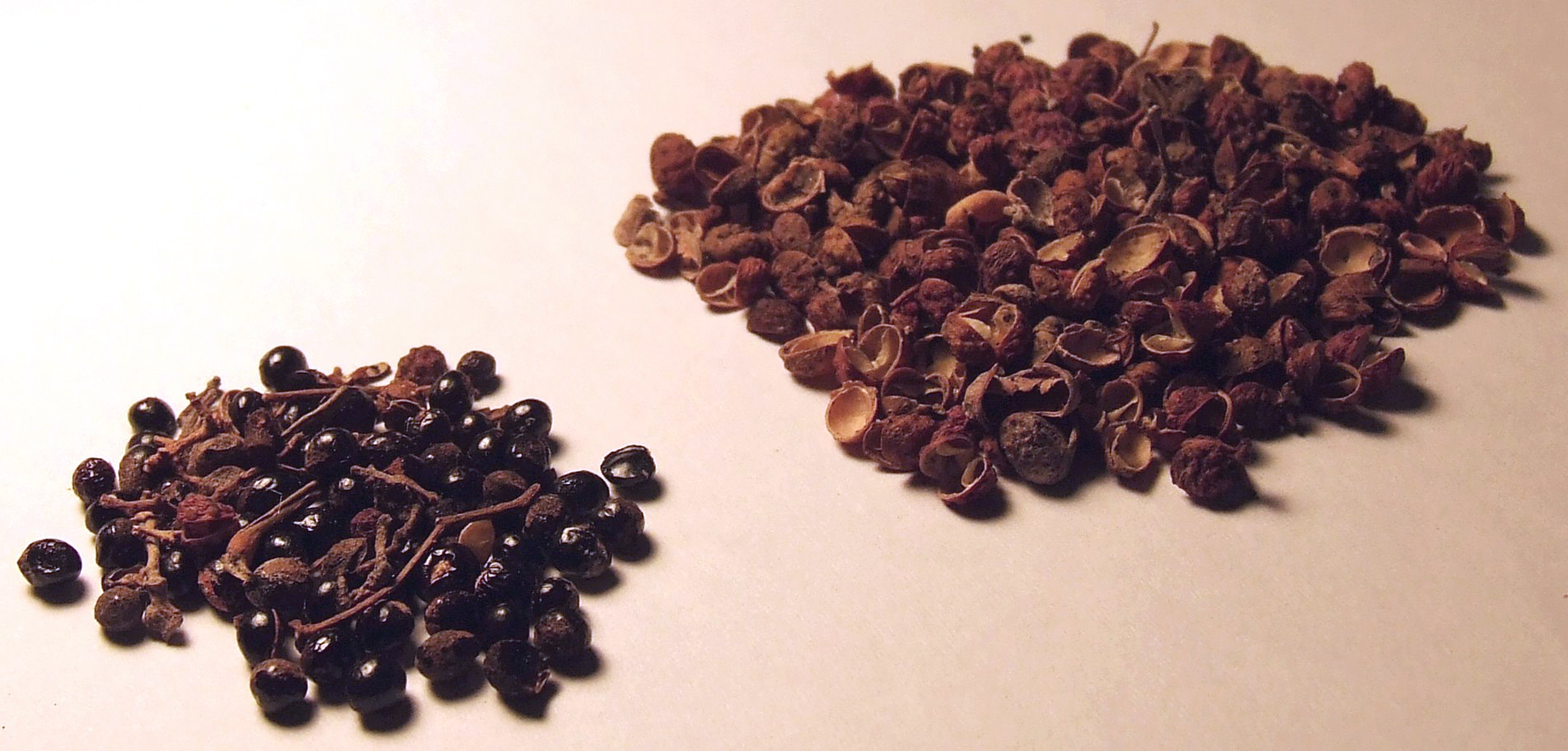
Black pepper itself is not one product. It is picked while the berry is still green and just starting to turn, then dried in the sun until the skin darkens and wrinkles around the seed. What varies after that is origin and grade, and the two most commonly seen on a specialty shelf are Tellicherry and Malabar, both named for regions on India’s Malabar coast.
Tellicherry refers to larger, more mature berries sorted out through a sieve, and the extra ripening time before picking gives it a fuller, slightly fruity heat compared to standard black pepper. Malabar is the more general grade from the same coast, smaller and sharper. Sarawak pepper from Malaysia and Kampot pepper from Cambodia are two more regional names, each with a reputation among cooks for a particular balance of heat and citrus-like brightness, and each commanding a higher price than a generic tin for exactly that reason.
Lampong pepper from Indonesia is a fifth name worth knowing, smaller and more pungent than Tellicherry, and closer to what most large commercial pepper blends are built from. None of these grades is objectively correct for every dish; a rustic braise can take the bluntness of a generic blend without losing much, while a dish built around pepper as the main flavor, such as a peppercorn-crusted steak or a Cambodian pepper crab, rewards paying for a named origin.
White pepper: the retting pond and the flavor it strips out

White pepper starts as the same berry, picked later once it has fully ripened to red, then soaked in water for one to two weeks in a process called retting. The soft outer skin softens and is rubbed away, leaving only the pale inner seed, which is then dried.
The retting process gives white pepper a distinct fermented, almost musty edge that black pepper does not have, along with a heat that some tasters describe as sharper but less complex, since a large share of the aromatic compounds live in the skin that has been removed. It is the standard pepper in a great deal of Chinese and other East and Southeast Asian cooking, and it is the reason a pale cream soup or a white sauce in French technique calls for white rather than black: no dark flecks showing through a pale dish, a similar concern to the one covered in our piece on choosing the right vinegar for the dish it finishes.
Green peppercorn: preserved young, and where it belongs
Green peppercorns are picked earliest of all, well before ripening, and because they are unripe and full of moisture they cannot simply be sun-dried the way black pepper is; they would rot rather than darken. They are instead either freeze-dried, which keeps them green and gives a crumbly dried product, or preserved in brine, which keeps them soft and closer to fresh.
Fresh flavor is the whole appeal. Green peppercorns taste bright, slightly grassy, and considerably less sharp than a fully dried black one, which is why brined green peppercorns crushed into a pan sauce for steak au poivre give a rounder heat than ground black pepper would in the same amount. Freeze-dried green peppercorns are milder still and work well cracked over a salad where a black peppercorn’s heat would be too much.
Pink peppercorn is not a peppercorn at all
Pink peppercorns are papery, hollow berries with a fruity sweetness and a much milder, almost floral heat than any true pepper. They are common in decorative peppercorn blends specifically because of the color contrast, and they crush easily under a spoon in a way that a dried Piper nigrum berry does not.
Because the plant belongs to the cashew family, anyone with a known allergy to cashews, pistachios, or mangoes should treat pink peppercorns with some caution and check with a doctor before eating them regularly, rather than assuming the word pepper means it is related to the other three. For everyone else they are a pleasant, low-heat garnish rather than a working substitute for black pepper in a recipe that depends on real heat.
The grind size that changes the heat
Piperine, the compound responsible for pepper’s heat, is present in roughly the same concentration whether a peppercorn is left whole or ground to dust. What changes with grind size is how fast that heat and the surrounding aroma reach the tongue, and how long they last once they get there.
A fine grind exposes far more surface area at once, so the initial hit of heat reads sharper and arrives faster, but it also fades faster because the same surface area lets the aromatic oils evaporate quickly, both in the jar and on the plate. A coarse crack releases its heat and aroma more slowly and holds it longer, which is why a steak finished with cracked pepper tastes different from the same steak dusted with fine pepper from a shaker, even measured to the same weight.
Why preground pepper tastes like dust after three months
Grinding a peppercorn breaks open cell walls and exposes the volatile aromatic oils that give pepper its complexity, alongside the piperine that gives it heat. Those oils begin evaporating and oxidizing the moment the seed is cracked, and a fine grind has far more surface area exposed than a whole seed does.
Piperine itself is fairly stable and does not disappear quickly, which is why old ground pepper still tastes hot even once it has gone flat. What is missing is everything else: the citrus note, the faint wood, the specific character that told a Tellicherry apart from a generic tin. A jar of ground pepper is close to its best for about a month and noticeably diminished by three, while whole peppercorns kept in a sealed container out of direct light hold their character for a year or more with barely any loss.
Tasting the four side by side
| Type | Picked | Processing | Character |
|---|---|---|---|
| Black | Just turning | Sun-dried whole | Sharp, woody, most complex |
| White | Fully ripe | Soaked, skin removed | Sharper, musty, less aromatic |
| Green | Unripe | Brined or freeze-dried | Bright, grassy, mild |
| Pink | N/A, different plant | Dried whole | Fruity, floral, very mild |
Tasting all four on their own, without anything else on the tongue, makes the differences obvious in a way that a recipe never quite explains. A pinch of each, chewed slowly, shows the black as the loudest and most rounded, the white as sharper but flatter, the green as fresh and almost herbal, and the pink as barely pepper at all next to the other three, the same side-by-side approach used in our ranking of twelve chiles by heat and flavor.
Buying pepper: what the label should say
A label that names a single origin, such as Tellicherry or Kampot, and a harvest year is a better sign than one that simply says black pepper with no further detail, in the same way a coffee bag naming a farm says more than one labeled only dark roast. Whole peppercorns are always the better buy over ground, regardless of origin, since the grinding is the step that starts the clock running down.
Buy in small quantities rather than the largest tin available. A four-ounce bag of whole peppercorns used within a year beats a pound bought once and left to sit, and the price difference per ounce rarely justifies the amount that will end up thrown out once it has gone stale.
Storing it, and the mill worth using
Keep whole peppercorns in a sealed jar away from direct light and away from the heat of the stove, where a surprising number of spice racks are mounted for convenience and end up cooking their contents slowly for years. A cupboard shelf works better than anywhere within reach of a burner.
A mill with an adjustable grind is worth the cost over a cheap fixed one, since it allows a coarse crack for a finished steak and a finer grind for a dough or a delicate sauce from the same jar. Grind only what a dish needs at the moment of cooking rather than a batch ahead, and treat any pepper that has sat ground in a jar for more than a couple of months as something to use up in a long-cooked stew rather than to finish a delicate dish. Pepper is one of several pantry spices worth treating this way, alongside the smoked spices covered in our guide to adding smoke to a dish without a smoker.
A cheap plastic mill with a fixed setting is not a false economy so much as a different tool for a different job. It works fine for a table where pepper is added at the very end over a finished plate, where a single medium grind covers most needs. Where it falls short is precision: a serious cook wants the option of a near-powder grind for a spice rub and a rough crack for the crust on a piece of meat, and only an adjustable mechanism gives both from the same jar of peppercorns.
A small electric grinder reserved only for spices, kept separate from a coffee grinder, is worth having in a kitchen that goes through pepper quickly, since it produces a consistent grind in seconds for a rub or a large batch and saves the wrist work a hand mill demands for anything beyond a light finishing dusting.
Frequently Asked Questions
Is white pepper hotter than black pepper?
Many tasters describe the initial heat as sharper, though it carries less of the aromatic complexity that makes black pepper taste rounded. The two are closer in raw heat than their reputations suggest, and the real difference is in everything surrounding that heat.
Can green peppercorns replace black pepper in a recipe?
Brined green peppercorns work well in a sauce or a marinade where their softness and milder heat suit the dish, such as steak au poivre, but they are a poor substitute anywhere a recipe wants the assertive bite of dried black pepper.
Why do some pepper blends look pink, green, and black together?
Decorative peppercorn blends mix colors mainly for visual contrast rather than for a considered flavor profile, and the pink component is usually there for color more than for any culinary role it plays.
Does freezing whole peppercorns extend their life?
It is unnecessary. Whole peppercorns kept sealed and away from heat and light already last well over a year at room temperature, and freezing introduces moisture risk from condensation without buying much additional shelf life.
Is pink peppercorn safe for everyone?
Most people tolerate it without issue, but anyone with a known allergy to cashews, pistachios, or mangoes should be cautious, since the plant is related to those foods, and should check with a doctor before eating it regularly.
Buy one small bag of a named-origin black pepper and taste it against whatever has been sitting in the cupboard. The difference is usually loud enough that the old jar goes in a stew that night and does not come back out.