By two in the afternoon on the day itself, the oven is already fighting over space between a turkey, a casserole, and whatever bread needs a final warm-through, and something always loses that fight. Usually it is the vegetable side, since it is the one dish nobody built the schedule around in the first place.
The six vegetable thanksgiving sides below are chosen and timed specifically to avoid that fight: two finish entirely on the stovetop, one is served cold, and the rest are built to go into the oven in the gaps the turkey actually leaves rather than competing with it directly. None of them are a consolation plate standing in for the real meal; each is built to be good enough that it gets finished rather than left in the dish.
The oven itself is the real constraint on a holiday menu, far more than any single recipe, and most vegetable sides fail not because the cooking is hard but because they were never given a slot in a schedule that already assumed the oven belonged to the turkey and the stuffing all day.
What follows is all six, the oven or stovetop space each one needs, and how far ahead each can be made without losing anything on the day itself.
- Six sides: roots, green beans, red cabbage, a raw salad, brussels sprouts, and a squash gratin
- Oven users: three of the six need oven time, the rest use the stovetop or a slow cooker
- Make-ahead: two can be fully finished a day or two early
- The one cold dish: a fennel and apple salad, dressed just before serving
- Holding time: none of these should sit on a buffet at room temperature for more than two hours
- The point: vegetables that stand on their own next to turkey and stuffing, not a bowl of plain steamed carrots
Six vegetable thanksgiving sides that do not compete for the oven
| Side | Cooks where | Make ahead |
|---|---|---|
| Roasted root vegetables, two sauces | Oven, 425 | Sauces 2 days ahead |
| Charred green beans | Stovetop | Blanch a day ahead |
| Braised red cabbage | Stovetop, then oven low | Fully, 2 days ahead |
| Fennel and apple salad | No cooking | Components a day ahead |
| Brussels sprouts | Oven, 450 | Trim a day ahead |
| Squash and sage gratin | Oven, then holds in a slow cooker | Assemble a day ahead |
Vegetable thanksgiving sides built this way spread the cooking across the whole day and across more than one appliance, rather than assuming a single oven can hold everything at once at the exact moment the turkey needs to rest.
Three of the six lean on the stovetop, a slow cooker, or no cooking at all, which is deliberate. A table with six vegetable sides all requiring the oven at 425 for forty minutes each is a table that will not have all six ready at the same time, no matter how carefully the schedule is written out in advance.
Roasted root vegetables with two sauces
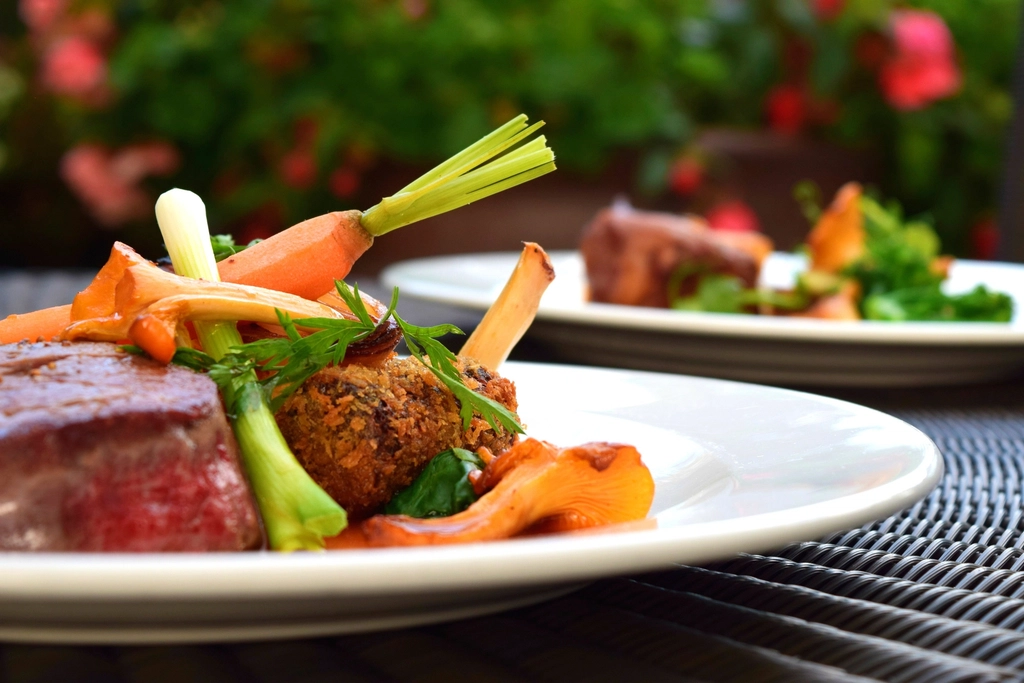
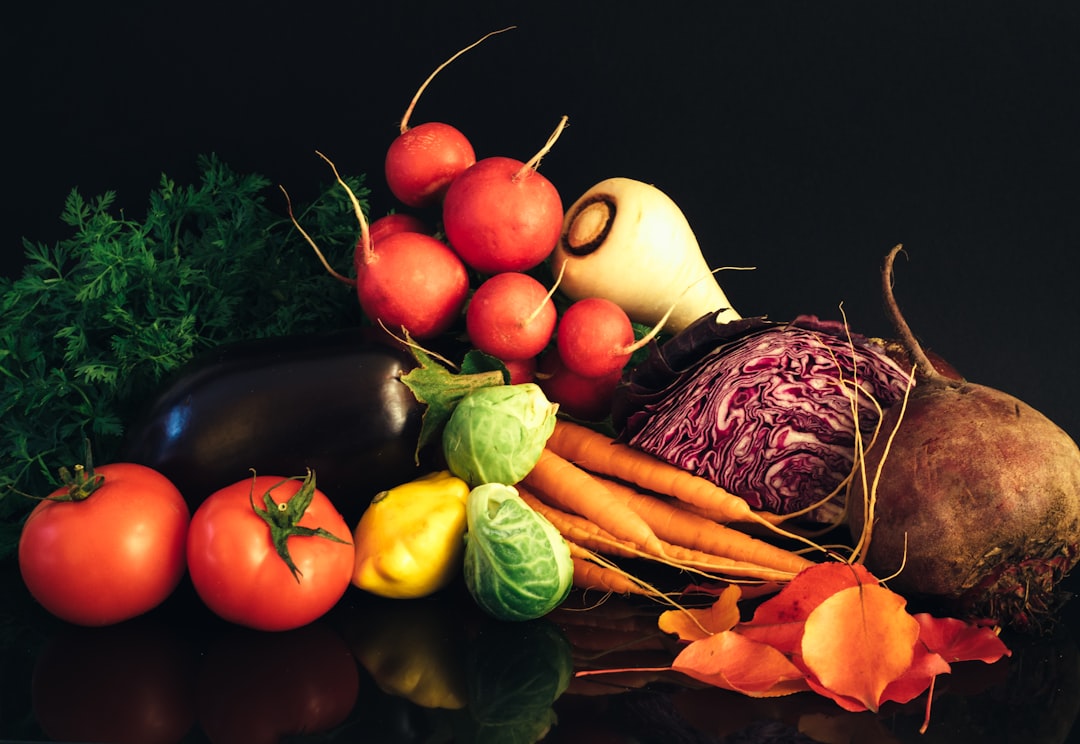
Carrots, parsnips, and a red onion, cut into similar-sized wedges, roasted at 425 for about thirty-five minutes until well browned, form the base. Rather than one flavor, make two sauces ahead of time: a simple brown butter and sage, and a sharper gremolata of parsley, lemon zest, and garlic, letting guests choose or mix both over the same tray.
The mix of colors from carrots, parsnips, and red onion also does more for a Thanksgiving table visually than a single vegetable would, and the two sauces mean the same tray reads as two different dishes to anyone filling a plate, without doubling the actual cooking involved.
Both sauces keep for two days refrigerated, which means the only work happening on the day itself is the roasting, and the tray can go into the oven whenever a thirty-five-minute window opens up between the turkey coming out and everything else going in. The same one-tray, multiple-sauce approach is worked out at length in our piece on one tray of vegetables turned into four different dinners.
Charred green beans, off the stovetop entirely
Blanch a pound and a half of green beans the day before, plunge them into ice water, and refrigerate. On the day, char them hard in a very hot, dry skillet for four to five minutes, in batches so they are not crowded, then toss with olive oil, flaky salt, and toasted almonds.
Because the entire cook happens on the stovetop rather than in the oven, this is one of the easiest sides to slot in at the last minute, even while the oven is fully occupied with everything else, and the pre-blanching the day before cuts the actual cooking time on the day down to under ten minutes total.
A cast iron skillet gives the deepest char of any pan available in most kitchens, since it holds heat better than a thinner stainless pan once the beans go in and start releasing moisture. If a cast iron skillet is not available, a heavy stainless pan works, though the char will be slightly less even.
Braised red cabbage, made two days ahead
Sliced red cabbage, braised slowly with a chopped apple, a splash of red wine vinegar, a little brown sugar, and a cinnamon stick, for about an hour and a half on the stovetop, is a dish that genuinely improves after a day or two in the refrigerator as the flavors settle and deepen.
Make it completely two days ahead, refrigerate it, and reheat gently on the stovetop or in a slow cooker on the day itself, which uses no oven space at all on Thanksgiving and frees up a burner for only the ten minutes it takes to warm through. Cabbage behaves the same way across methods, a point covered in our guide to cabbage as a main dish rather than a side.
This is also the dish on the list most likely to have leftovers, and it holds up remarkably well as its own meal days later, stirred through rice or served alongside a roast pork sandwich, which is worth knowing if the holiday table tends to leave a full dish of it behind.
A raw fennel and apple salad for the one cold thing on the table
Thin-shaved fennel, tart apple slices, a handful of parsley, and a lemon and olive oil dressing make the one dish on this list that uses no heat at all and no oven or stovetop space on the day. Shave the fennel and slice the apple ahead of time, tossing the apple in a little lemon juice to keep it from browning, and store them separately.
Combine and dress only in the last twenty minutes before serving, since fennel softens and the apple continues to release moisture the longer it sits dressed, and a salad assembled too early turns watery by the time it reaches the table.
A shaved fennel salad also does real work as a palate cleanser on a table otherwise dominated by rich, heavy dishes, and its bright acidity is worth having somewhere on the table specifically for that reason, beyond simply being the token vegetable course.
Brussels sprouts, roasted hard and finished at the table
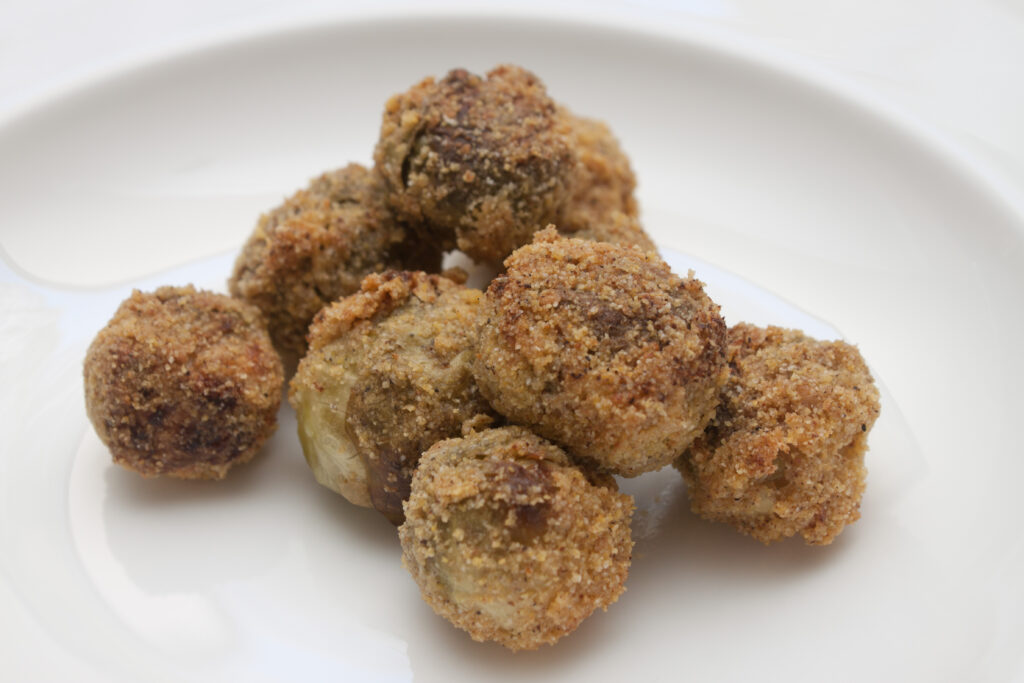
Halved brussels sprouts, tossed generously in oil and roasted at 450 for twenty-five minutes without stirring too often, come out deeply browned on the cut side and genuinely crisp at the edges, a texture that low, gentle roasting never achieves. Finish with a drizzle of balsamic reduction or a squeeze of lemon at the table rather than in the pan, since acid added before roasting interferes with browning. The same timing rule for acid and fat applies to the bitter greens in our piece on six winter greens that are not kale.
Trim and halve them the day before and store refrigerated in a bag, which leaves only the roasting itself for the day, a twenty-five-minute window that can slot in wherever the oven has a gap at 450 degrees, close to the temperature many people also use for a final crisping of other dishes.
A squash and sage gratin that holds heat well
Thin-sliced butternut or delicata squash layered with cream, sage, garlic, and a little gruyere, baked at 375 for about fifty minutes until tender and browned on top, is the richest of the six and the one that most directly stands in for a potato gratin on a table that already has plenty of starch elsewhere.
Assemble the whole dish a day ahead, refrigerated unbaked, then bake it the day of. Once baked, it holds heat reasonably well in a slow cooker set to warm for up to an hour, which is useful if the oven itself is needed again right after this dish comes out.
Oven space and the make-ahead order, worked backward from dinner
Start from the turkey’s schedule, since it dictates everything else: figure out when the oven is free before the bird goes in, during any rest period, and after it comes out while it rests before carving, and slot the three oven dishes above into those specific windows rather than trying to fit everything in in the final hour.
The braised cabbage and the fennel salad, needing no oven time at all, are the pieces that give the rest of the schedule room to breathe, and making them fully ahead means the day-of task list is really just three trays going in and out of one oven at different temperatures, staggered around the bird rather than stacked against it.
Holding food safely once the buffet is out
Once these sides are on a buffet table, the same two-hour rule that applies to the turkey and the stuffing applies here: food sitting at room temperature for more than about two hours moves into a range where bacteria multiply quickly, and a long, leisurely holiday meal can easily run past that window without anyone noticing.
A slow cooker set to warm, or a chafing dish with a real heat source underneath, keeps a hot side dish safely above that threshold for longer table time. The cold fennel salad should come out of the refrigerator closer to serving time rather than sitting out from the start, and any leftovers from any of the six should go into the refrigerator within two hours of the meal beginning, not whenever the last person finishes eating.
A large gathering that runs for several hours, with people arriving and eating at different times, is exactly the situation where this rule gets forgotten, since no single dish looks obviously spoiled after three hours on a table. Setting a timer from when the food first comes out is a more reliable habit than trusting a visual check alone.
Frequently Asked Questions
Can all six be made for a smaller table of four?
Yes, and the quantities scale down easily since none of them depend on a specific pan size the way a layered casserole sometimes does. Halving the recipes works cleanly for all six.
Which one is best for a vegan table?
The roasted root vegetables, the charred green beans, the braised cabbage, and the fennel salad are all naturally vegan as written. The squash gratin needs a dairy-free cream and cheese substitute, and the brussels sprouts are vegan unless finished with butter instead of oil.
What if I only have one oven and no slow cooker?
Prioritize the three stovetop and no-cook dishes, since they need no oven time at all, and pick one of the three oven dishes rather than all three, saving the others for a different meal. Trying to rotate three separate oven dishes through one oven on the day itself is where most holiday schedules fall apart.
A second small appliance, whether a toaster oven, an air fryer with an oven function, or a neighbor willing to lend oven space for an hour, solves more scheduling problems on a holiday than any amount of clever recipe timing does, and it is worth asking around well before the day itself rather than discovering the conflict at noon on Thanksgiving.
Can the roasted vegetables be reheated the next day?
Yes, and a hot oven or a dry skillet brings back most of the original texture, while a microwave tends to turn browned edges soft. They keep about four days refrigerated.
How do I keep the fennel salad from going watery if it has to sit out for a while?
Dress only the portion being served immediately and keep the rest undressed and separate until it is needed, refilling the bowl rather than dressing the entire batch at once.
Pick two or three of these rather than attempting all six on a table that already has plenty on it. The point of building sides around the oven’s actual schedule is choosing fewer dishes and getting each one right, not filling every inch of counter space with something green.