A cook once told me to just use anchovy paste instead of the fish sauce a recipe called for, since they were both fishy and salty anyway. The dish came out wrong in a way that was hard to name at first: flatter, without the funk that made the original recipe work, and oddly sweet where it should have had a savory backbone. Two ingredients from the sea are not automatically the same ingredient.
Anchovy, fish sauce, and shrimp paste are all fermented seafood products used to add a deep savory quality to a dish rather than a fishy taste on its own, and all three disappear into a finished sauce in a way that makes them easy to underestimate. None of them substitutes cleanly for either of the others, and the differences show up clearly once each is tasted on its own terms.
Below is what each one actually is, how strong it is measured against the others, and the dishes that could not exist without the specific one they are built on.
- All three: fermented seafood, built for savory depth rather than fish flavor as such
- Strongest by volume: shrimp paste, used in teaspoons rather than tablespoons
- Most versatile: fish sauce, used across most of Southeast Asian cooking
- Most familiar in the West: anchovies, sold whole, filleted, or as a paste
- No clean substitutions: each is built into dishes the other two cannot replicate
- After opening: all three keep for months refrigerated, and all three carry real allergens
Fish sauce vs anchovy: two products that overlap and one that doesn’t replace the other
The fish sauce vs anchovy comparison comes up constantly because both are, at some level, fermented or cured small fish used to season a dish rather than to be eaten as the main event. Fish sauce is itself often made from anchovies or similar small fish, fermented in salt for months to years until the liquid that drains off becomes the finished product.
What separates them is form and concentration. An anchovy fillet is the whole cured fish, oily and intact, meant to melt into a hot pan and disappear as texture while leaving flavor behind. Fish sauce is already a liquid, thin and pourable, meant to be splashed in rather than melted down, and its flavor is rounder and less immediately fishy than a raw anchovy fillet tastes on its own.
A cook reaching for one instead of the other is usually solving the wrong problem. If a recipe needs a savory base built into a fat before other ingredients go in, anchovy is the tool. If a recipe needs a splash of seasoning added at any point, including raw at the table, fish sauce is the tool, and neither one does the other job particularly well.
What each of the three actually is
Anchovies are small oily fish, cured in salt and usually packed in oil, either whole or filleted. Fish sauce is the strained liquid produced by fermenting whole small fish, typically anchovies or similar species, in large quantities of salt over a period ranging from several months to more than a year, depending on the producer and the grade being made.
Shrimp paste is a thick, dense paste made from fermented ground shrimp or krill, sold either as a wet paste or dried into blocks, and it is considerably more pungent in its raw, uncooked state than either of the other two. All three rely on the same basic process, salt-driven fermentation breaking down protein into free amino acids and creating the deep umami character none of them would have fresh.
The length of fermentation matters as much as the process itself. A fish sauce aged for a year or more develops a rounder, less aggressively sharp profile than one rushed through in a few months, which is part of why a well-made bottle costs noticeably more than a mass-market one and why the difference is worth tasting side by side at least once.
Anchovies: whole, fillet, or paste, and how much salt each carries
A whole salt-packed anchovy needs rinsing and filleting by hand before use, which most home cooks skip in favor of oil-packed fillets that are ready to use straight from the tin. Anchovy paste, sold in a tube, is the most convenient but also the most diluted of the three forms, cut with vinegar and other ingredients that make it milder and less concentrated than a true fillet.
Two fillets melted into a pan of hot olive oil, stirred until they dissolve, deliver a savory backbone to a tomato sauce or a braise without contributing any fishy flavor a diner would identify on the plate. This melting quality, unique among the three, is what makes anchovies the ingredient of choice for building a sauce base rather than for finishing a dish at the table.
Salt-packed anchovies, once rinsed and filleted, tend to have a cleaner, less oily flavor than the oil-packed kind, since they never sat marinating in oil for months before the tin was opened. The extra step of rinsing and boning them by hand is worth it for a dish where anchovy is the featured flavor rather than a background note, such as a simple pasta aglio e olio finished with a generous number of fillets.
Fish sauce: the liquid that took anchovy’s job in half the world’s kitchens
Fish sauce is the seasoning backbone of Vietnamese, Thai, Filipino, and much of the rest of Southeast Asian cooking, used the way soy sauce is used in East Asian kitchens or salt is used almost everywhere: added throughout cooking and often again at the table. A splash added early in a stir-fry or braise cooks off some of its sharper edge, while a splash added at the end, as in a dipping sauce, keeps its full pungency.
Brands vary enormously in strength and quality, and a fish sauce made from the first pressing of fermented anchovies carries a noticeably cleaner, more complex flavor than a cheaper, more diluted bottle cut with added water and sugar. Reading the ingredient list, looking for one that lists only fish and salt, is a reliable way to judge quality without needing to taste every bottle on a shelf.
Red Boat and Three Crabs are two widely available brands frequently pointed to by cooks who care about the difference, both built on a short ingredient list rather than the sugar and preservative additions common in cheaper bottles. Buying a smaller bottle of a better brand rather than a large jug of a diluted one is generally the better use of the same amount of money.
Shrimp paste: the thickest and the least forgiving
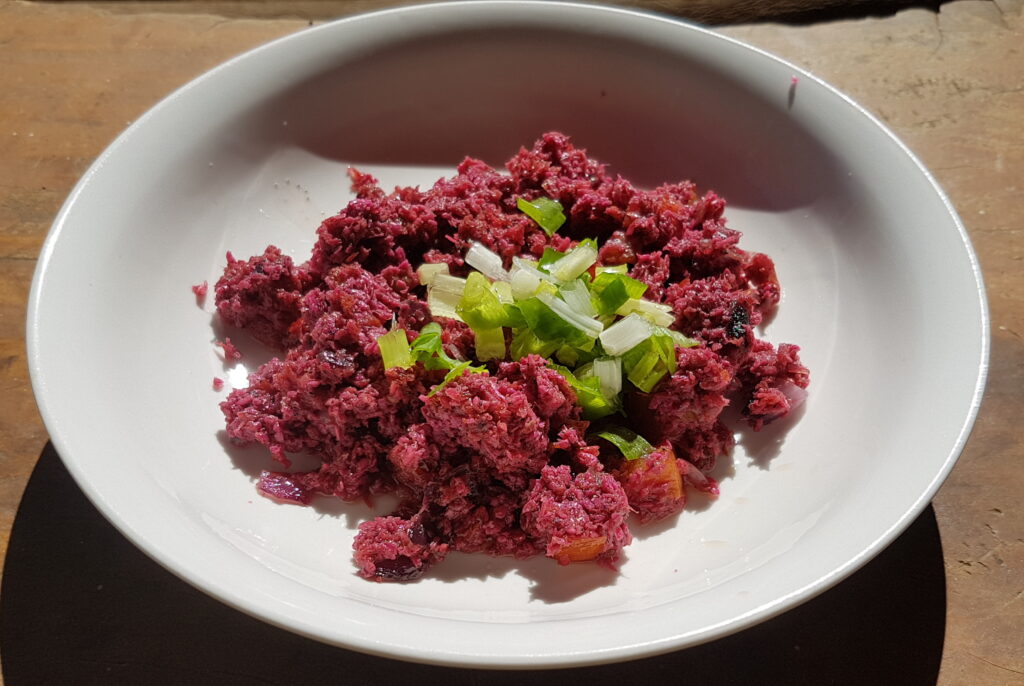
Shrimp paste, called by different names across the region including belacan in Malaysia and terasi in Indonesia, is the most concentrated and least approachable of the three in its raw form, with a smell strong enough that a first-time cook is often convinced something has gone wrong before it is even cooked.
Toasting or frying a small amount, either wrapped in foil over a flame or in a dry pan, mellows that raw pungency dramatically and is close to mandatory before it goes into most dishes rather than being used straight from the block. A teaspoon, properly toasted and worked into a chile paste or a stir-fry, transforms a dish the way a much larger quantity of fish sauce or anchovy would be needed to achieve the same depth.
Strength per teaspoon, measured against each other
| Anchovy (1 fillet) | Fish sauce (1 tsp) | Shrimp paste (1 tsp) | |
|---|---|---|---|
| Saltiness | Moderate | High | Very high |
| Fishiness raw | Noticeable | Sharp | Extremely strong |
| Fishiness cooked | Nearly gone | Rounded | Mellowed, still present |
| Typical amount per dish | 2 to 4 fillets | 1 to 3 tbsp | 1 to 2 tsp |
Shrimp paste does more work per teaspoon than either of the other two, which is exactly why recipes call for so little of it relative to fish sauce, often measured in single teaspoons rather than the tablespoons a fish sauce recipe regularly asks for.
The dishes each one built, and why swapping flattens them
A Caesar dressing or a Sicilian puttanesca depends on anchovies melting into a fat base, a texture and process that fish sauce or shrimp paste cannot replicate since neither one melts the same way into hot oil. A Vietnamese nuoc cham or a Thai green curry depends on fish sauce’s specific balance of salt and rounded funk, which a diluted anchovy paste stirred into water approximates only weakly. The ratio itself is worked out in detail in our piece on building a Vietnamese noodle bowl around nuoc cham.
Sambal belacan, the Malaysian and Indonesian chile paste, and countless Southeast Asian curry pastes are built around toasted shrimp paste specifically, and leaving it out or swapping in fish sauce changes the dish’s whole character rather than adjusting it slightly. Each ingredient is load-bearing in its own tradition, not an interchangeable seasoning that happens to come from the sea.
How much disappears into a finished sauce
All three are designed to vanish as a recognizable flavor once cooked into a finished dish, which is exactly what makes them easy to underrate from the ingredient list alone. A pasta sauce with two anchovies melted in tastes savory and rounded, not fishy, and most people eating it would not guess the ingredient was there at all.
The amount that survives to the final plate is a fraction of what goes into the pot, since fermentation has already broken the protein down into the amino acids responsible for umami, and cooking further integrates rather than intensifies that flavor. This is the reason these three ingredients get described as a background note or a backbone rather than a headline flavor in almost every dish that uses them well. It is the same quiet, structural role acid plays in our rundown of four acids that are not lemon.
Allergies, histamine, and storage after opening
All three are fish or shellfish products and carry the same allergy considerations as the fresh version of those foods. Fish sauce and anchovies contain fish protein and are unsuitable for anyone with a fish allergy, while shrimp paste is a shellfish product and carries the same risk for anyone allergic to shellfish; the two allergies are not the same and a person with one is not automatically at risk from the other.
Fermented fish products also carry naturally elevated histamine levels, which can trigger symptoms resembling an allergic reaction in people who are sensitive to histamine even without a true fish allergy. Once opened, all three keep for a long time under refrigeration, generally many months for fish sauce and shrimp paste and a few weeks for opened anchovy tins once transferred to a sealed container, but none of them should be left at room temperature for extended periods once the seal is broken, since the salt content slows spoilage but does not stop it entirely.
Frequently Asked Questions
Can vegetarian fish sauce substitutes replace the real thing?
Substitutes built on soy sauce, seaweed, and mushroom generally approximate the salt and umami reasonably well but lack the specific fermented funk of real fish sauce. They work as a reasonable stand-in for someone avoiding fish rather than as an indistinguishable replacement.
Is Worcestershire sauce a substitute for anchovies?
It is a closer substitute than most people expect, since traditional Worcestershire sauce is itself fermented with anchovies as a base ingredient, and it works in a pinch for a dish that wants a savory anchovy note without the fillets themselves.
Why does my shrimp paste smell so much stronger than the finished dish tastes?
Raw shrimp paste is genuinely one of the most pungent ingredients in any pantry, and toasting or frying it before use breaks down the compounds responsible for that raw smell, mellowing it considerably by the time it reaches the plate.
Can these three be mixed in the same dish?
Occasionally, and some regional recipes do call for a combination, particularly fish sauce alongside shrimp paste in certain Southeast Asian pastes. Combining all three without a recipe guiding the proportions risks an overpoweringly salty, muddled result.
How do I know if fish sauce has gone bad?
Fish sauce is extremely shelf-stable due to its salt content and rarely spoils in a way that makes it unsafe, though flavor can dull over a very long time. A change in color to noticeably darker, or a smell that has shifted from pungent to actively rotten rather than fermented, is the sign to discard a bottle.
Buy one bottle of real fish sauce, in the spirit of the ingredient-first approach in our piece on the ingredients that make a sauce irresistible, and taste it plain on a spoon before ever cooking with it. It will taste far too intense on its own to make sense, and that is the exact quality that turns into something essential once it lands in a hot pan with everything else.