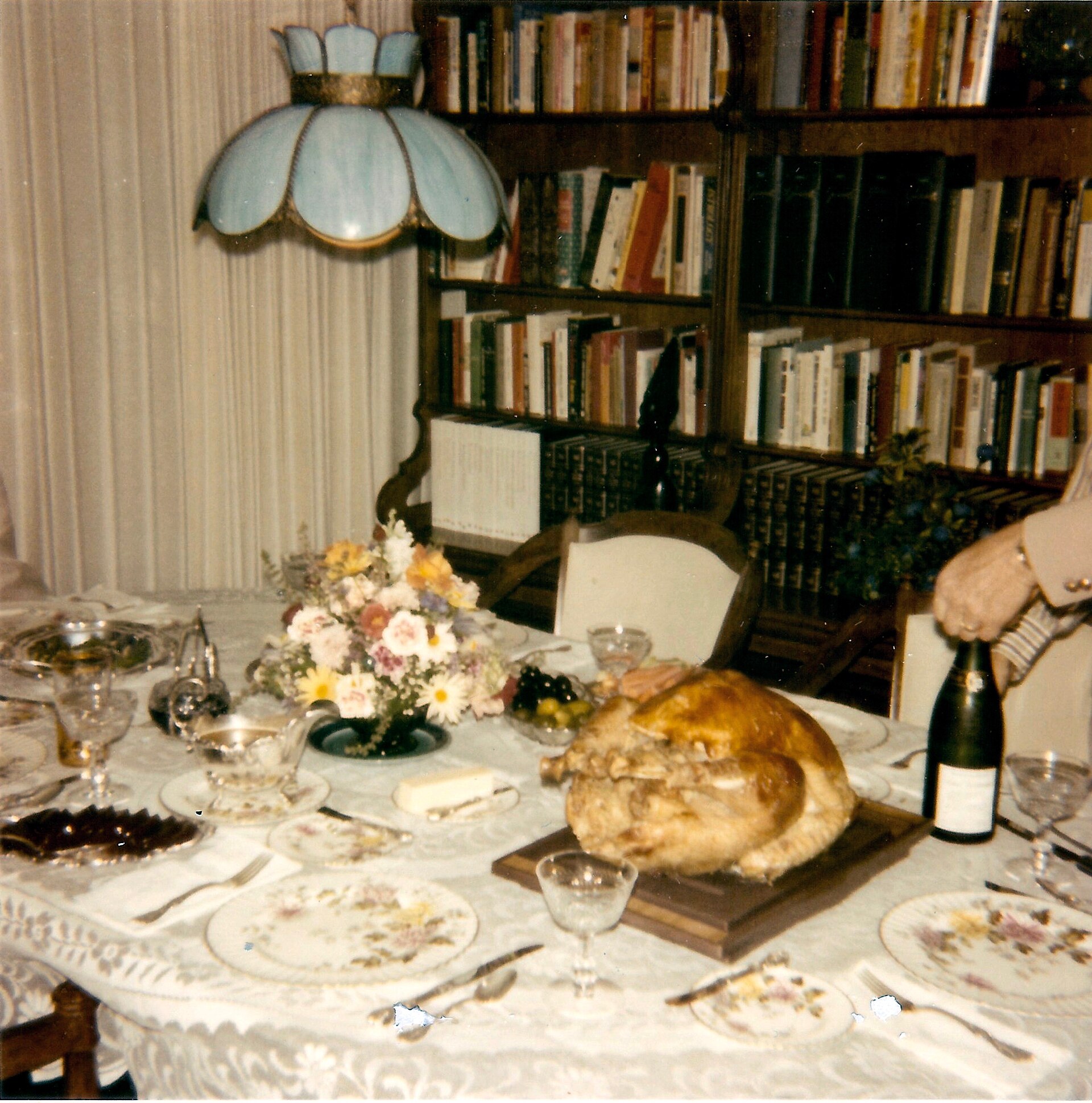
Fly a turkey dinner from a table in Providence to a table in Lafayette and a guest at either one would recognize the bird immediately and struggle with almost everything sitting next to it. Regional thanksgiving dishes vary enough across the country that the holiday functions less like one national meal repeated fifty times and more like six or seven distinct regional meals that happen to share a calendar date and a centerpiece.
Six regions in particular hold onto their own version stubbornly: New England, the Carolinas, Louisiana, the Southwest, the Upper Midwest, and the Pacific Northwest. Each treats the sides, the stuffing, and often the bird itself differently enough that comparing them side by side says more about American food geography than any single deep dive into one region’s table could.
What follows is what changes across all six, and the two things that, against all that regional variation, do not.
- Six regions: New England, the Carolinas, Louisiana, the Southwest, the Upper Midwest, the Pacific Northwest
- What varies most: the stuffing or dressing, and what stands in for gravy
- What never varies: a roasted or fried whole bird, and a late-afternoon meal
- The most unusual regional dish: Louisiana’s turducken, a bird inside a bird inside a bird
- The oldest continuous version: New England’s, largely unchanged in its core dishes
- The newest regional identity: the Pacific Northwest’s, still actively forming
Regional thanksgiving dishes, six tables compared
Comparing regional thanksgiving dishes side by side works best against a fixed set of categories rather than a loose description of each region in isolation: what replaces bread stuffing, what stands in for a plain gravy, and what appears on the table that a visitor from another region would not recognize at all. Measured that way, the six regions below separate cleanly from each other despite all serving, technically, the same holiday.
None of these six is more authentically Thanksgiving than another. Each developed from what grew, what was fished, and what previous generations of cooks in that specific place brought with them, the same forces that shape any regional cuisine anywhere in the world.
New England: oyster stuffing and the oldest version
New England’s table holds the closest claim to the original 1621 gathering, and its modern version, built on oyster stuffing, creamed onions, and brown bread, has changed the least of any region’s over the past century. Coastal access to fresh oysters historically at a low cost shaped a stuffing tradition that most of the rest of the country has since moved away from, even as New England households kept it as a matter of course rather than revival.
Our deeper look at New England’s full checklist covers the oyster stuffing, the creamed onions, and the steamed brown bread in more detail than a six-region comparison has room for, including why all three faded elsewhere on the map even as they stayed standard here.
The Carolinas: rice, not bread, as the stuffing base
Coastal Carolina tables lean on rice rather than bread as the base for a stuffing-adjacent dish, a legacy of the region’s Carolina Gold rice cultivation and the same rice-forward cooking tradition that shows up across the region’s low country cooking more broadly. Collard greens, often cooked with a smoked pork product, are close to non-negotiable on a Carolina table where they might be entirely absent elsewhere.
Sweet potato dishes lean toward the pie end of the spectrum here rather than the savory-with-marshmallow casserole more common further north, tracking the region’s broader identity around sweet potato pie discussed at length in our comparison of sweet potato and pumpkin pie.
Louisiana: fried turkey and the trinity in everything
Louisiana’s Cajun and Creole tables reroute the bird itself, deep-frying a whole turkey outdoors rather than roasting it in the oven, a technique that spread nationally over the past few decades but still carries its strongest regional identity here. Cornbread dressing shows up loaded with andouille sausage and the onion-celery-bell pepper trinity that underlies most Cajun and Creole cooking, a savory, spiced departure from a plainer version served elsewhere.
Turducken, a deboned chicken stuffed inside a deboned duck stuffed inside a turkey, originated here and remains rare outside the region even now, a genuinely singular regional dish with no real equivalent on any of the other five tables covered here.
The Southwest: green chile and posole instead of gravy and stuffing
New Mexico and Arizona tables build the meal around green chile rather than a traditional gravy, touching the gravy itself, the mashed potatoes, and sometimes the stuffing, while posole often replaces one of the standard starches entirely. Our detailed look at the southwestern menu built around one ingredient covers the full spread and the red-or-green question that comes up at nearly every table in the region.
This is one of the more recently solidified regional identities on this list, shaped heavily by the area’s Hispanic and Indigenous culinary traditions blending with the imported Thanksgiving format over the past several generations rather than tracing back centuries the way New England’s does.
The Upper Midwest: hotdish logic applied to a holiday table
Minnesota and the Dakotas bring the same starch-binder-crunchy-top structure that defines an everyday hotdish to the holiday table, often in the form of a green bean or sweet potato casserole built on that exact template rather than a dish invented specifically for the occasion. Our piece on what actually defines a hotdish lays out the structure that shows up, in a slightly dressed-up form, on Thanksgiving tables across the region.
Lutefisk, though more associated with Christmas in most Scandinavian-American households in the region, occasionally makes an appearance at Thanksgiving as well, a genuinely divisive dish even within families that consider it a tradition worth keeping.
The Pacific Northwest: seafood before the turkey arrives
Tables in Washington and Oregon frequently open with a seafood course, Dungeness crab or fresh oysters, before the turkey ever reaches the table, reflecting the region’s easy access to both and a food culture that treats seafood as an everyday staple rather than a special occasion splurge. Foraged wild mushrooms, chanterelles especially, often work their way into stuffing or a side dish here in a way rarely seen in other regions’ versions.
This is the newest and least standardized of the six regional identities described here, still actively forming as the region’s food culture, heavily shaped by immigration and a strong local-and-seasonal ethos, continues to influence what a traditional Thanksgiving looks like in the Pacific Northwest specifically.
A side-by-side table of what changes and what doesn’t
Lining up all six regions against the same three categories shows the pattern more clearly than describing each one separately.
| Region | Stuffing or dressing | Signature departure |
|---|---|---|
| New England | Oyster stuffing | Creamed onions and steamed brown bread |
| The Carolinas | Rice-based dressing | Collards with smoked pork |
| Louisiana | Cornbread with andouille and trinity | Deep-fried turkey, turducken |
| The Southwest | Cornbread stuffing with green chile | Posole in place of a starch |
| Upper Midwest | Hotdish-structured casseroles | Occasional lutefisk |
| Pacific Northwest | Wild mushroom stuffing | A seafood course before the bird |
No single column repeats across all six rows, which is the clearest evidence that Thanksgiving dinner as a fixed national menu is closer to a myth than a description of what actually happens on tables across the country.
Why the turkey and the timing survive everywhere
Despite every other variation covered here, two things hold constant across all six regions: a whole bird, whether roasted or fried, sits at the center of the table, and the meal itself happens in the mid-afternoon rather than at a typical dinner hour, generally somewhere between one and five o’clock. Both details trace back to the same practical root, a meal historically built around a full day of cooking that needed to finish and be eaten before evening, regardless of what regional dishes surrounded the bird by the time it reached the table.
The bird’s centrality also survives because nothing regional has fully displaced it anywhere, even where a regional specialty, like Louisiana’s fried version, changes the cooking method dramatically. Every one of these six tables still calls the meal built around a turkey, not around whatever regional dish gets the most attention once the bird is carved.
The specific mid-afternoon serving window also serves a practical function that has outlasted the reasons that originally created it: it accommodates a household hosting extended family traveling in from elsewhere, giving everyone a full morning to arrive and a full evening afterward before needing to depart again, a scheduling logic that works as well in a Seattle household serving crab and turkey as it does at a New England table serving oysters and turkey.
Even the handful of households that skip a whole roasted or fried bird entirely, opting for a large piece of meat like a prime rib or a whole ham instead, tend to keep that same mid-afternoon timing intact, which suggests the schedule itself has become as central to the holiday’s identity as the bird traditionally sitting at the middle of the table.
Where each region’s identity actually comes from
None of these six regional tables developed in isolation from immigration, and several owe their most distinctive dishes directly to specific groups who settled in the area and adapted the holiday to what they already knew how to cook. Louisiana’s trinity and its Cajun and Creole seasoning trace to French, Spanish, and African culinary influences layered over generations. The Southwest’s green chile menu owes as much to Indigenous and Hispanic foodways predating the holiday’s arrival in the region as it does to the imported New England format.
This pattern, a national holiday absorbing and reflecting whatever culinary traditions already existed in a given place, is the same one covered from a household level rather than a regional one in our piece on pancit, tahdig, and farofa served beside the turkey. Regional variation and household, immigrant-driven variation are really the same force operating at two different scales.
What a household with roots in two regions actually does
A family with one parent from Louisiana and another from New England does not typically pick a single regional identity and discard the other; more often, both traditions end up on the same table, an oyster stuffing next to a pot of red beans, or a fried turkey served alongside creamed onions that would look at home in Boston. This blending happens at the household level far more often than any single regional description accounts for, since most American families are not purely rooted in one of these six regions to begin with.
The result, over a generation or two, is often a genuinely new hybrid table that does not match any single regional description cleanly, which is arguably closer to how most of these six regional identities themselves originally formed in the first place, one household’s blended choices repeated and normalized across a wider community over time.
Frequently Asked Questions
Which region’s Thanksgiving is closest to the original 1621 meal?
New England’s, both because the original gathering happened there and because the region’s core dishes have changed comparatively little over the following centuries.
Is fried turkey actually more common in Louisiana than roasted turkey?
It is common enough to be considered a defining regional practice, though many Louisiana households still roast a turkey and fry a second one, or alternate between years.
Why do some regions serve rice instead of bread-based stuffing?
It traces to what grew locally and cheaply in each region’s agricultural history, with rice-growing coastal areas developing a rice-based tradition well before bread stuffing became the more common national default.
Do any of these six regions overlap with each other’s dishes?
Some overlap exists at the edges, particularly between the Carolinas and Louisiana around rice and pork, but each region’s full combination of dishes remains distinct enough to identify on sight.
Is a blended, multi-regional Thanksgiving table common in mixed households?
Increasingly, yes, particularly in households where family members grew up in different parts of the country and each brings one dish from their own regional tradition to a shared table.
None of these six tables is the real one, and none of the others is a deviation from it. The bird and the timing are the actual holiday; everything else on the table has always belonged to wherever it was cooked.